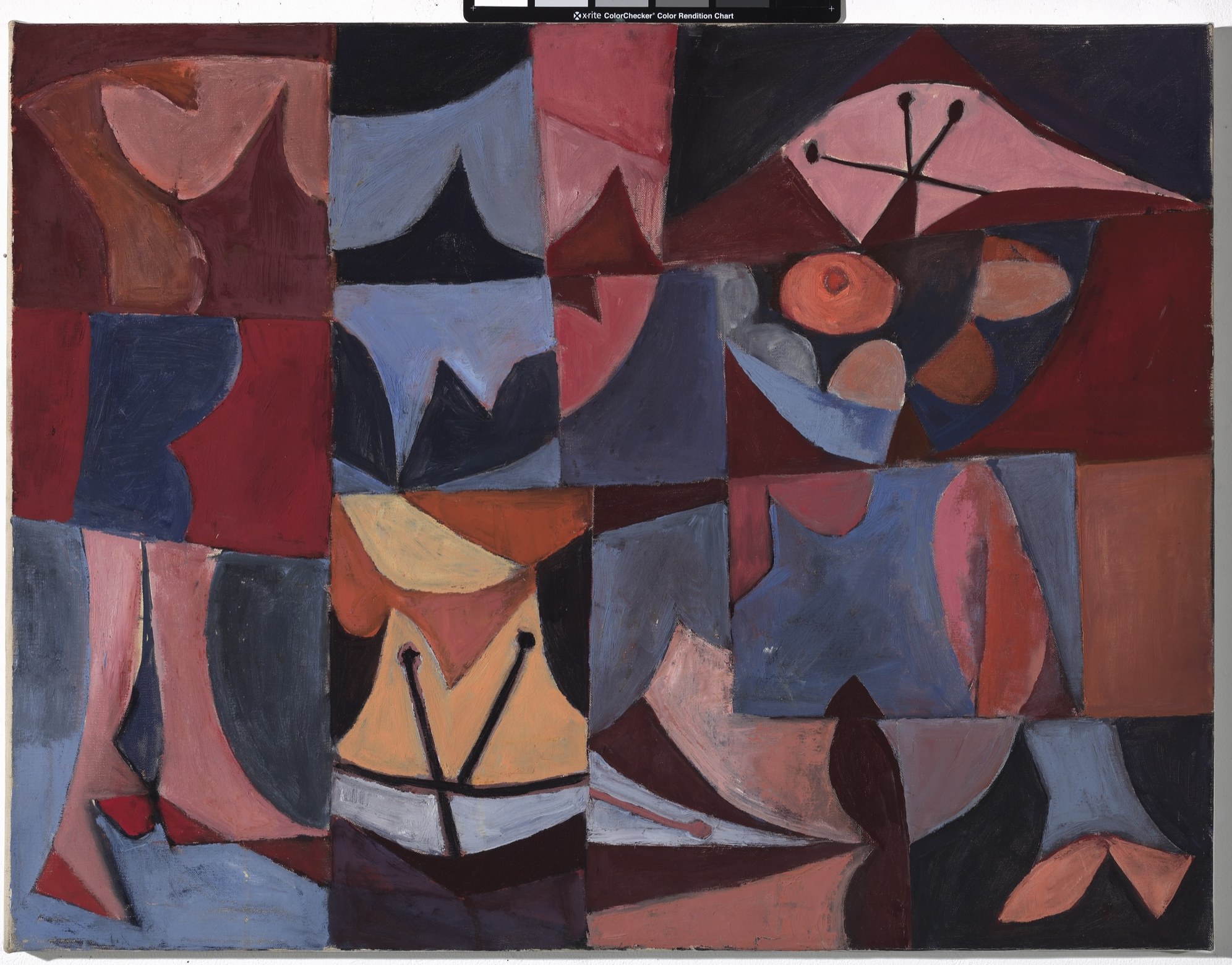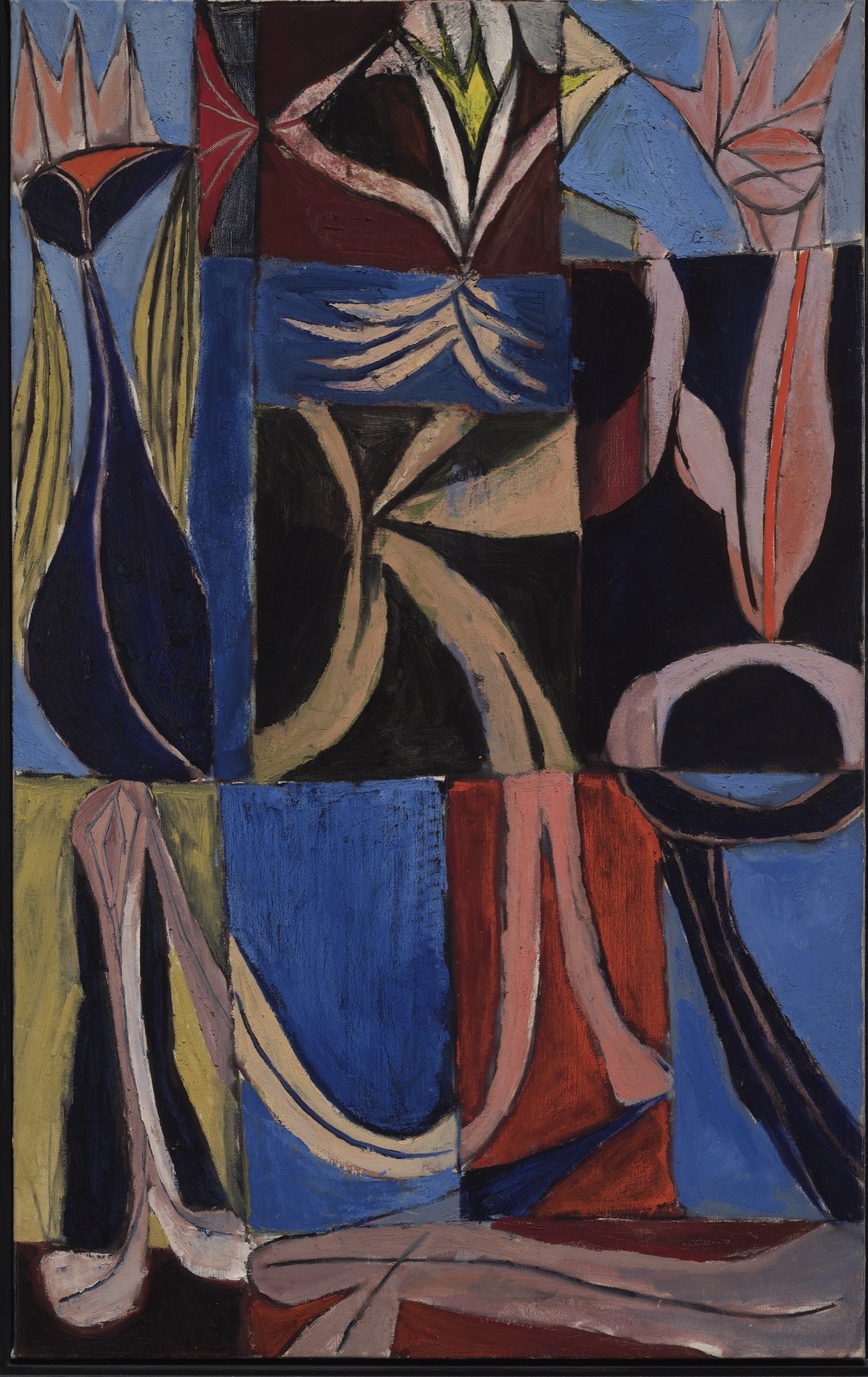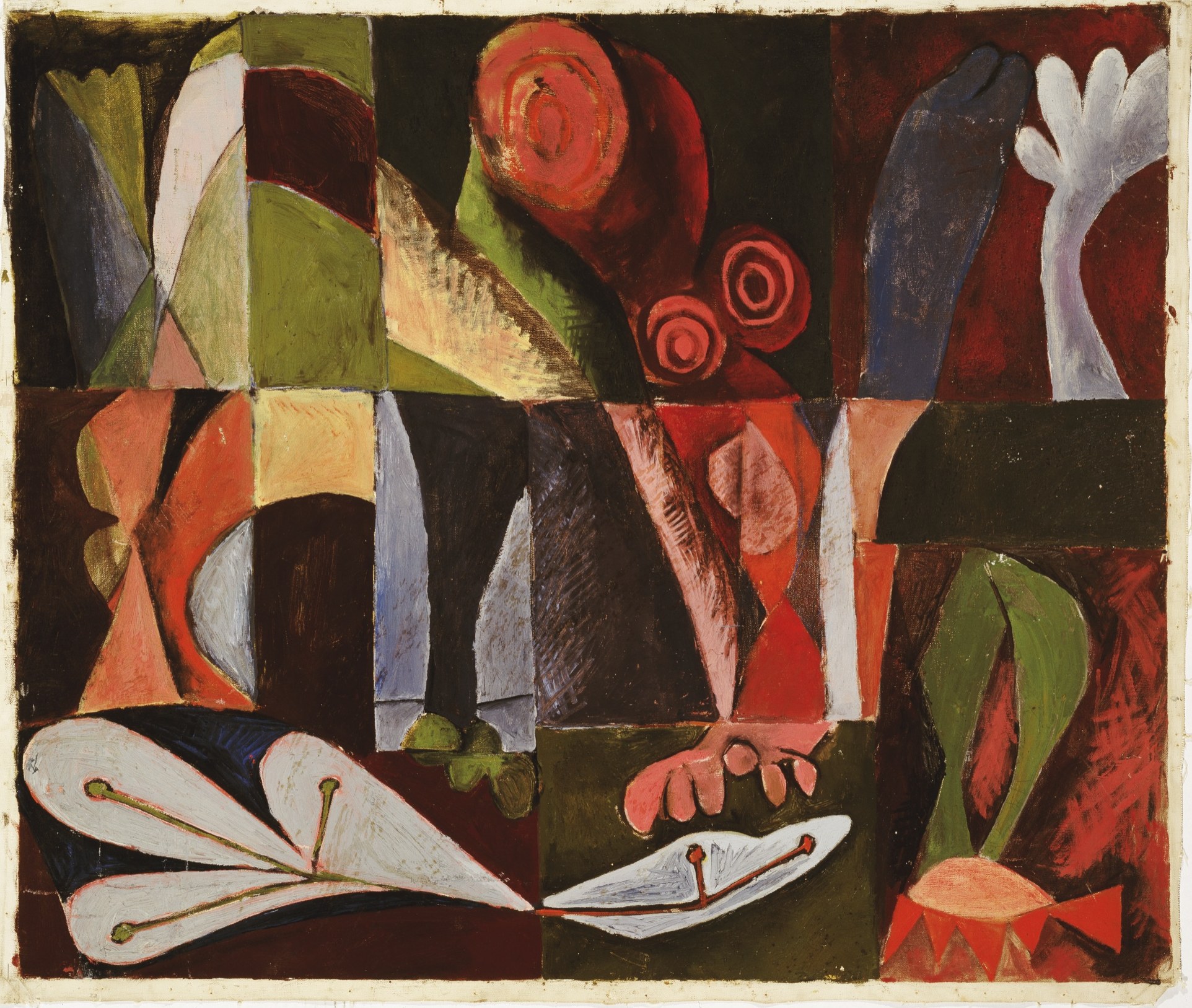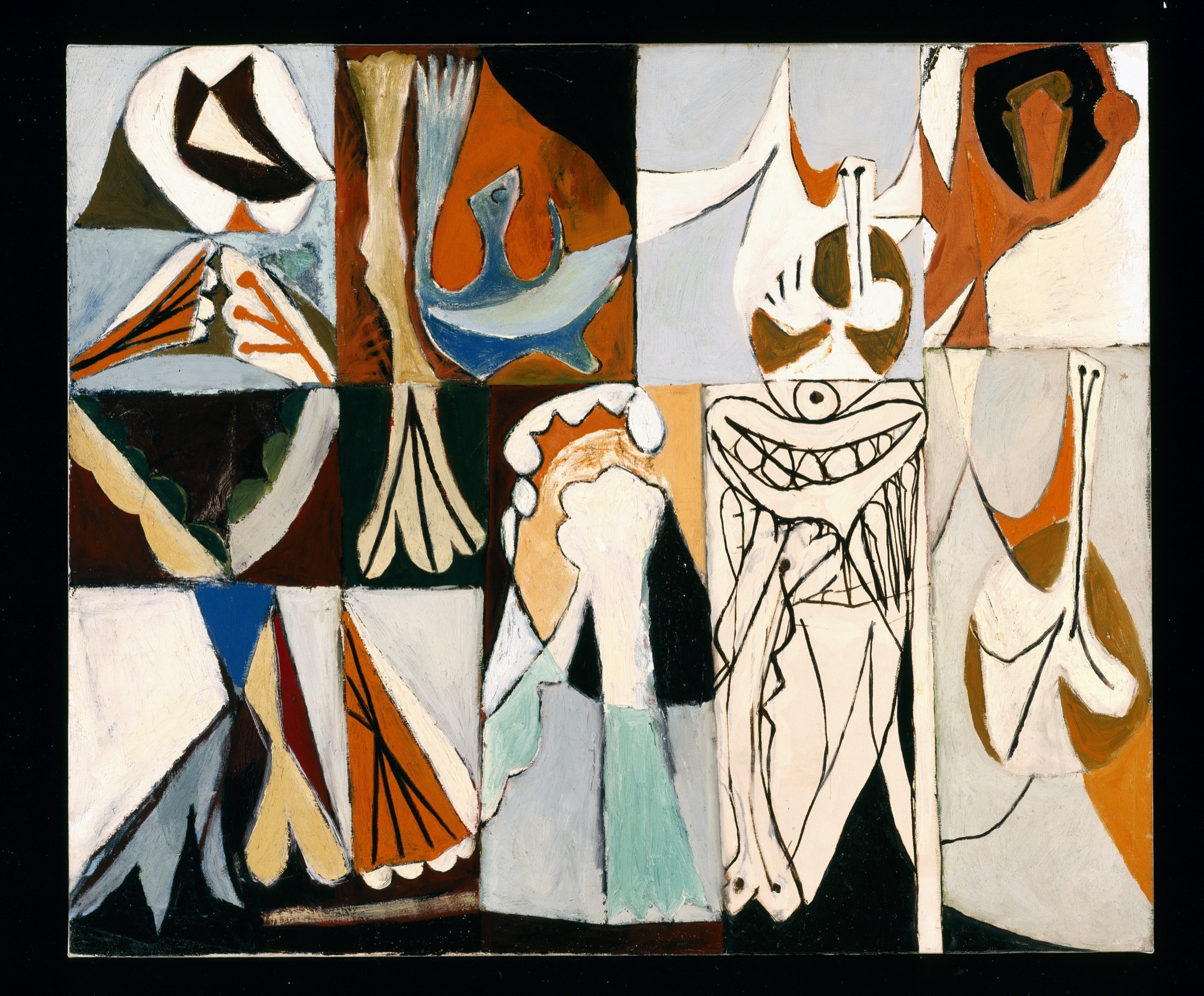
Beginnings
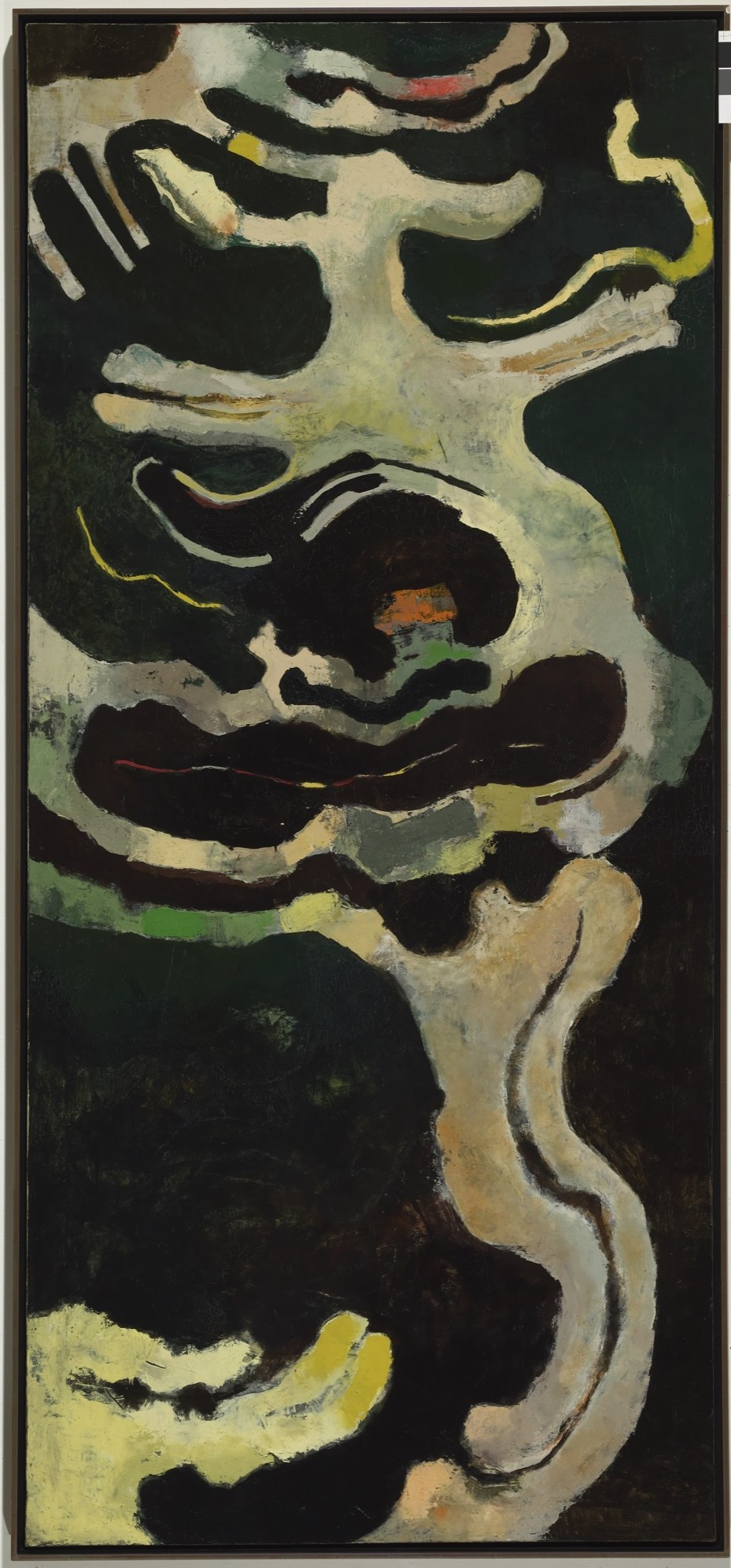
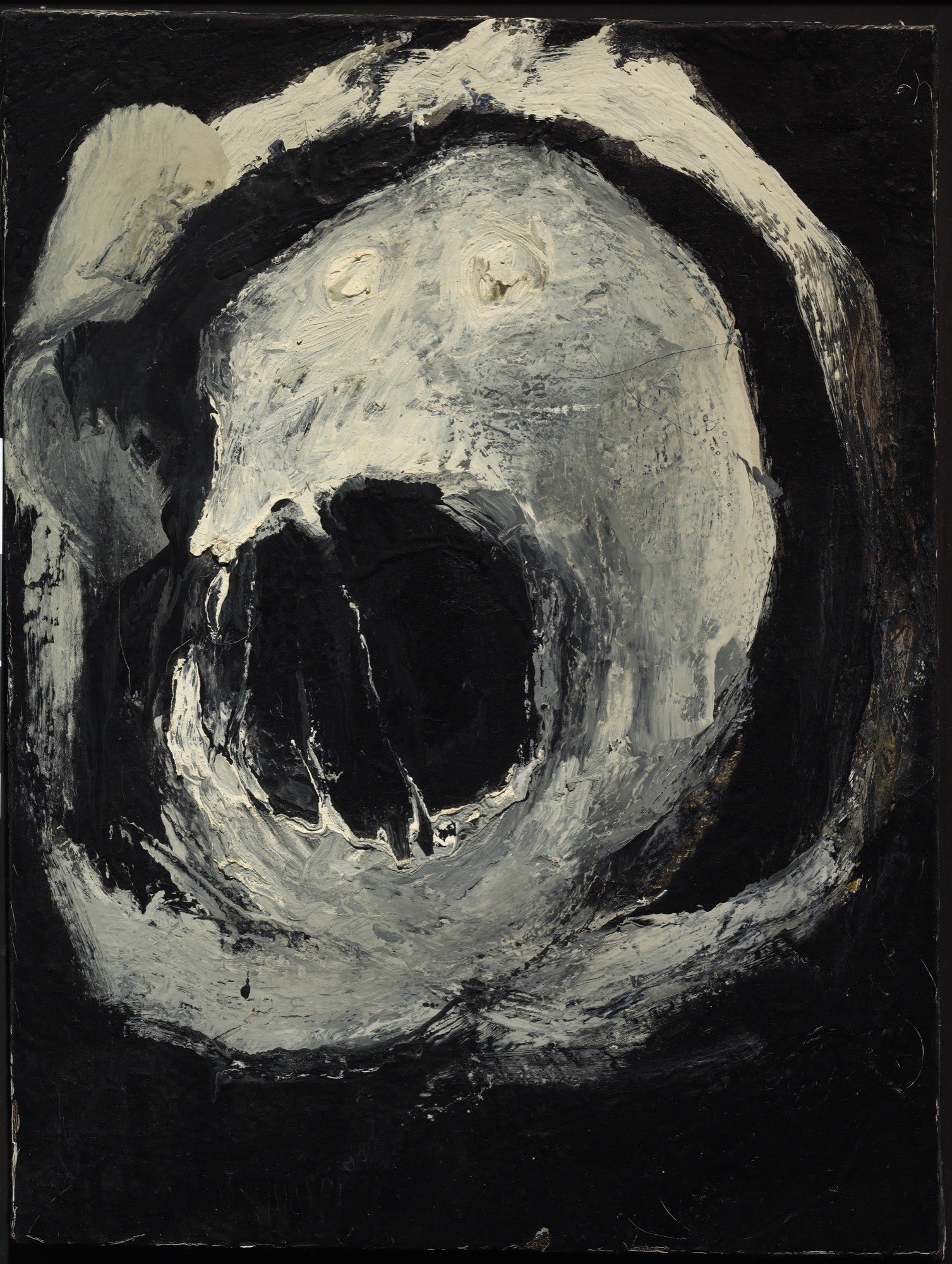
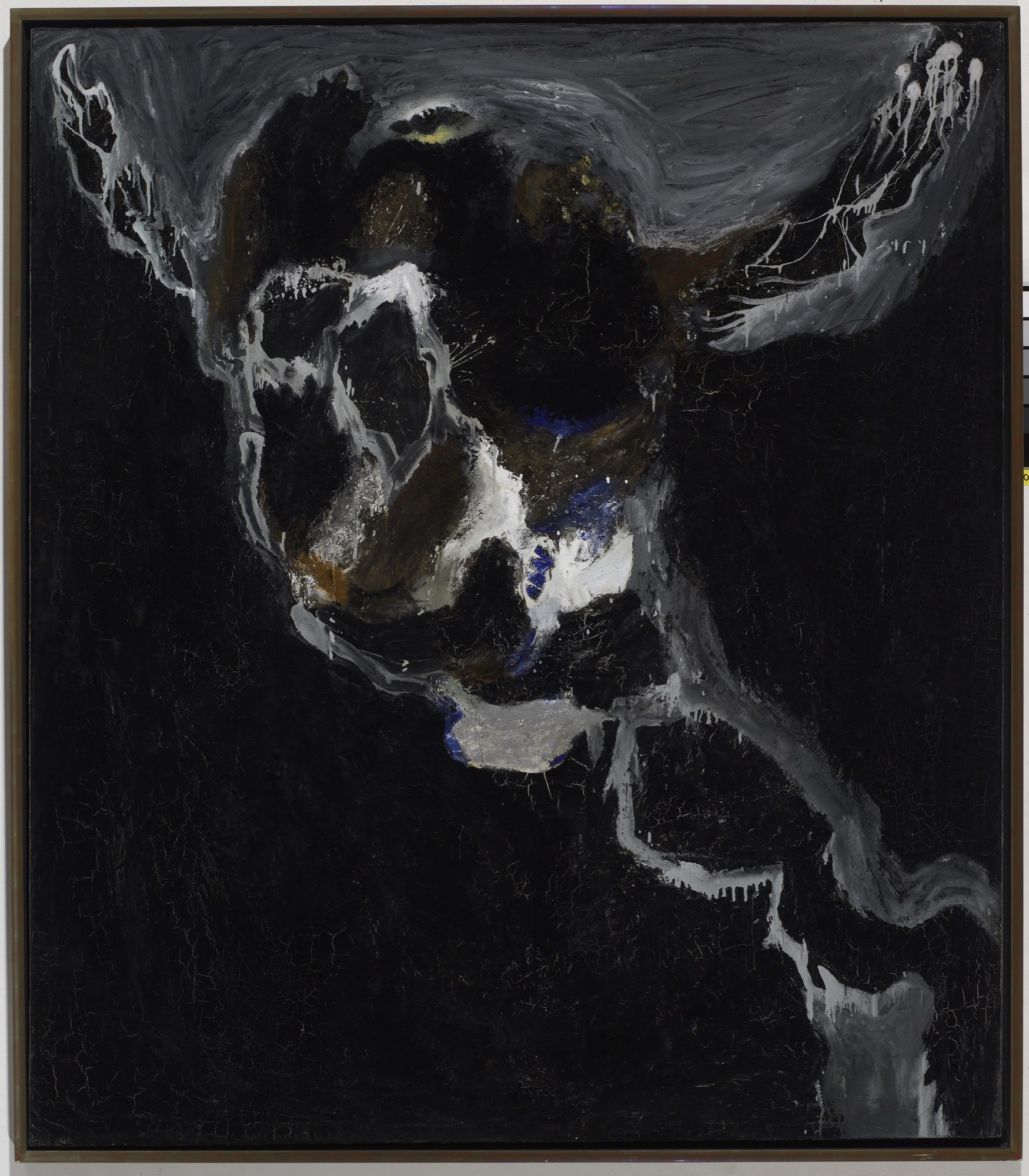
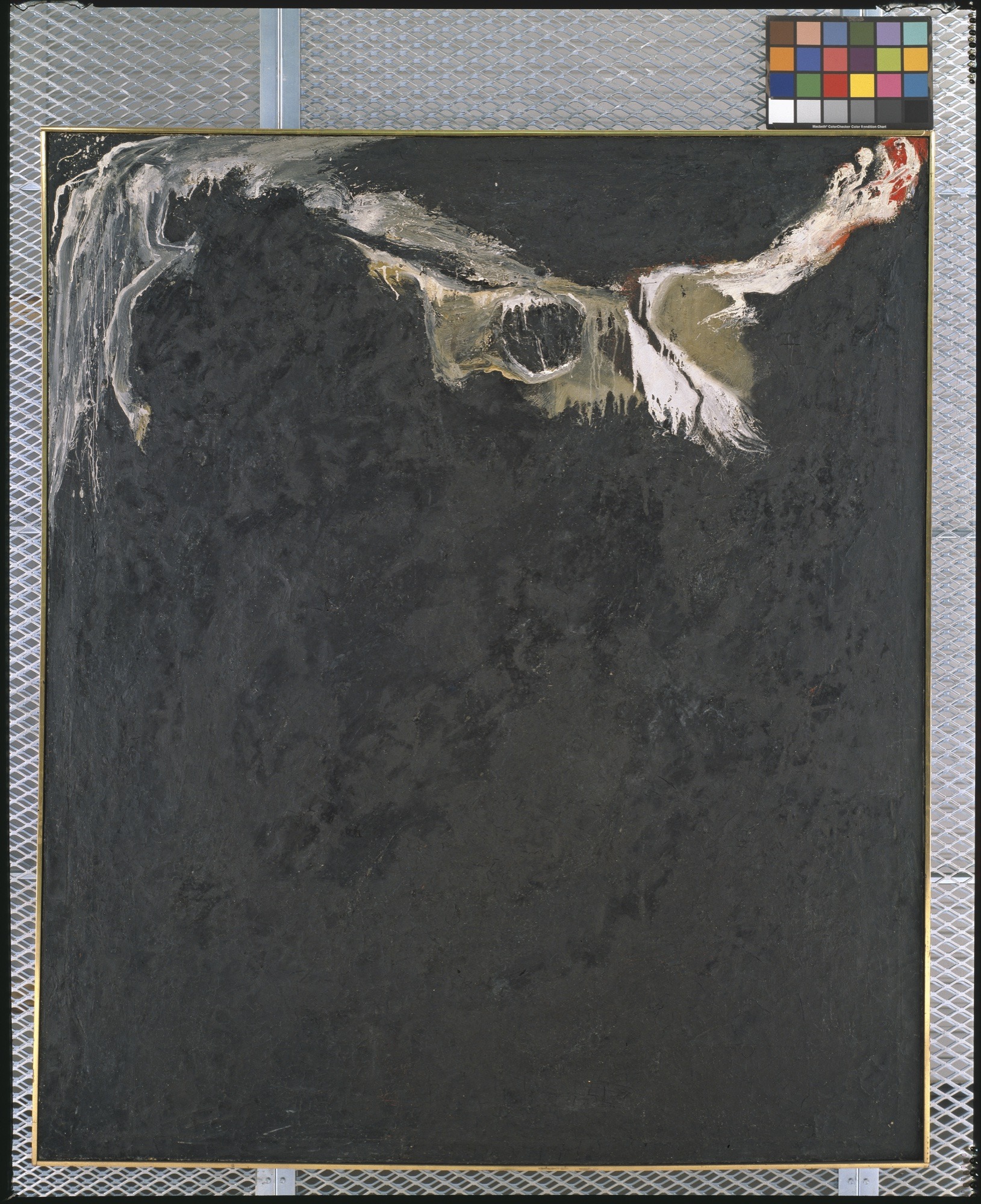
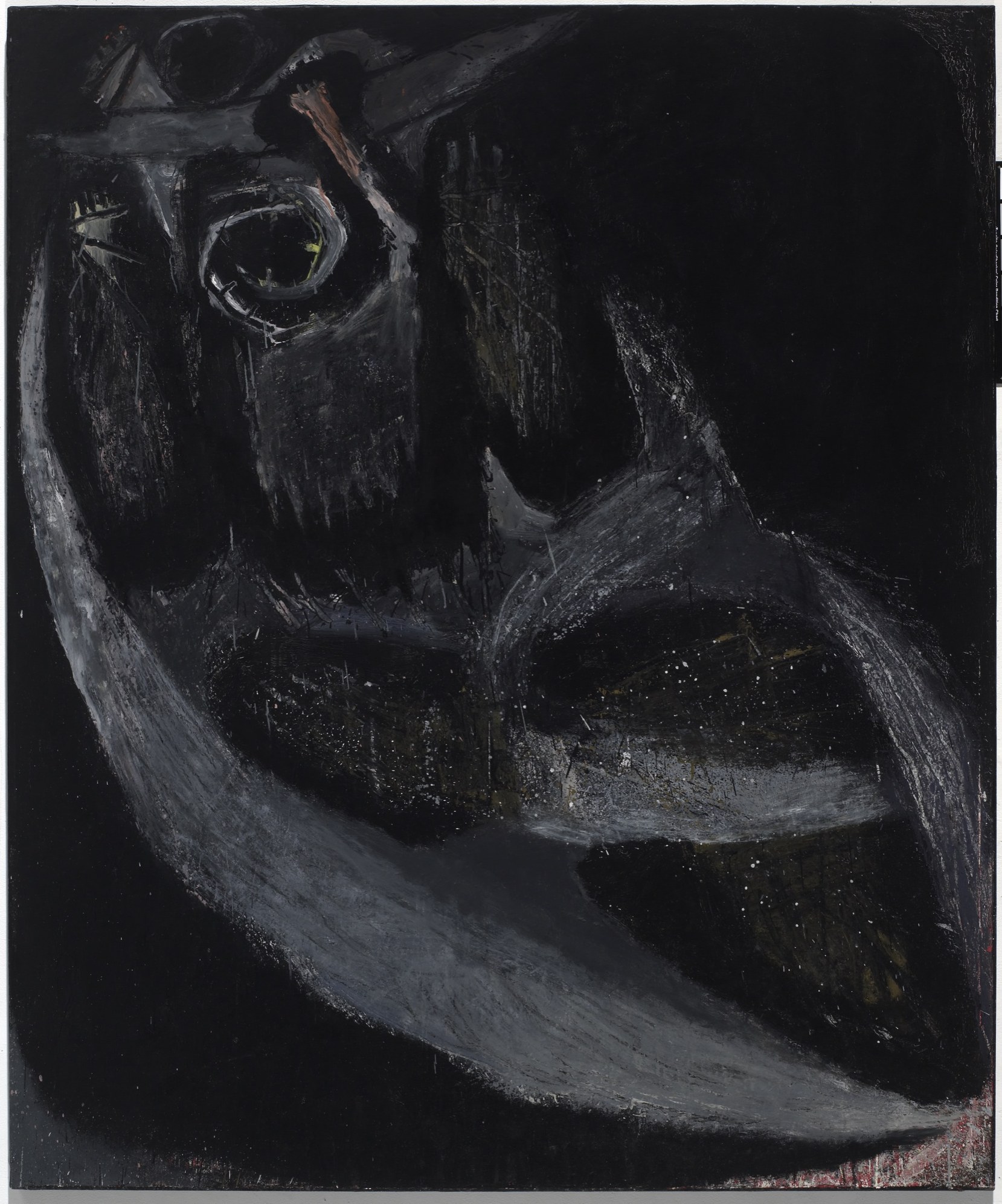
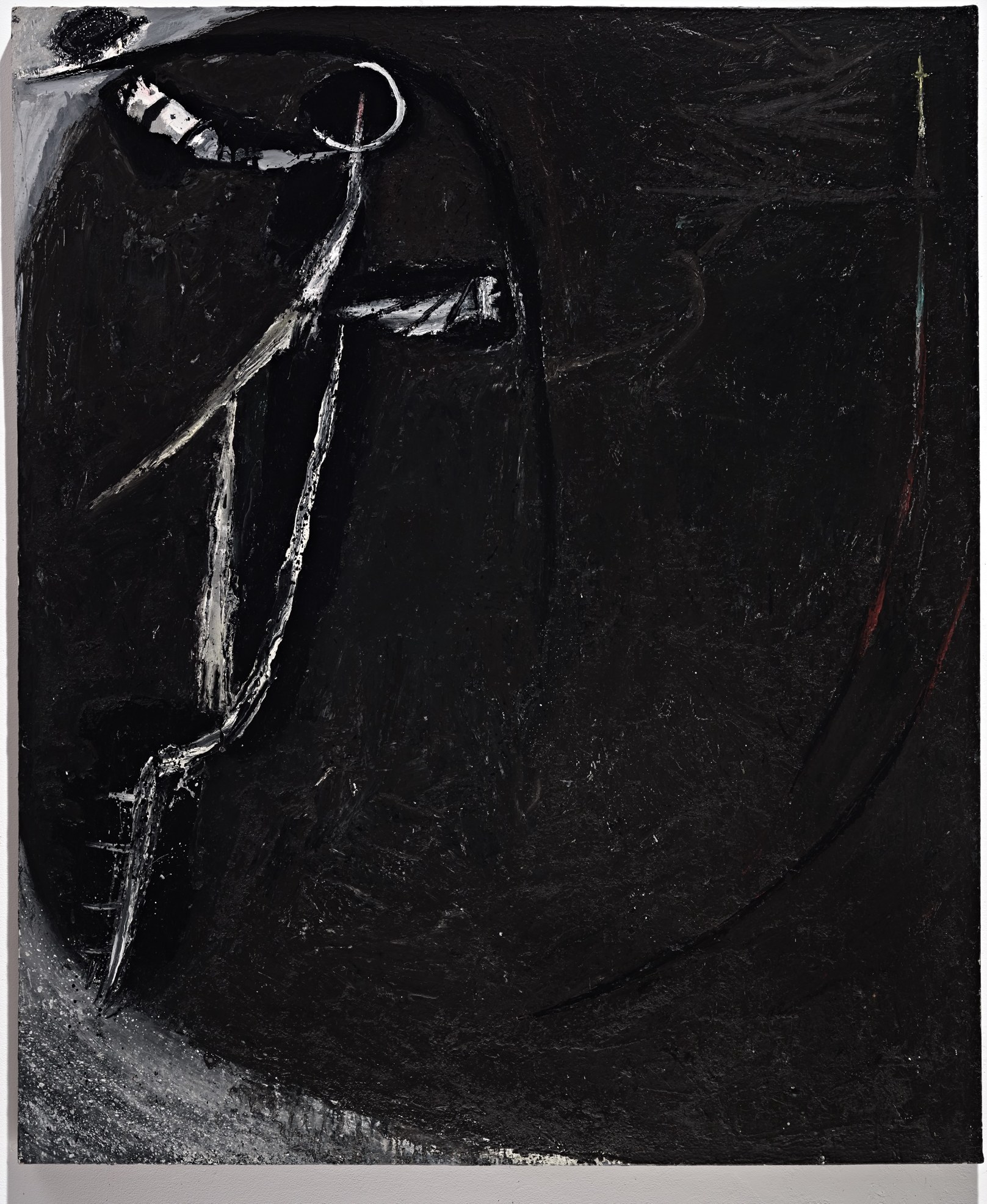
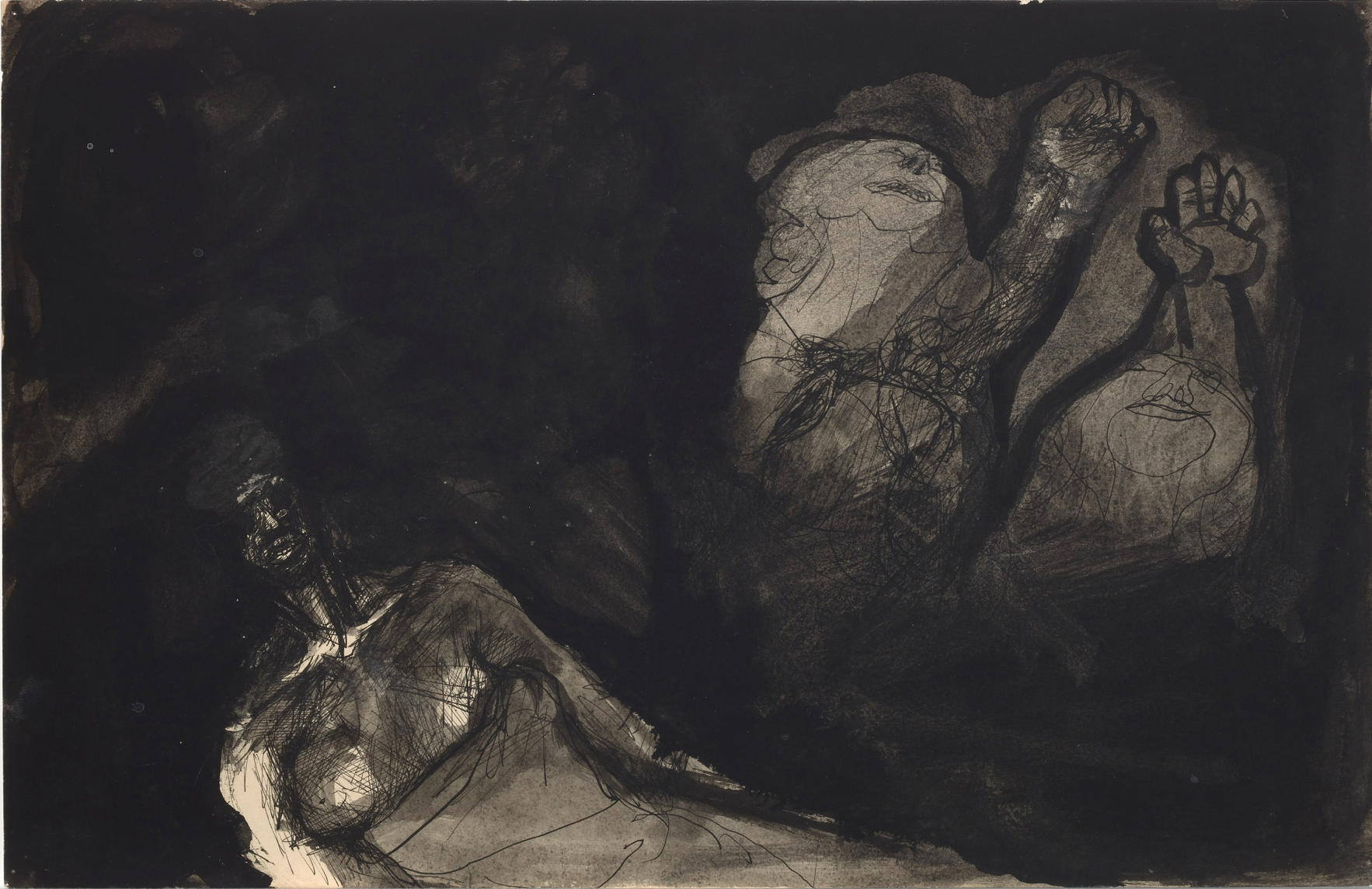
Born in Kansas City in 1921 and raised in Minnesota, Lobdell served as an infantry lieutenant in Europe during World War II. In April 1945 his unit came upon the aftermath at Gardelegen, Germany, where more than a thousand concentration camp prisoners had been burned alive. The image never left him, and pushed into his work a vocabulary of bones, tendons, and torn corporeal forms that would re-emerge for decades.
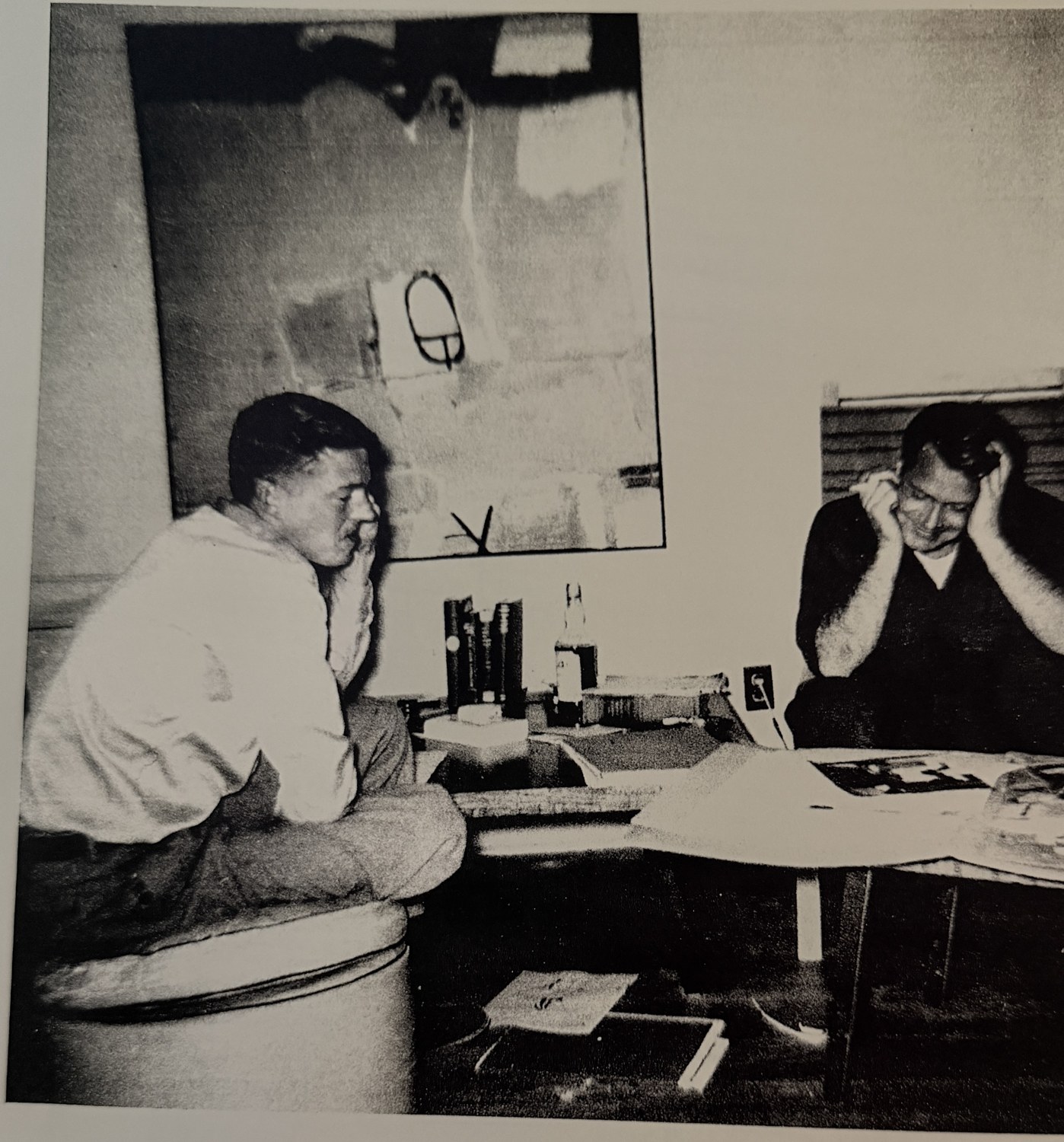
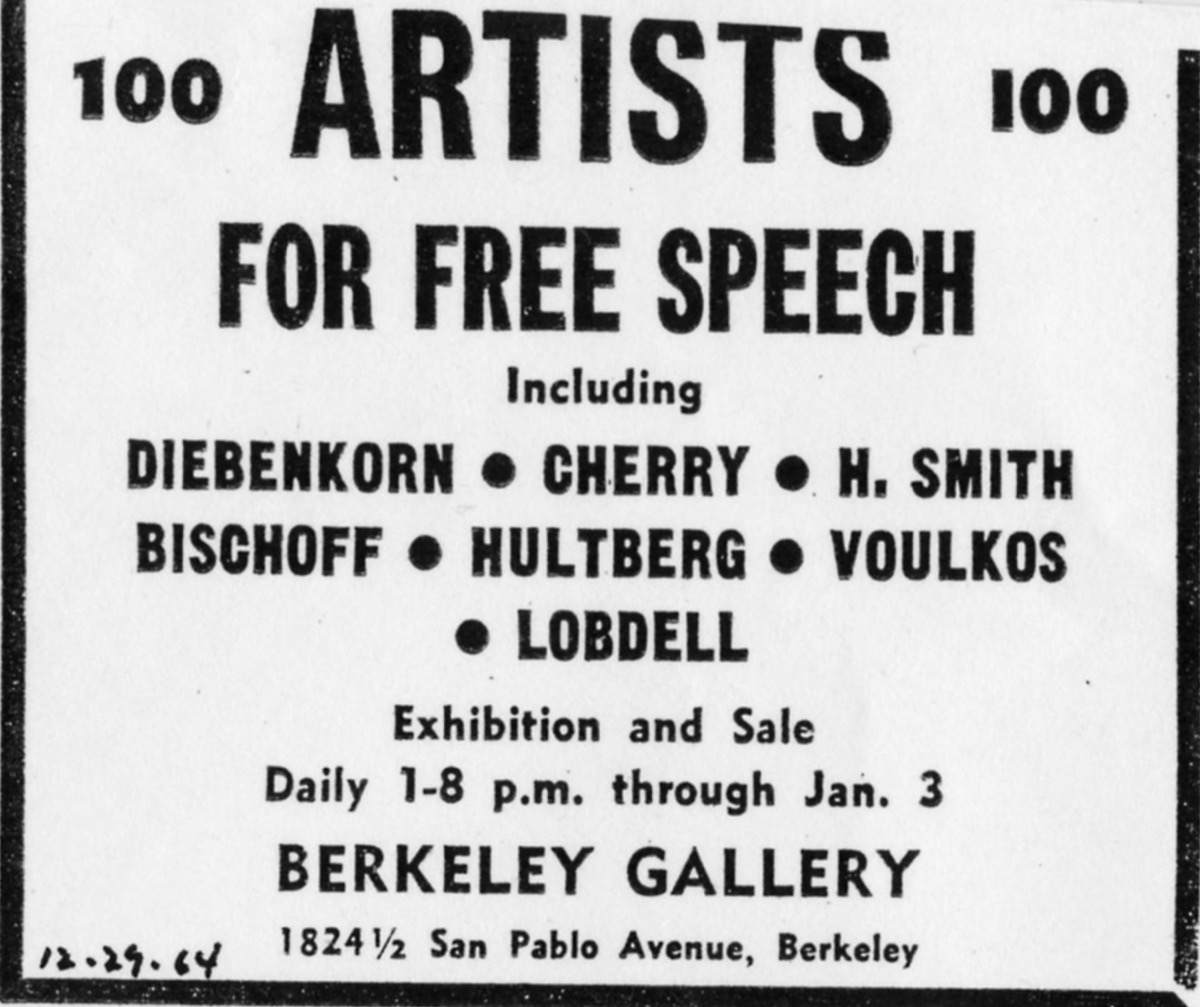
In 1947 he enrolled at the California School of Fine Arts on the G.I. Bill, at the precise moment it was becoming the most important Abstract Expressionist school west of New York. His teachers — Clyfford Still, Mark Rothko, David Park — and his peers — Richard Diebenkorn, Elmer Bischoff, Hassel Smith, Sam Francis, Ronald Bladen — formed the circle in which his work took shape. His lifelong friendship with Diebenkorn produced decades of correspondence preserved today in the Diebenkorn Foundation Archives.
The Work and Its Evolution
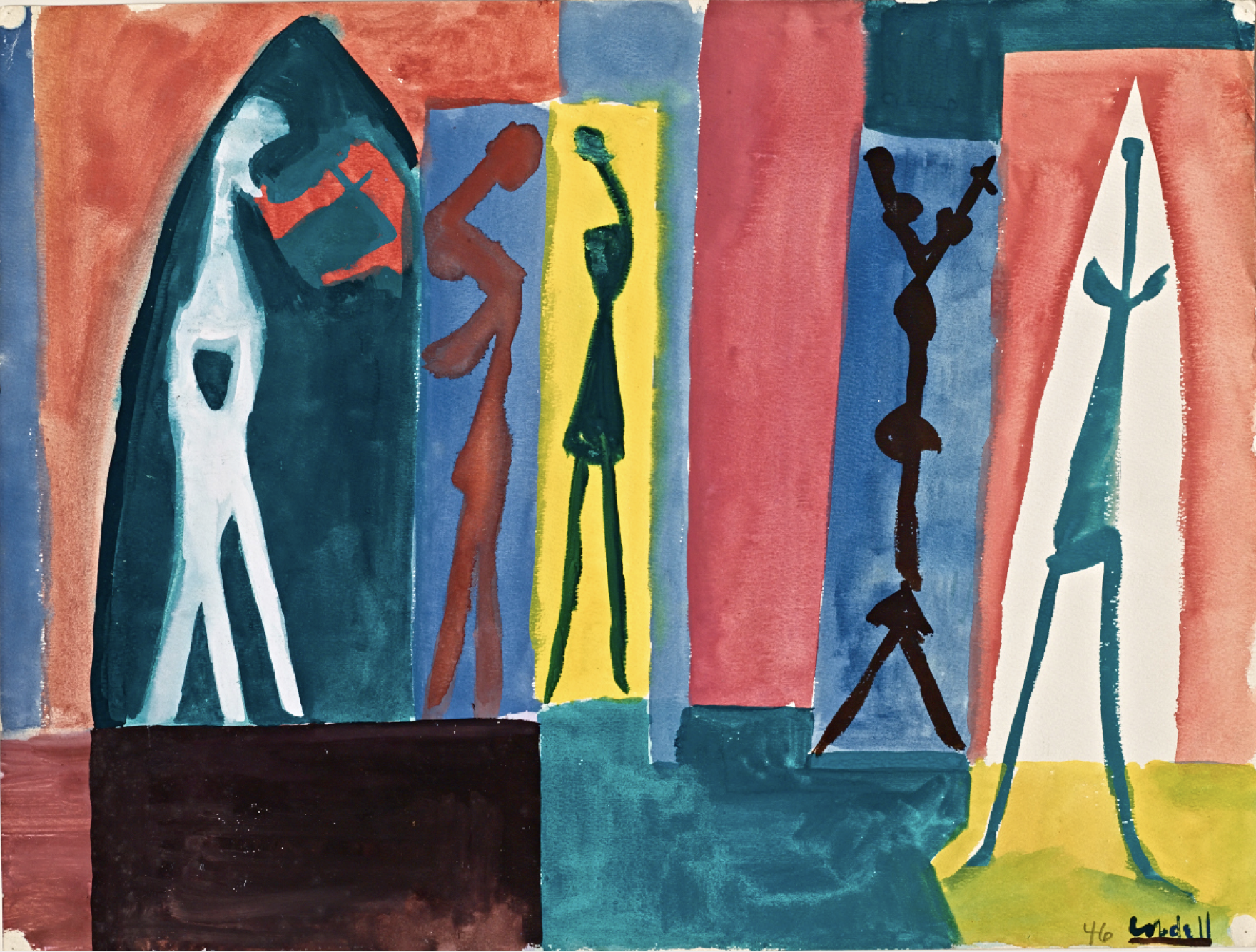
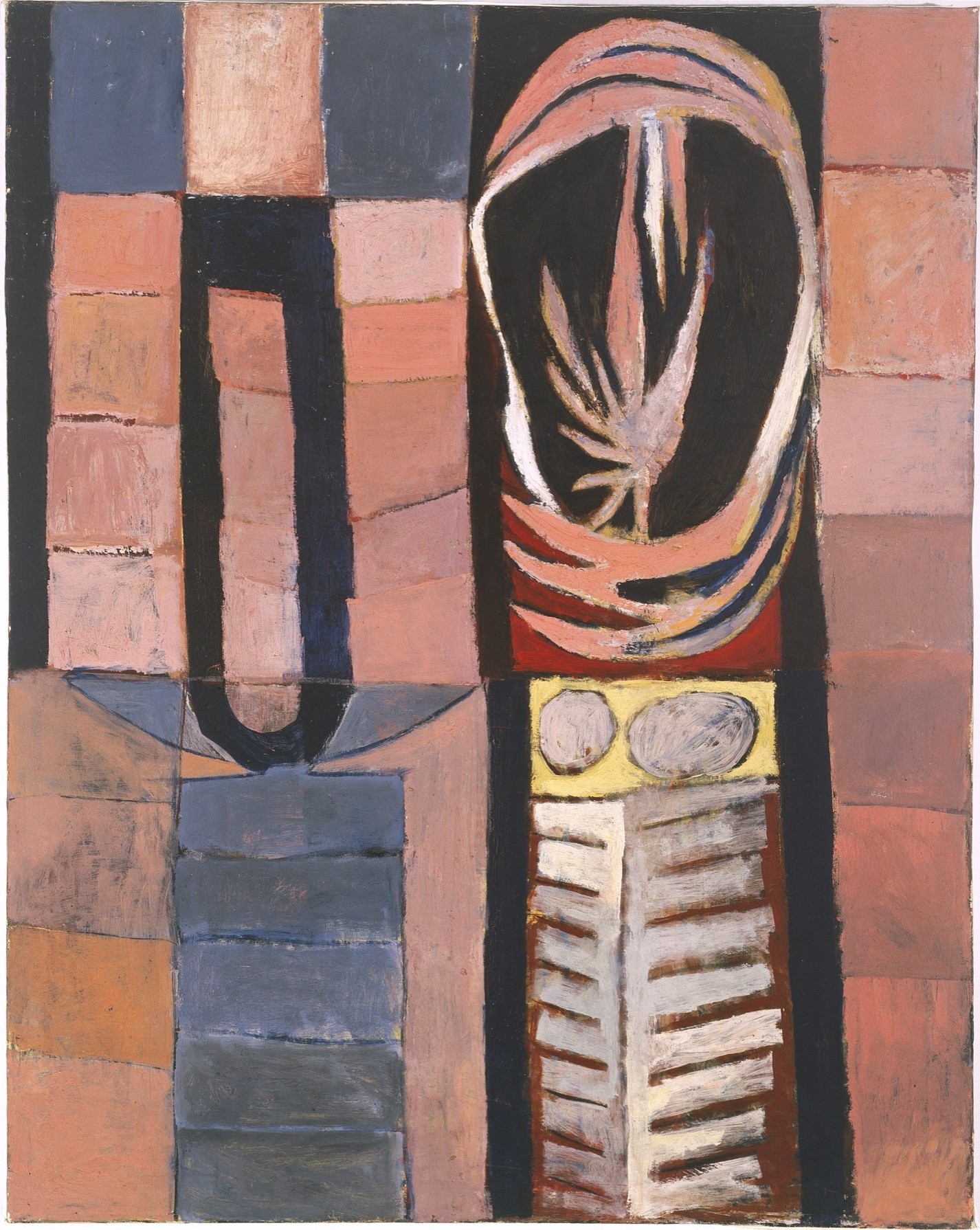
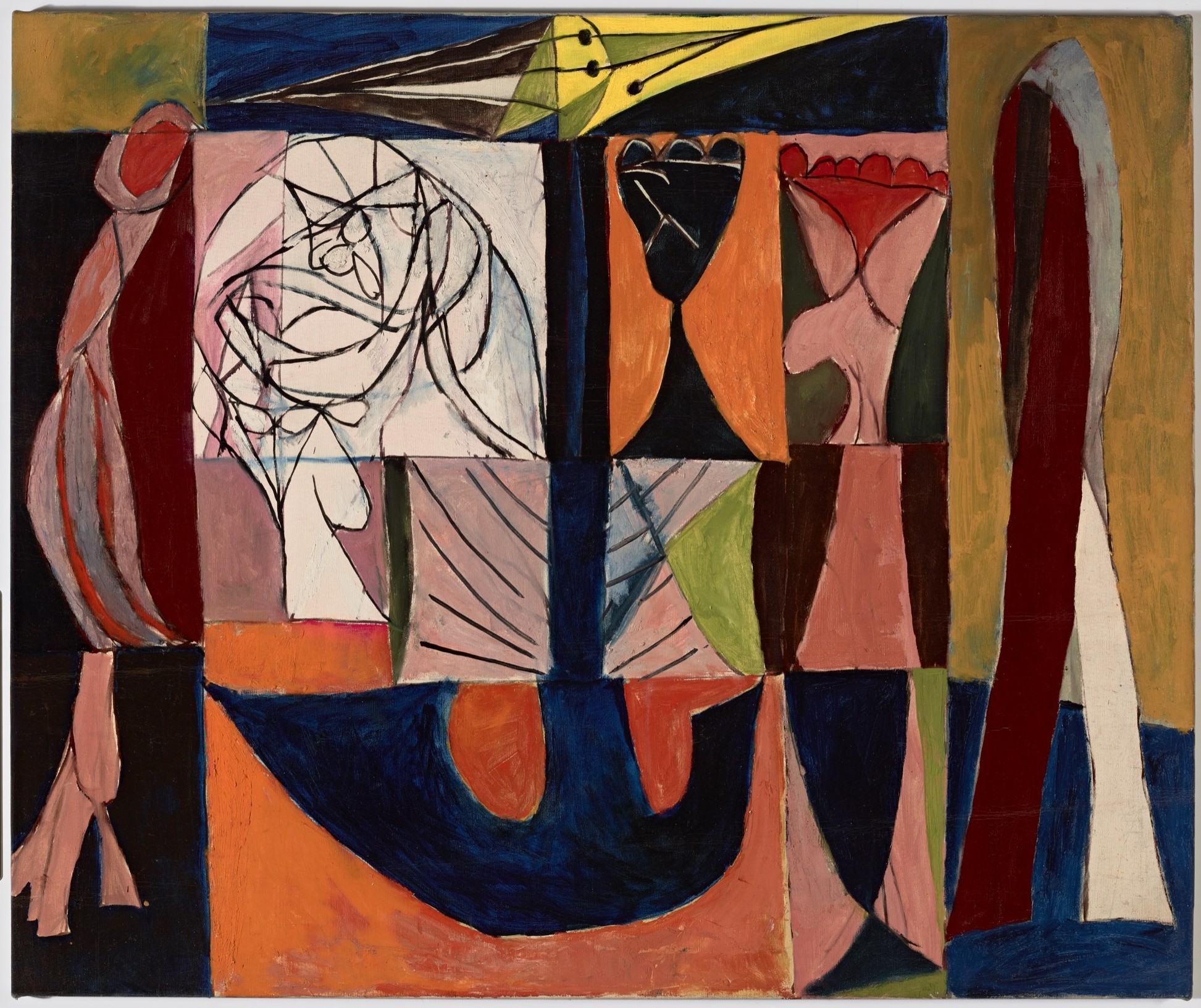
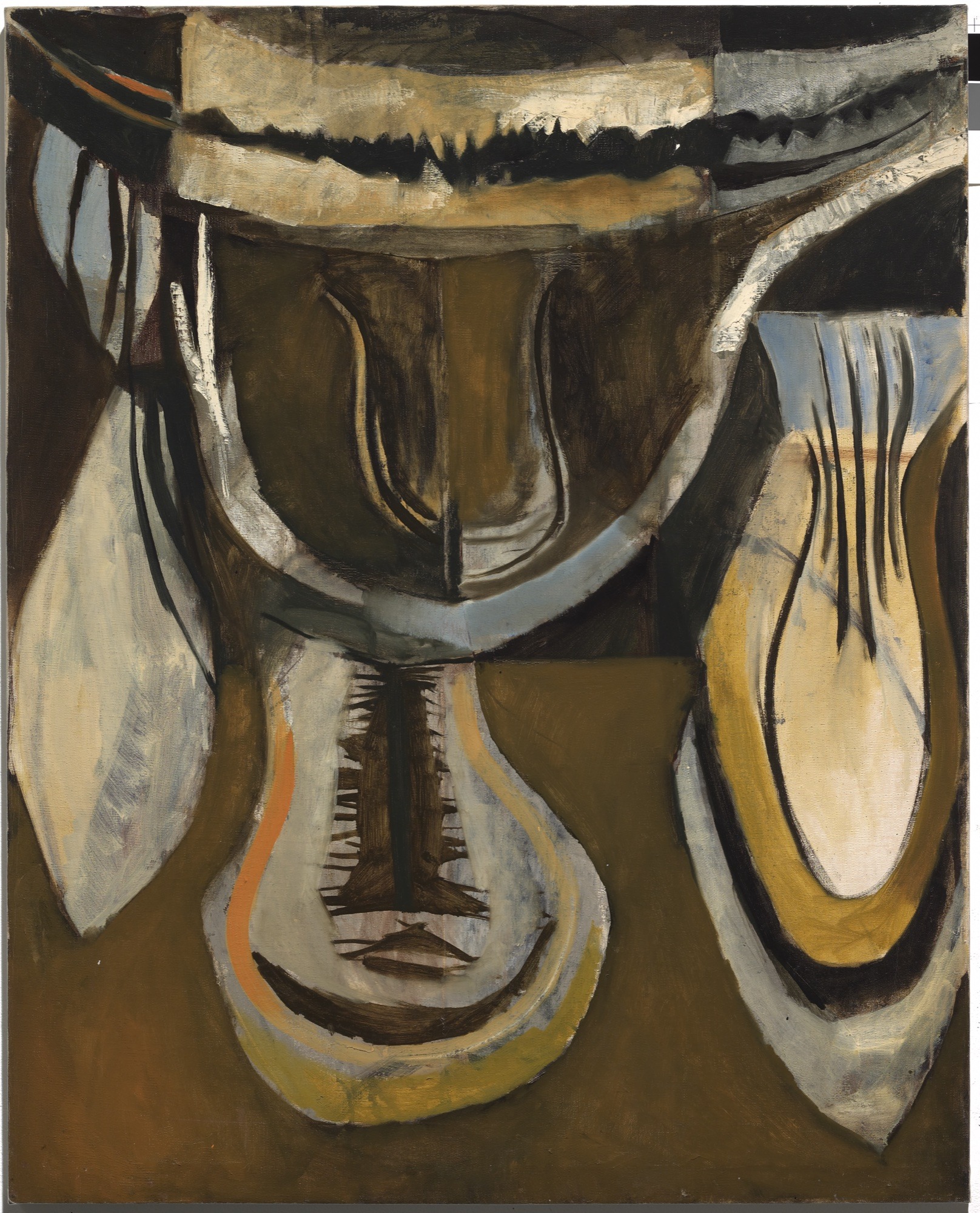
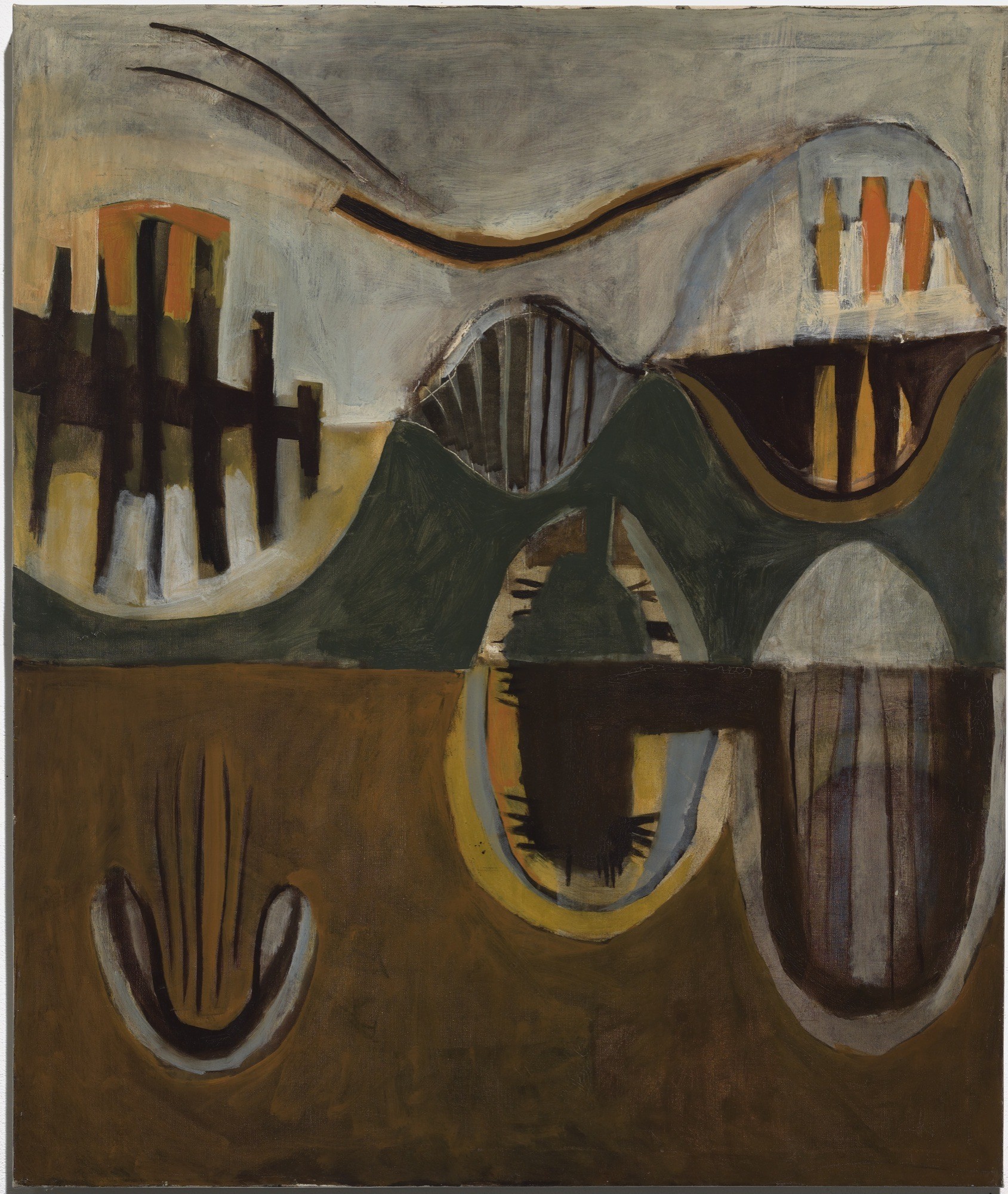
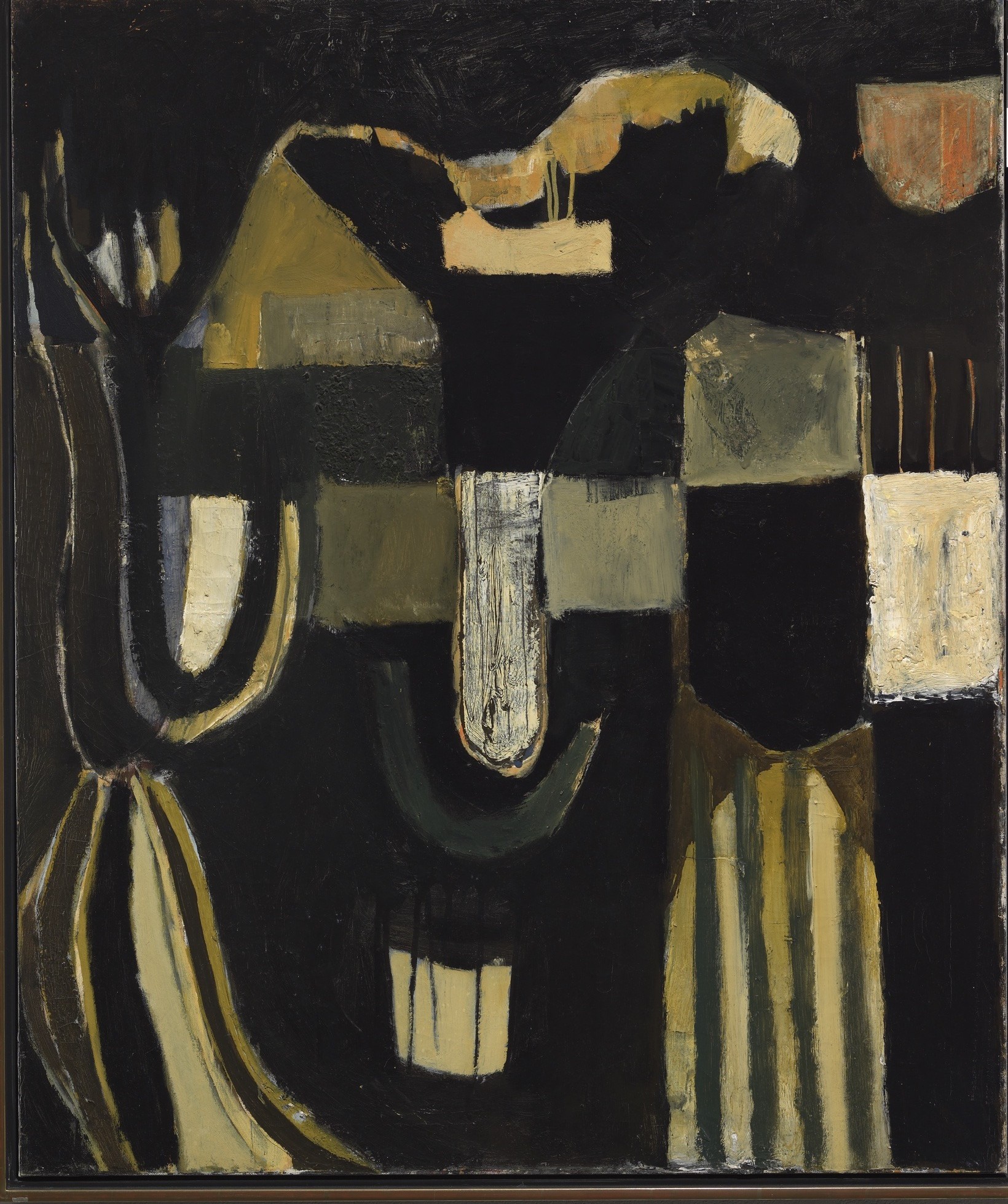
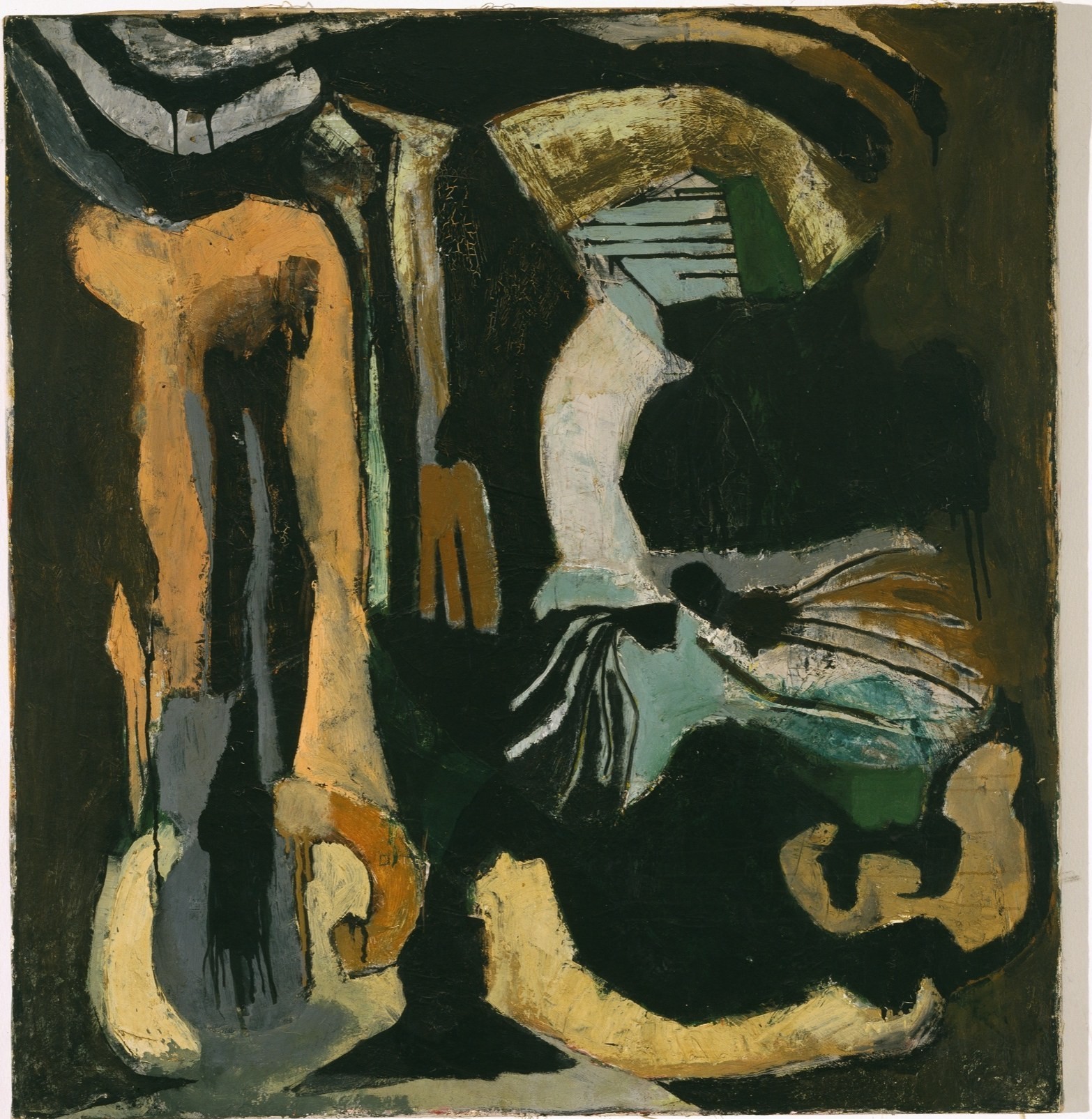
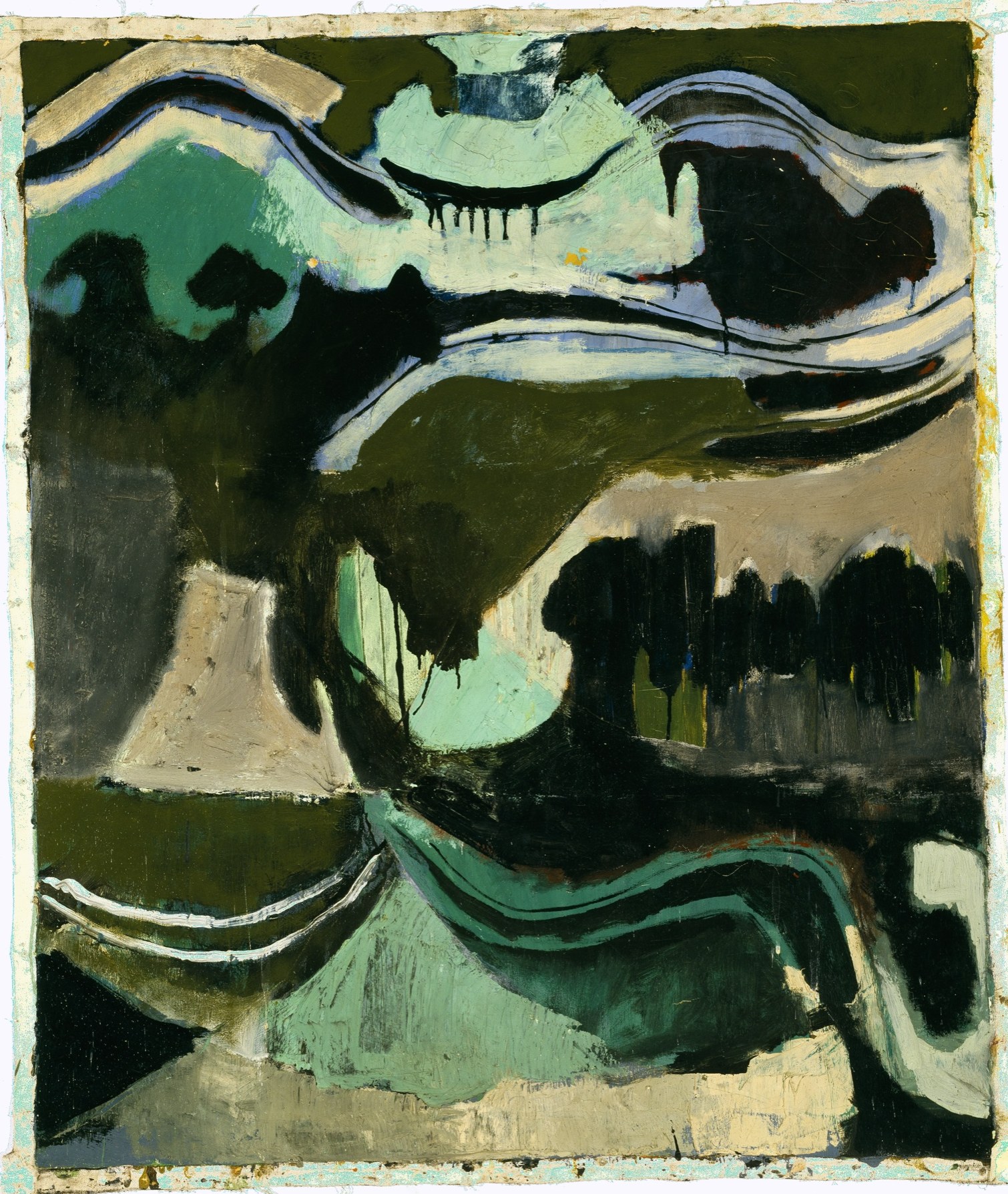
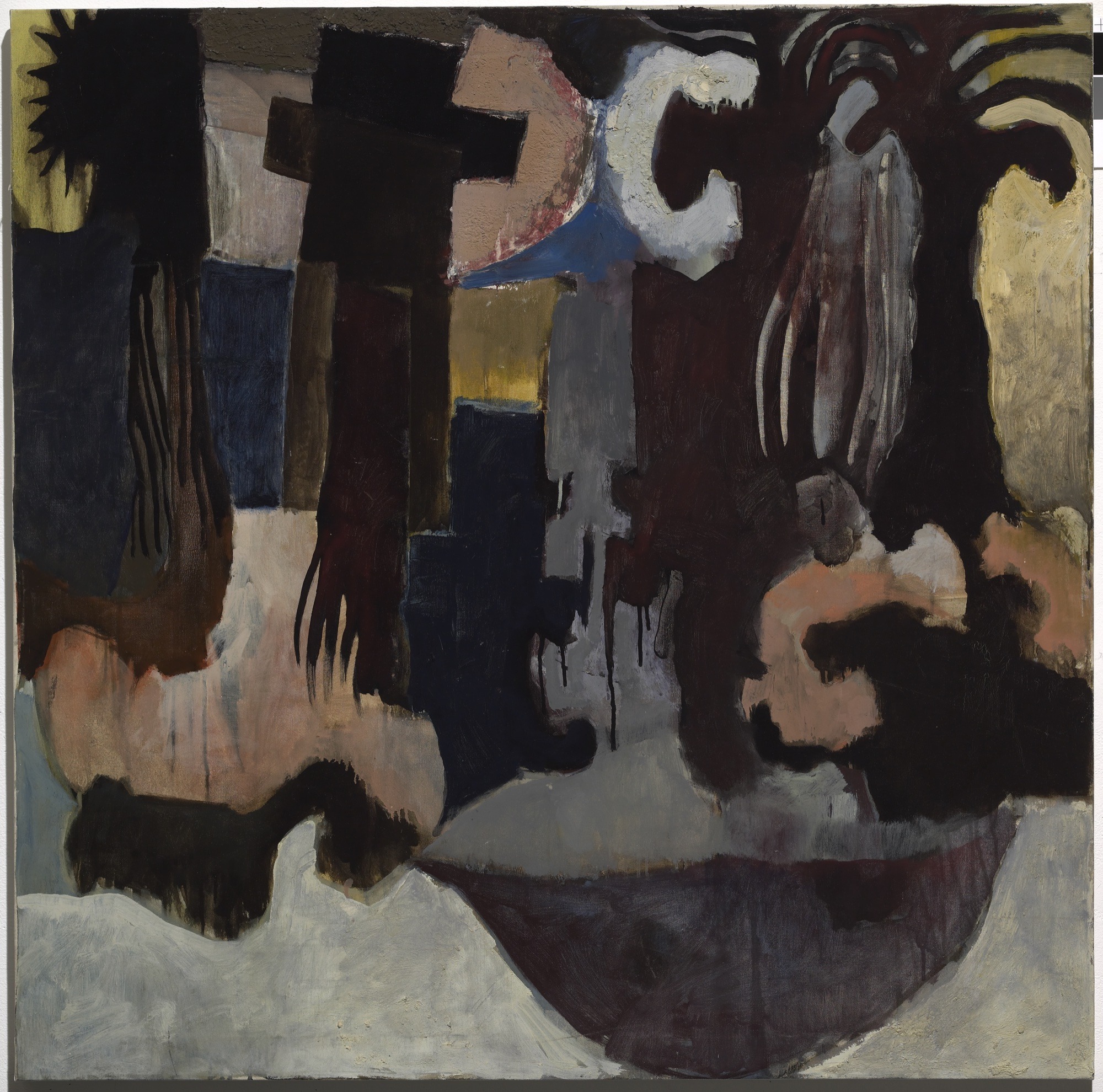
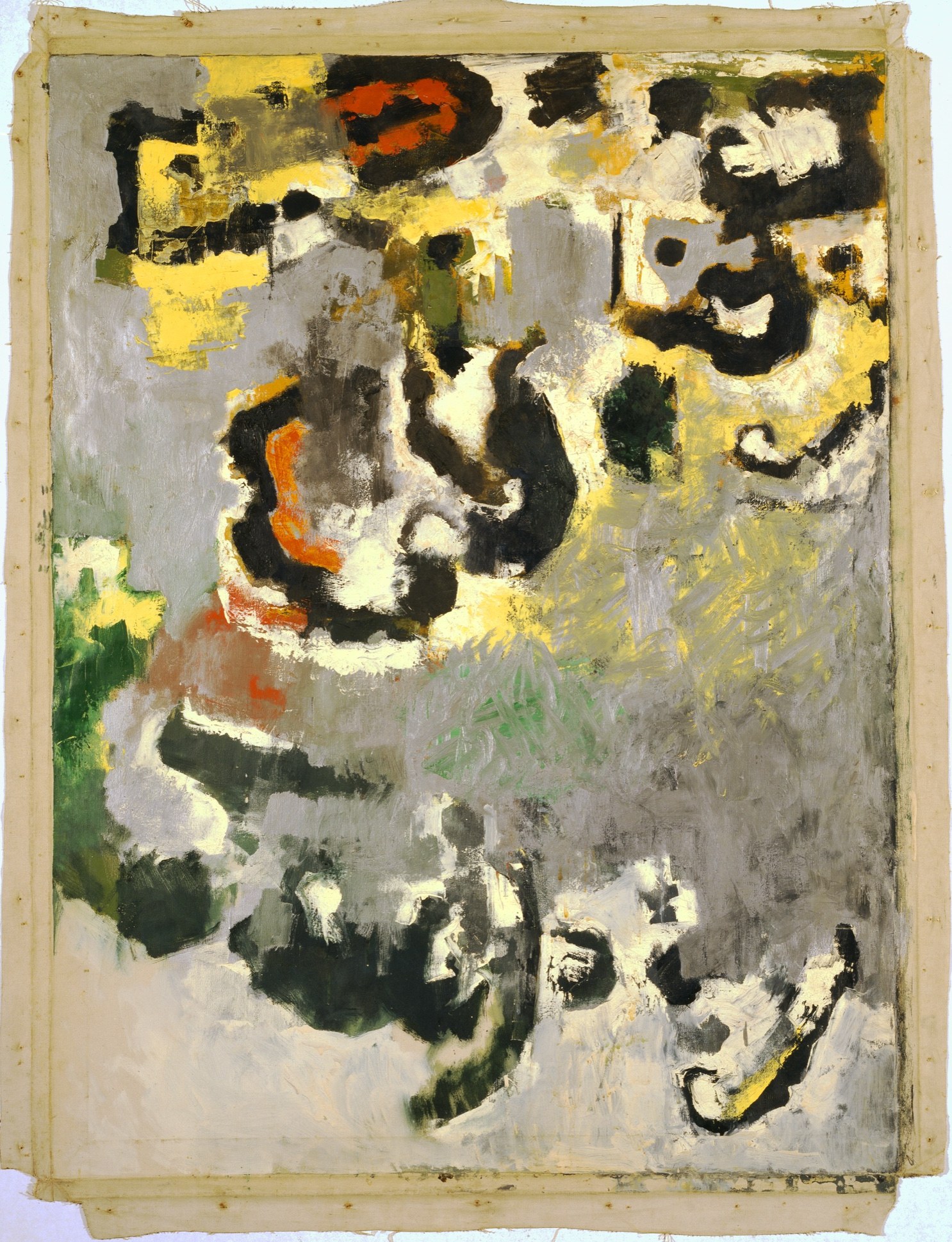
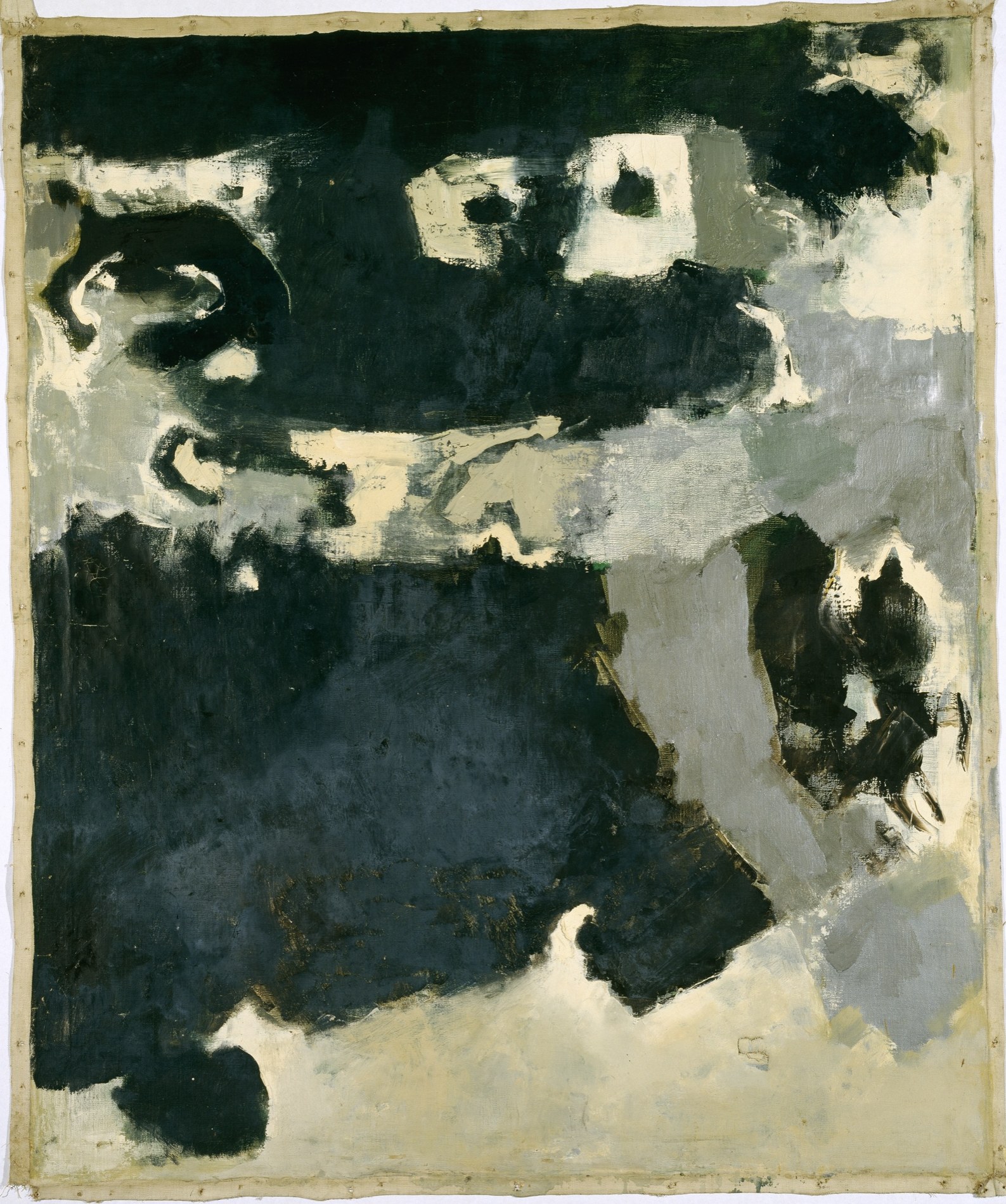
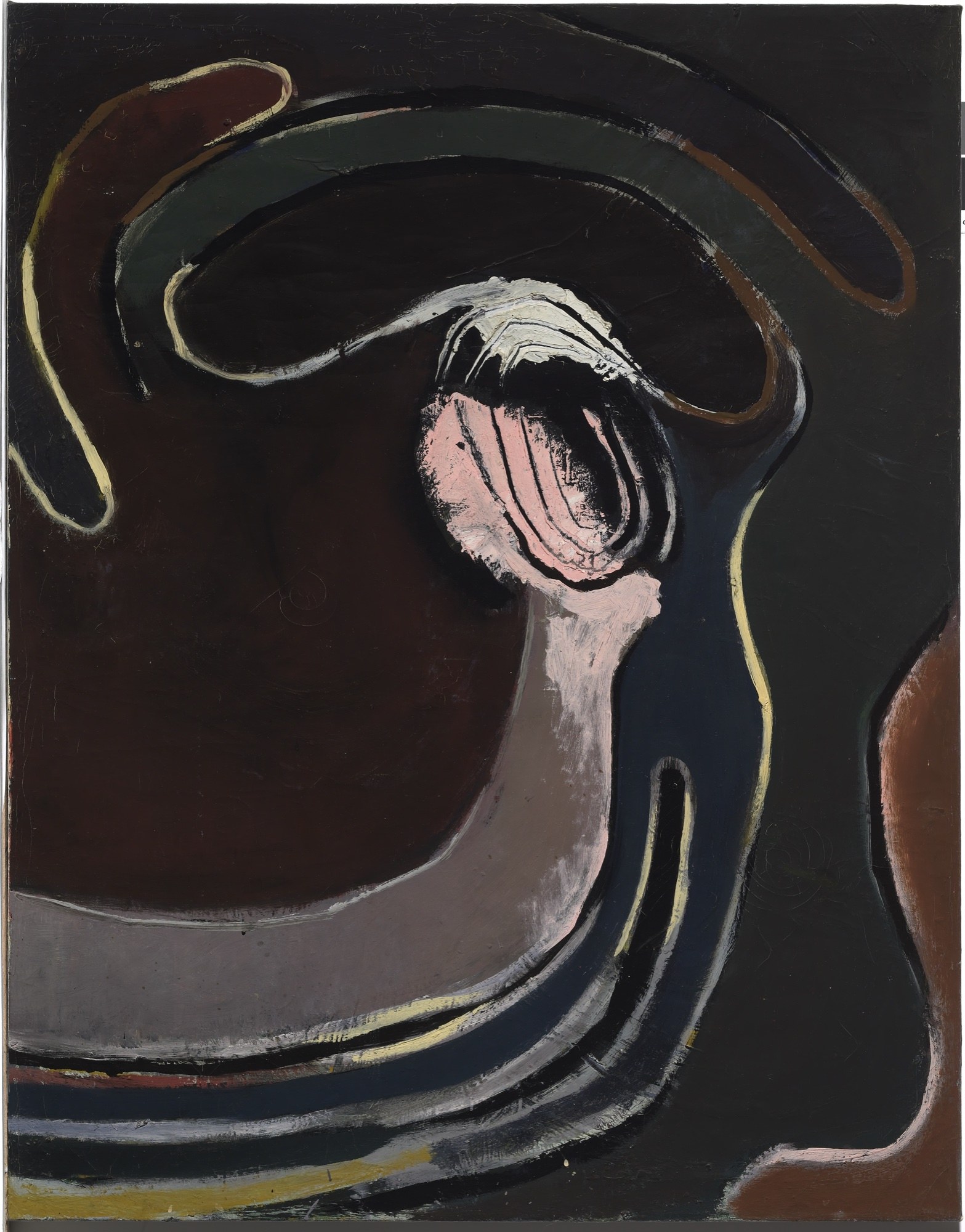
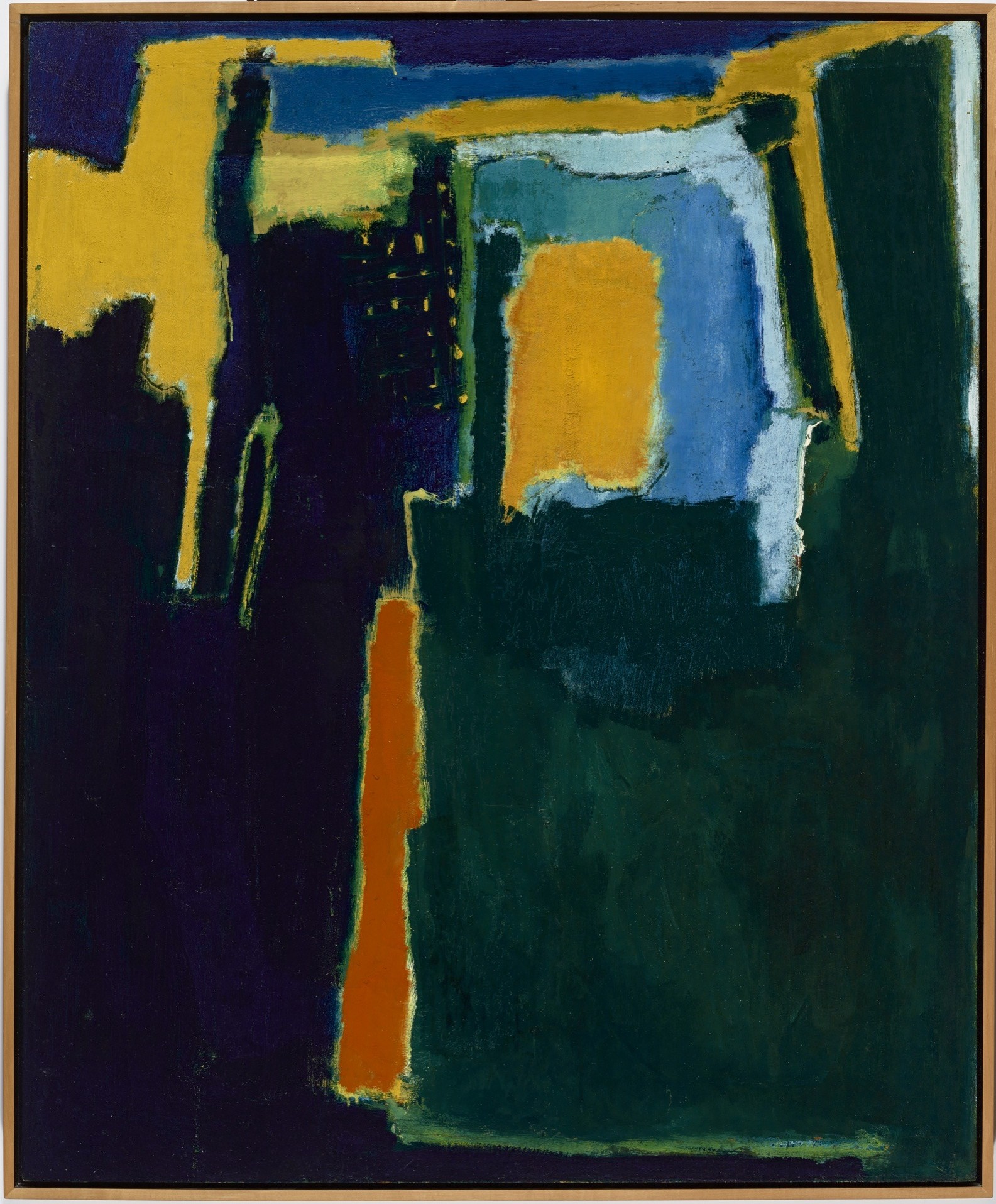
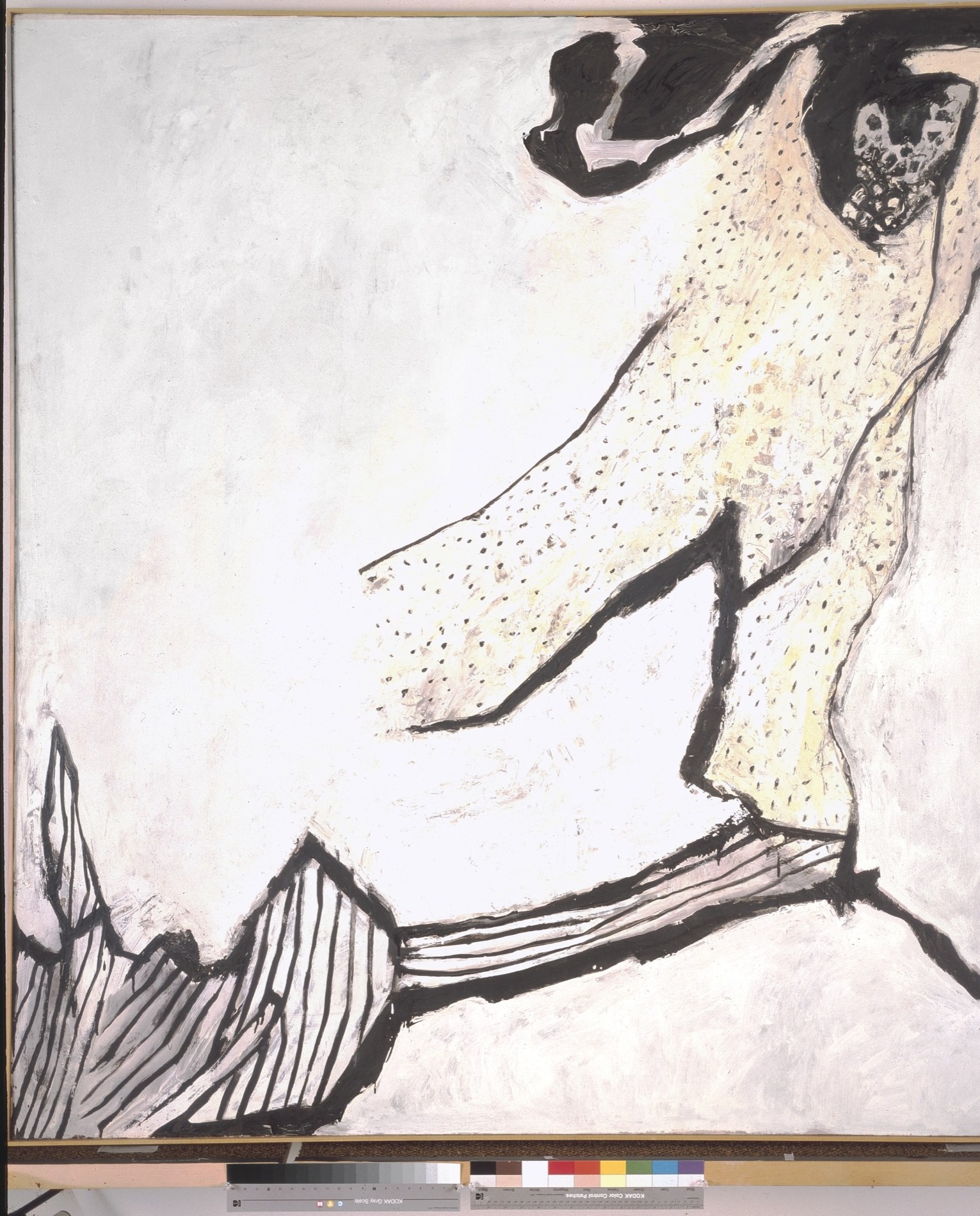
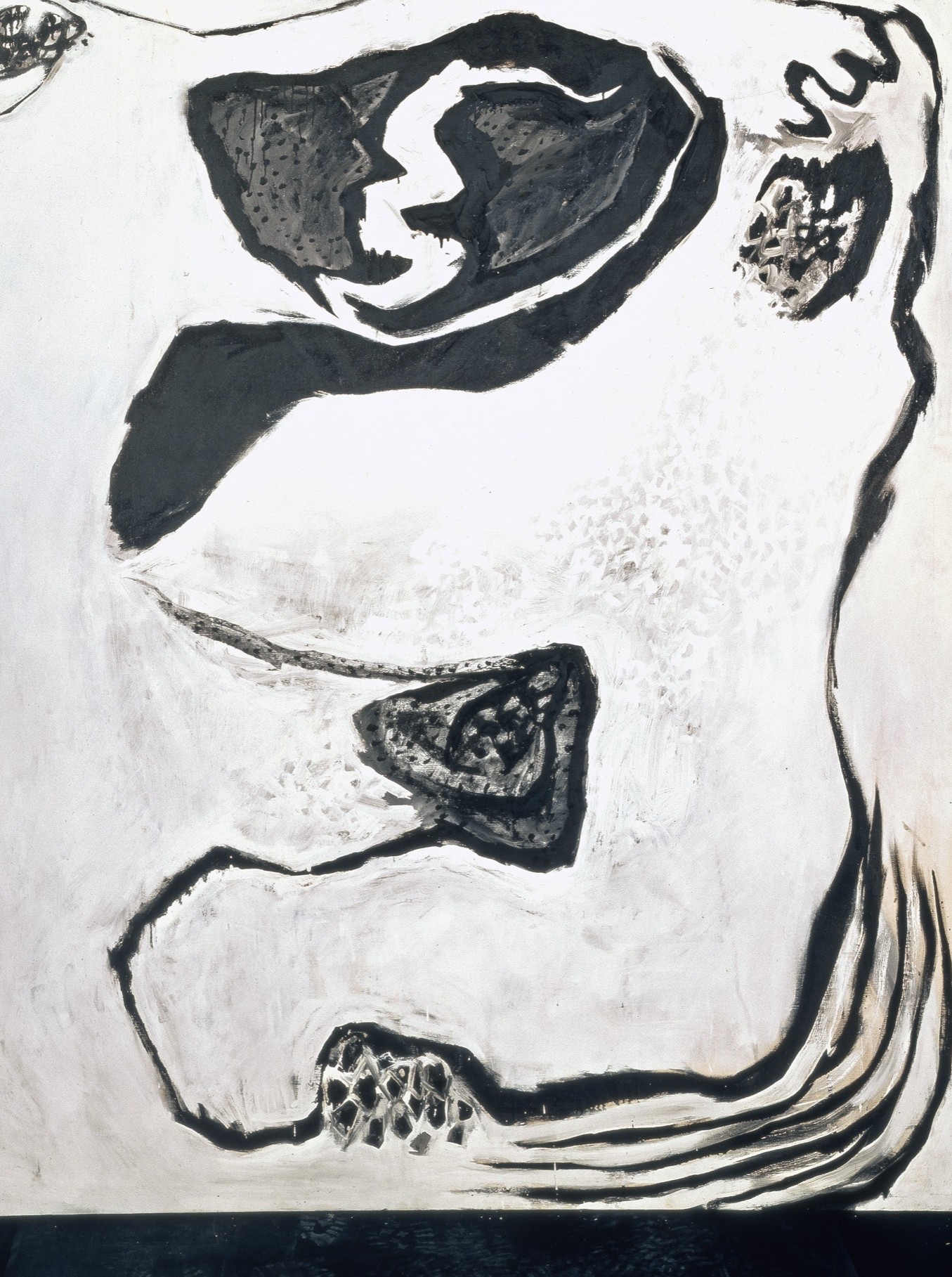
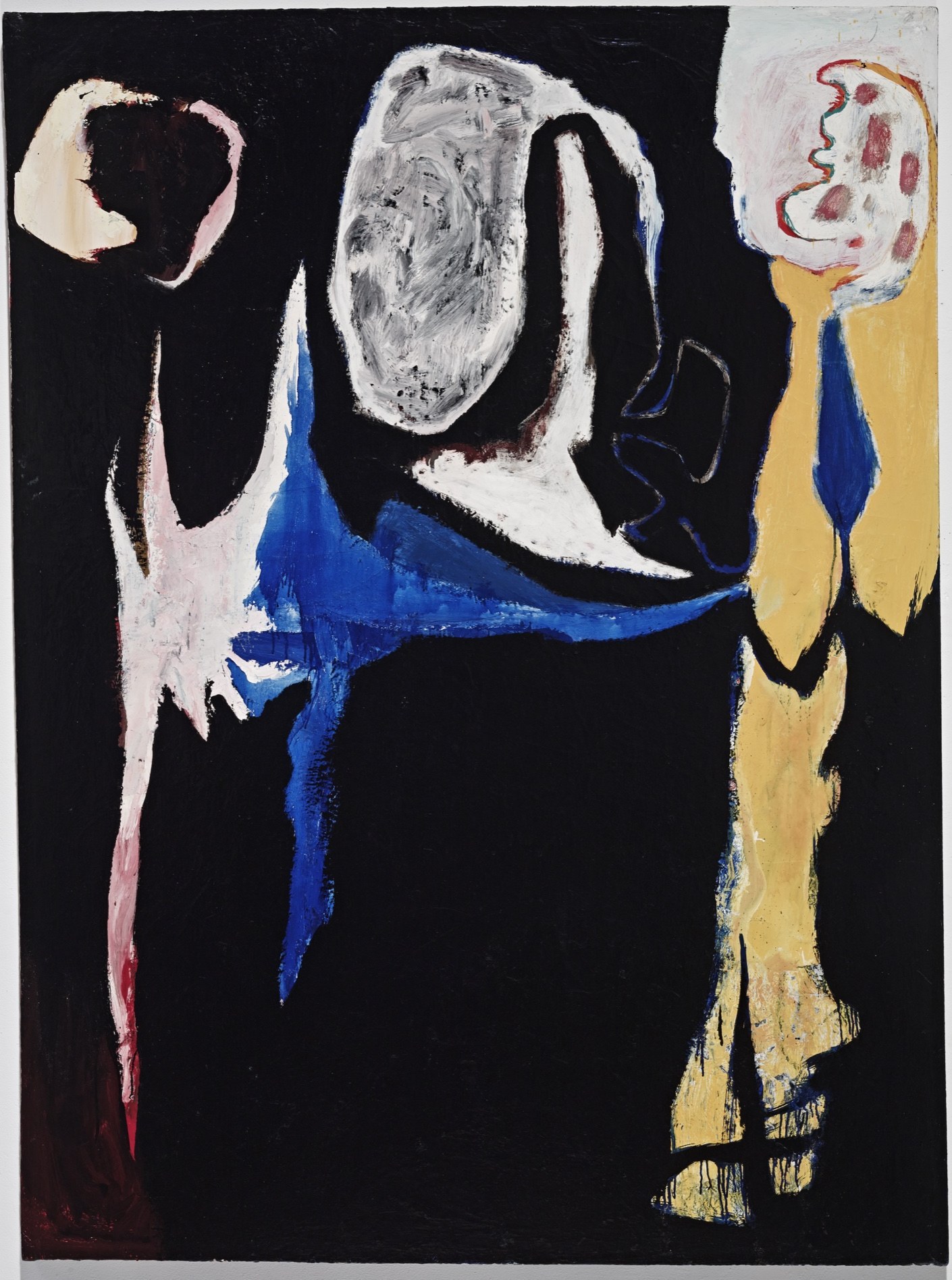
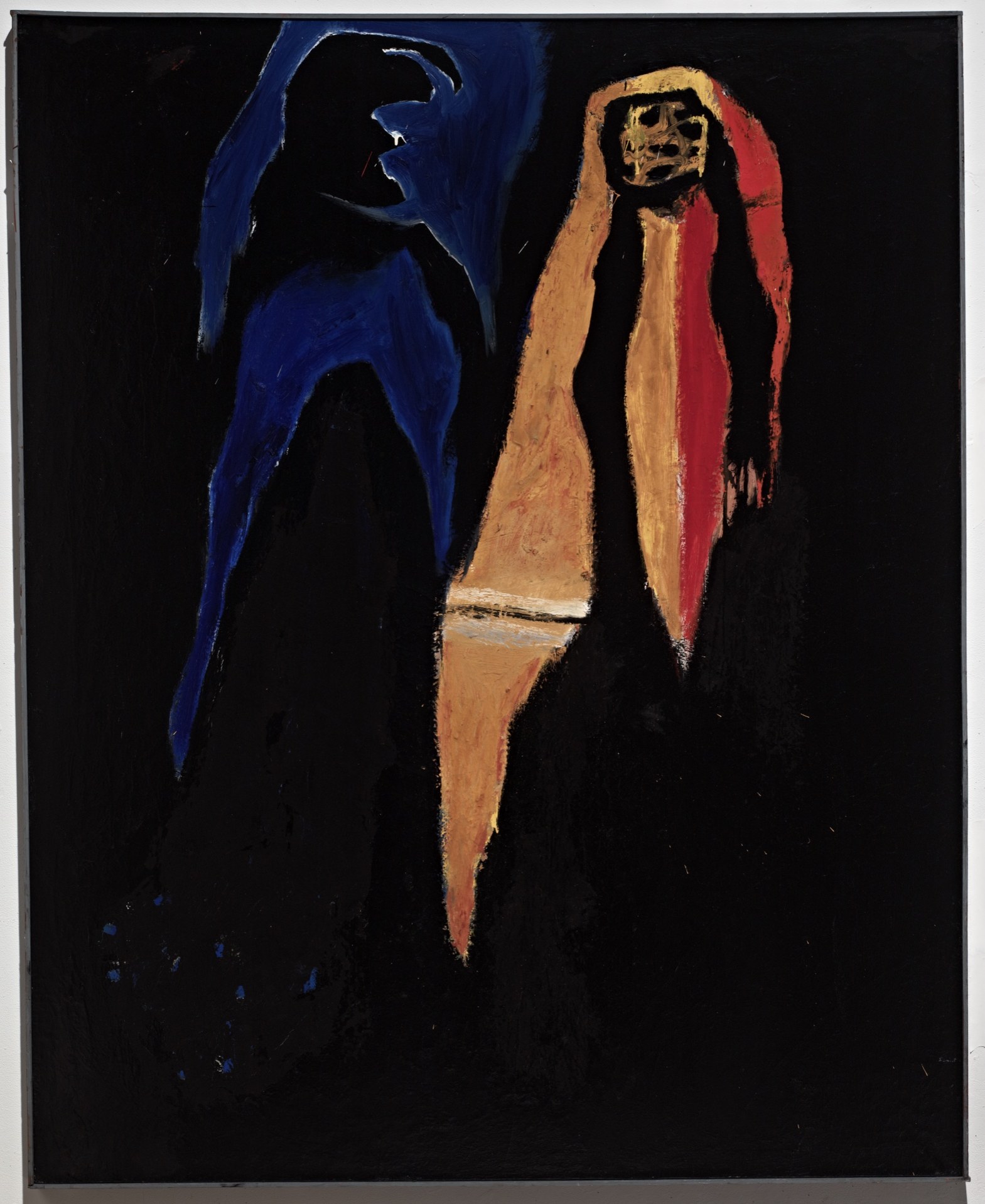
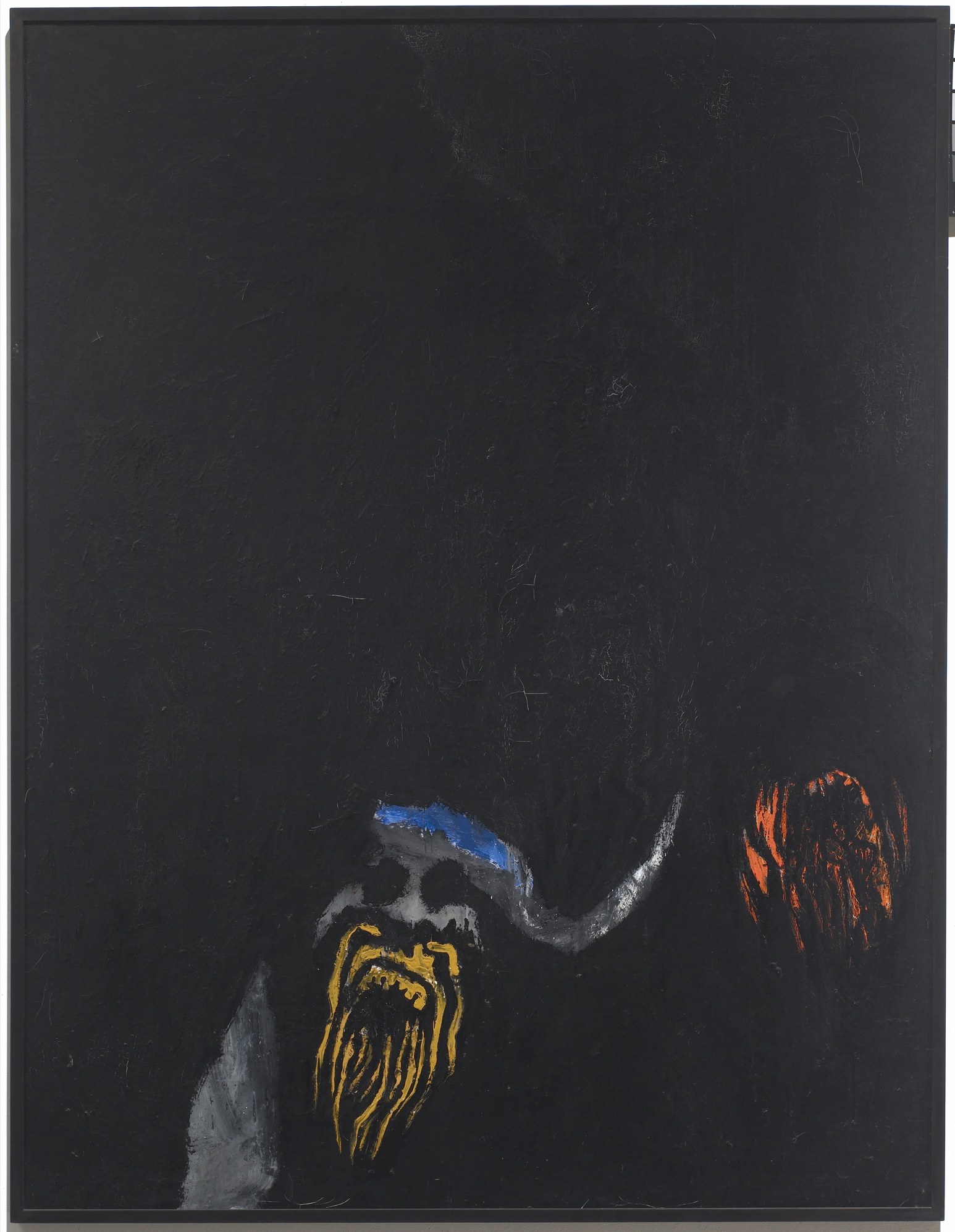
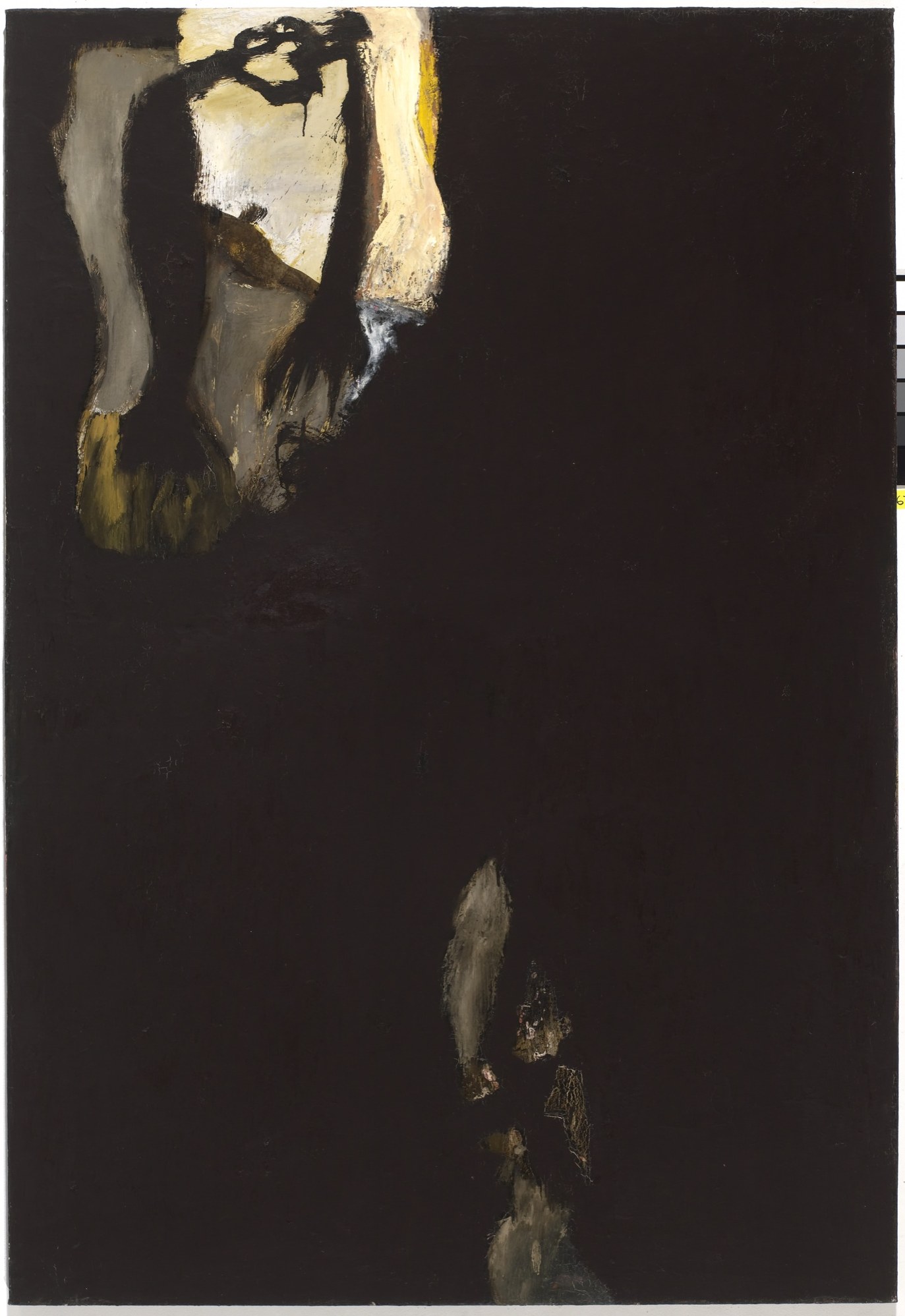
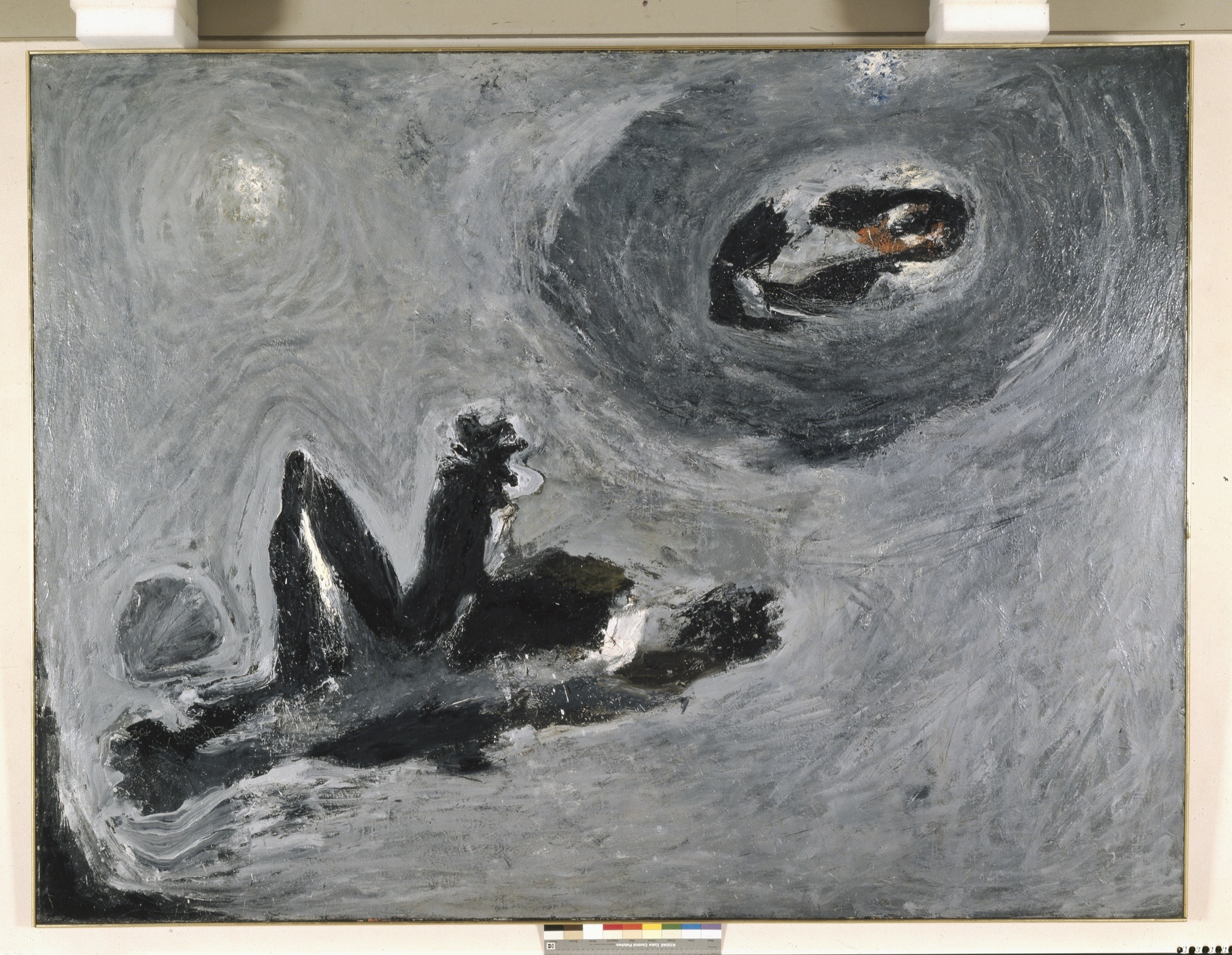
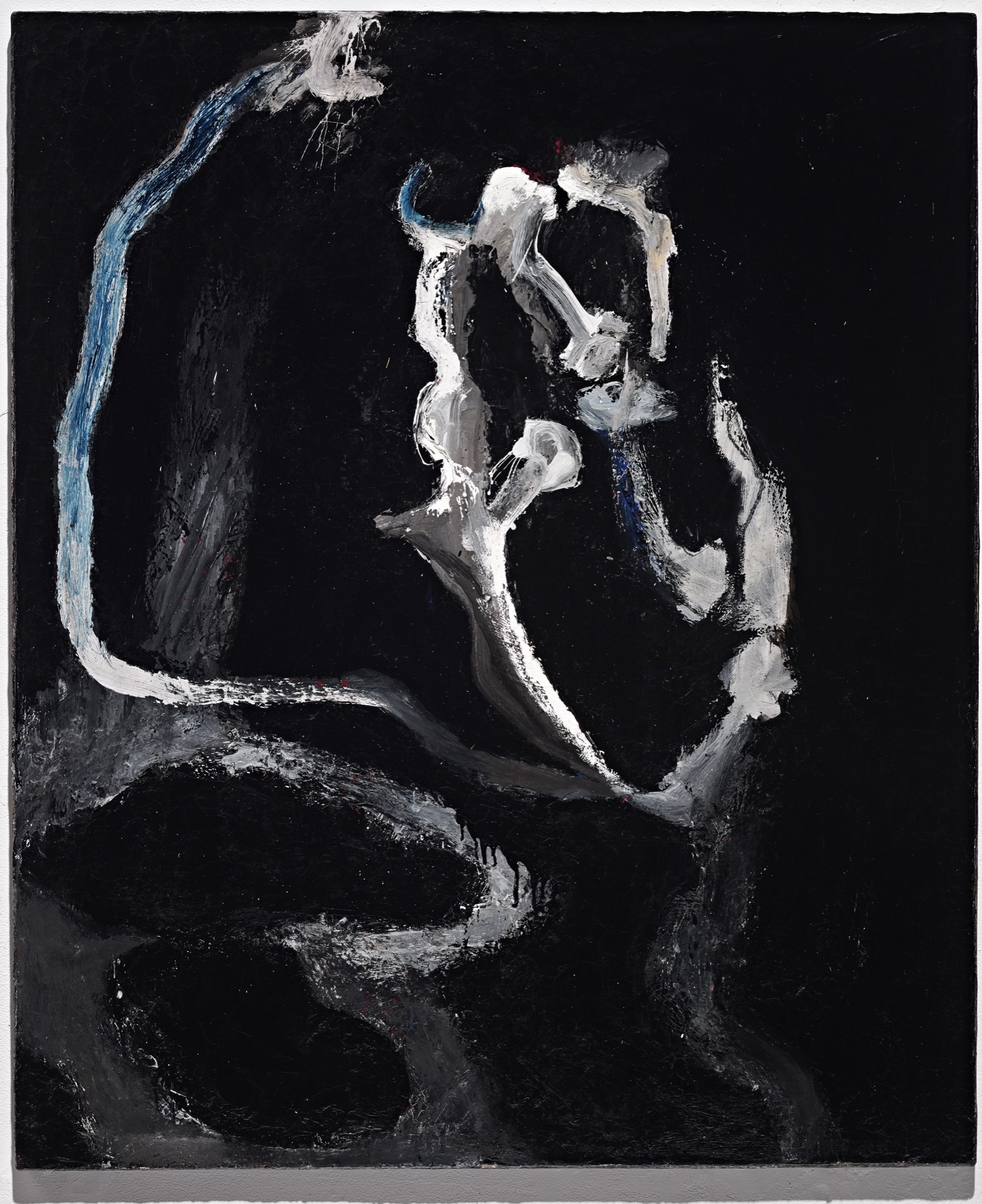
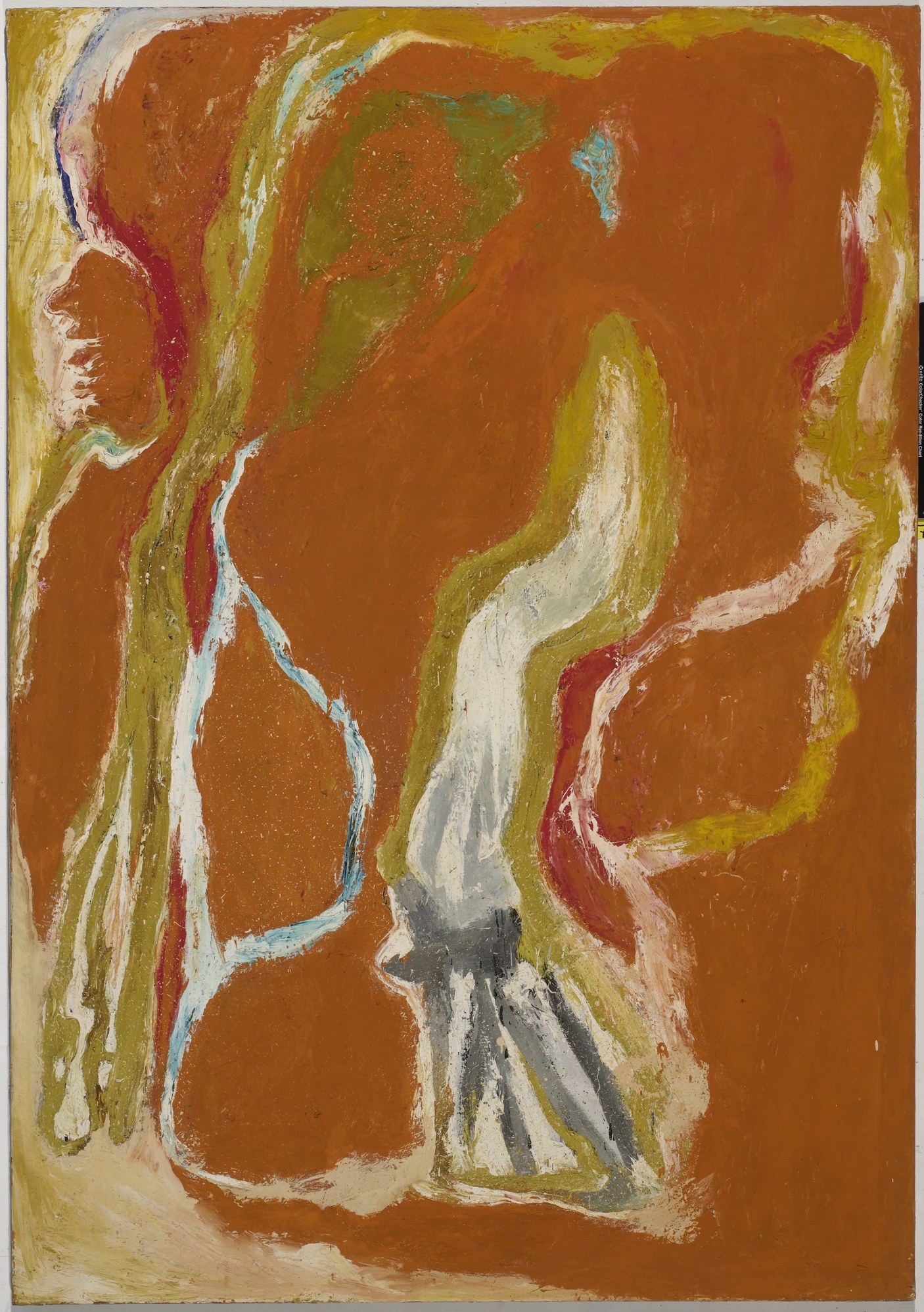
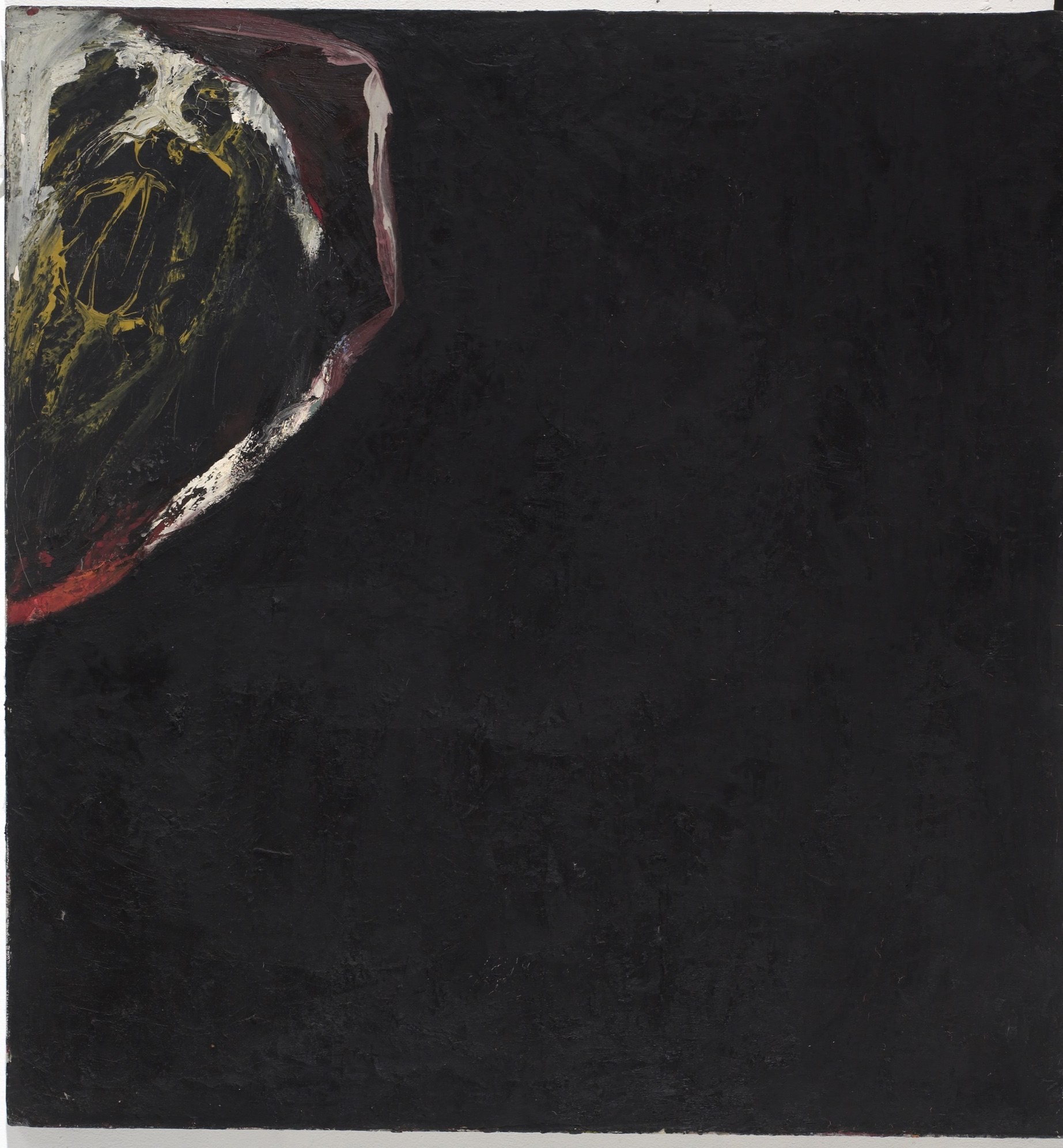
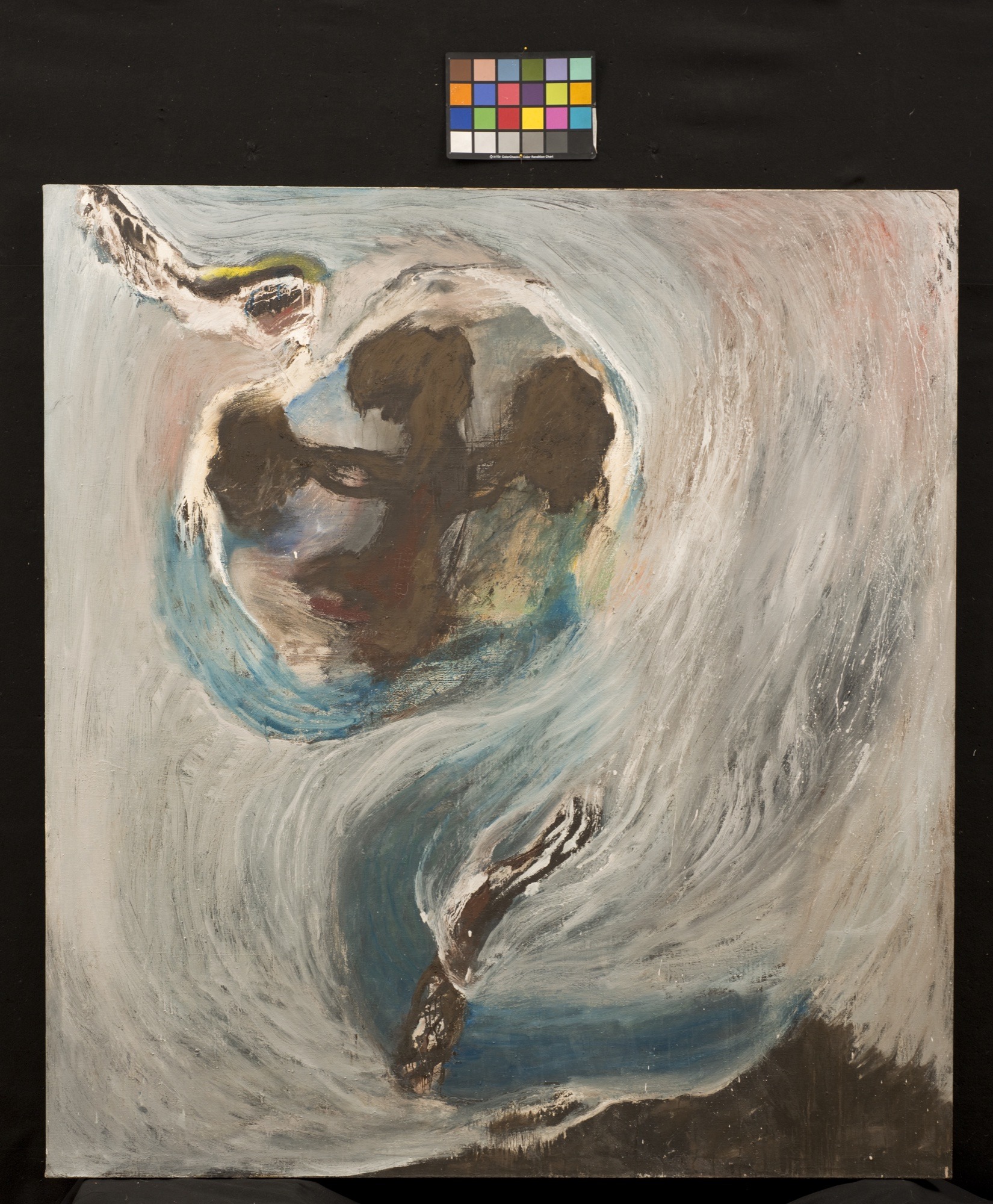
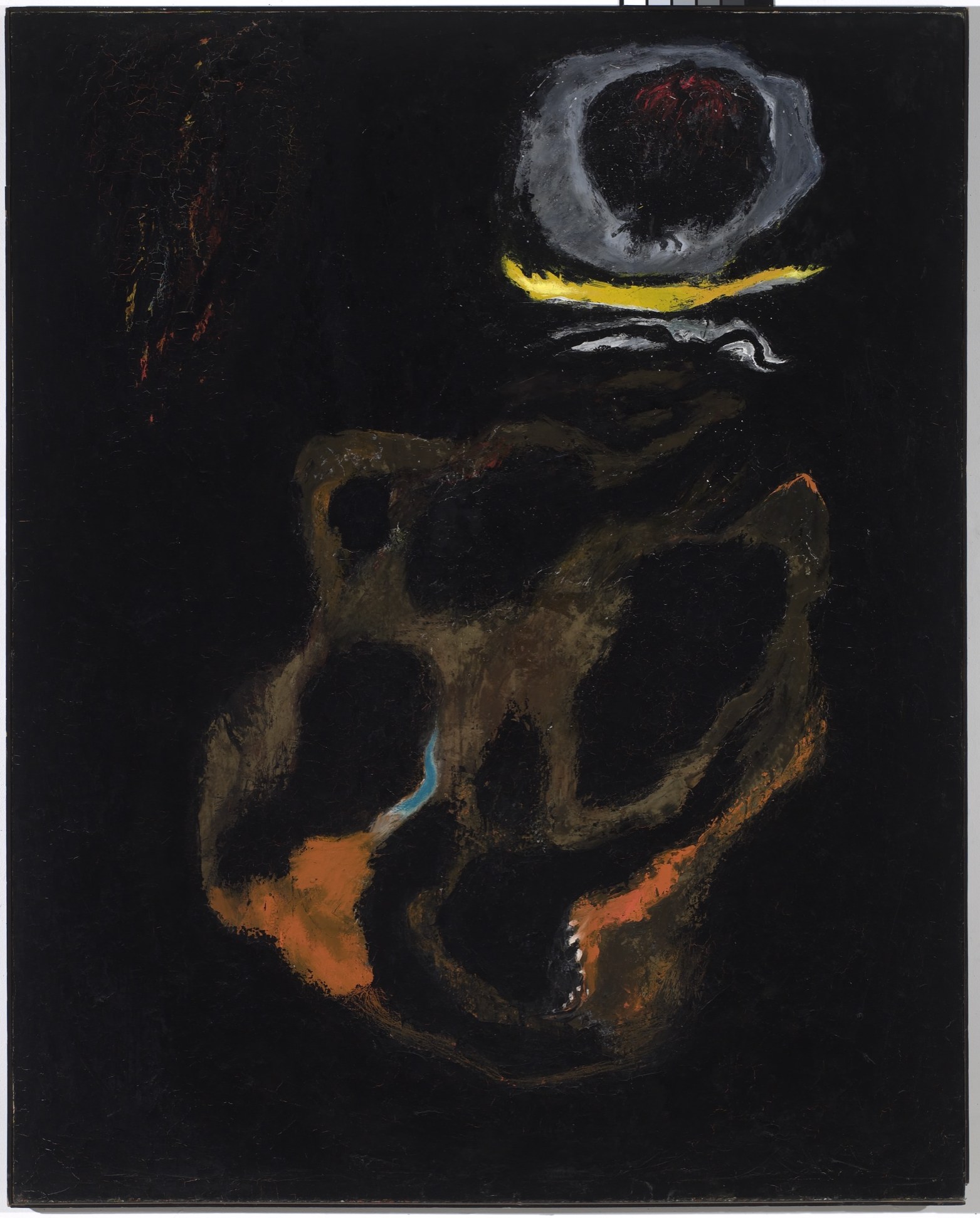
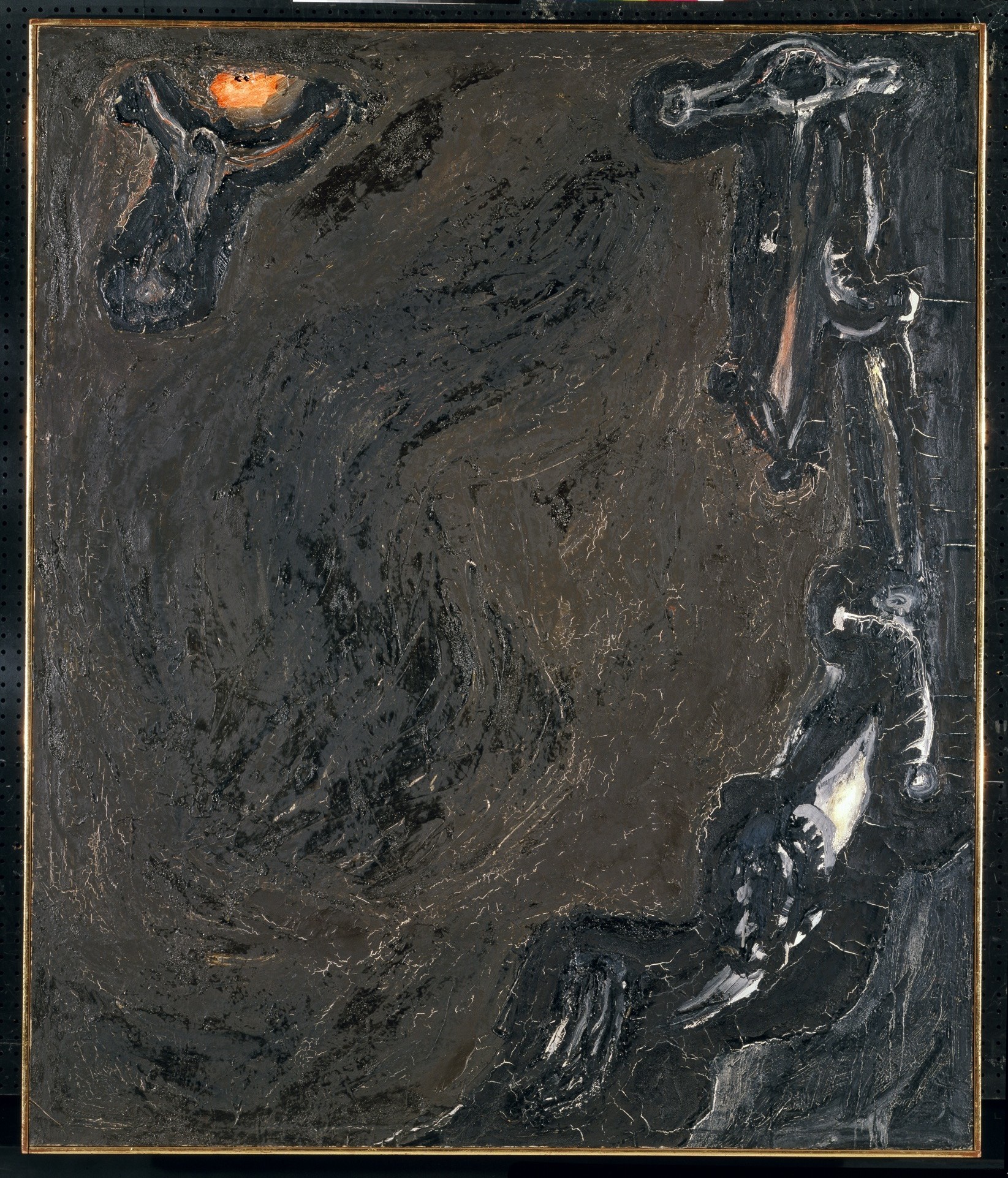
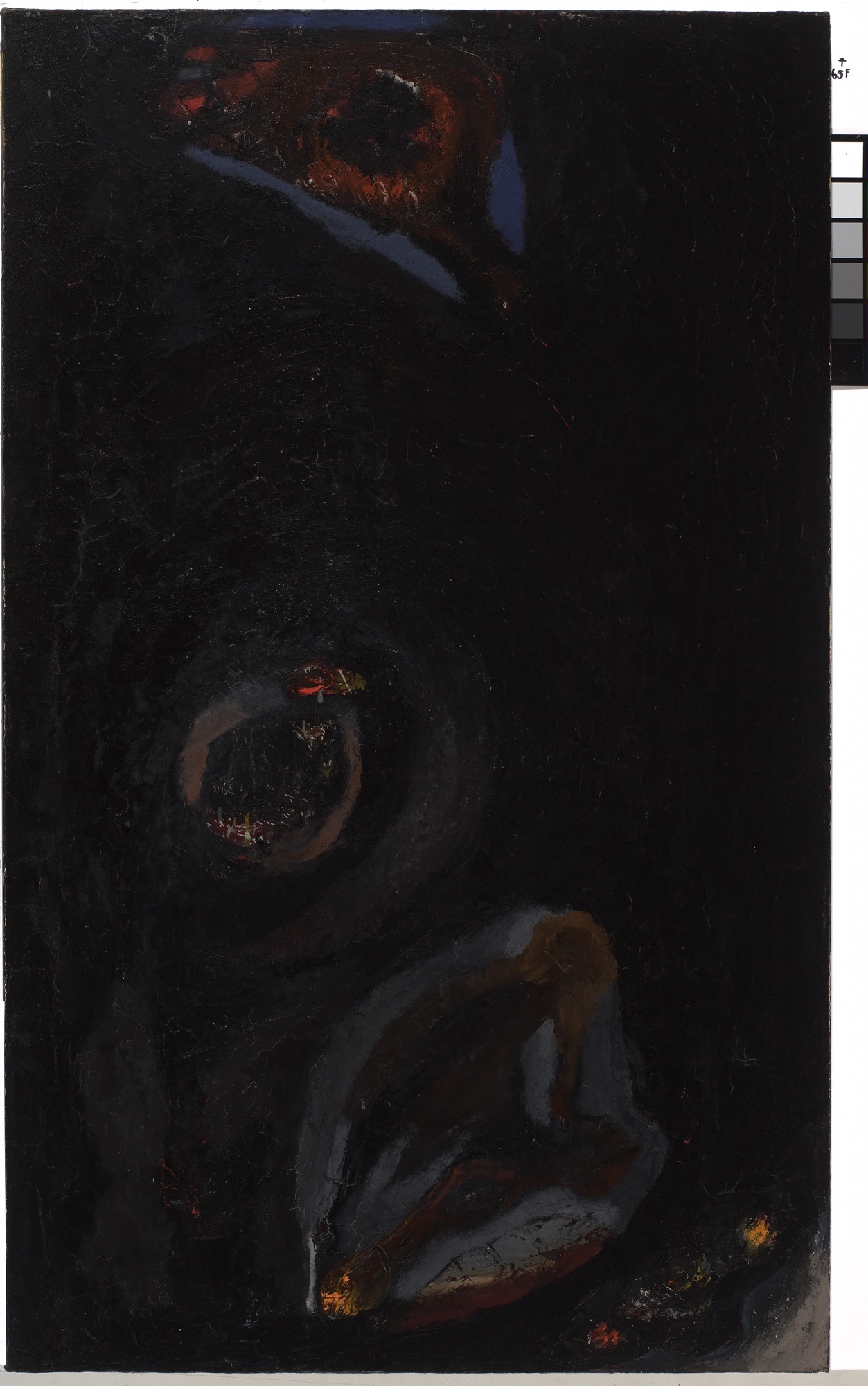
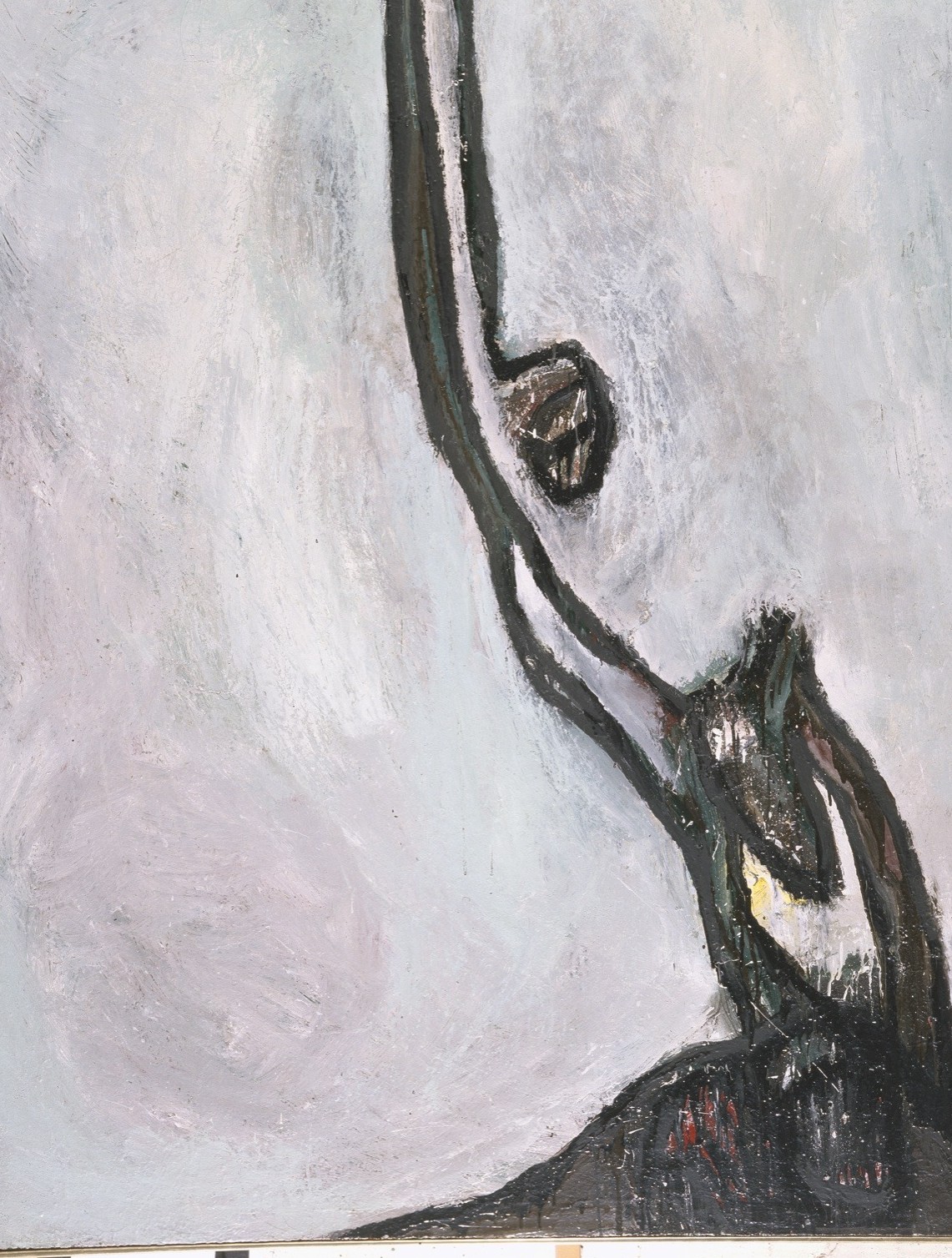
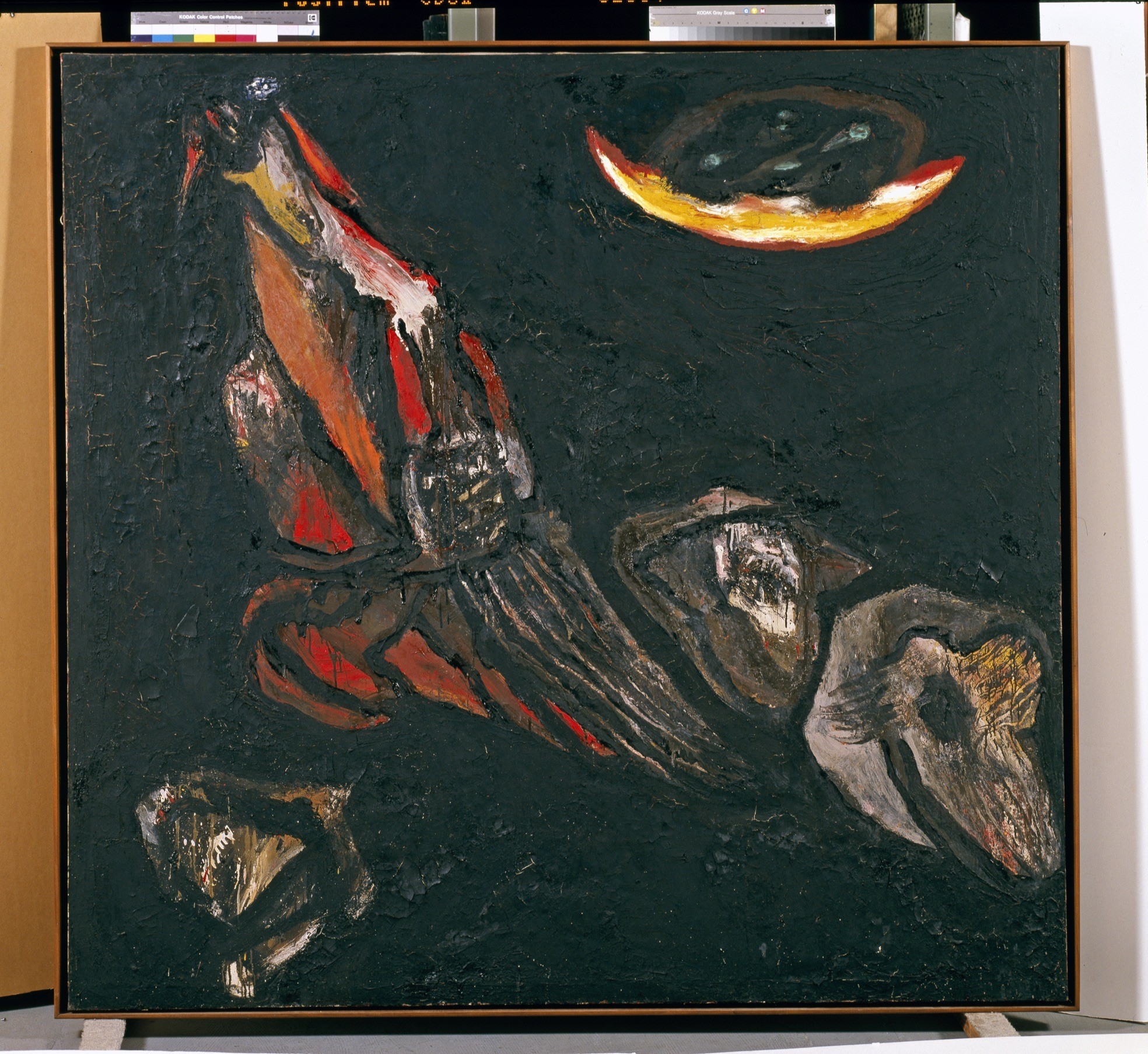
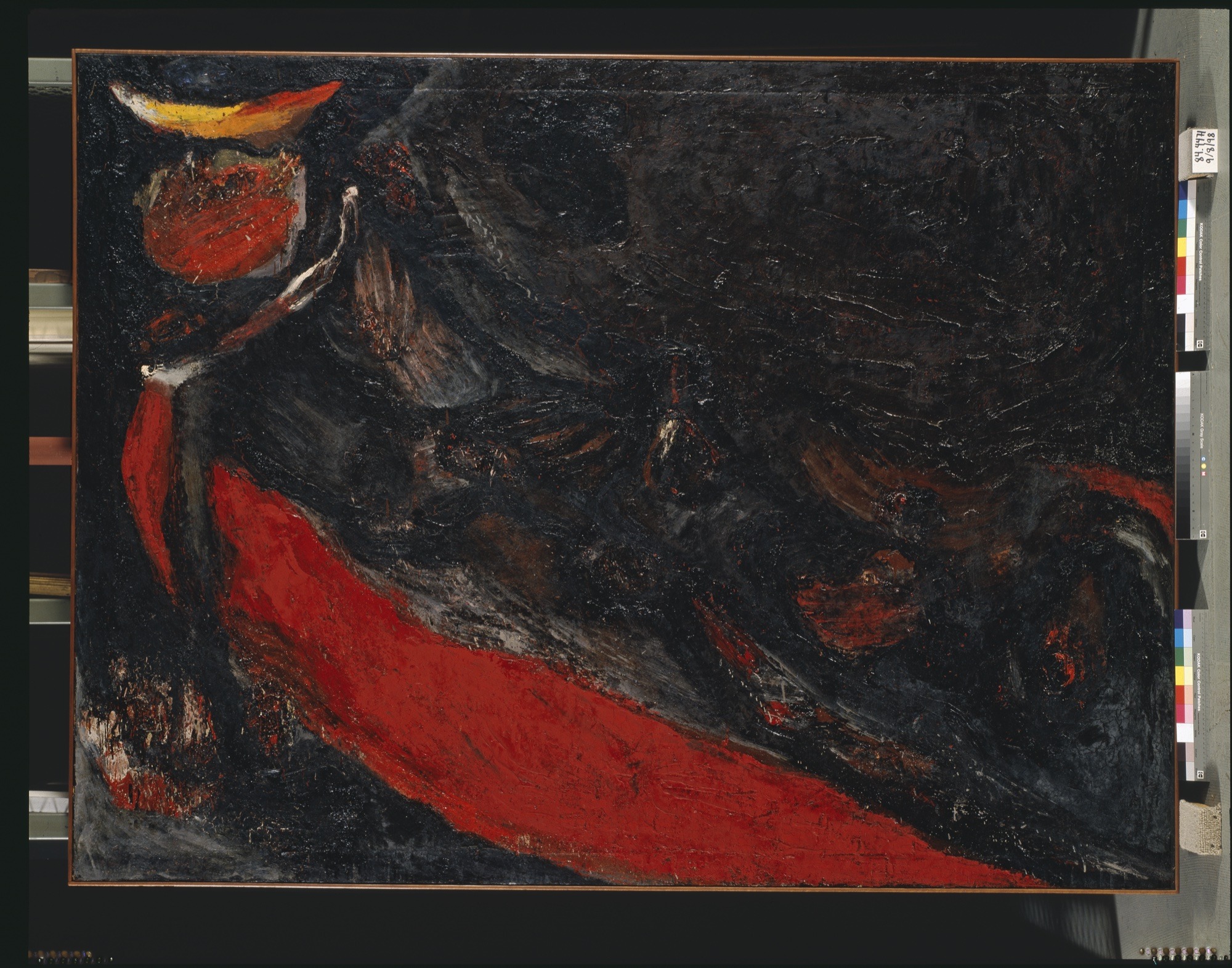
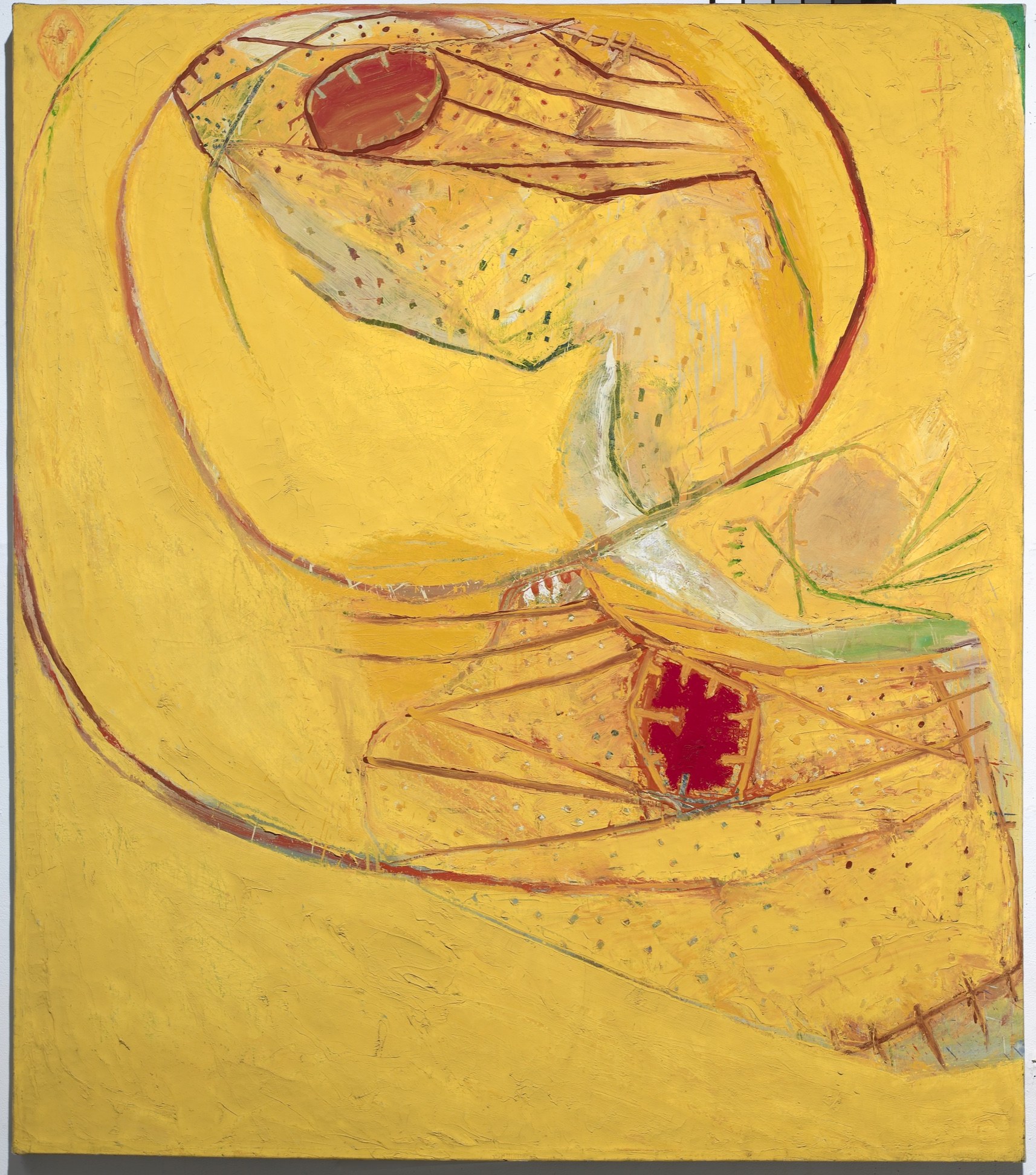
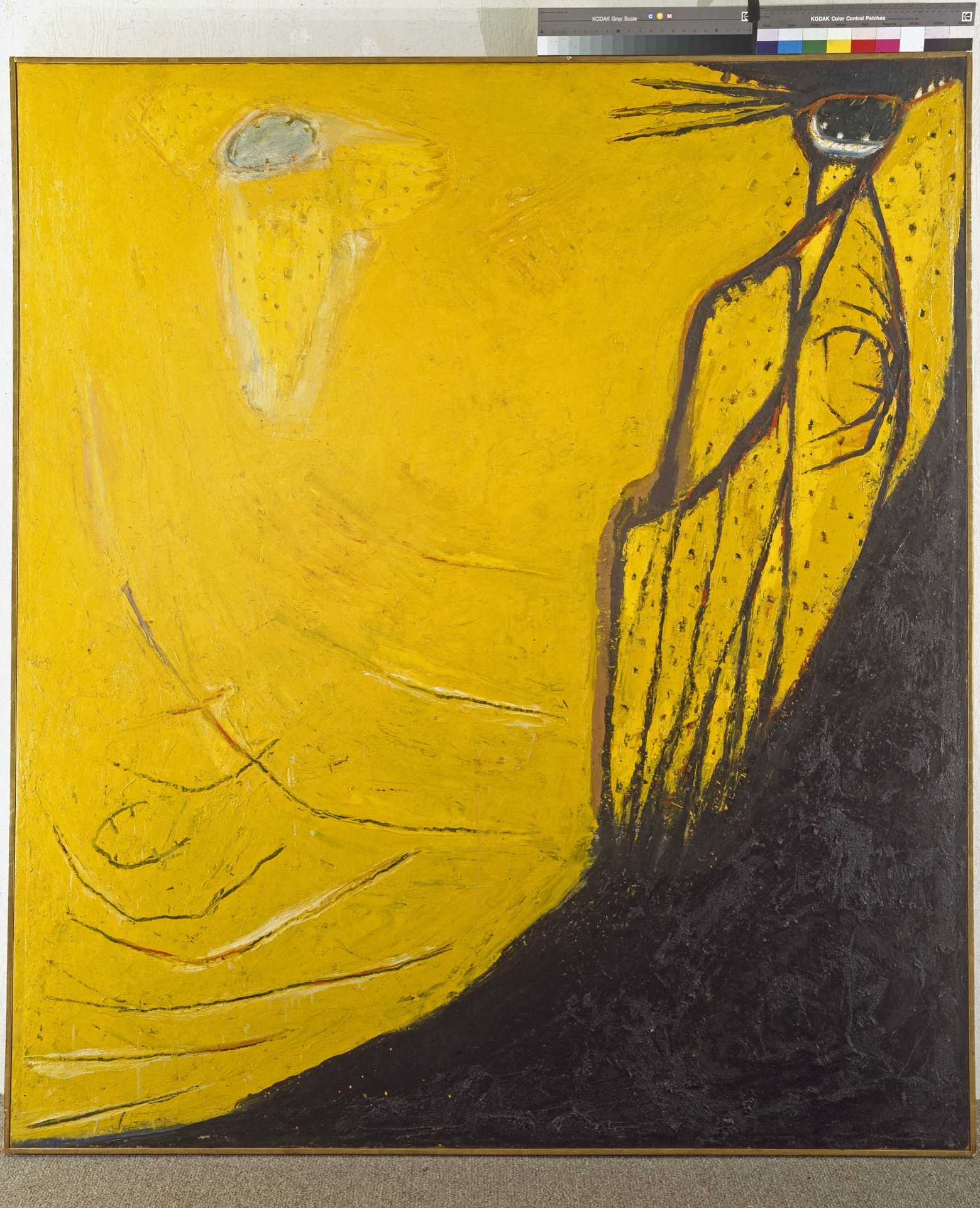
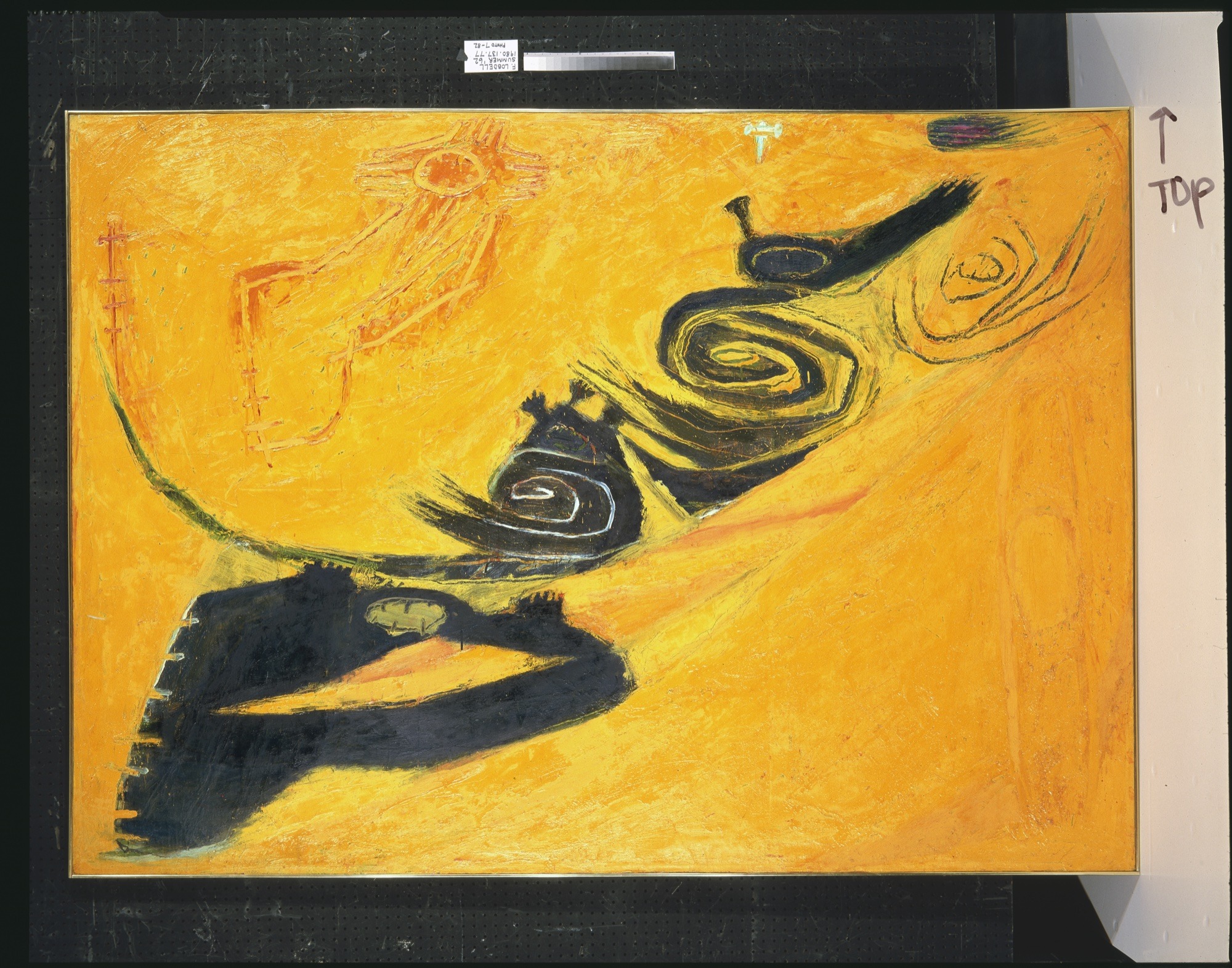
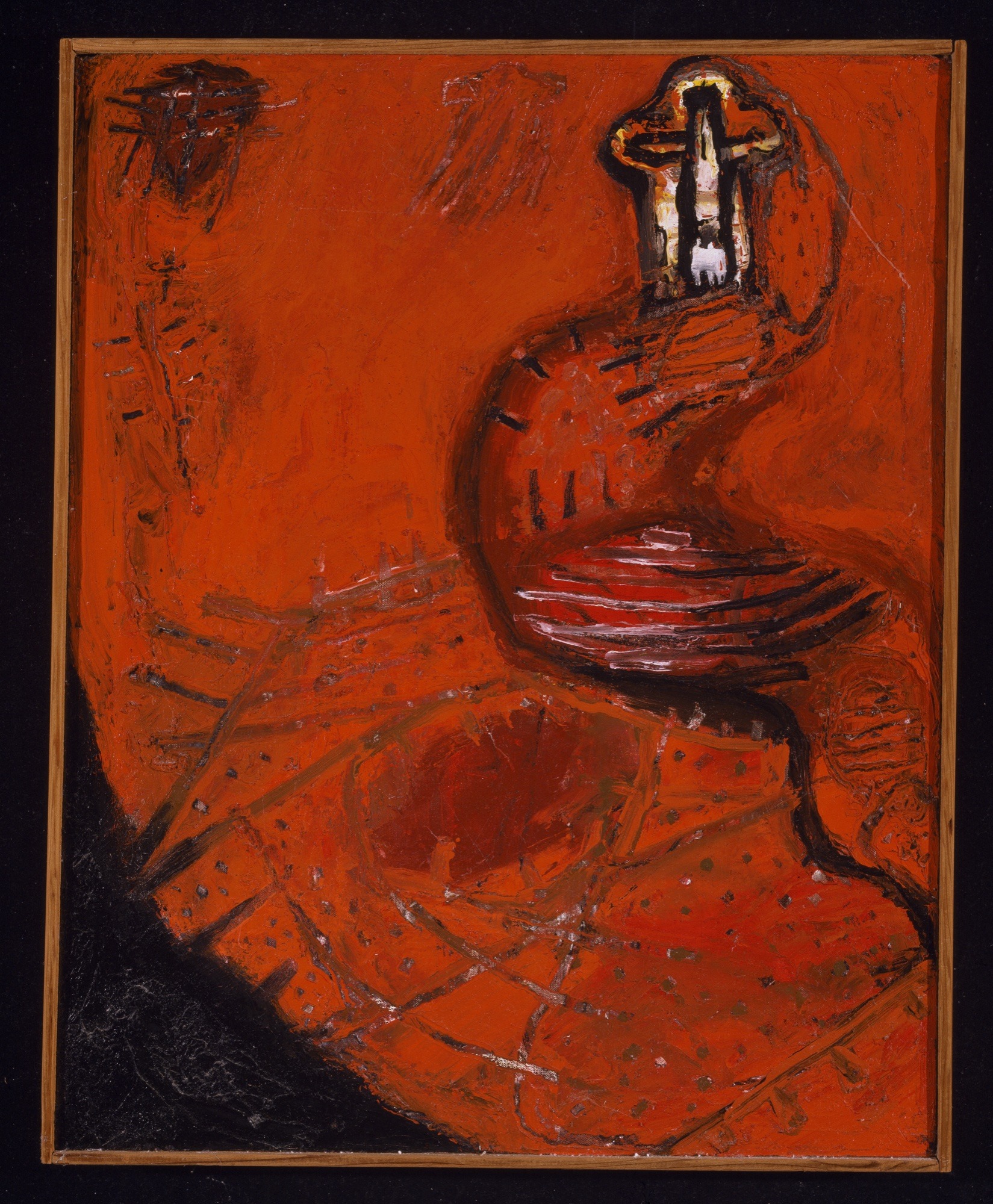
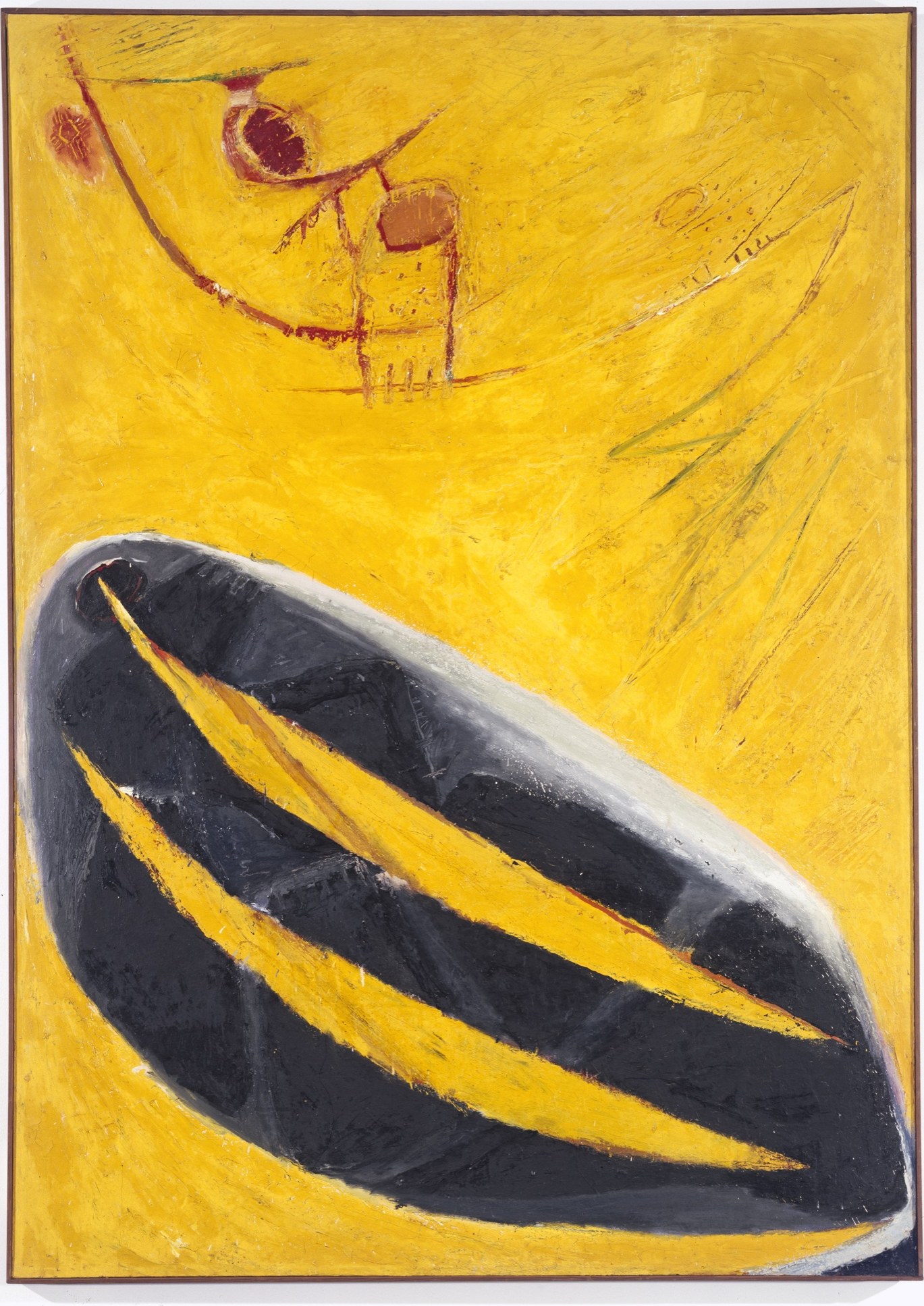
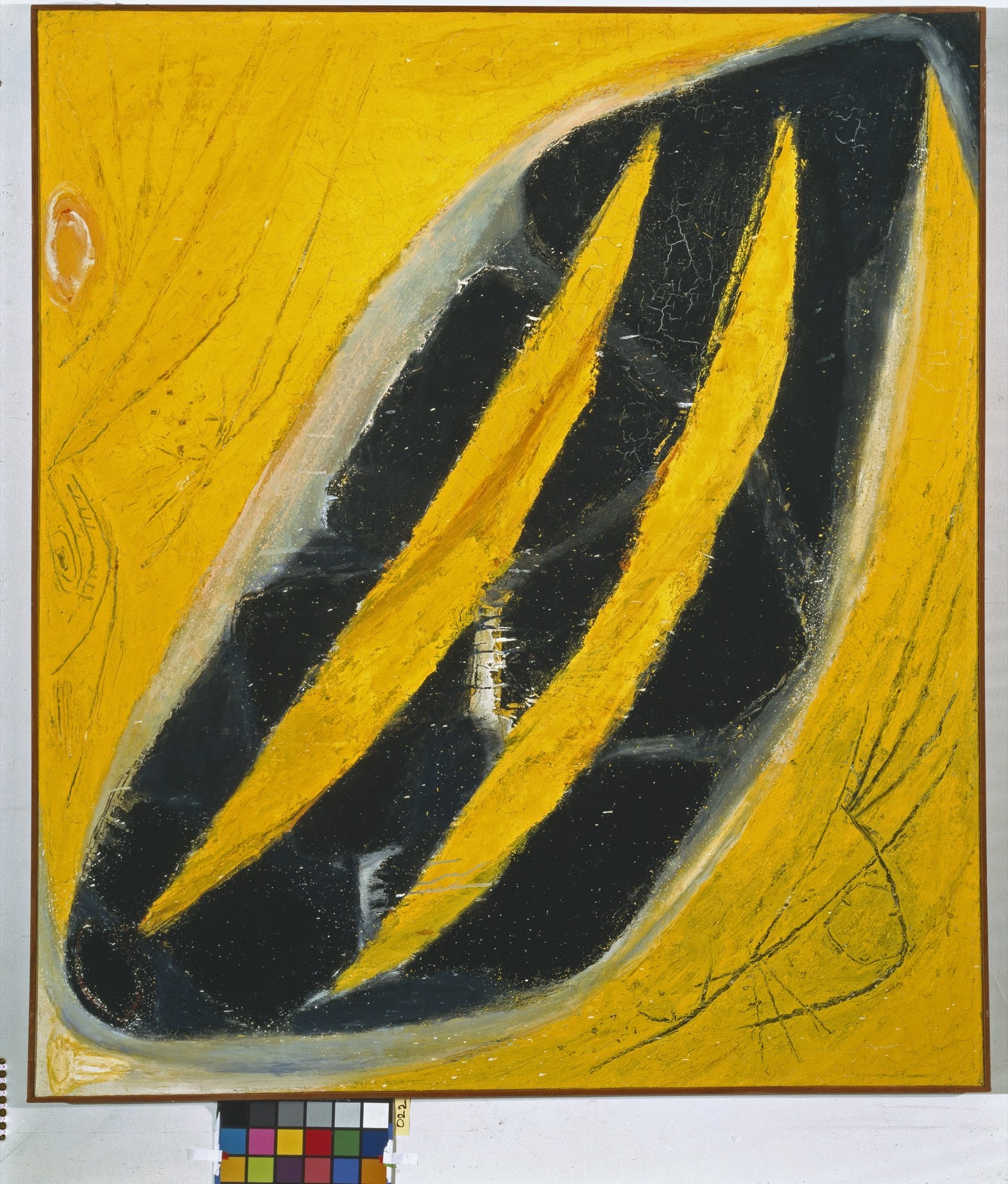
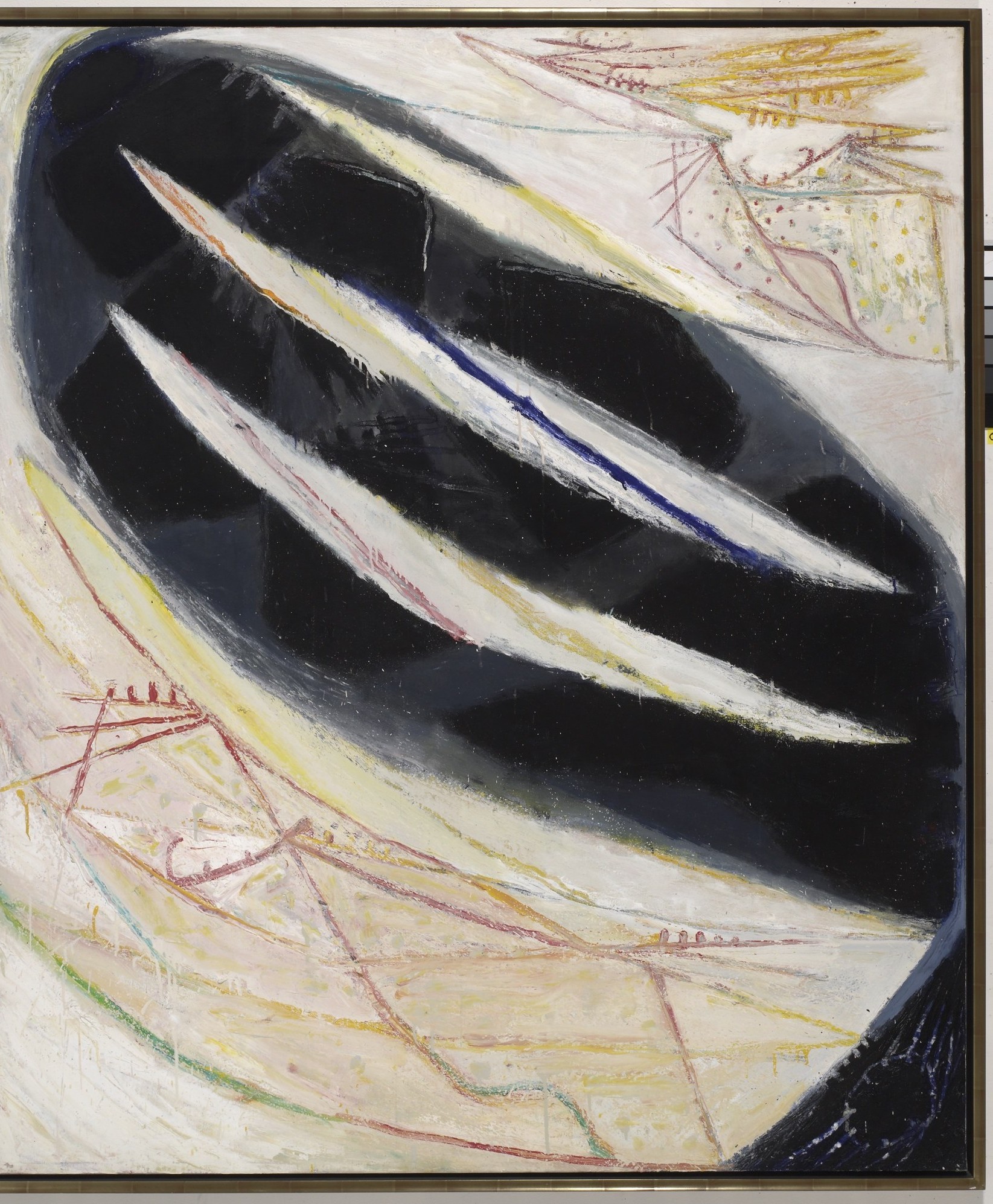
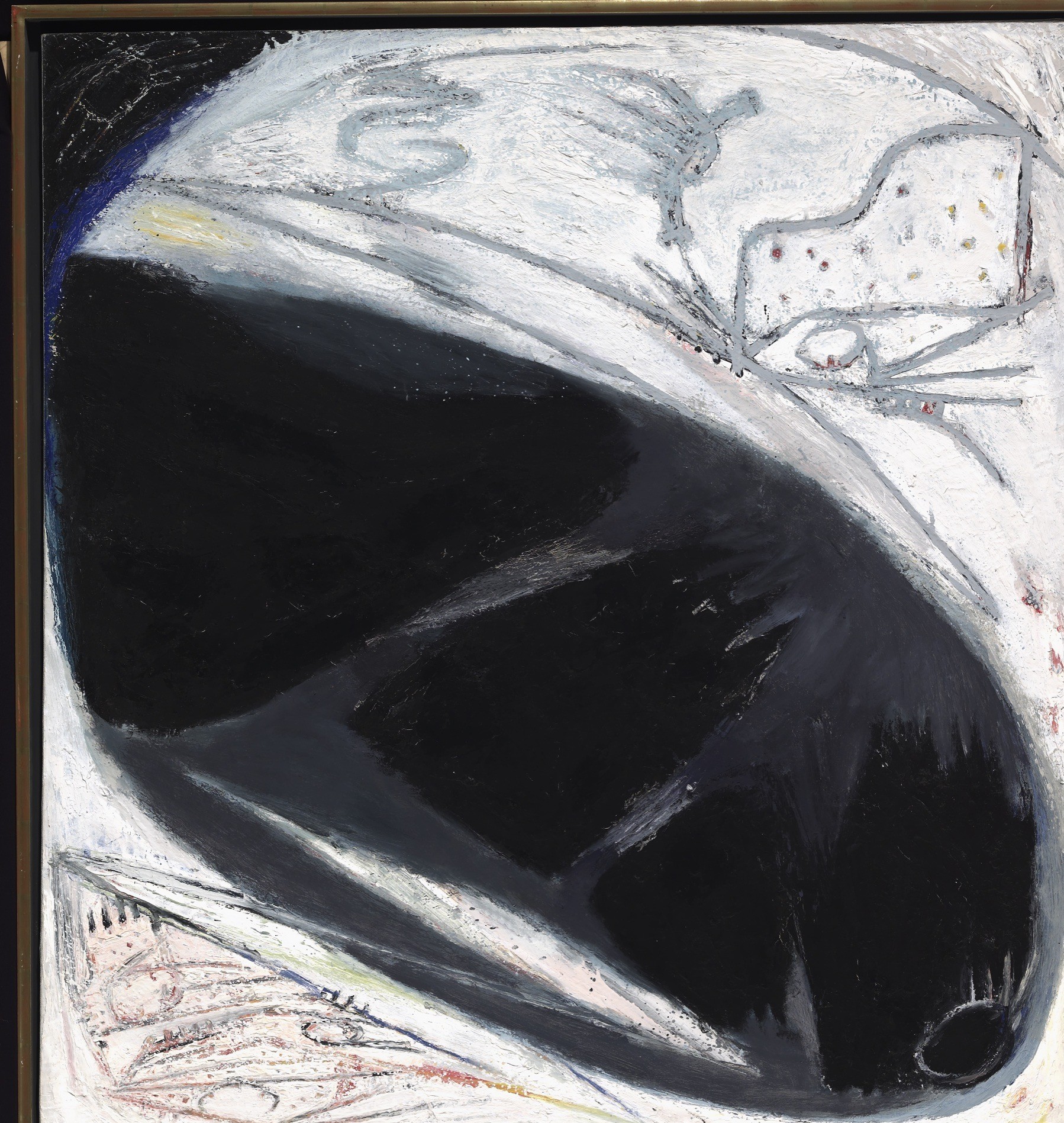
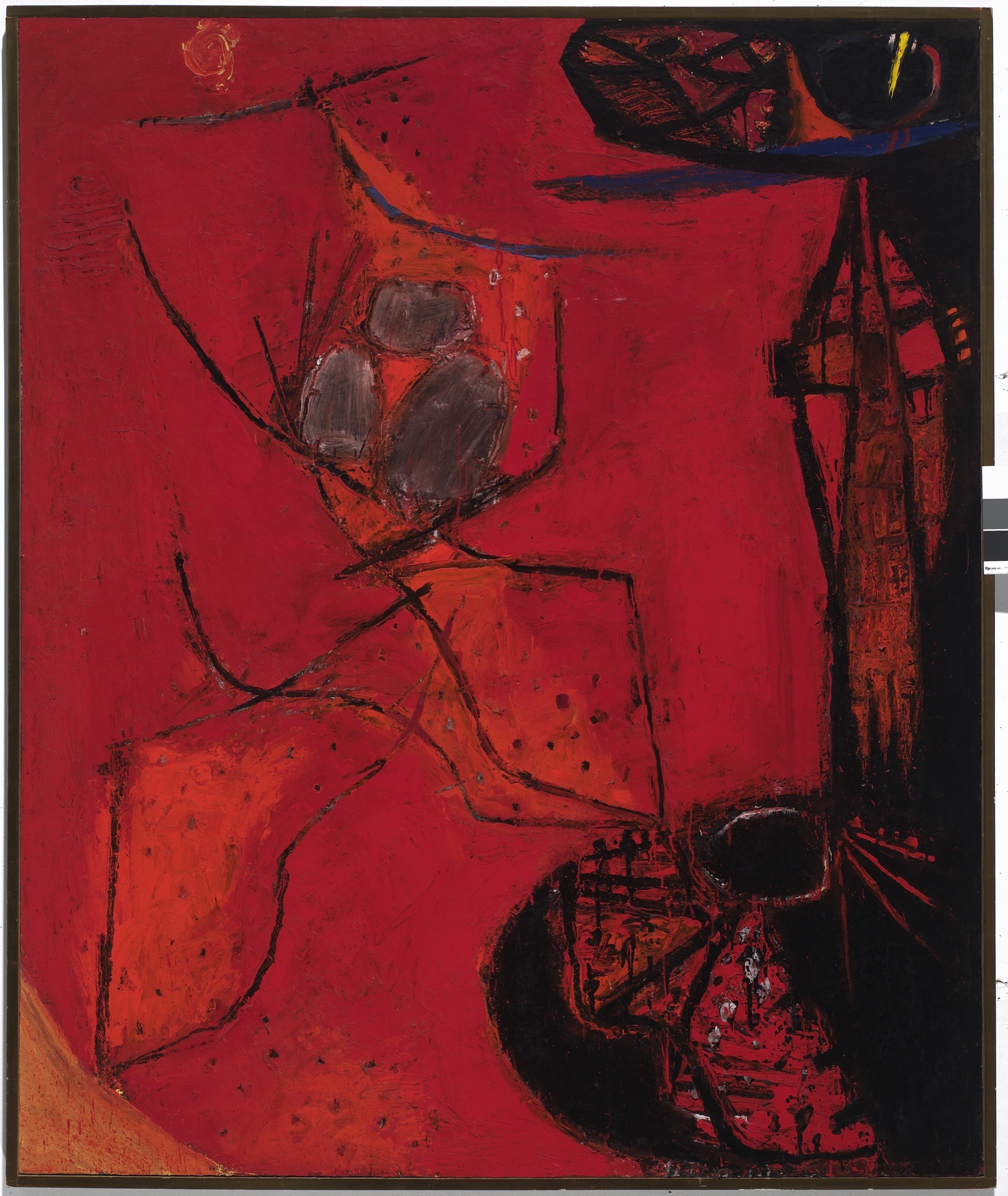
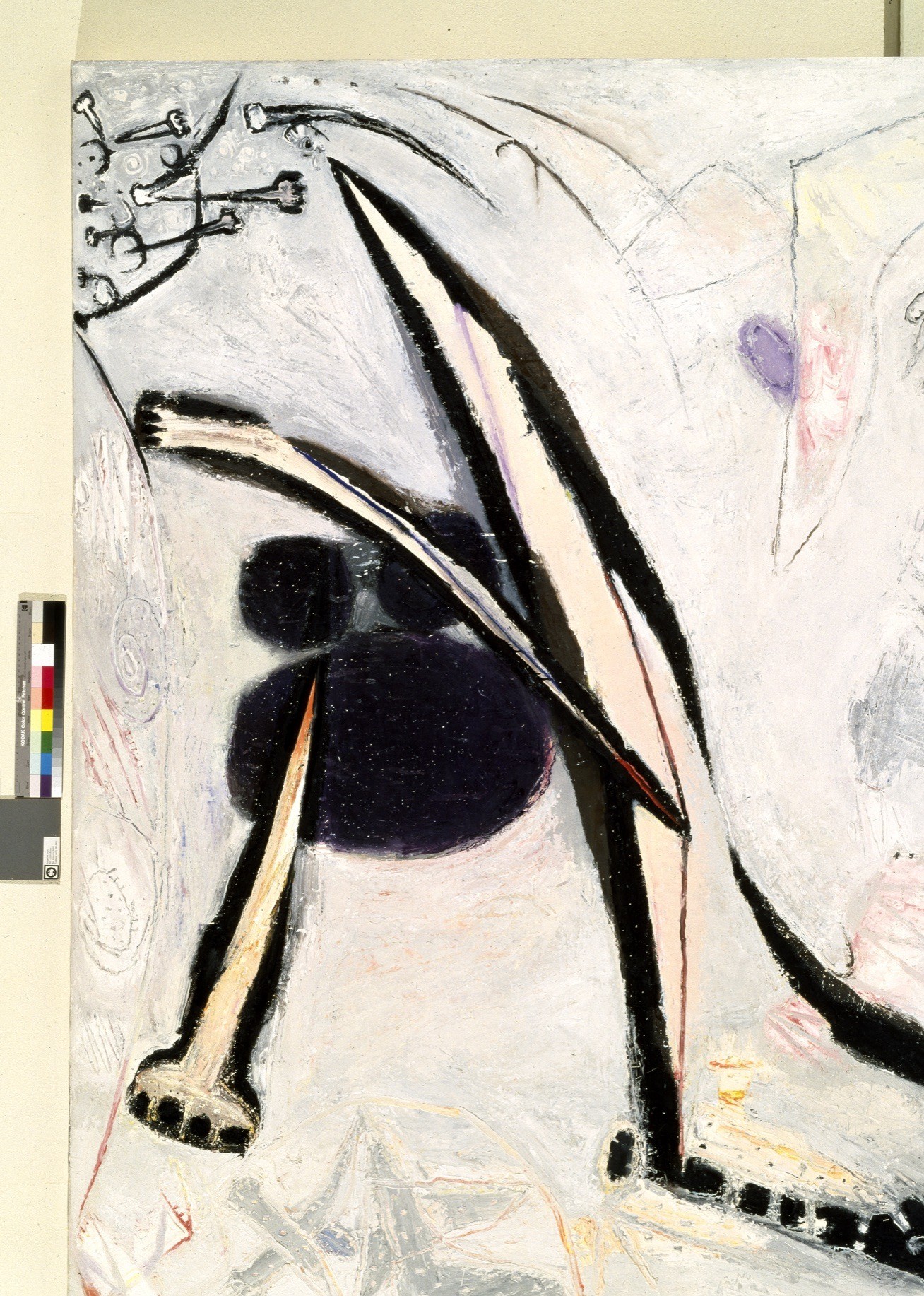
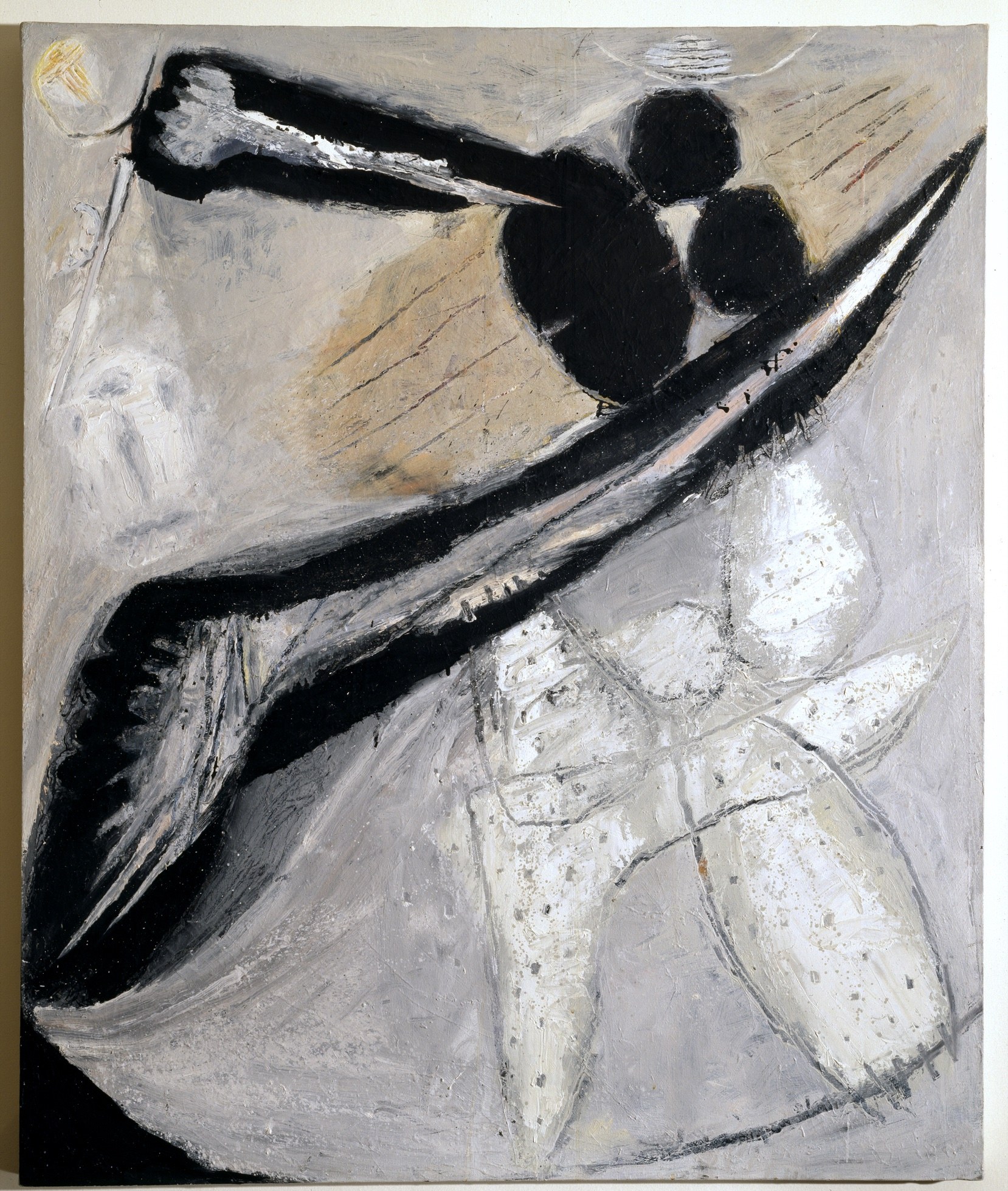
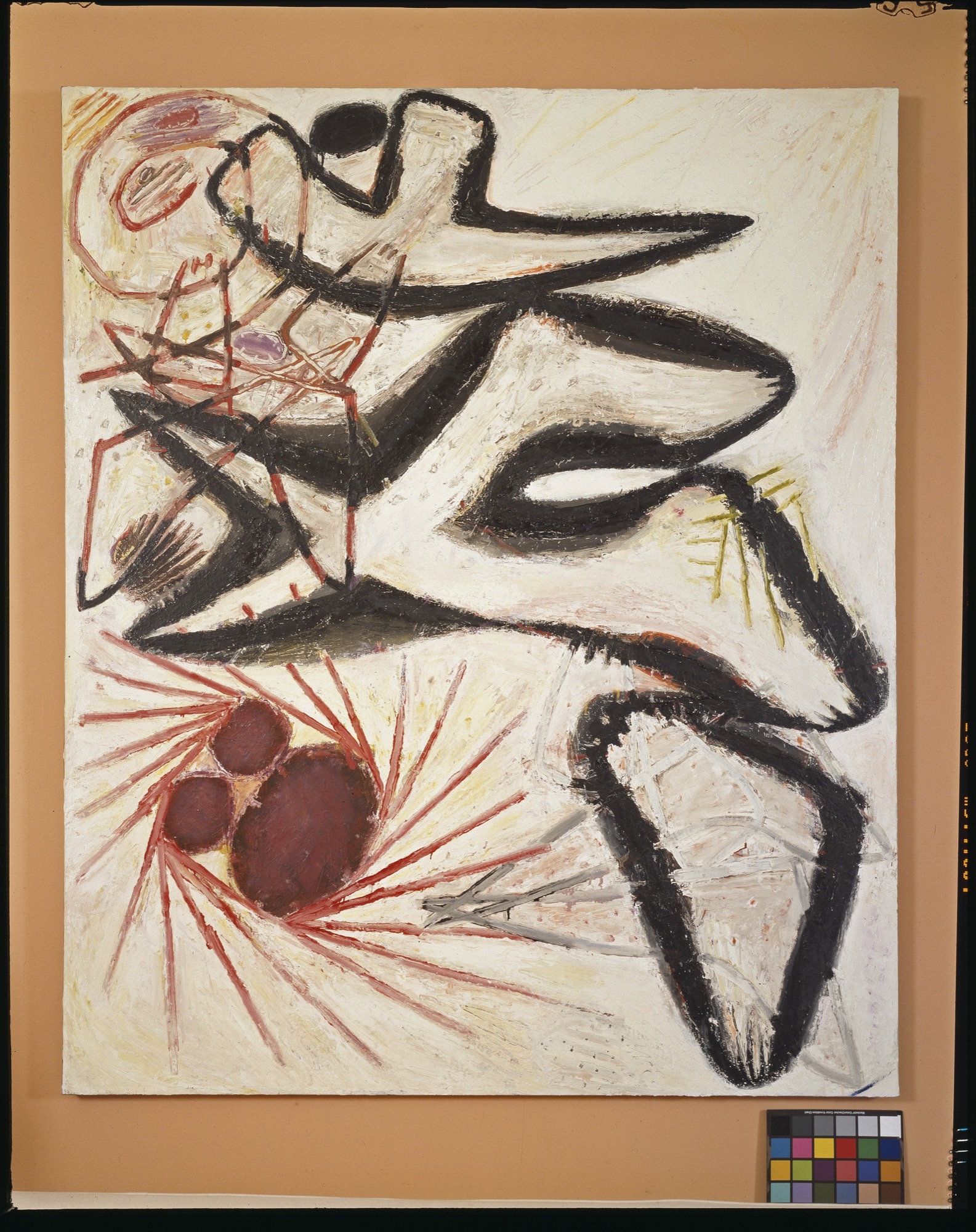
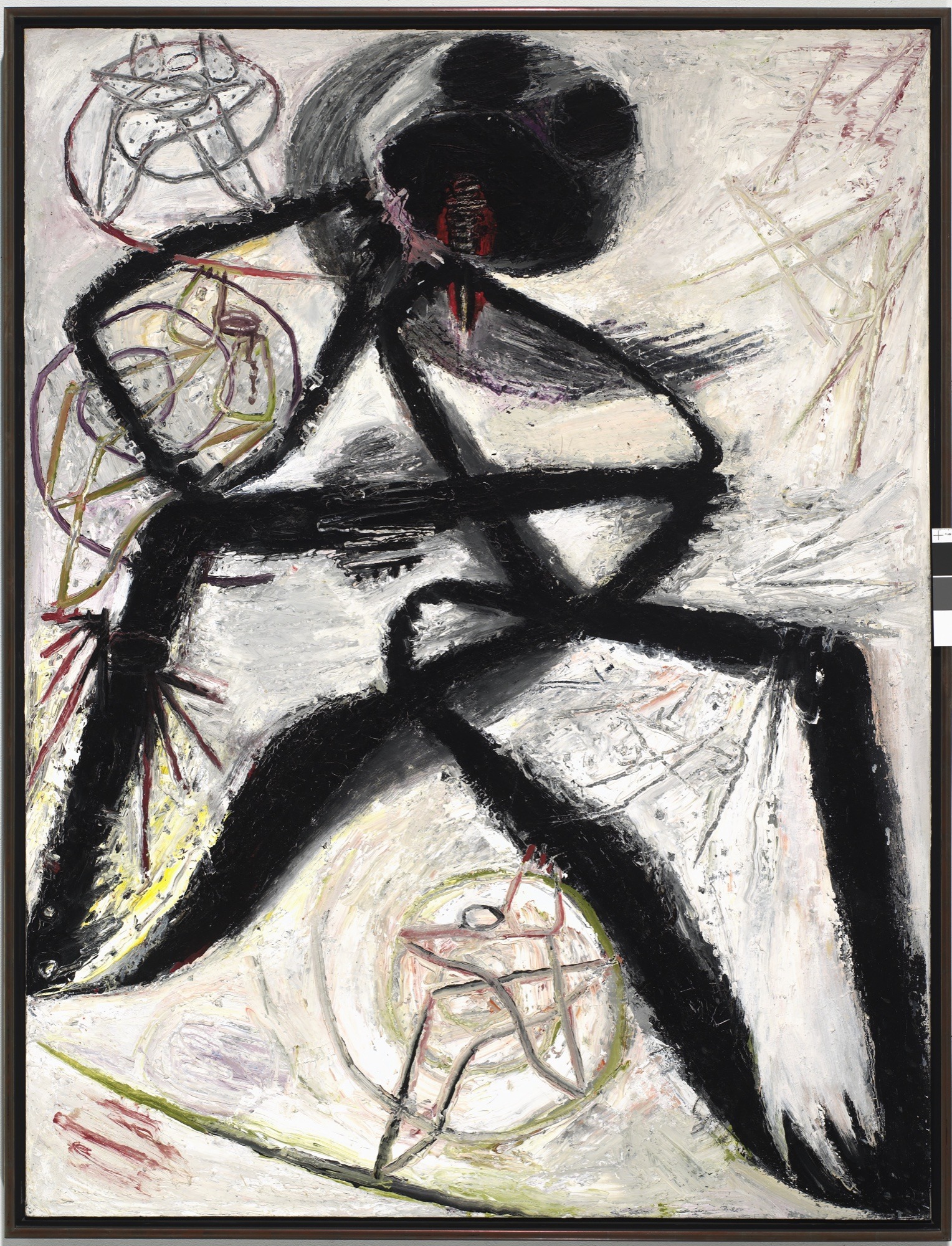
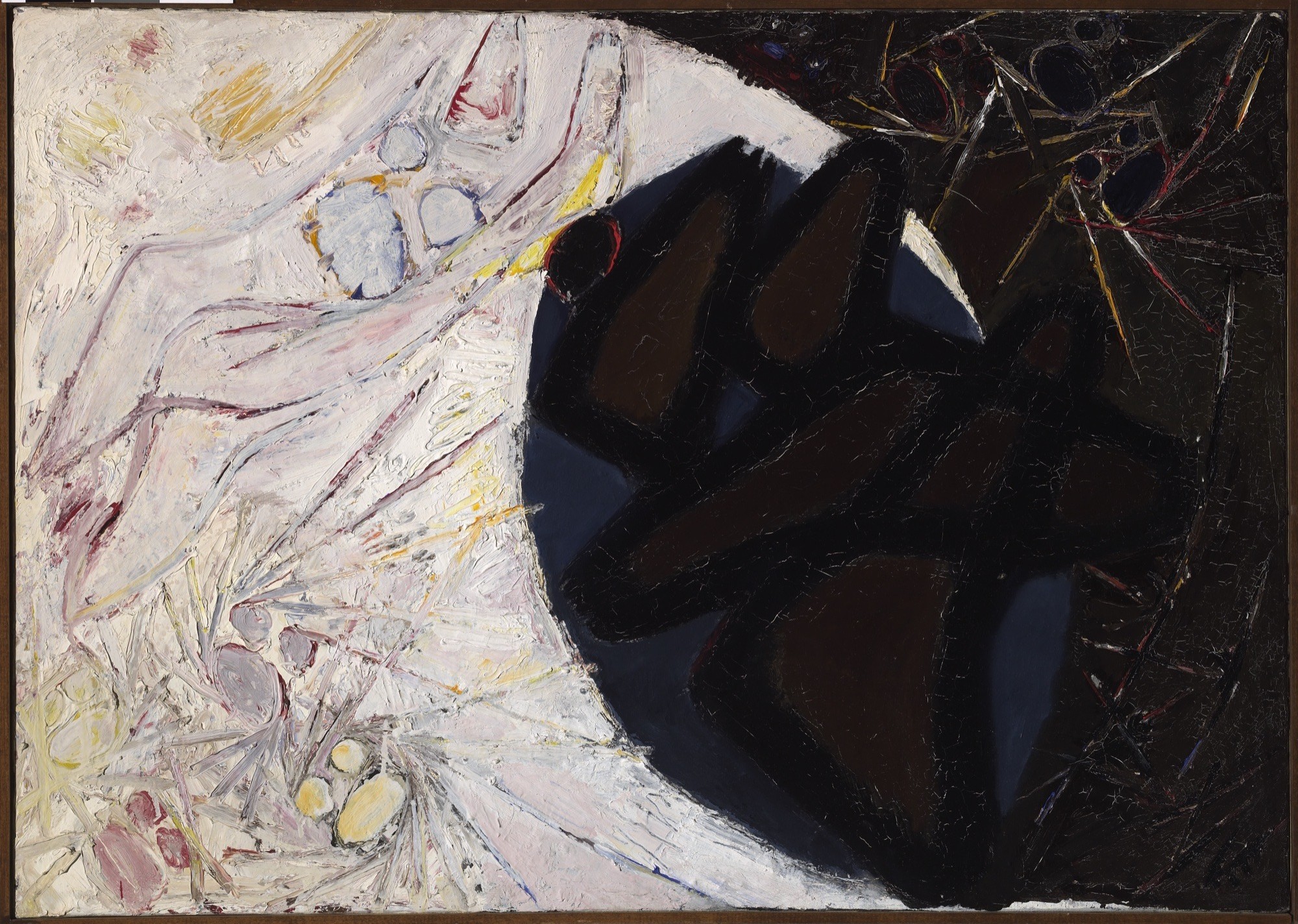
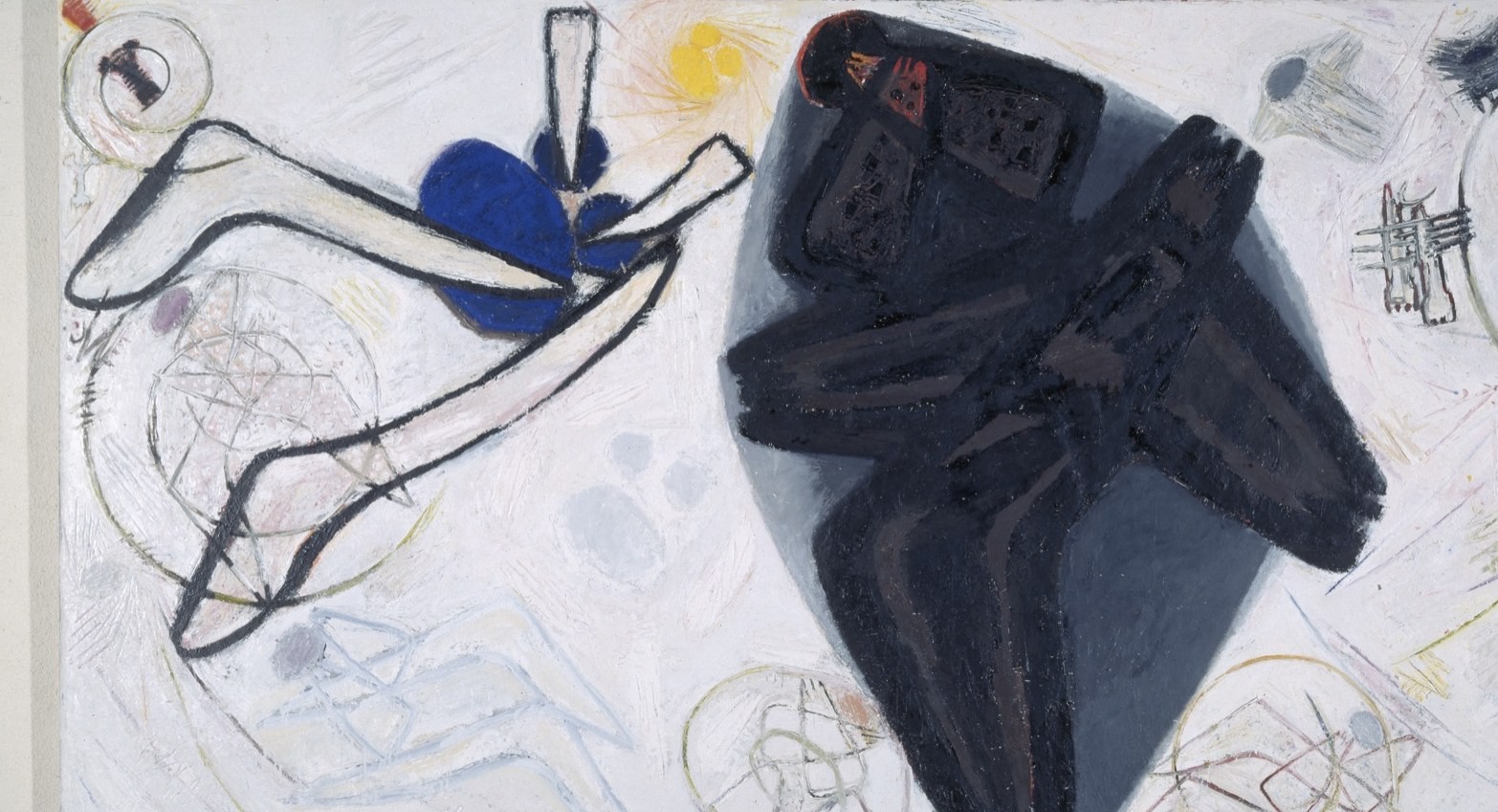
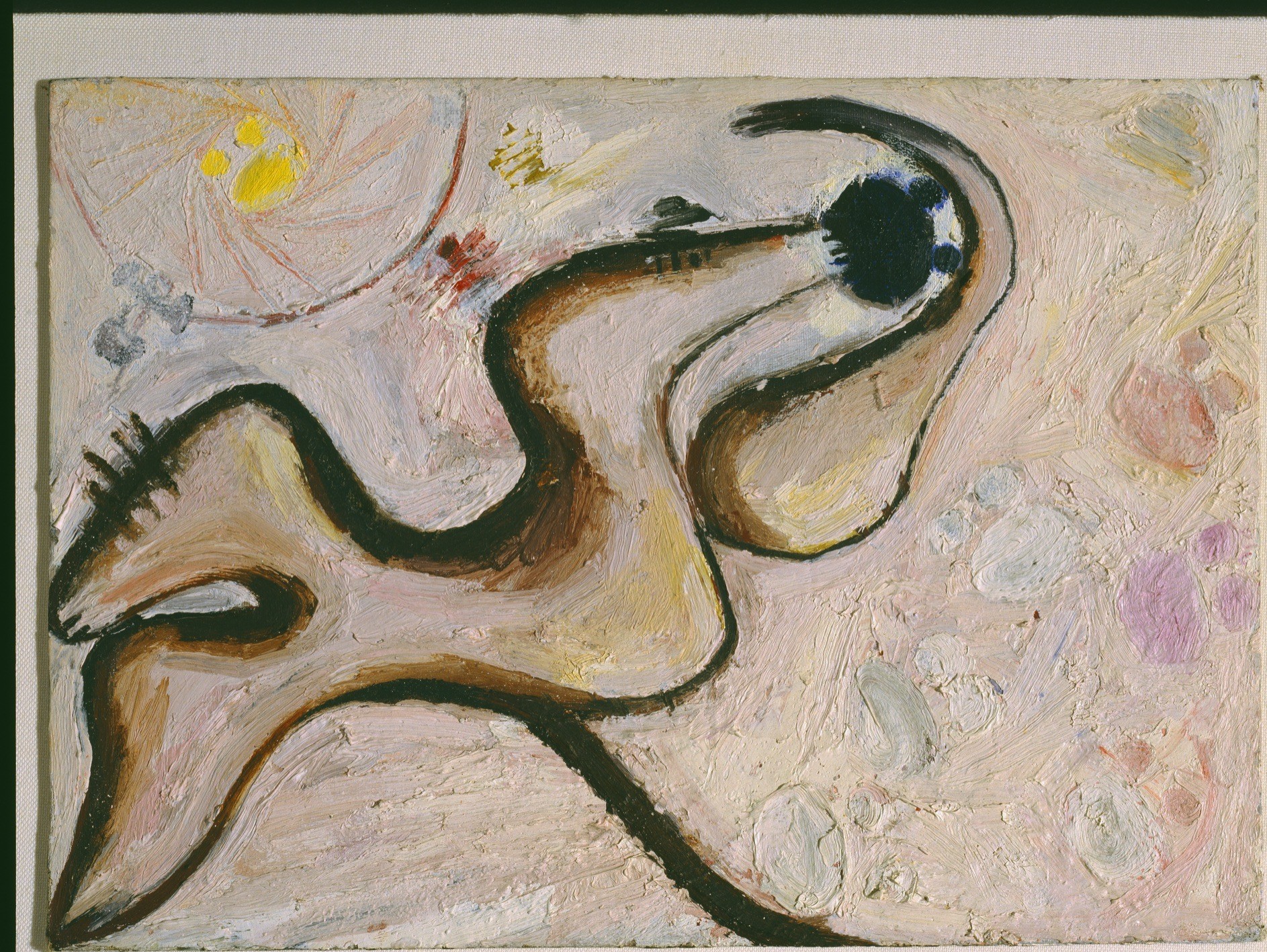
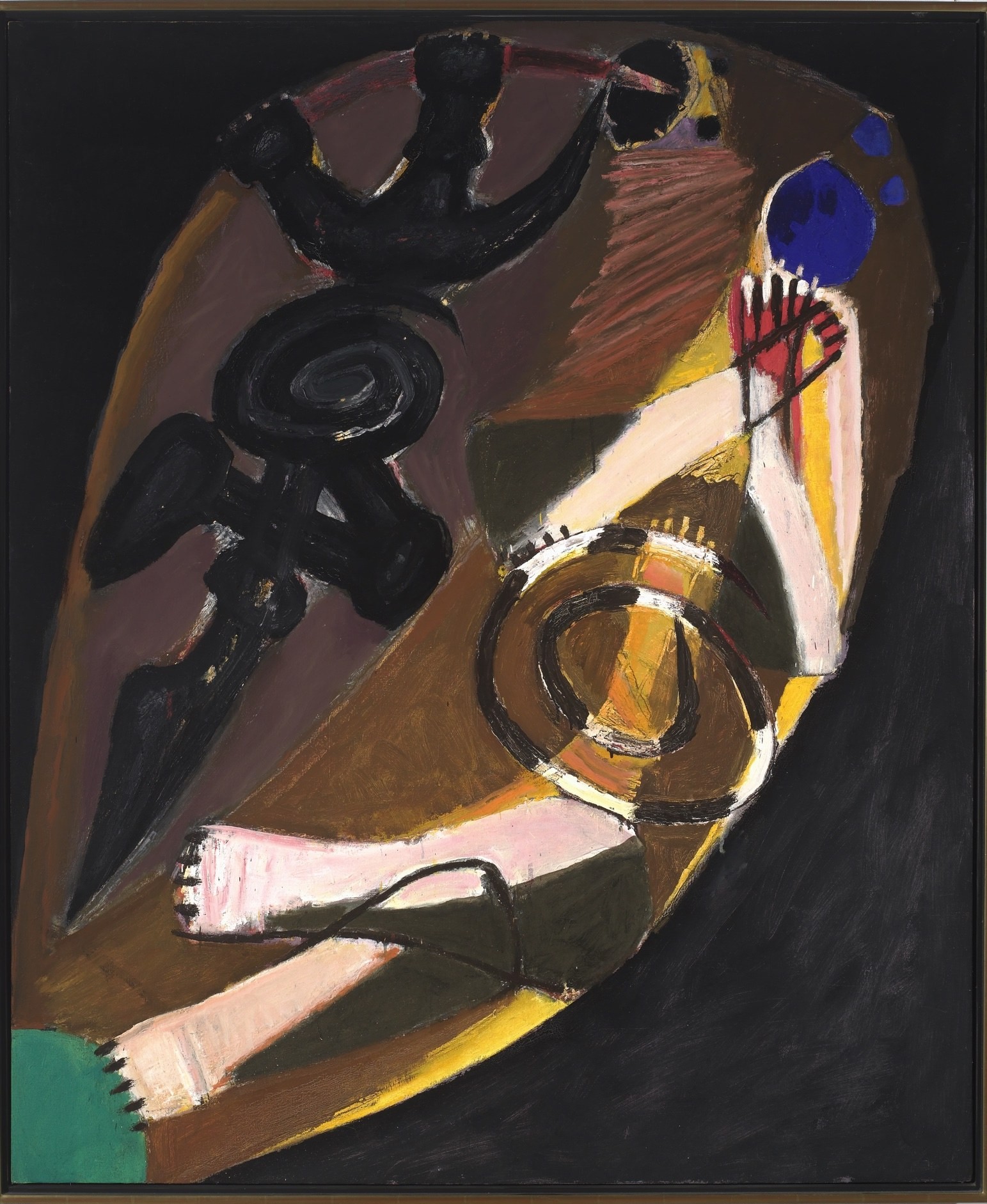
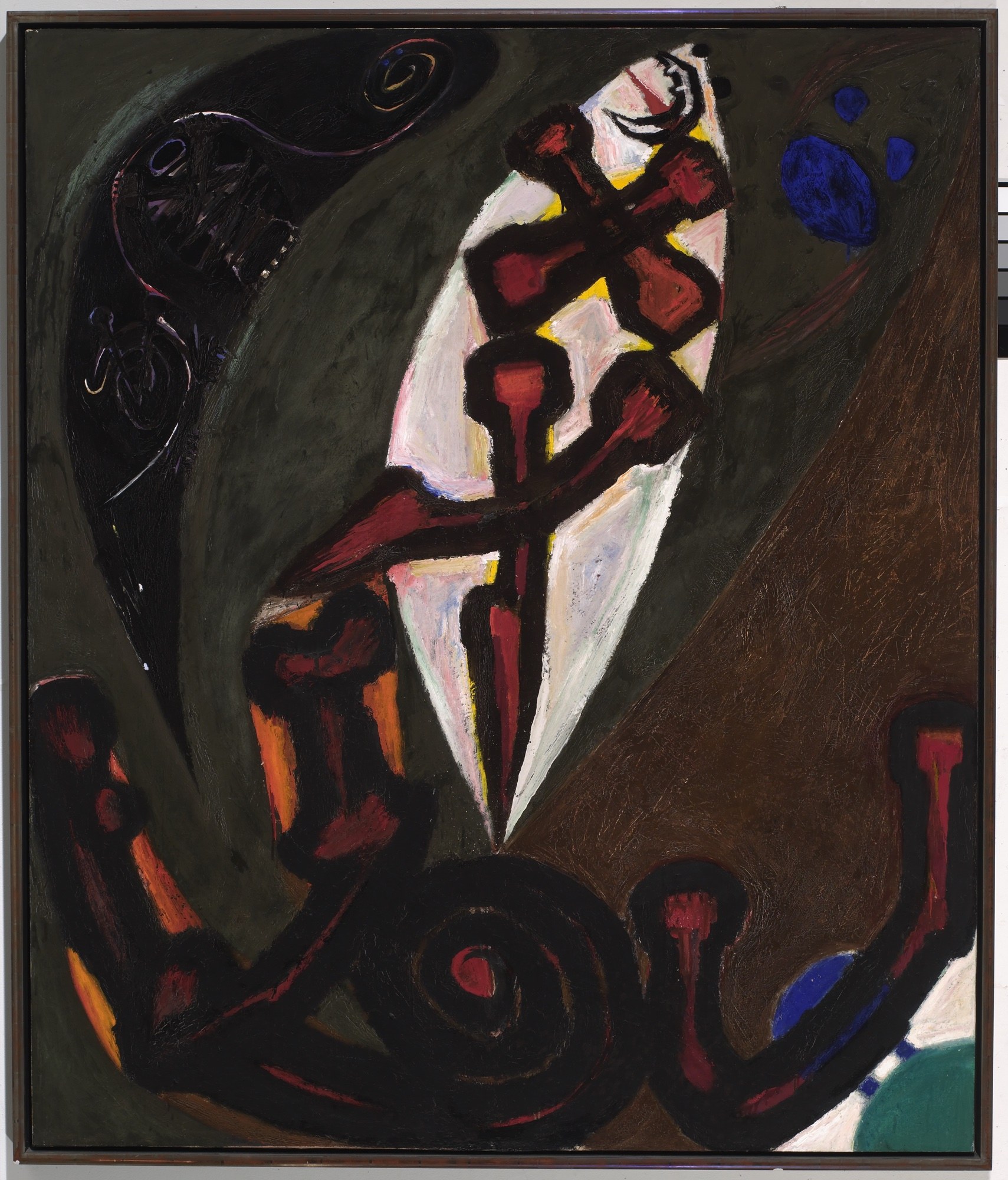
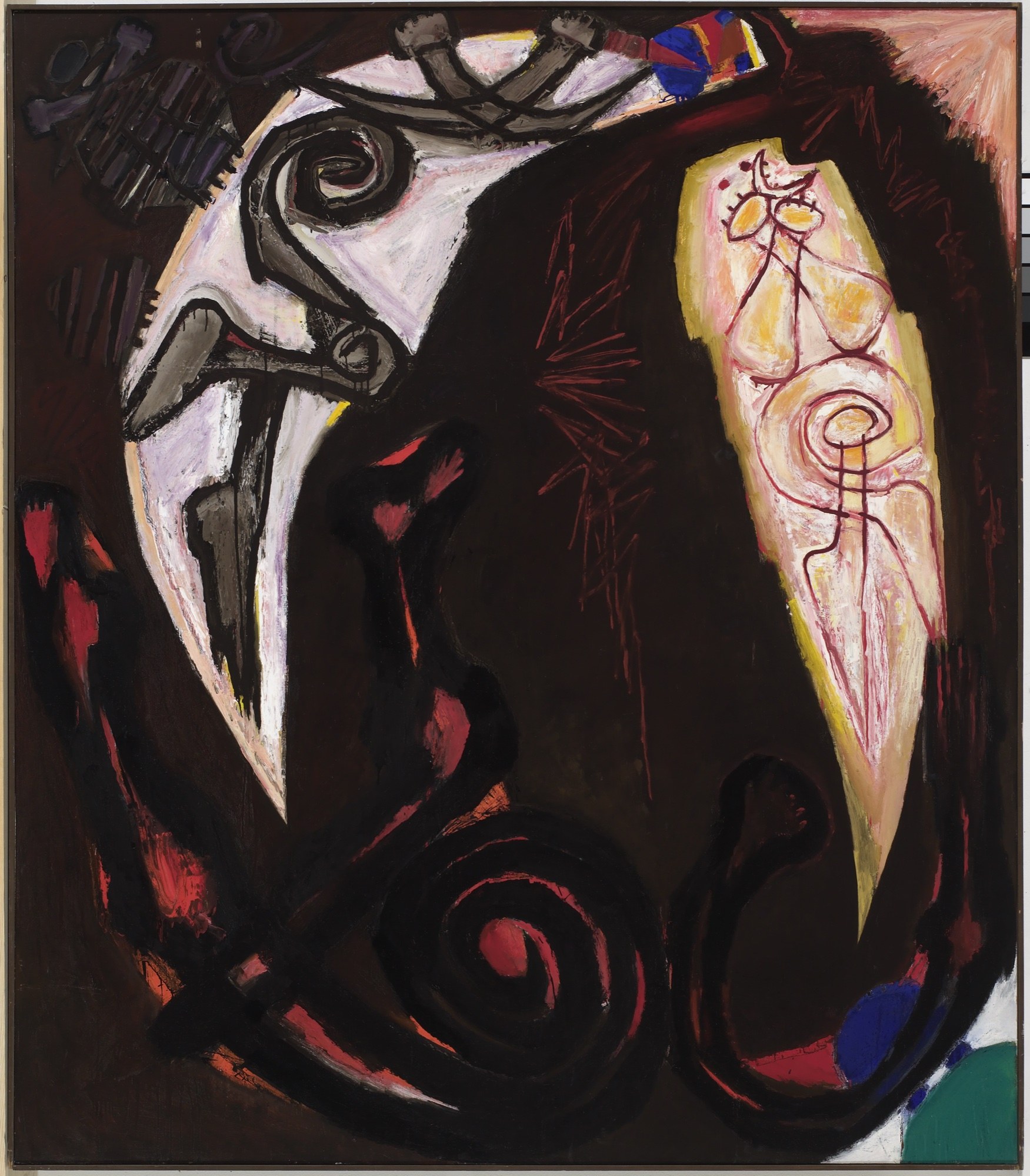
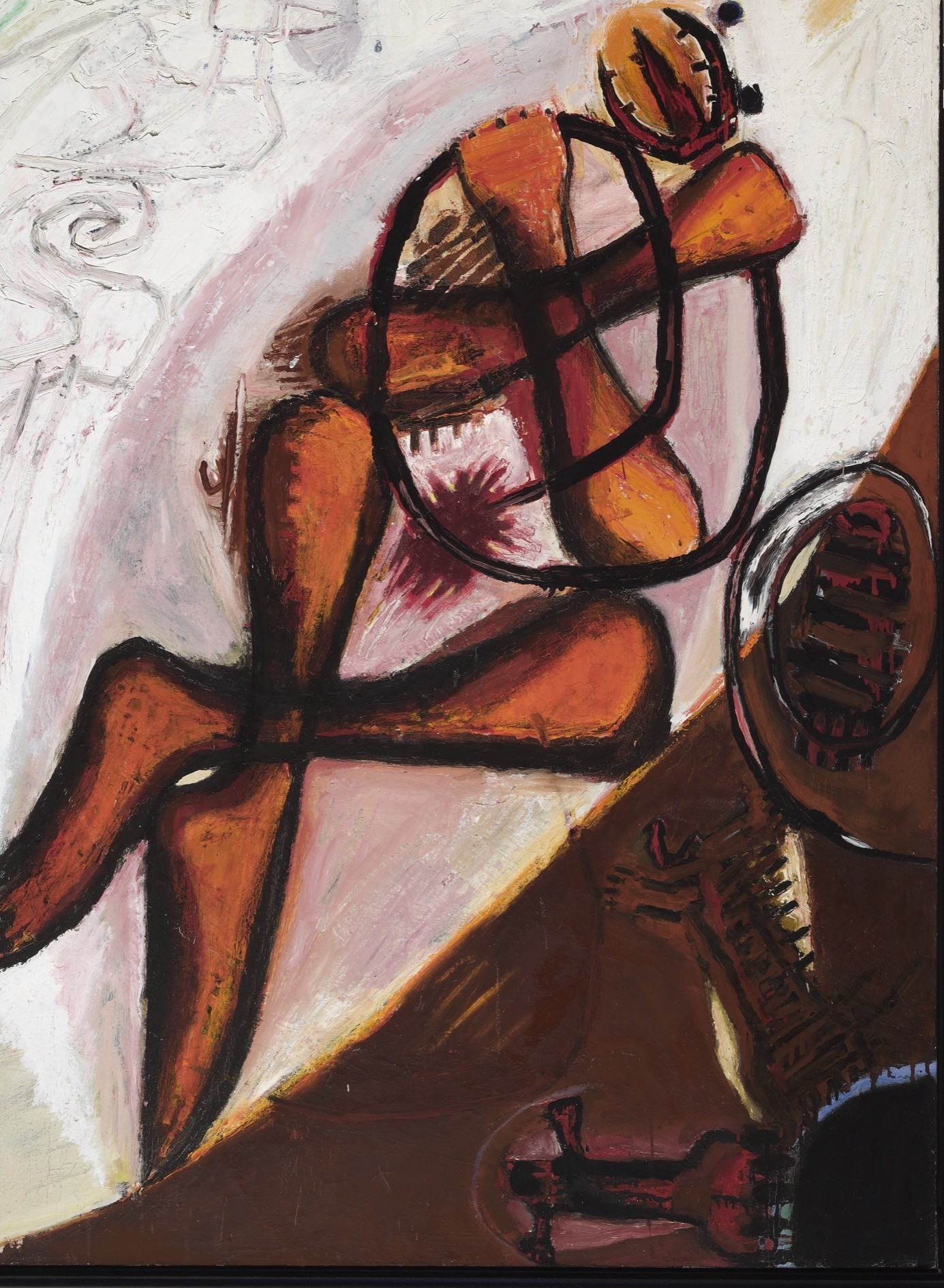
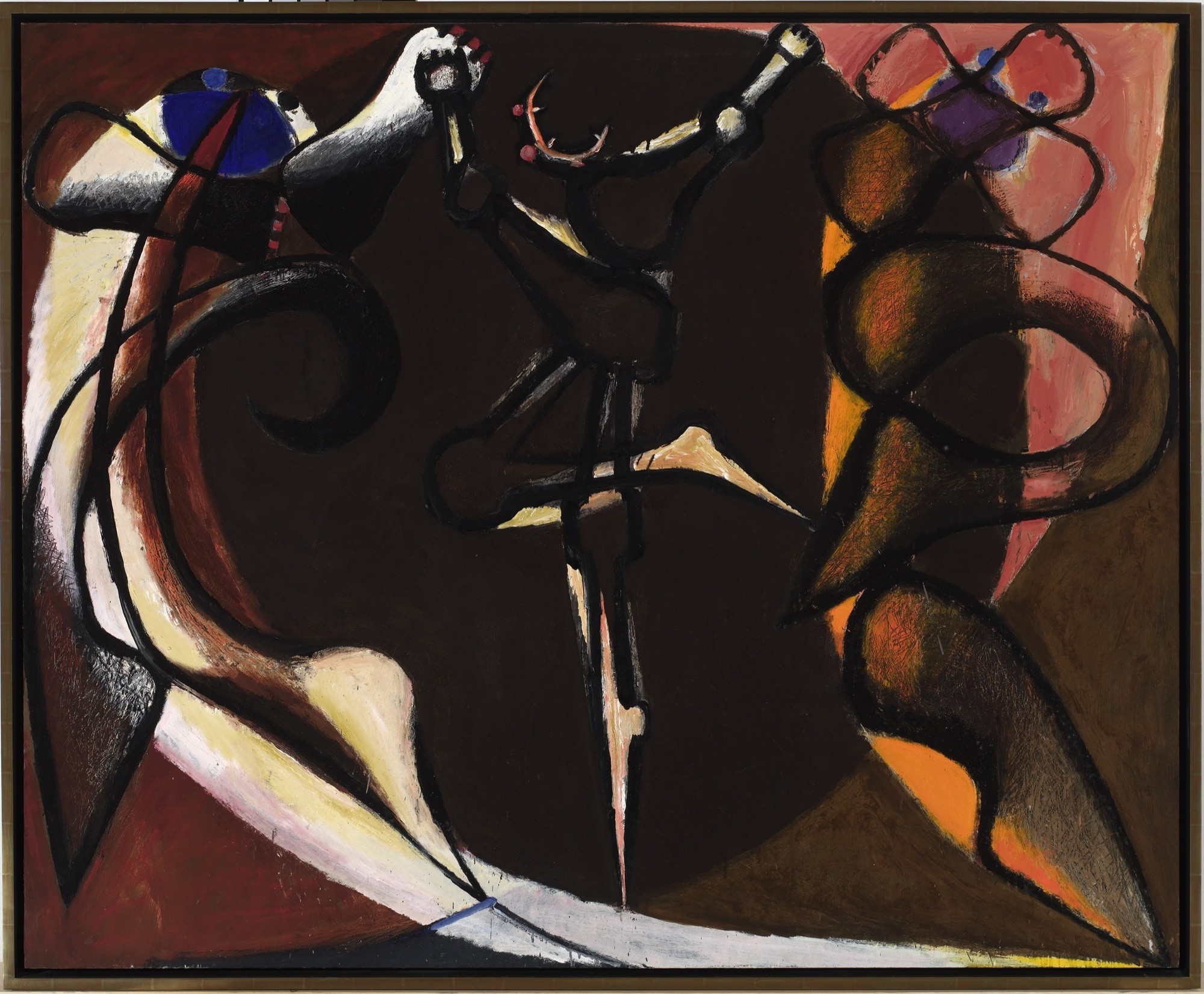
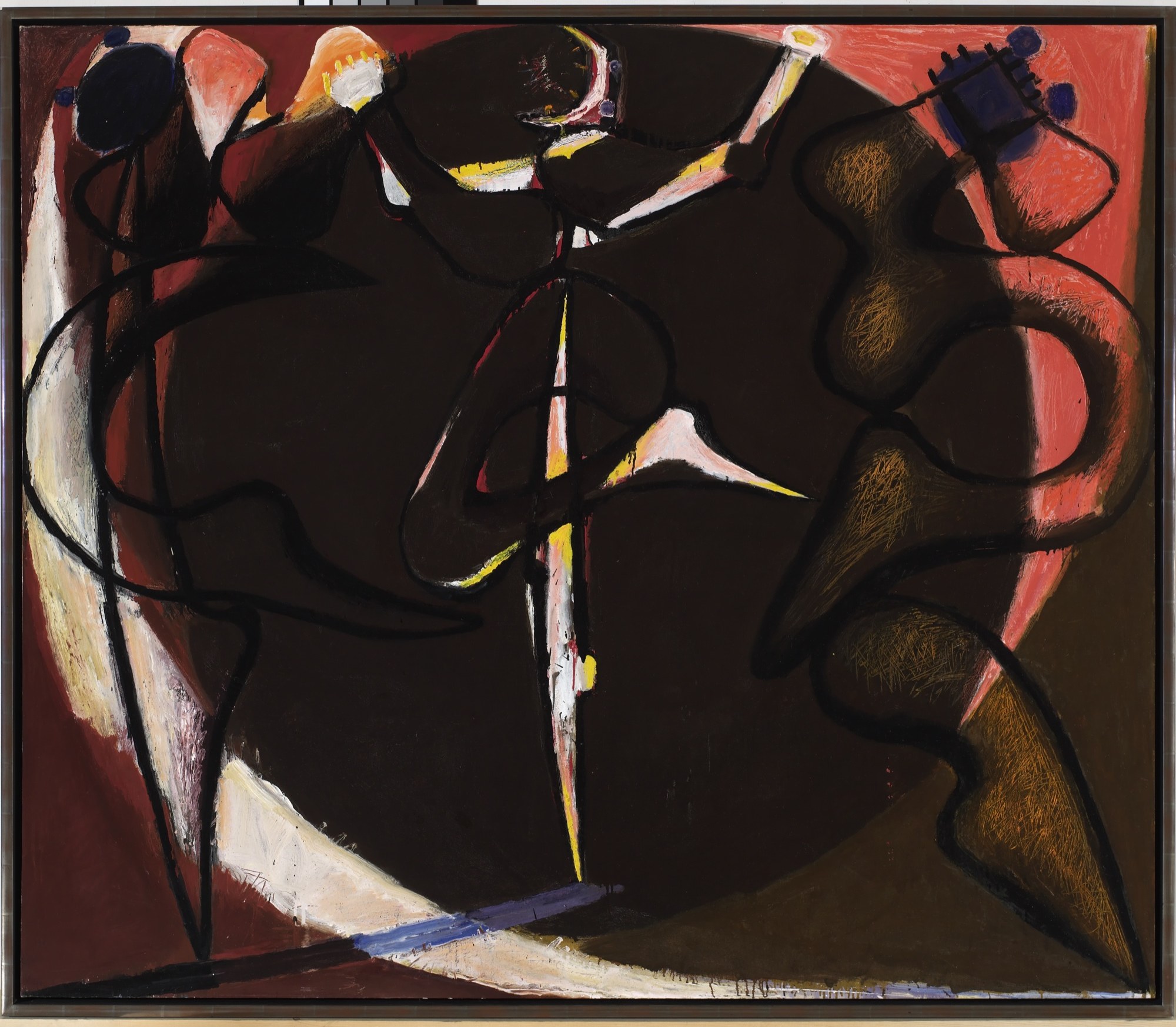
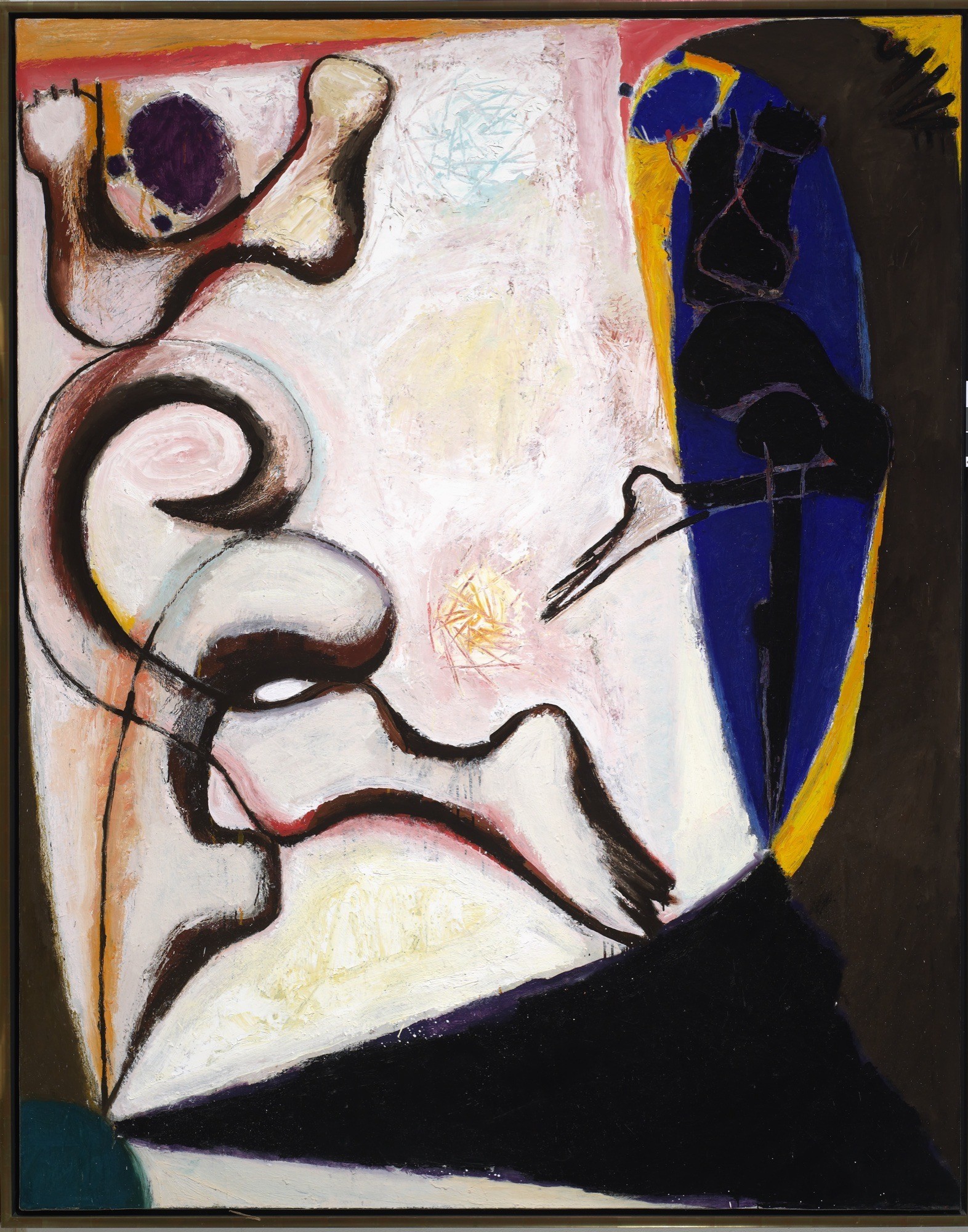
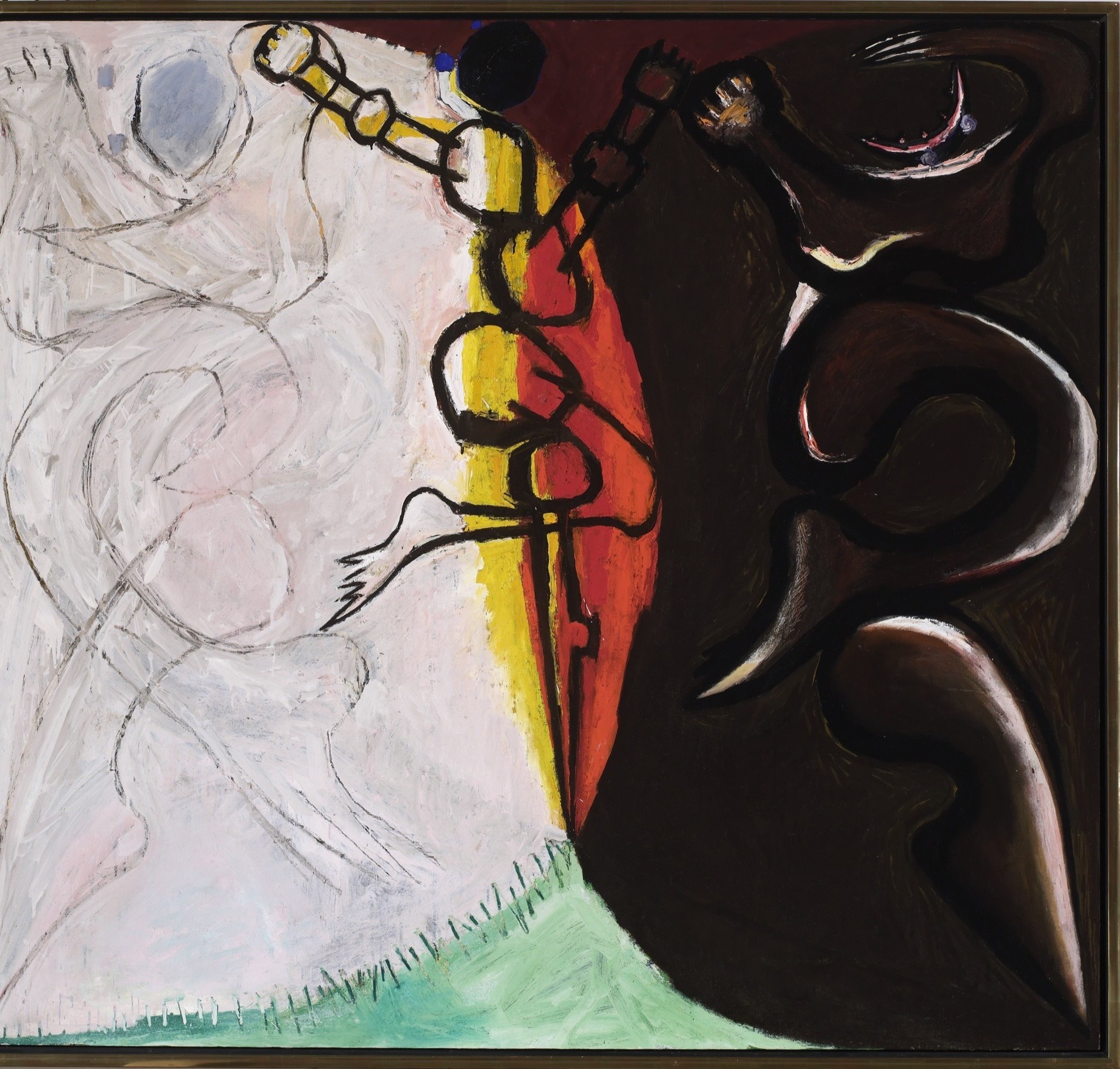
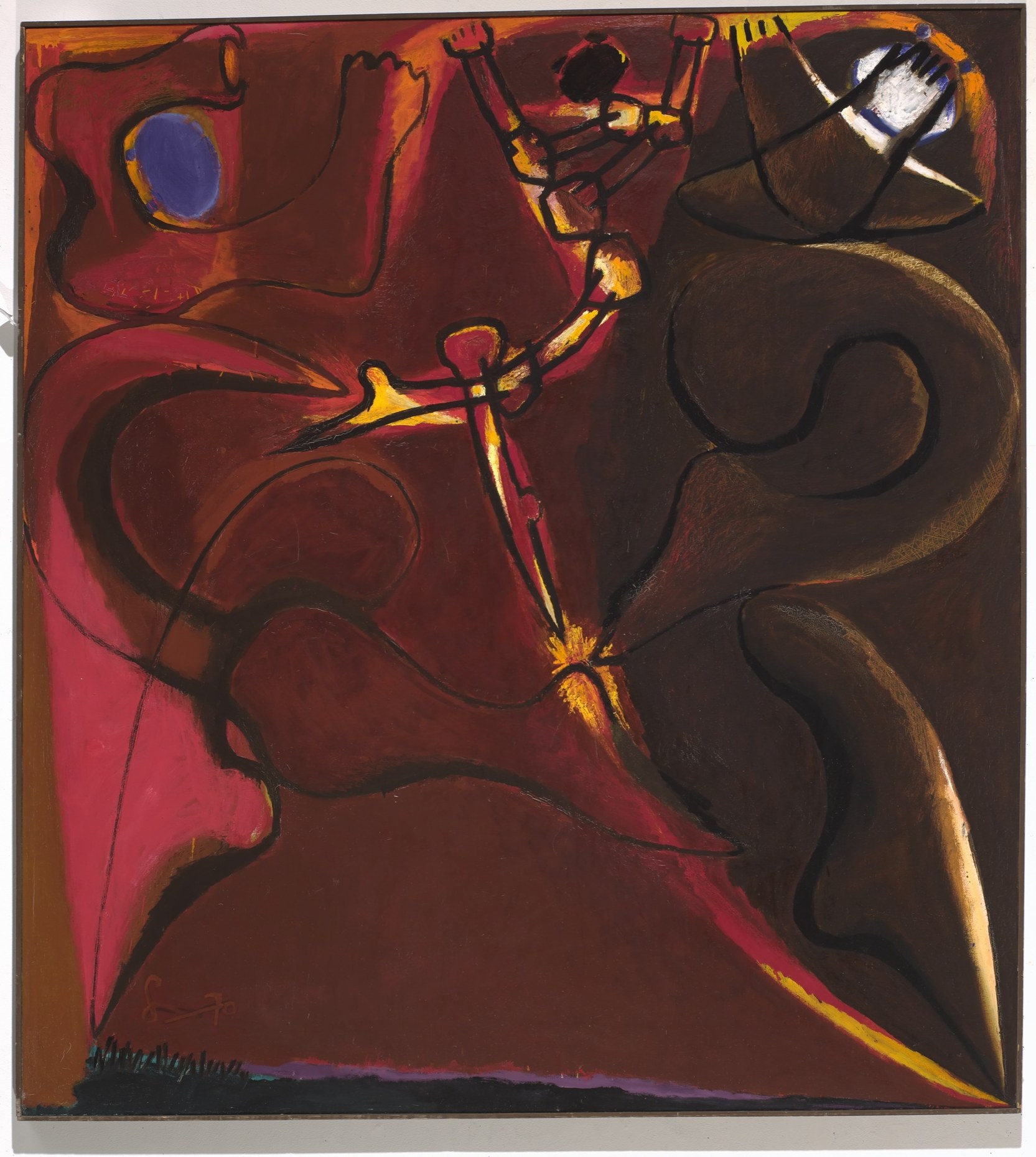
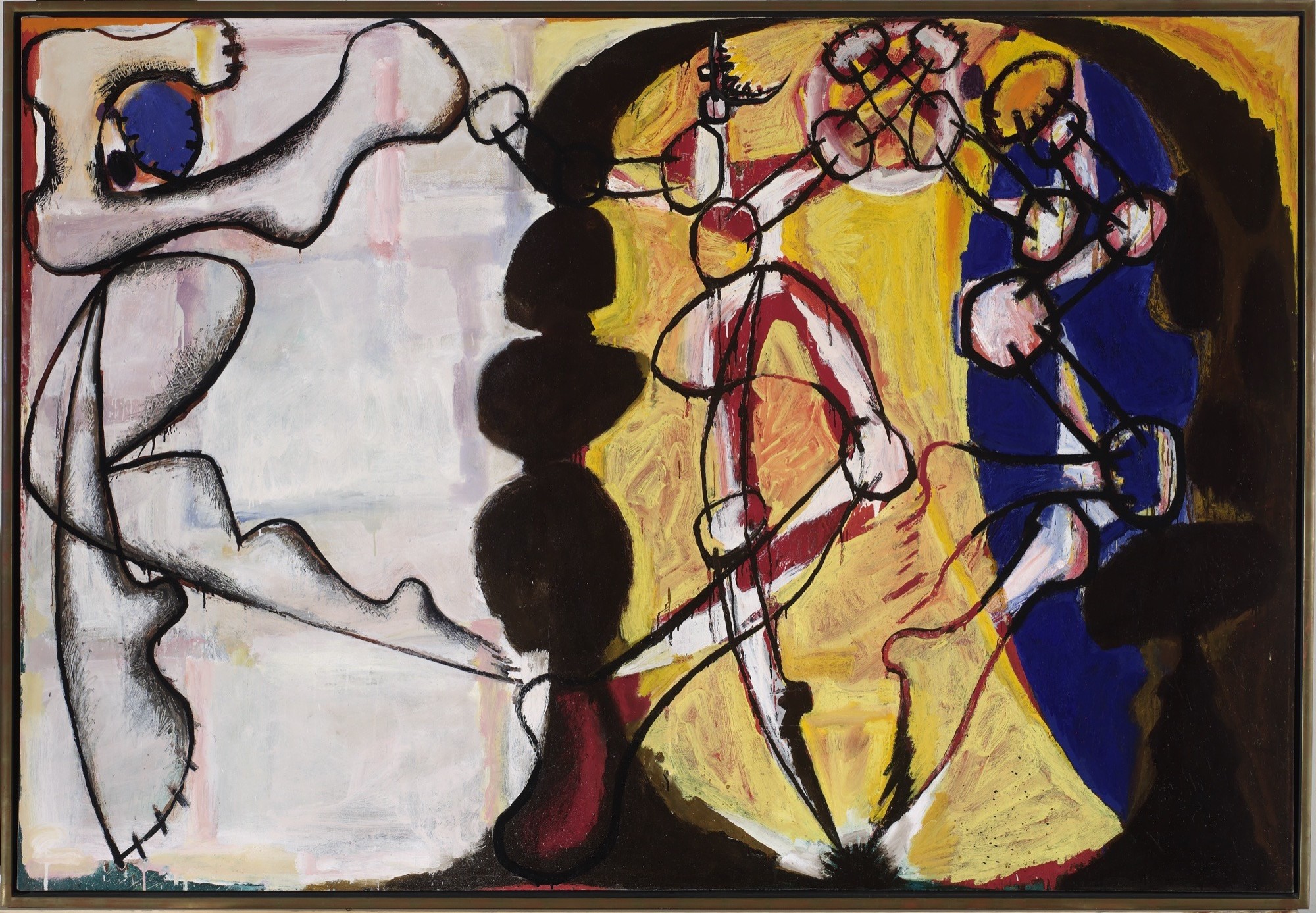
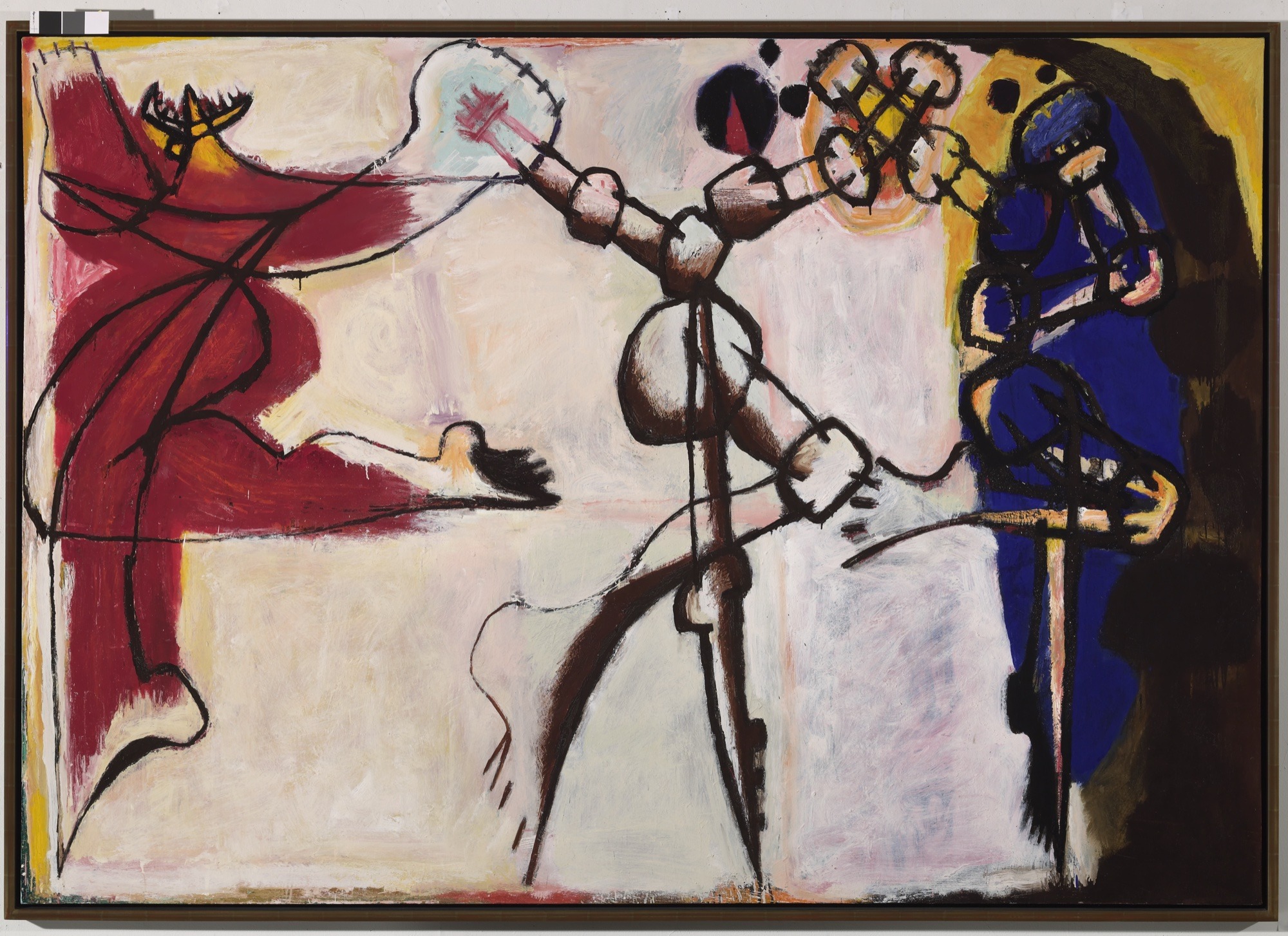
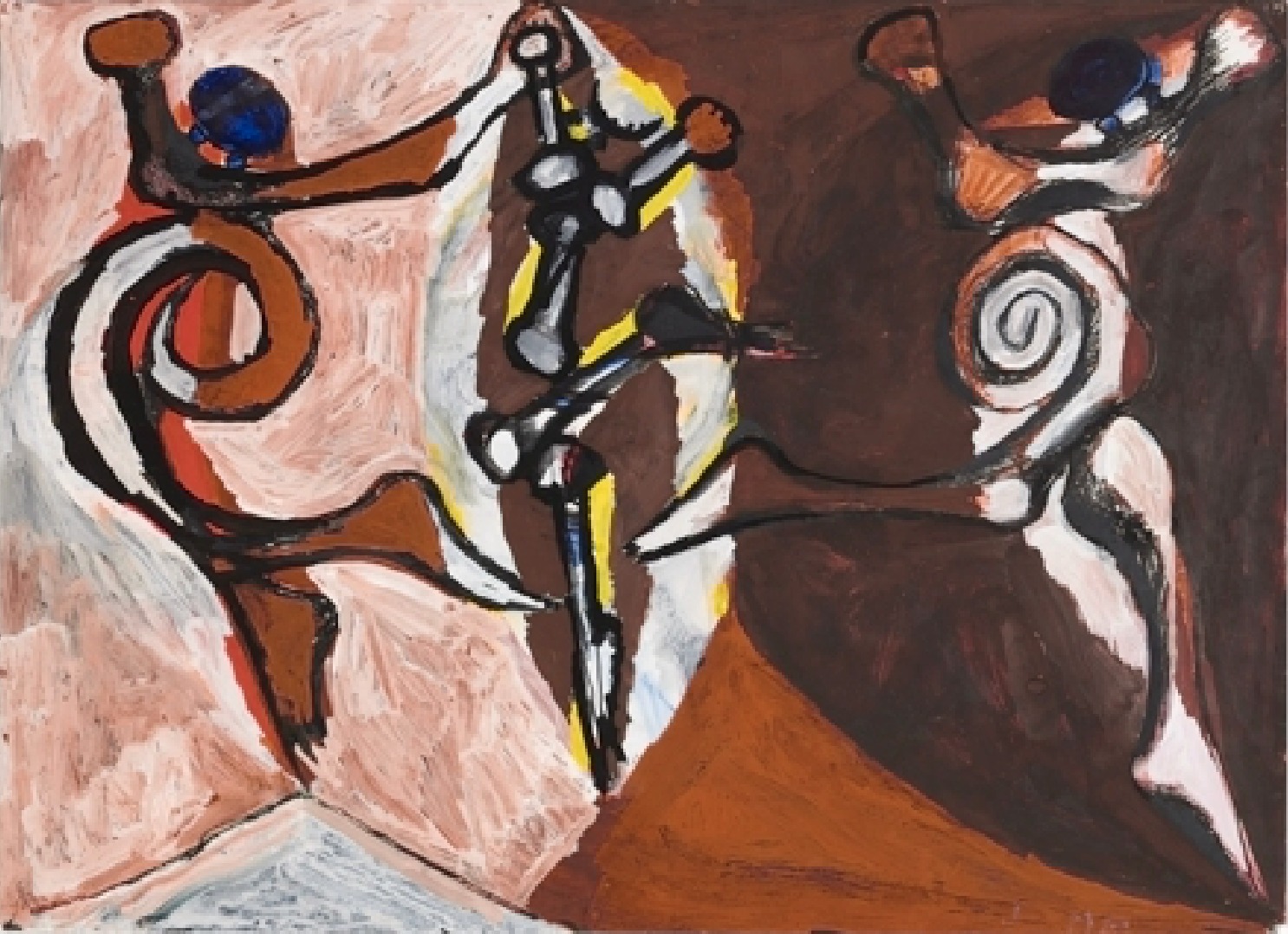
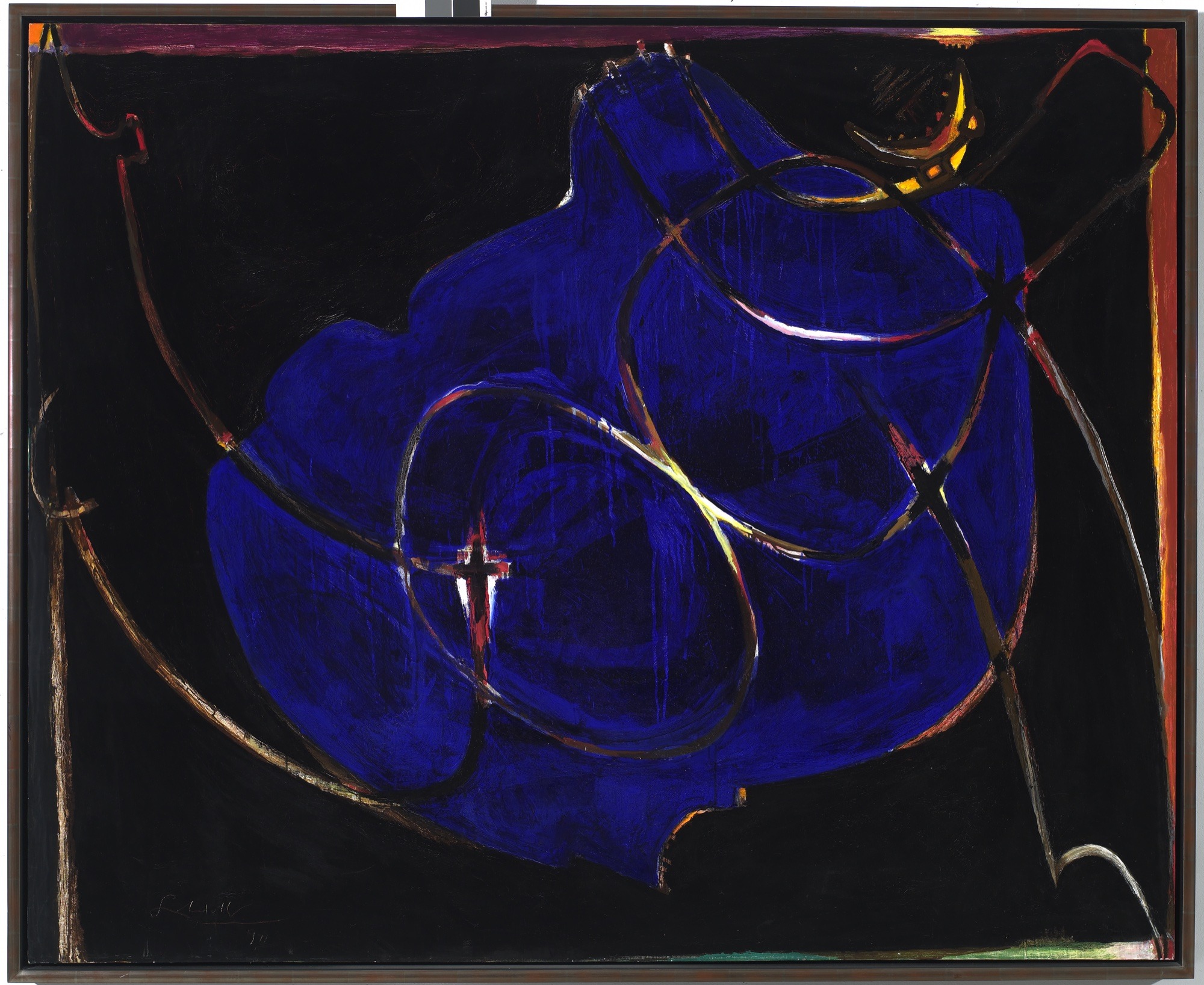
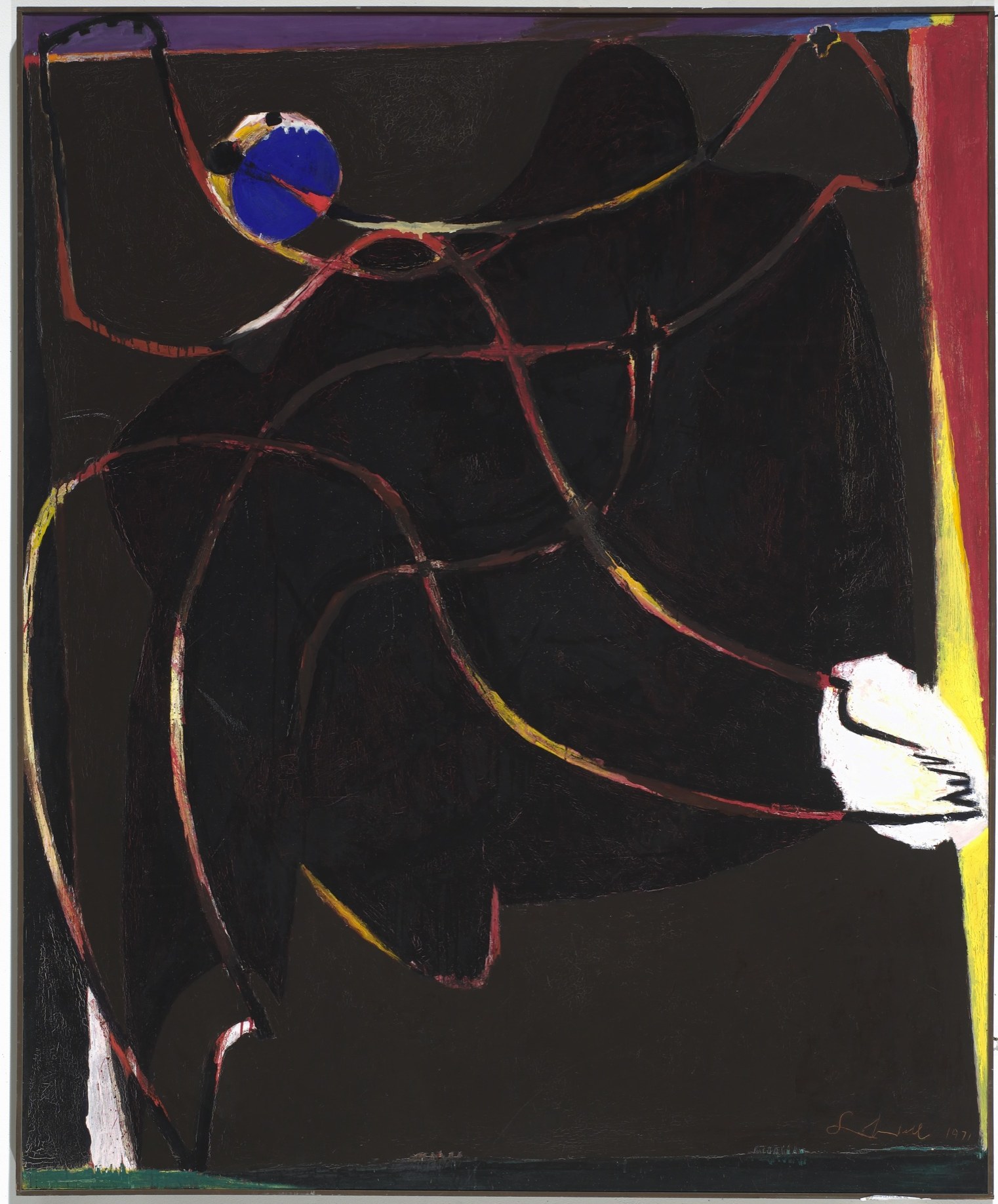
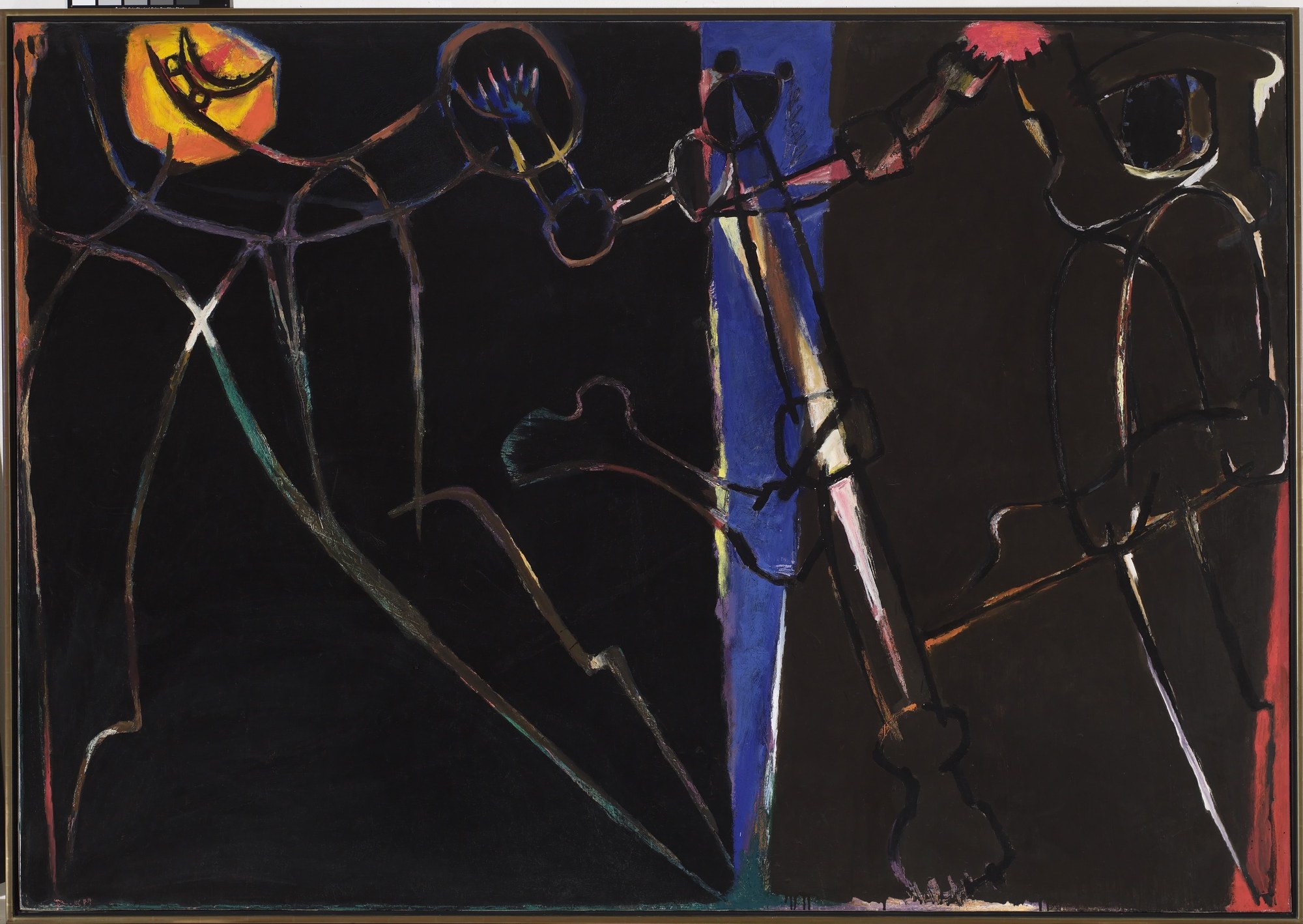
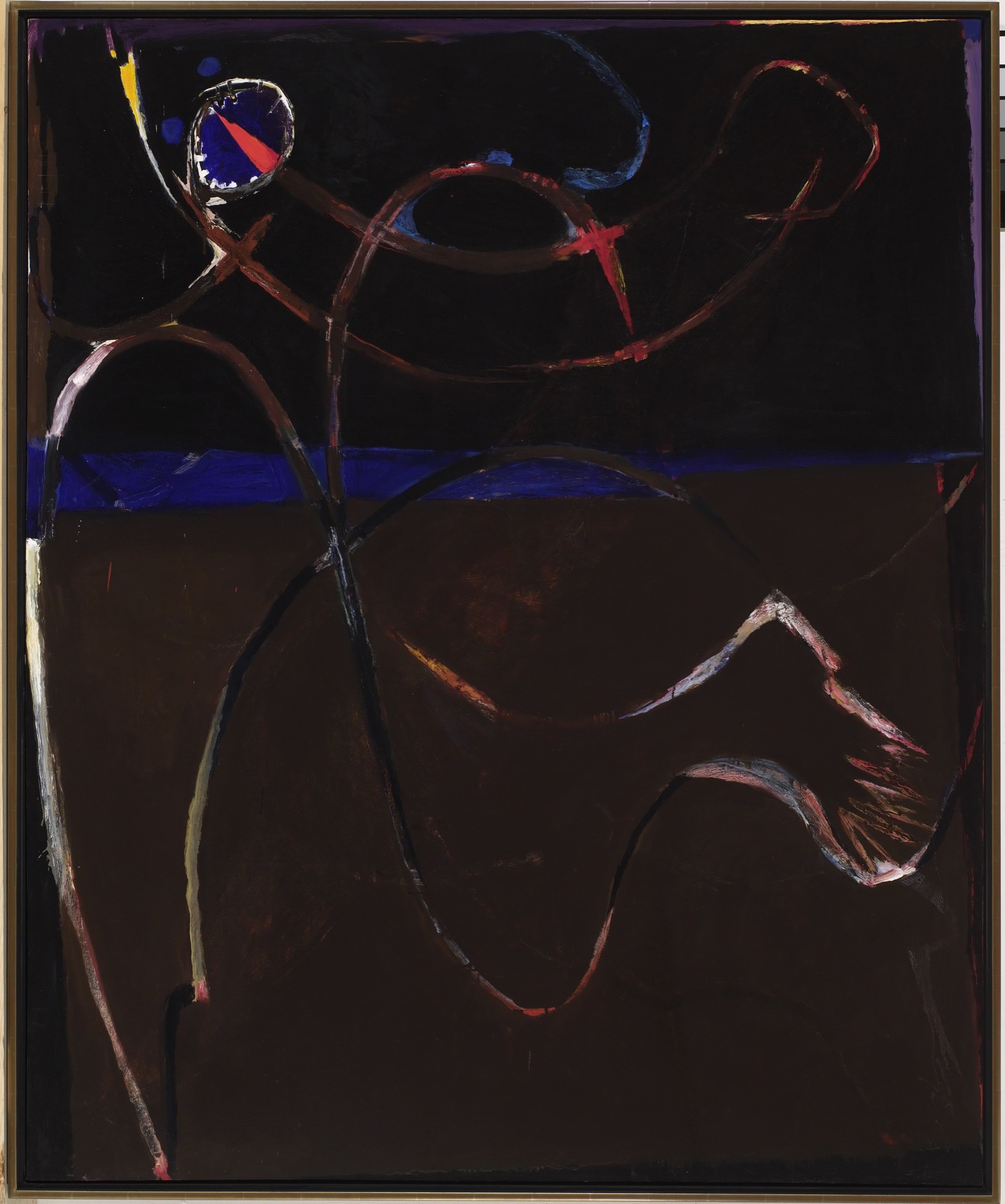
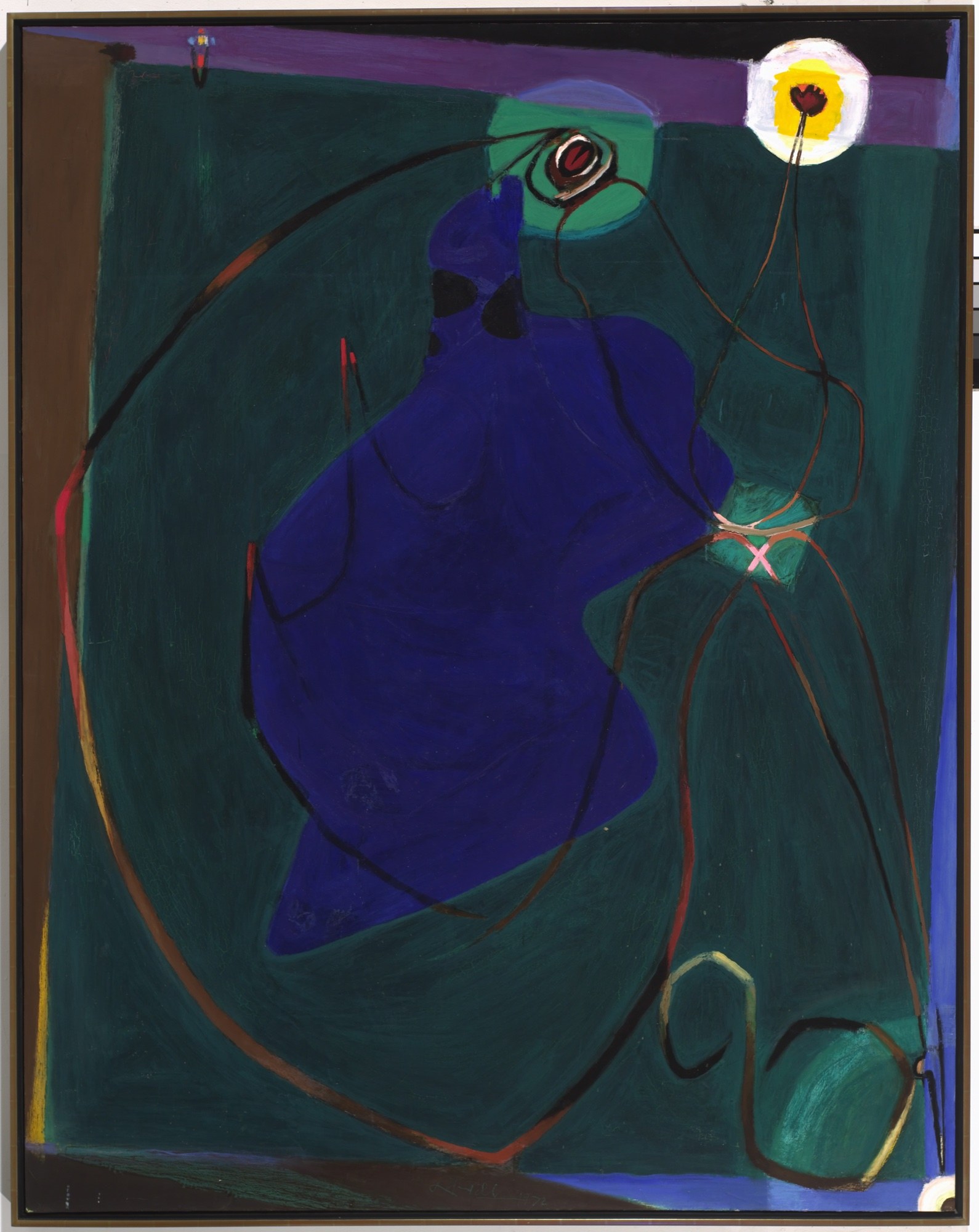
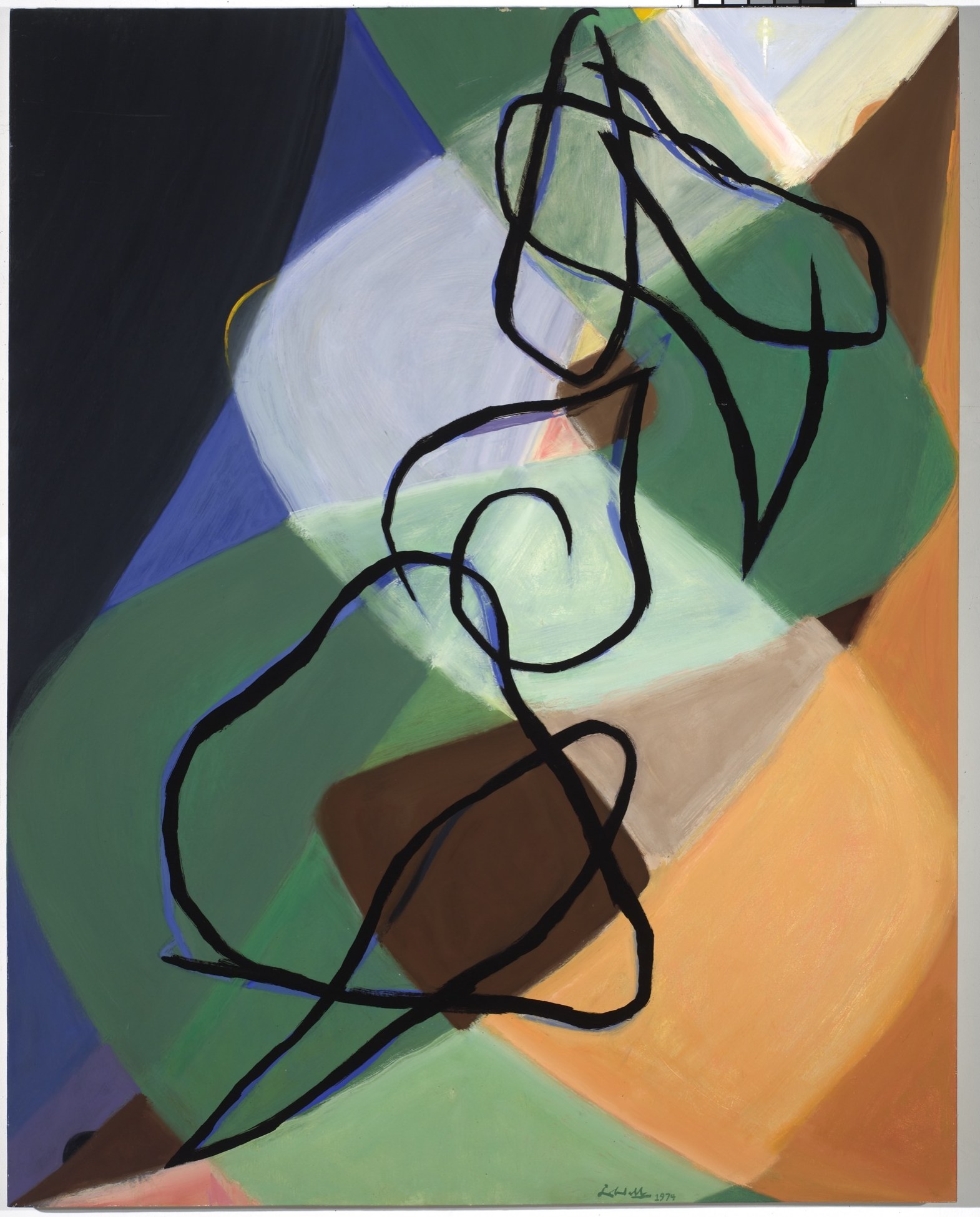
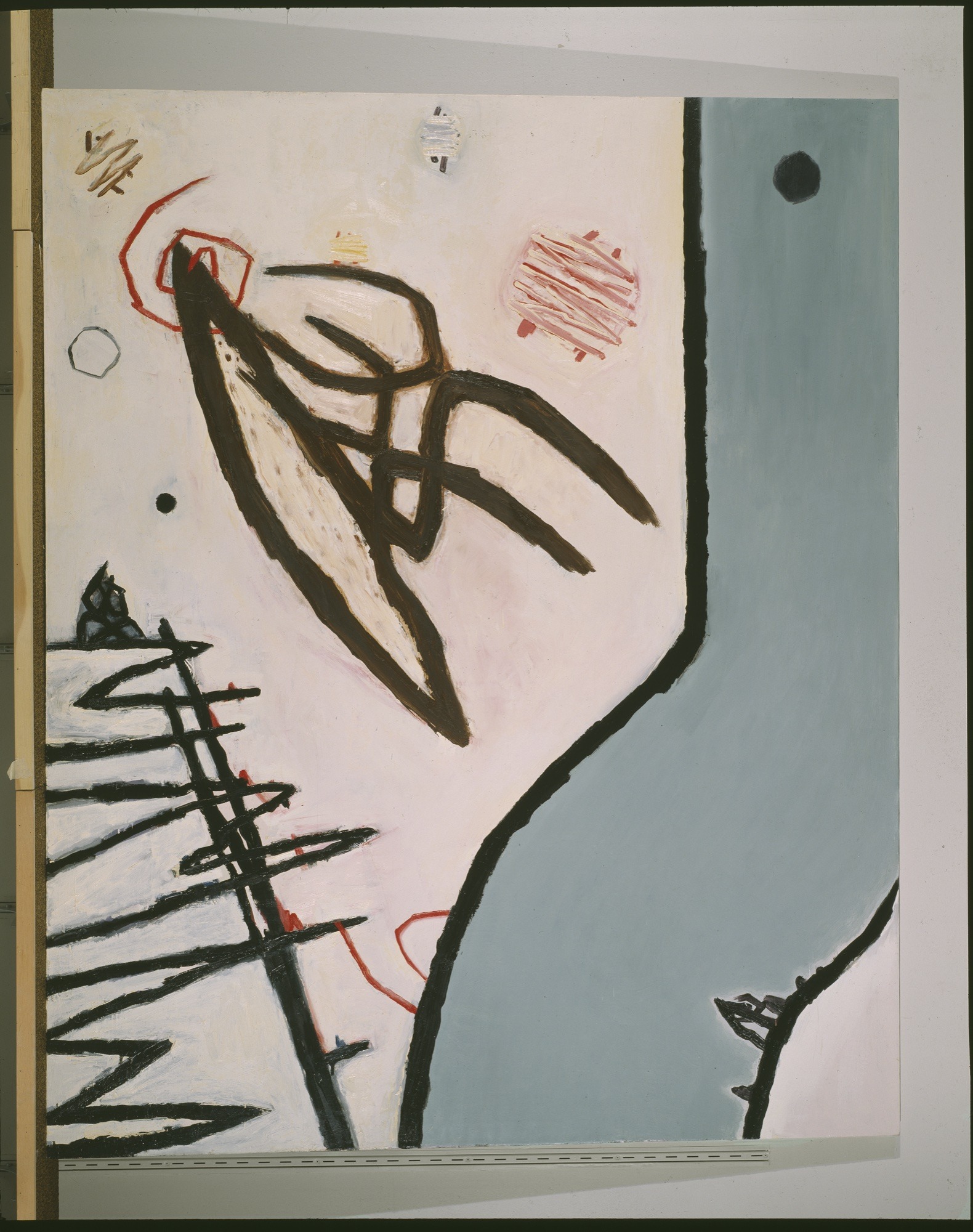
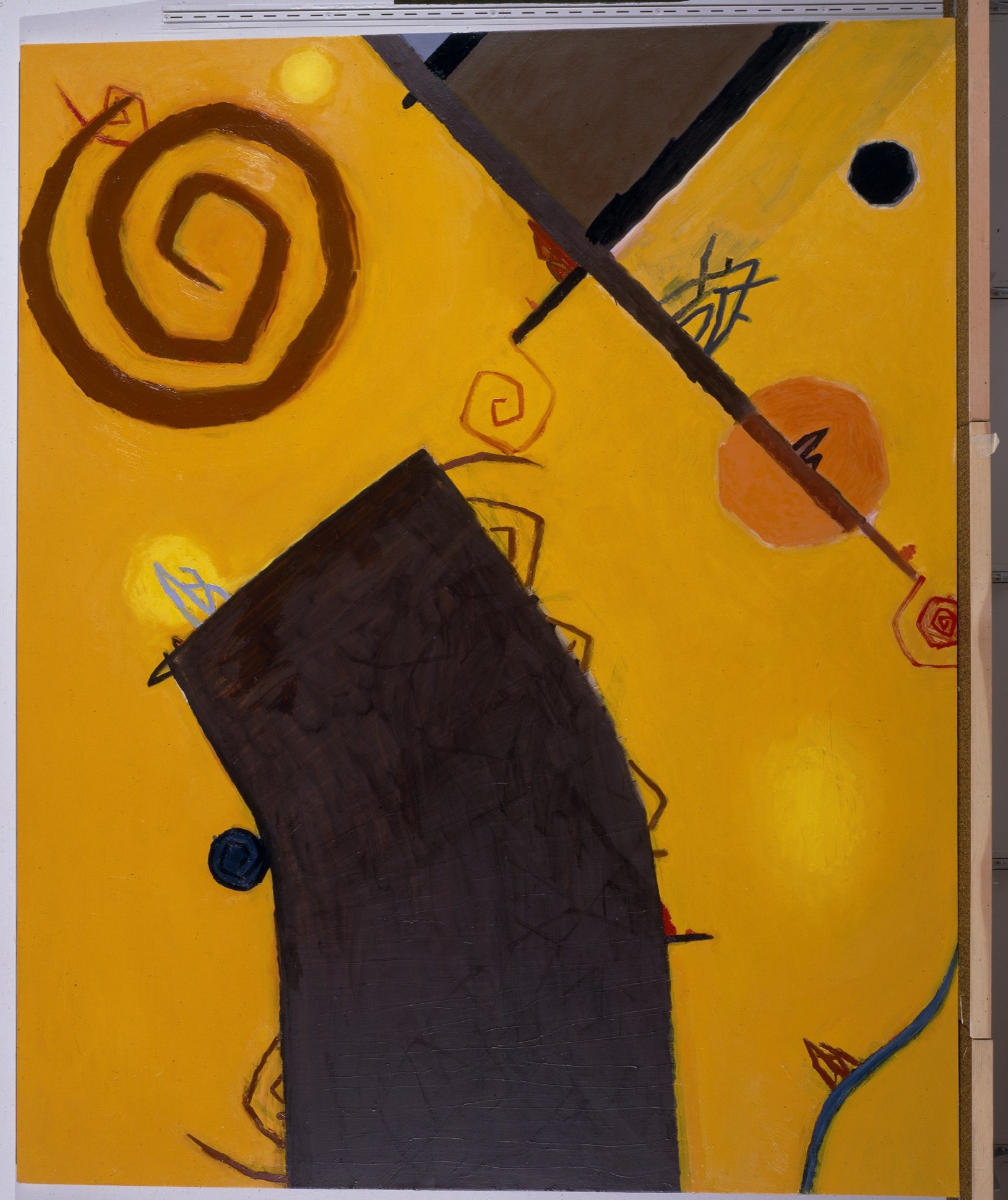
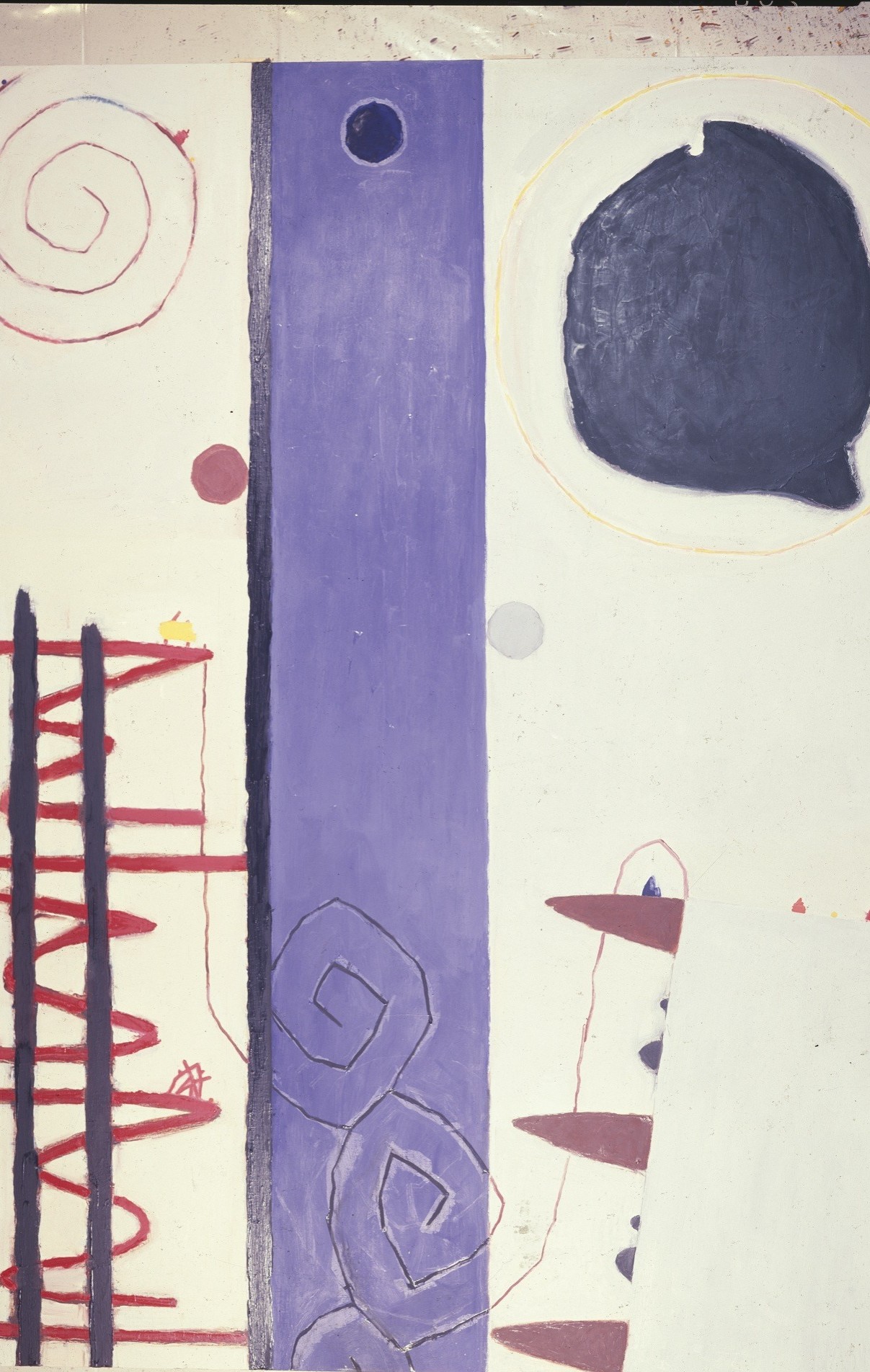
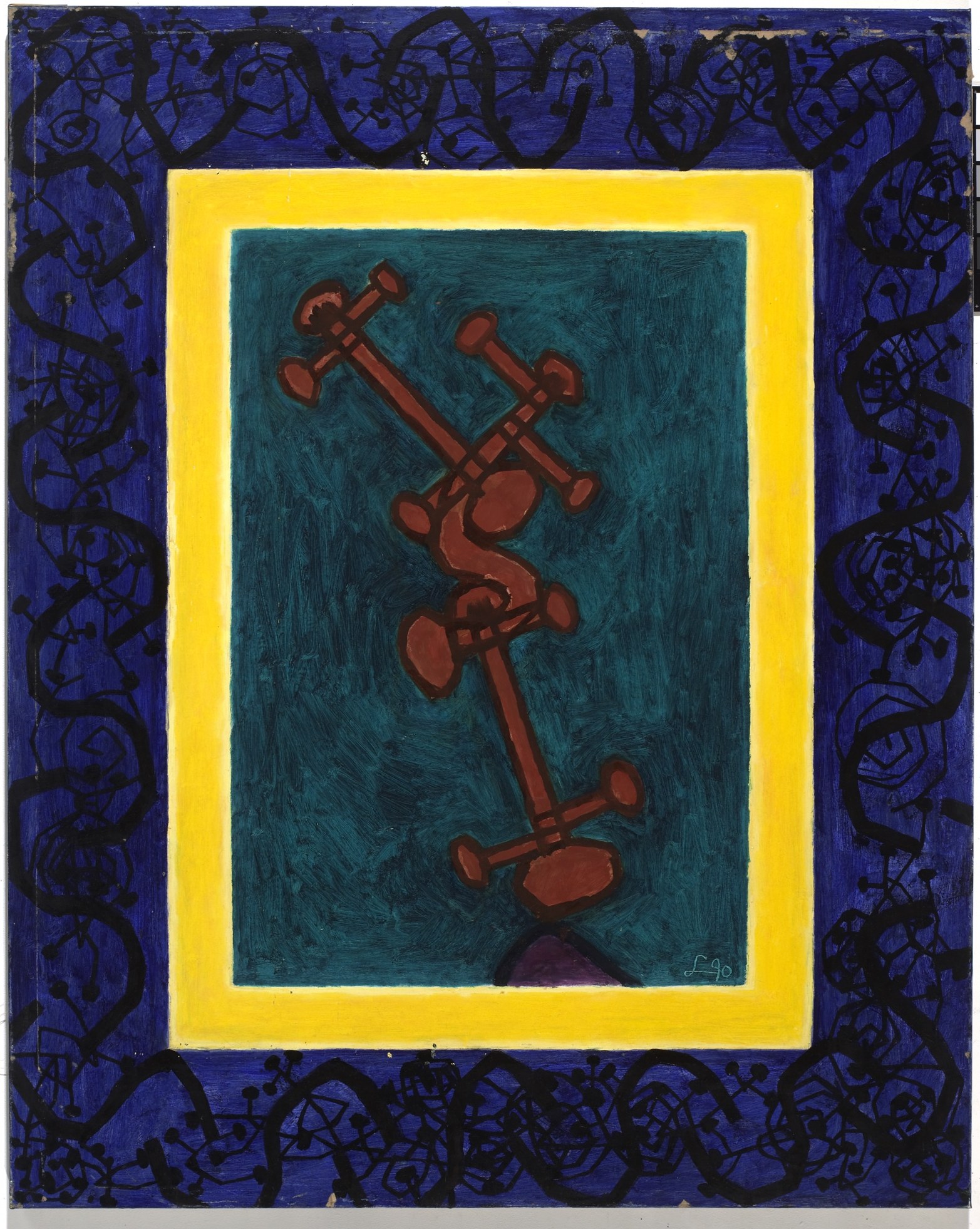
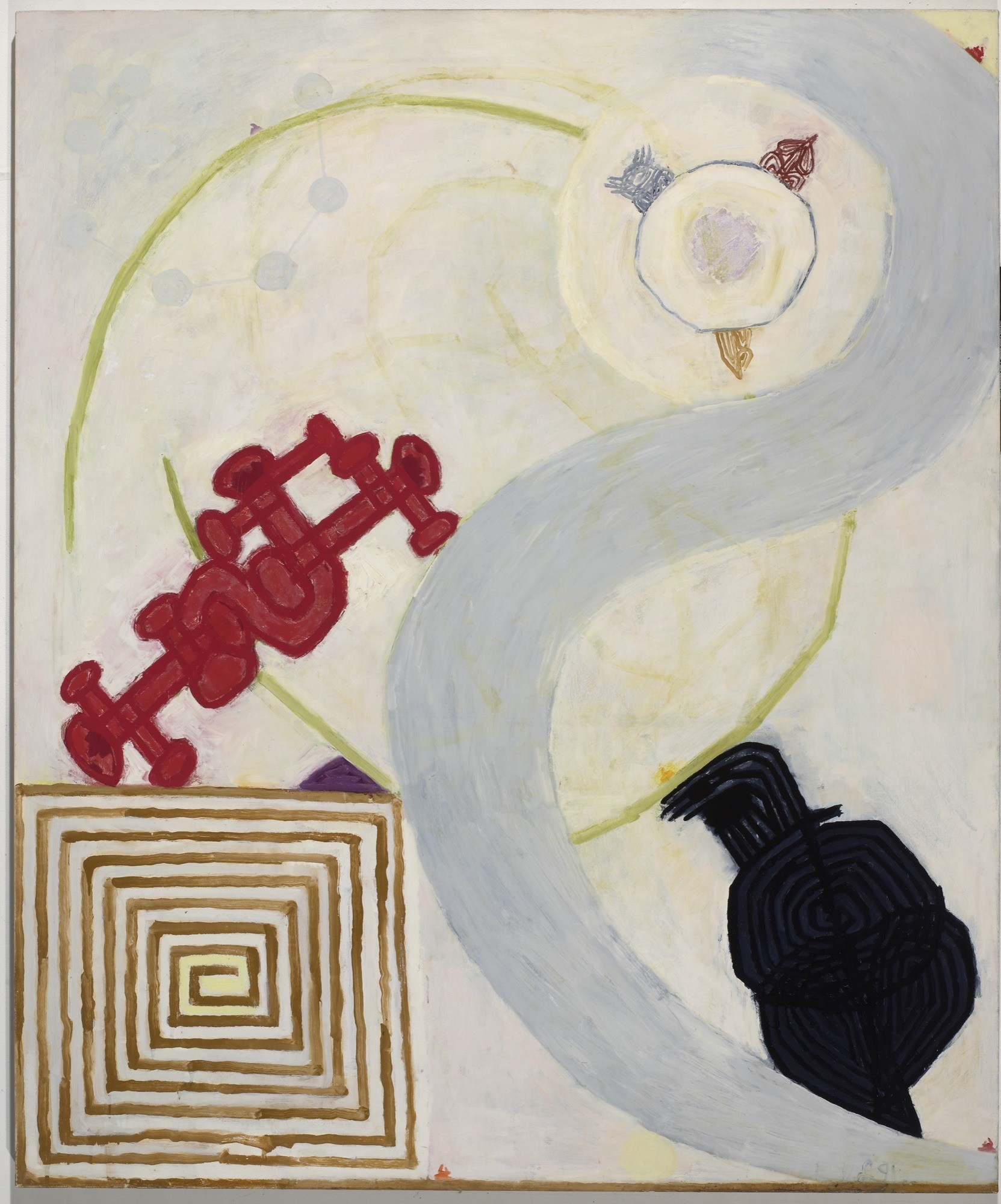
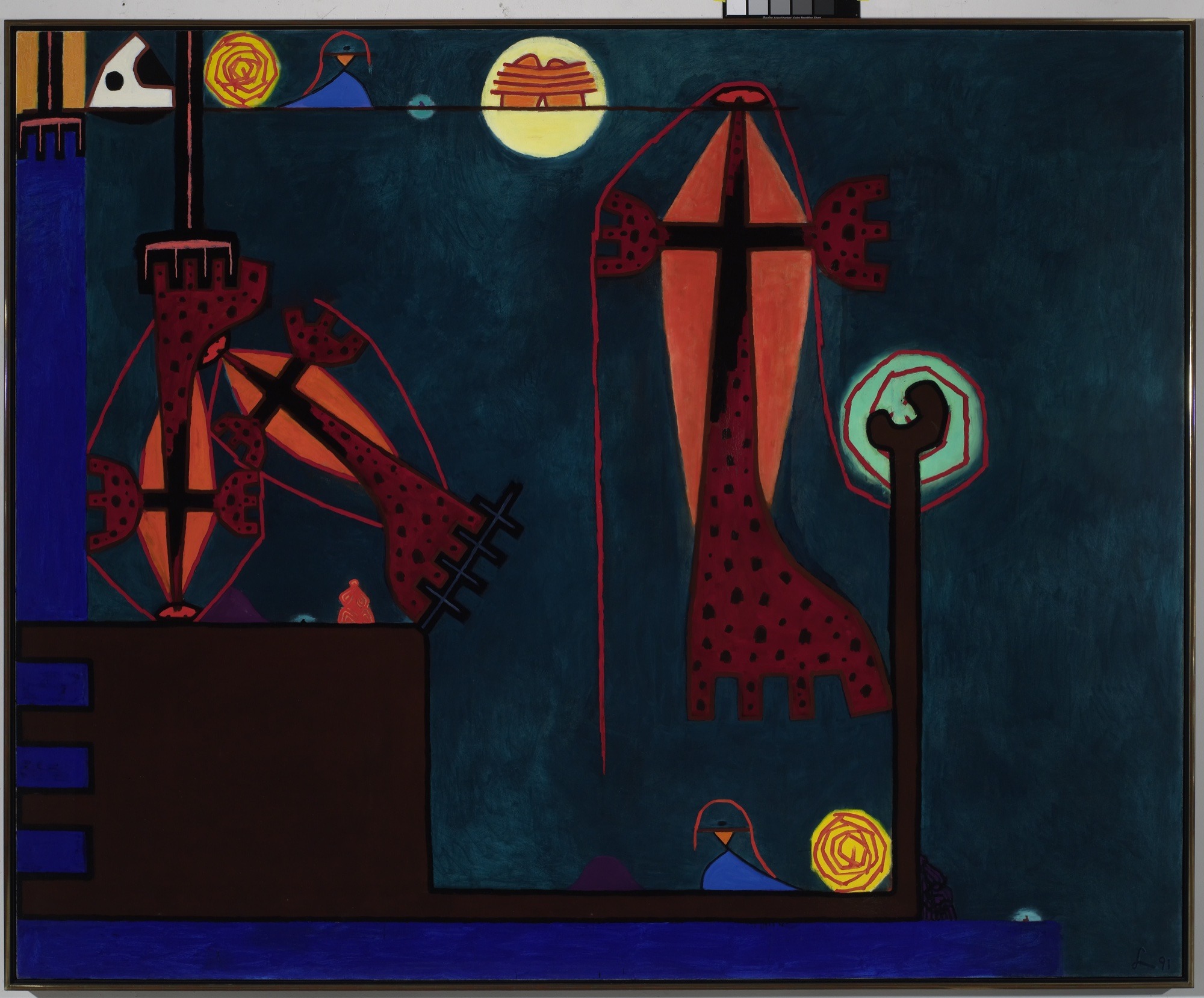
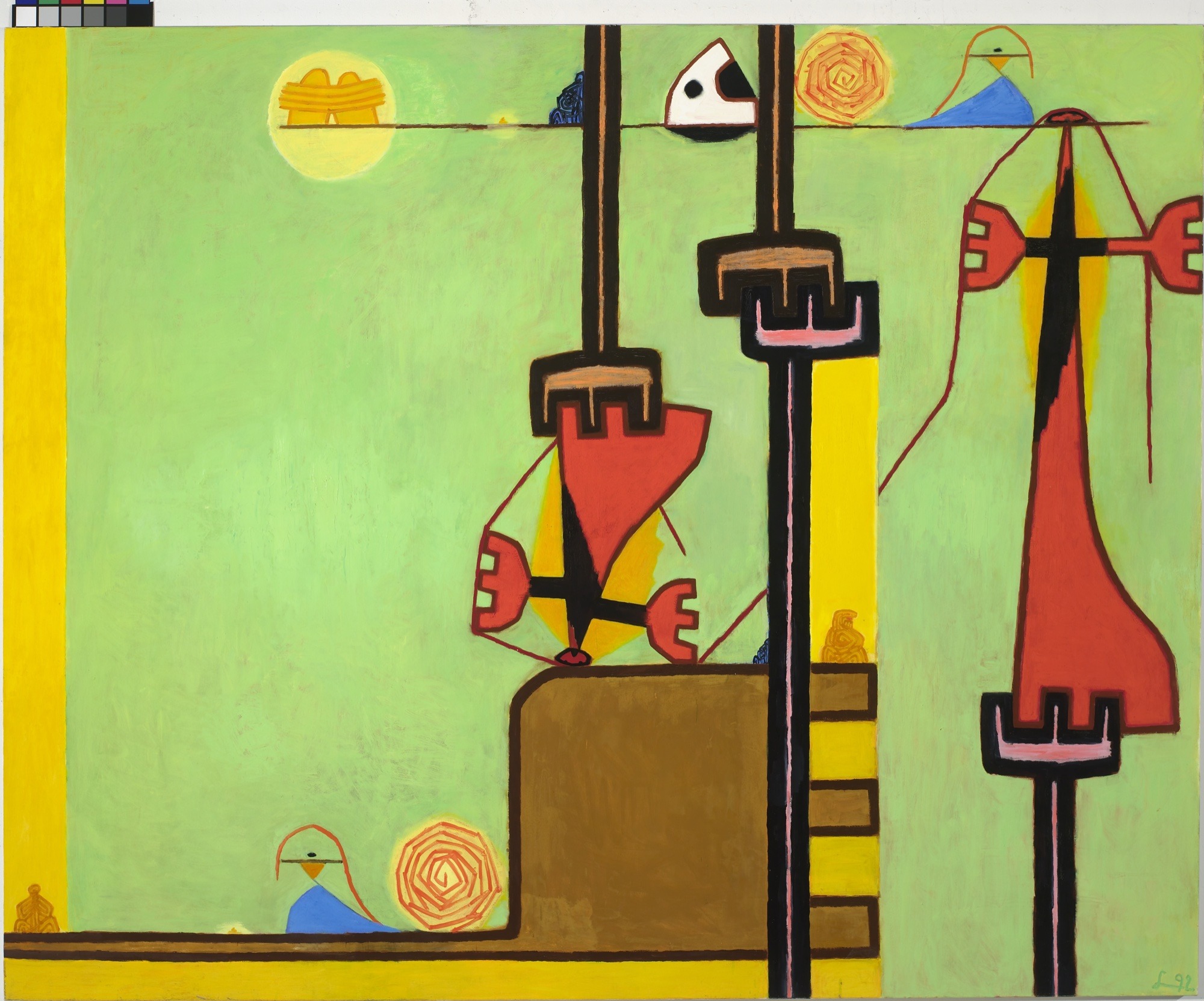
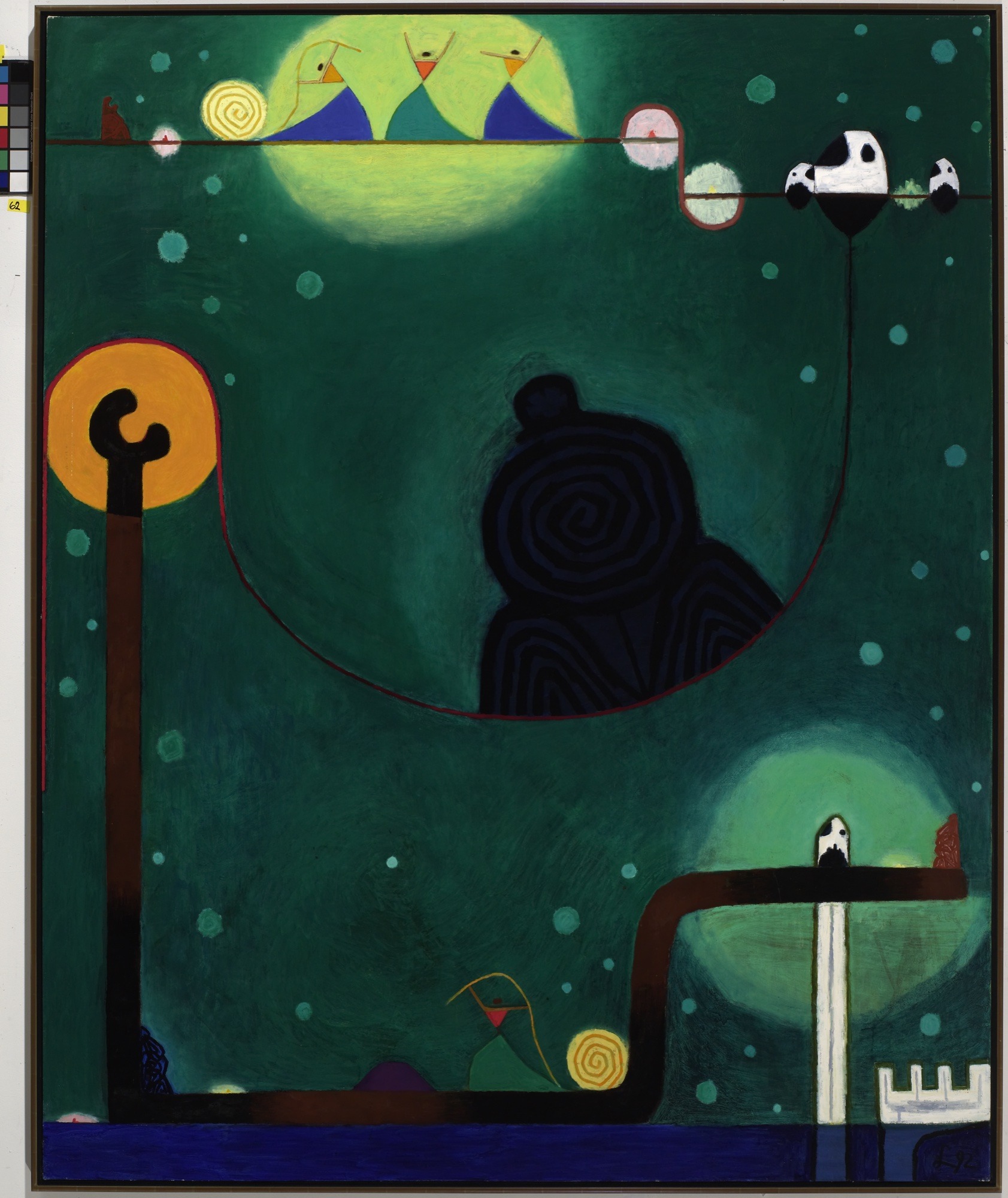
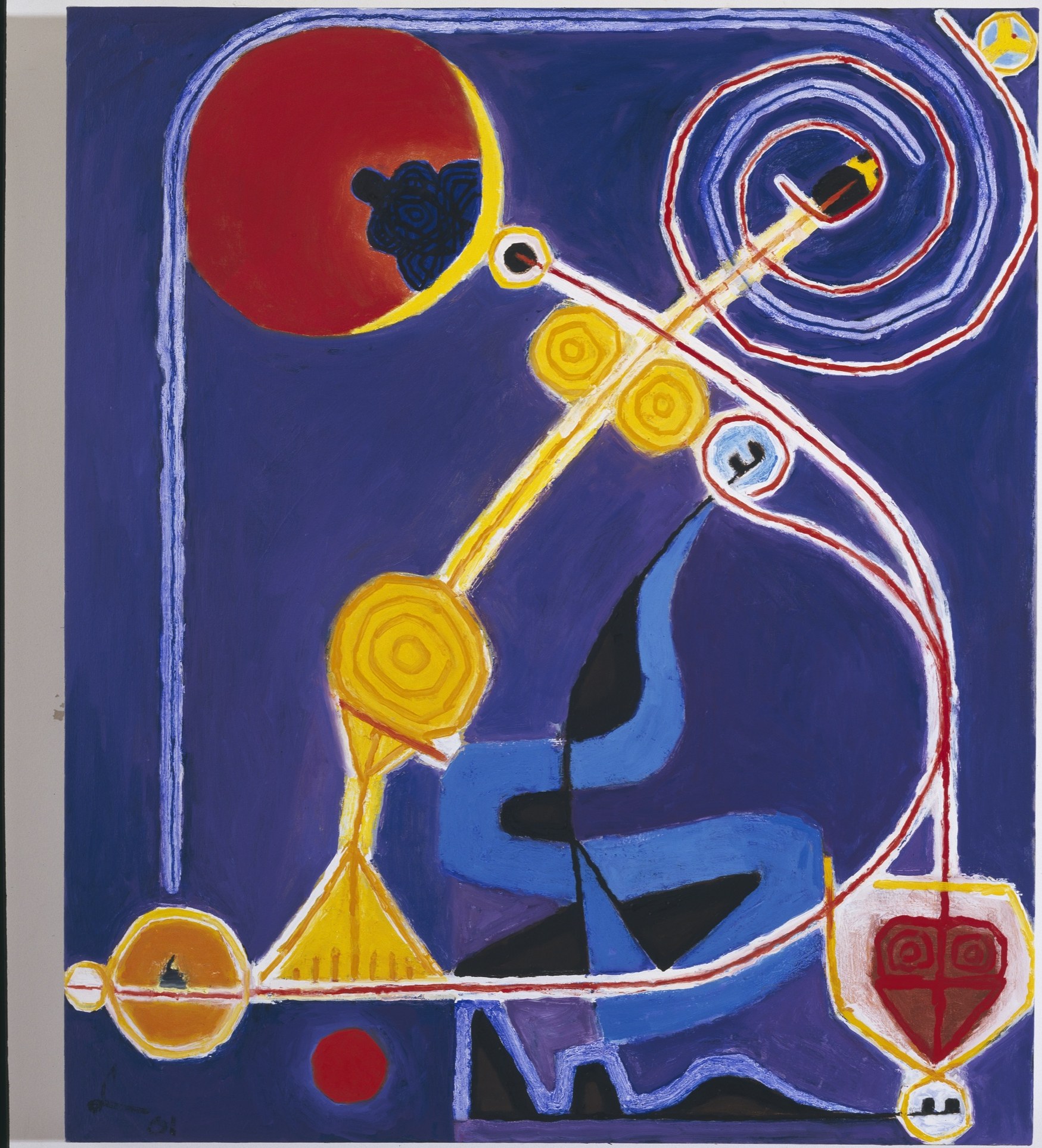
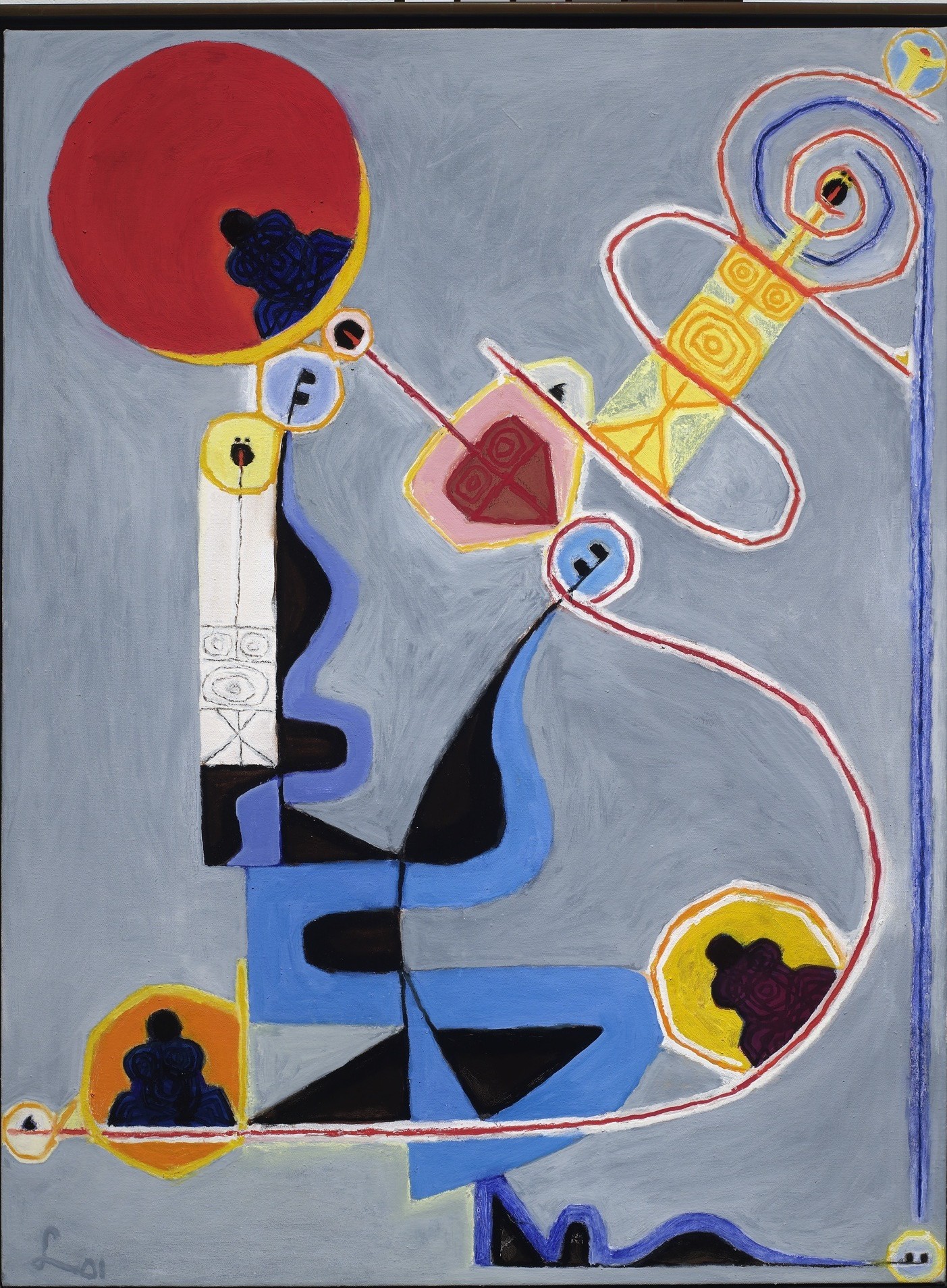
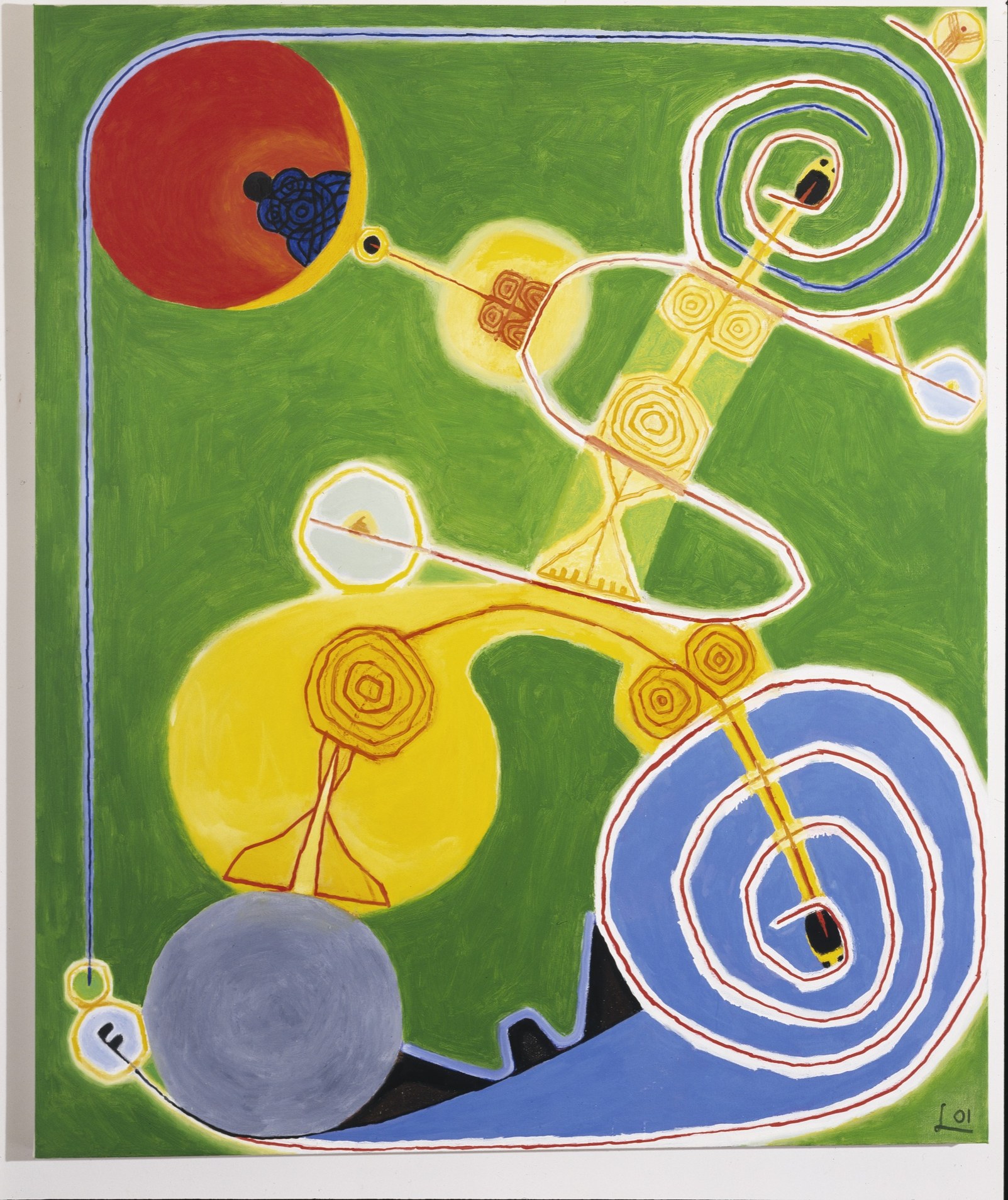
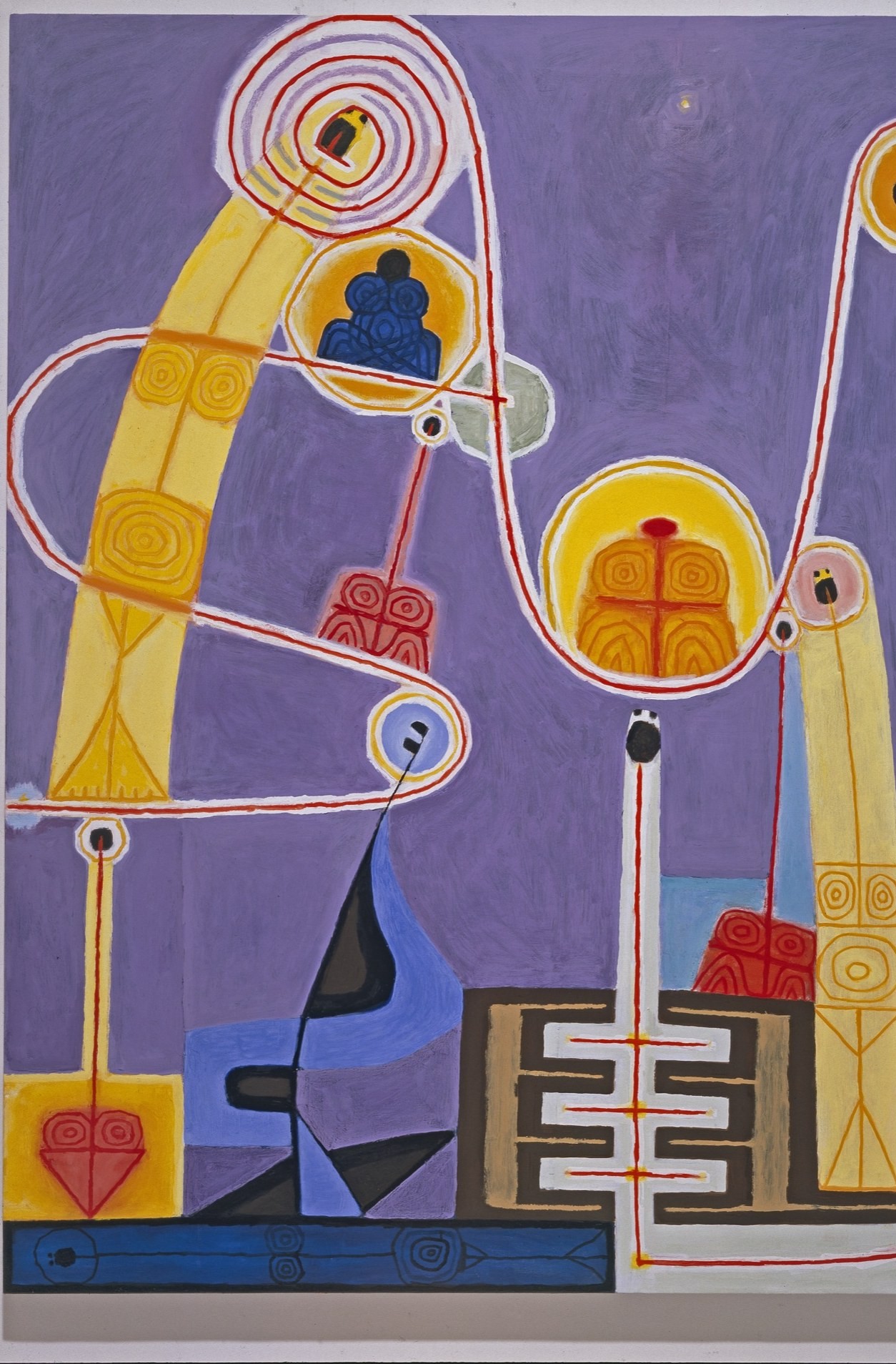
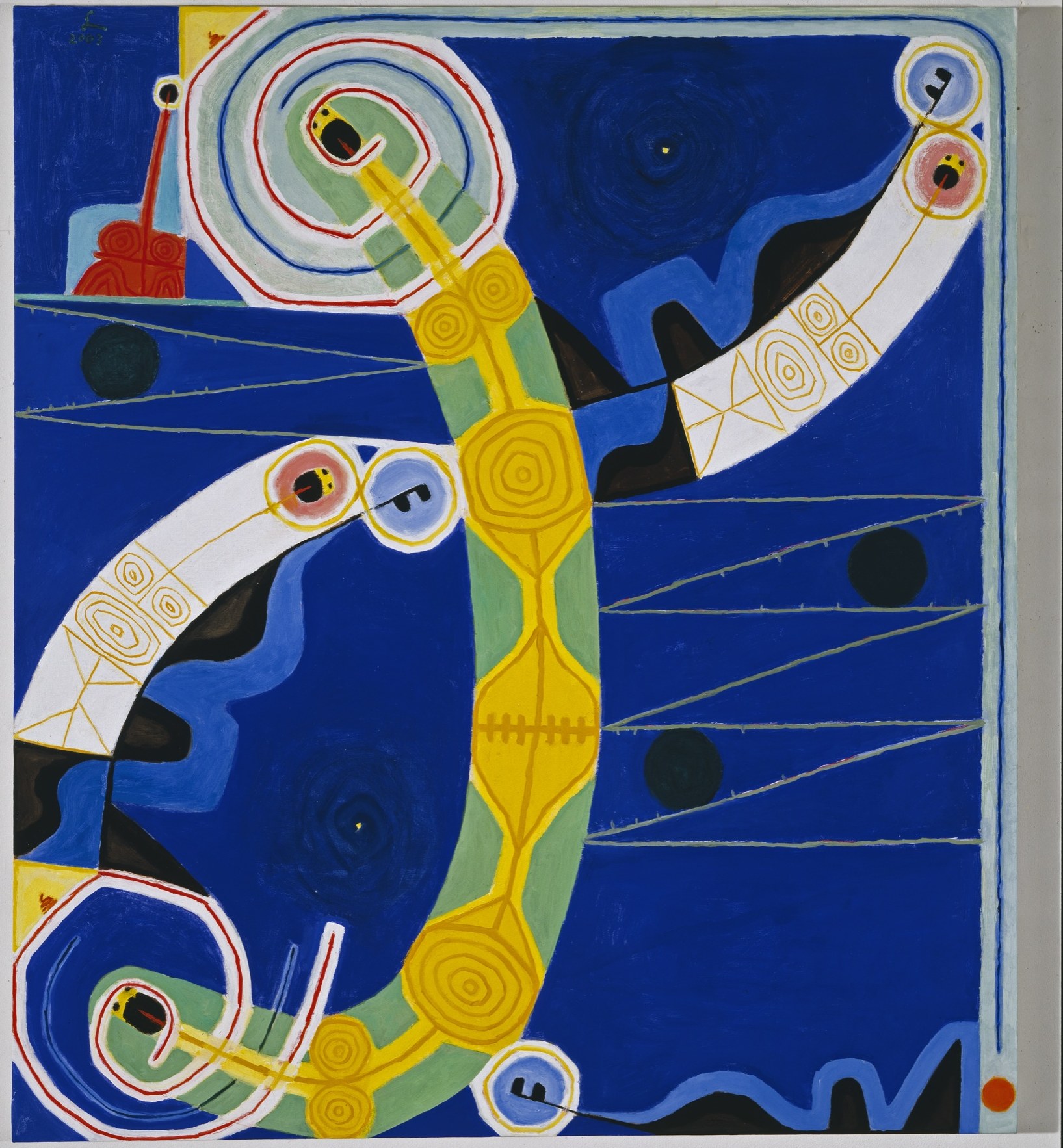
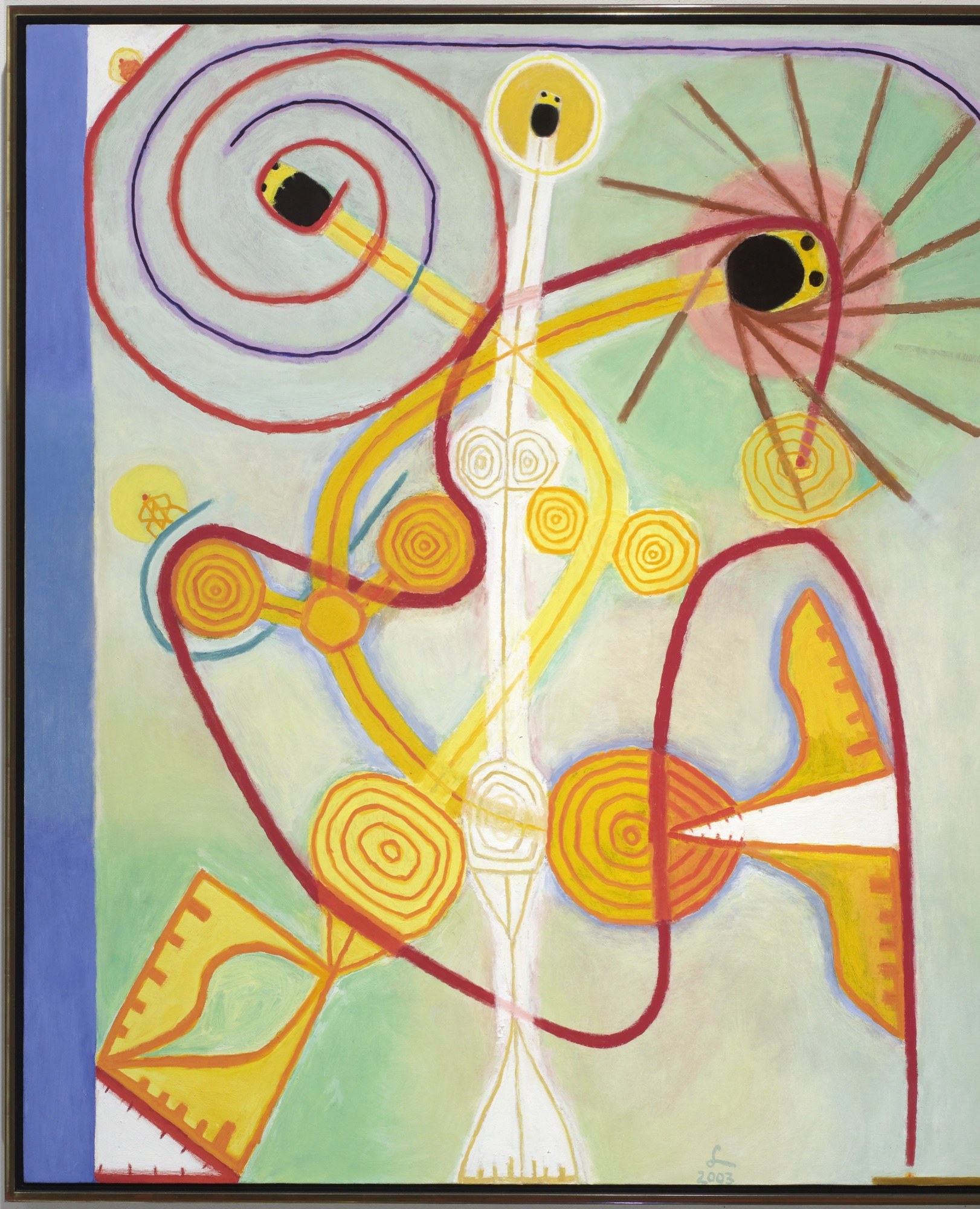
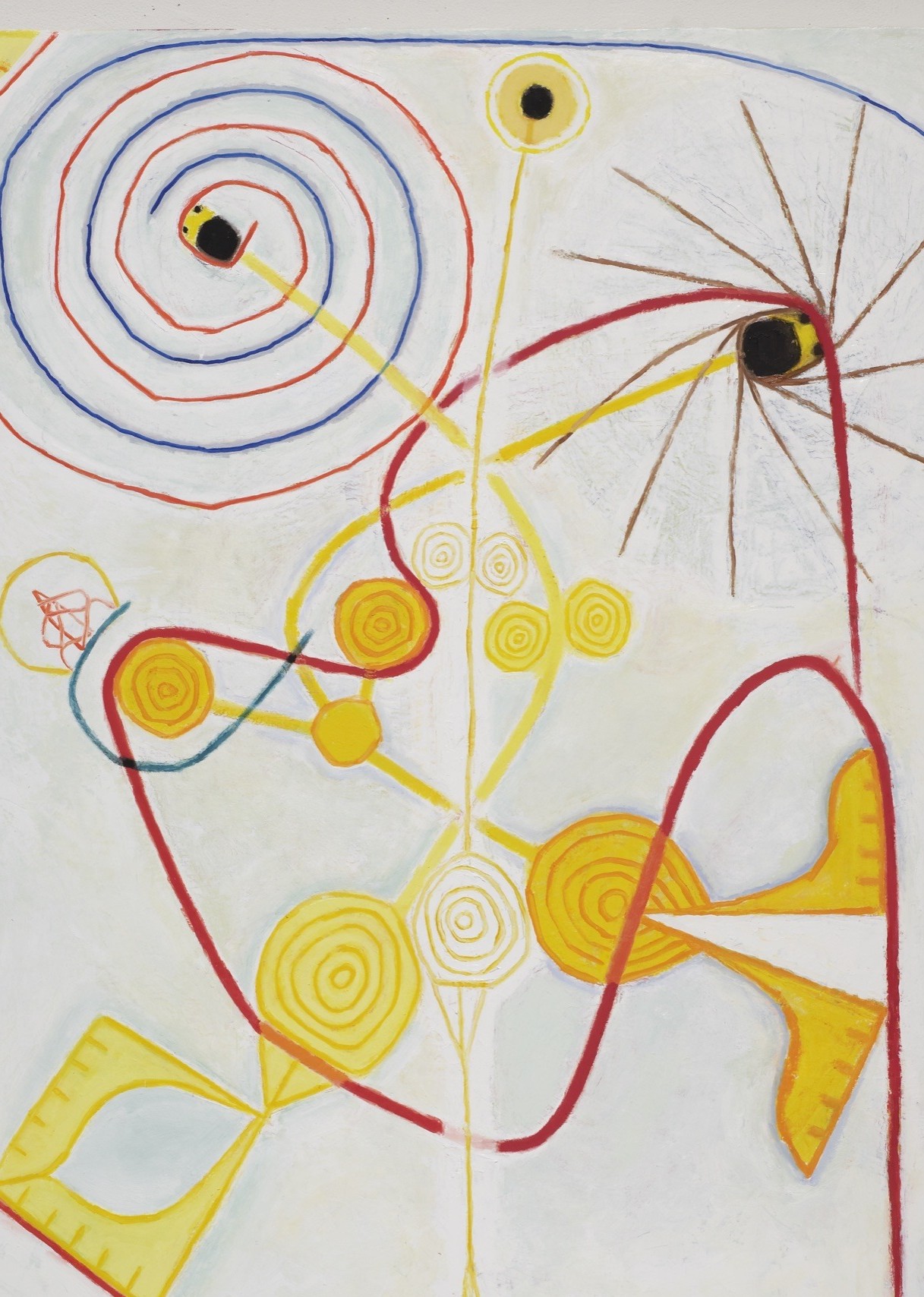
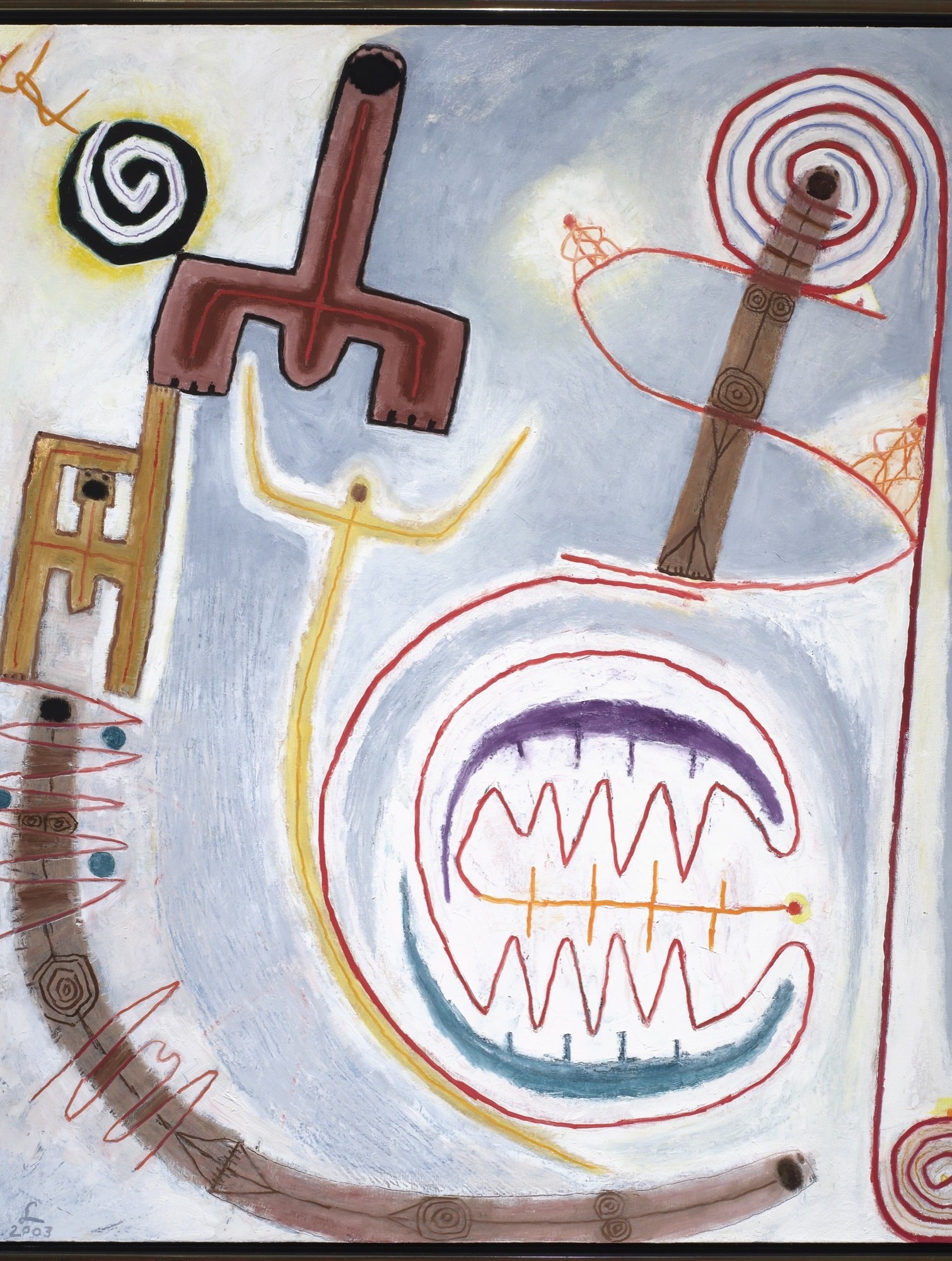
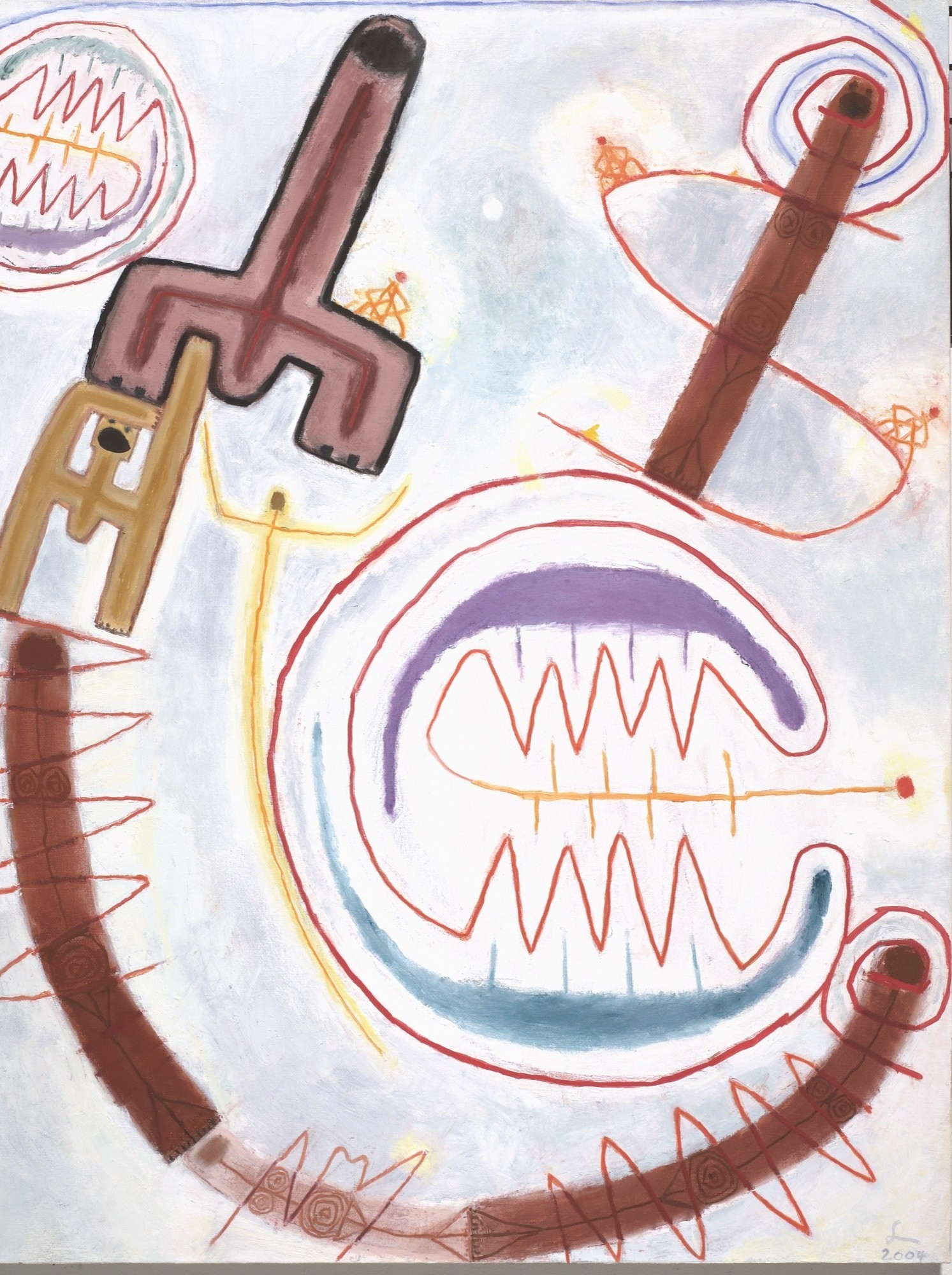
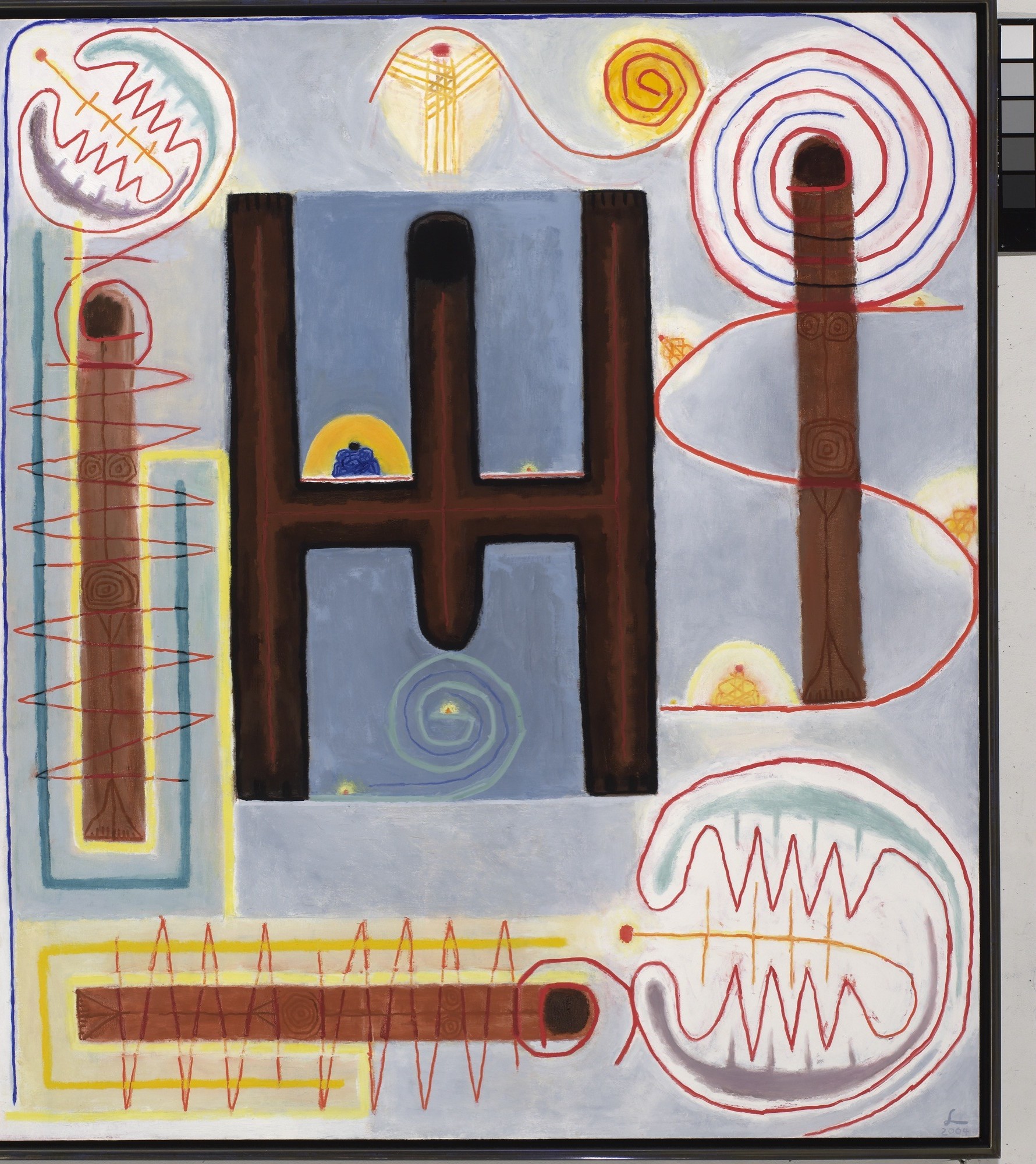
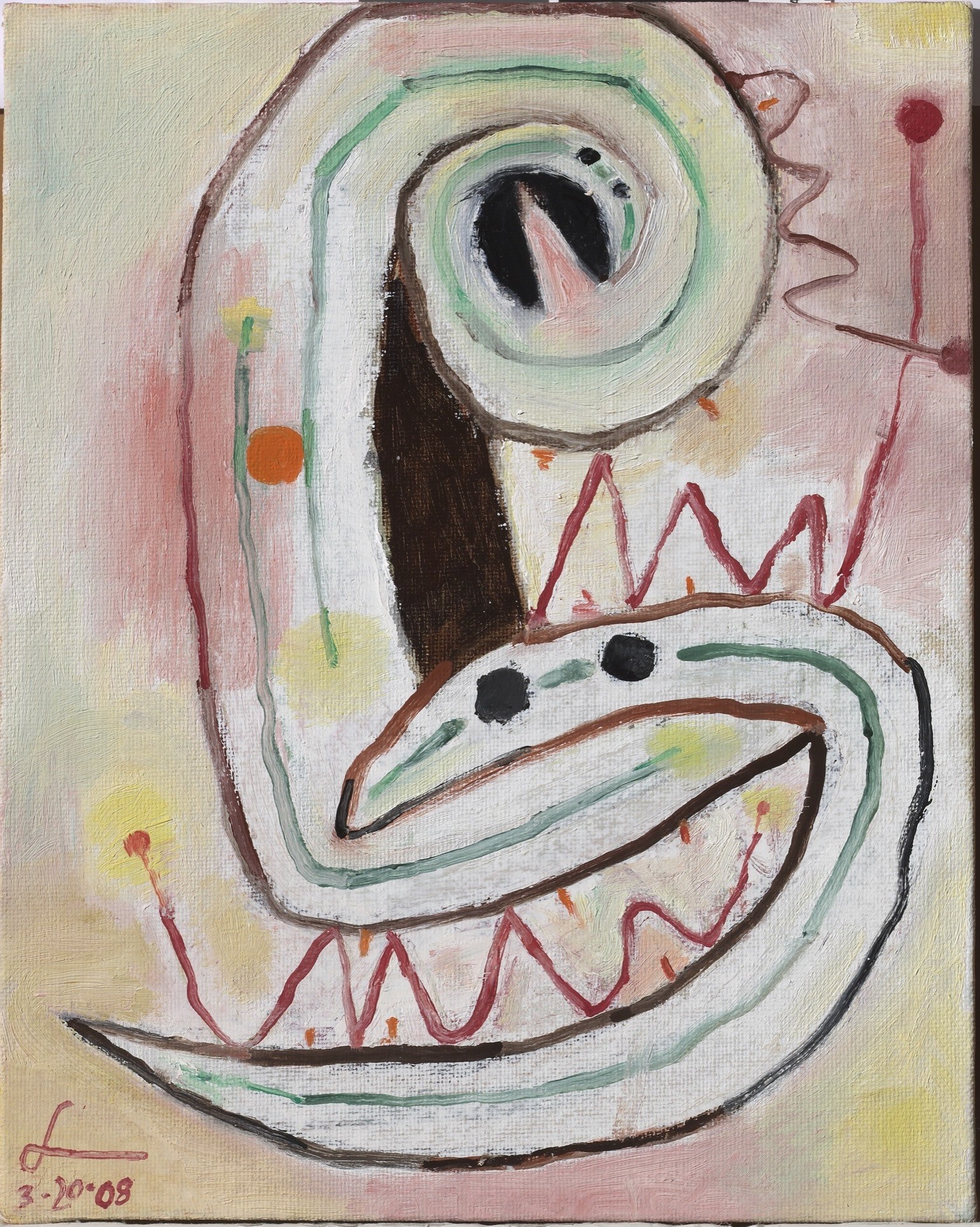
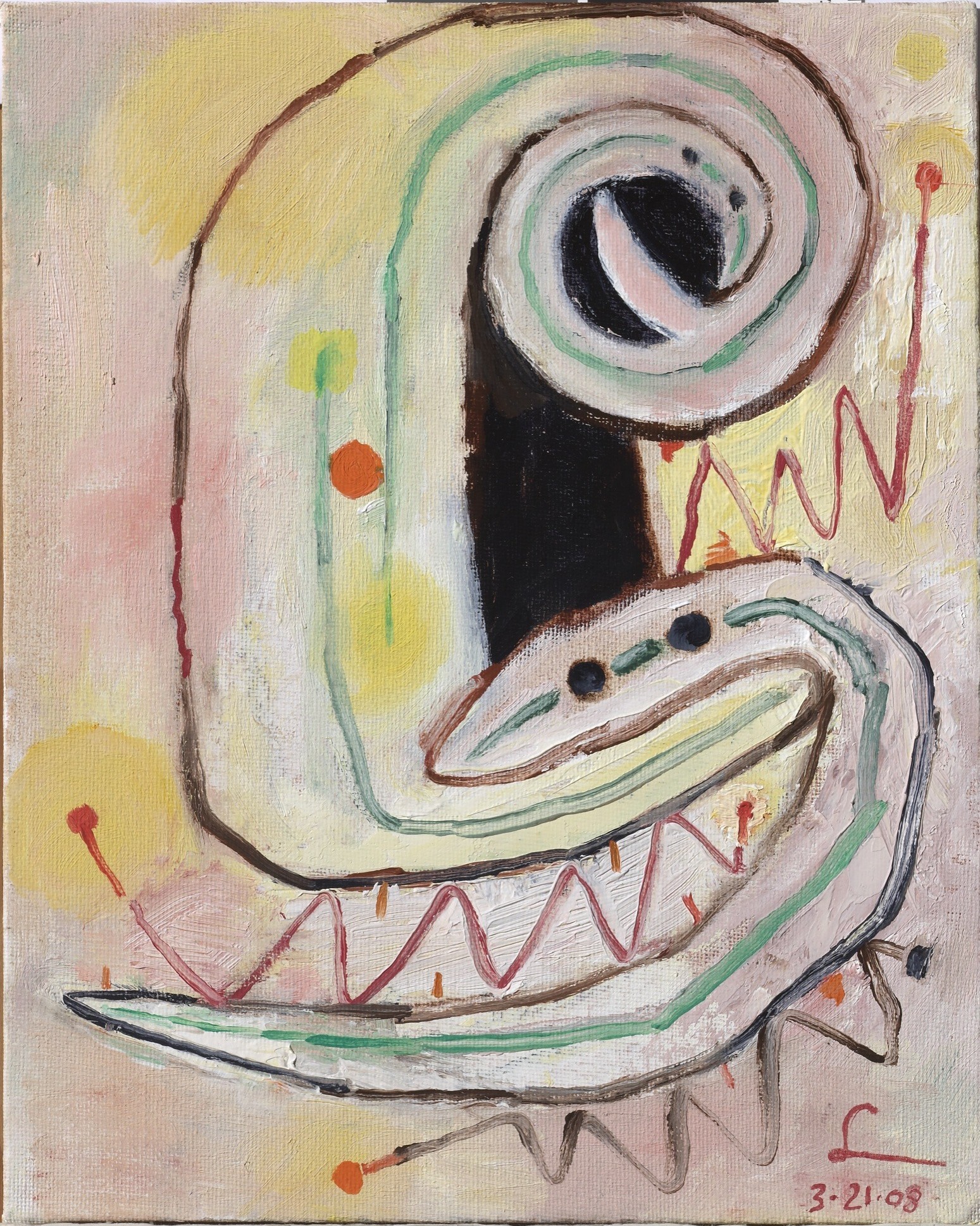
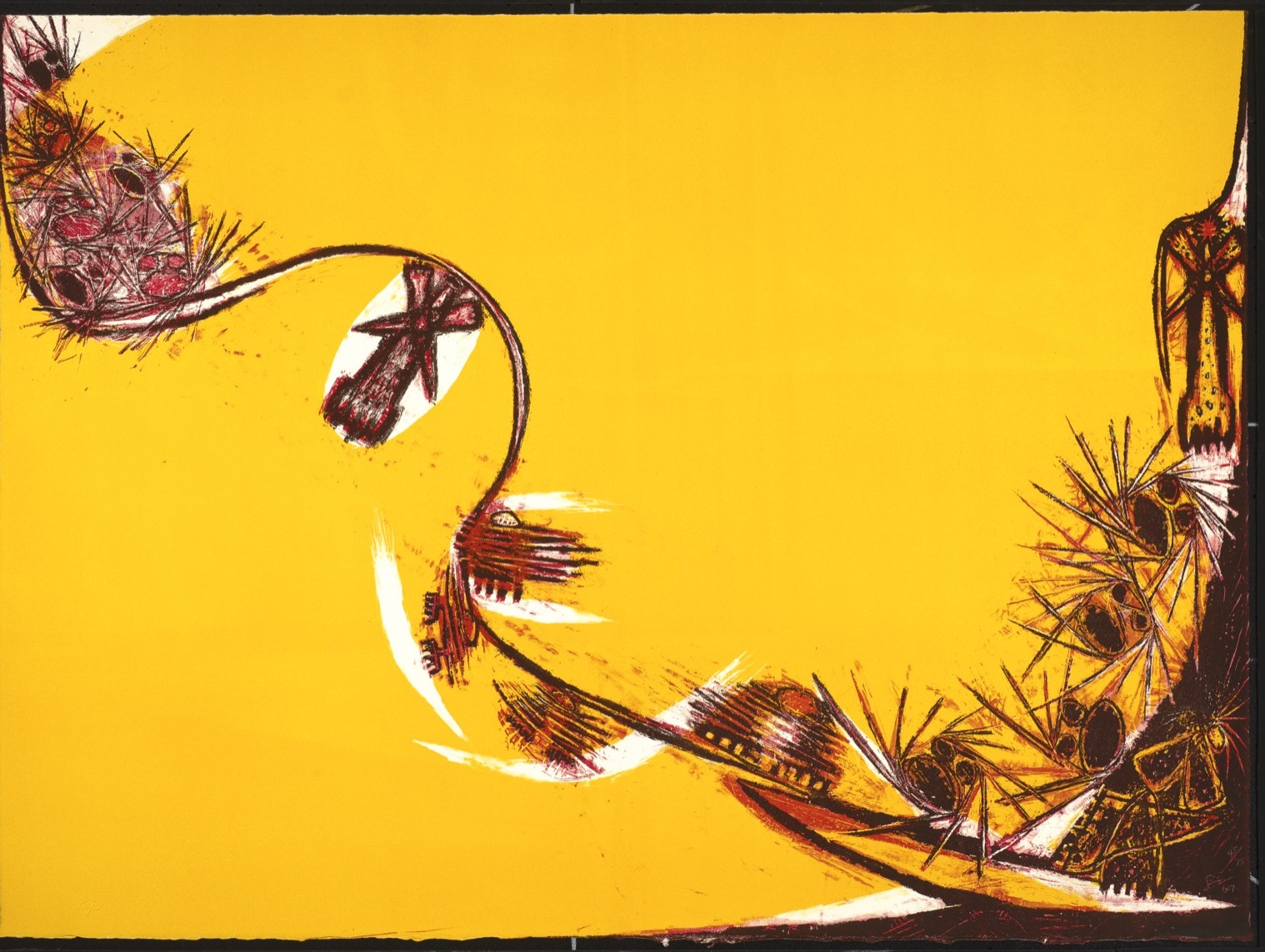
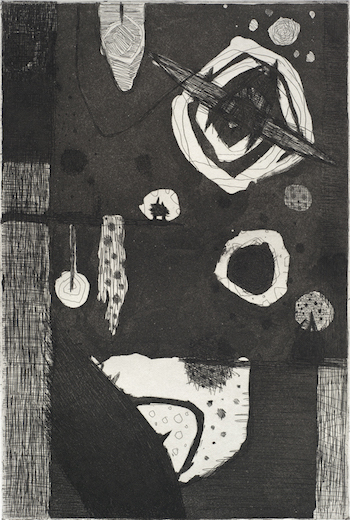
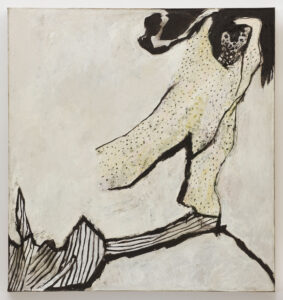
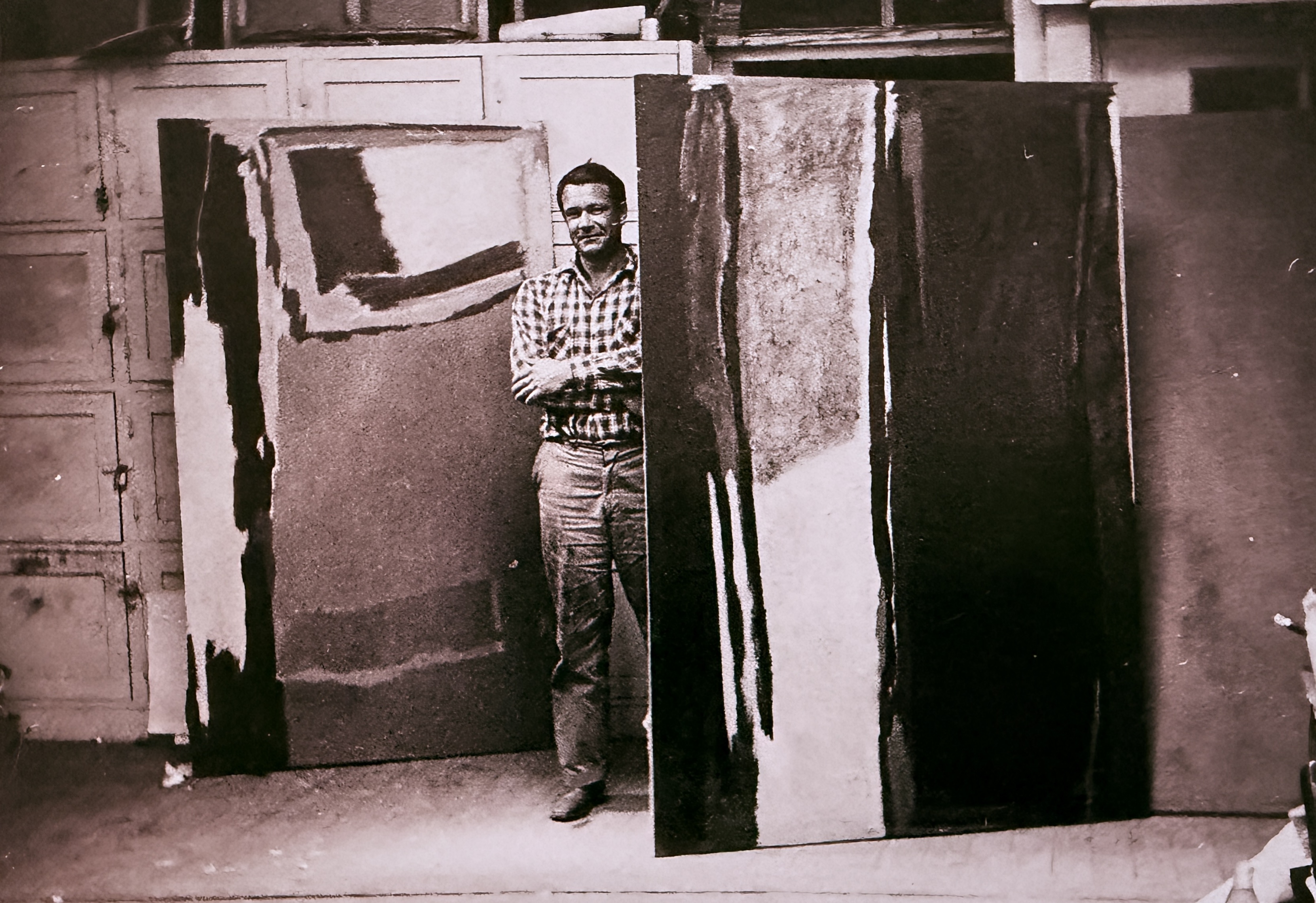
Lobdell's first postwar paintings emerged from a raw, earthy palette of mottled blacks, greens, and browns — the same Still-inflected ground tone shared by Diebenkorn and Bladen — out of which he began organizing a private pictography: boomerangs, sun discs with spinning rays, jawbones, wing shapes, ragged claws. Two influences fused in this iconography: the Paleolithic cave paintings at Lascaux, which he encountered studying in Paris in 1950–51, and the surrealist mark-making of Picasso, Miró, and Klee. Beneath both was the war.
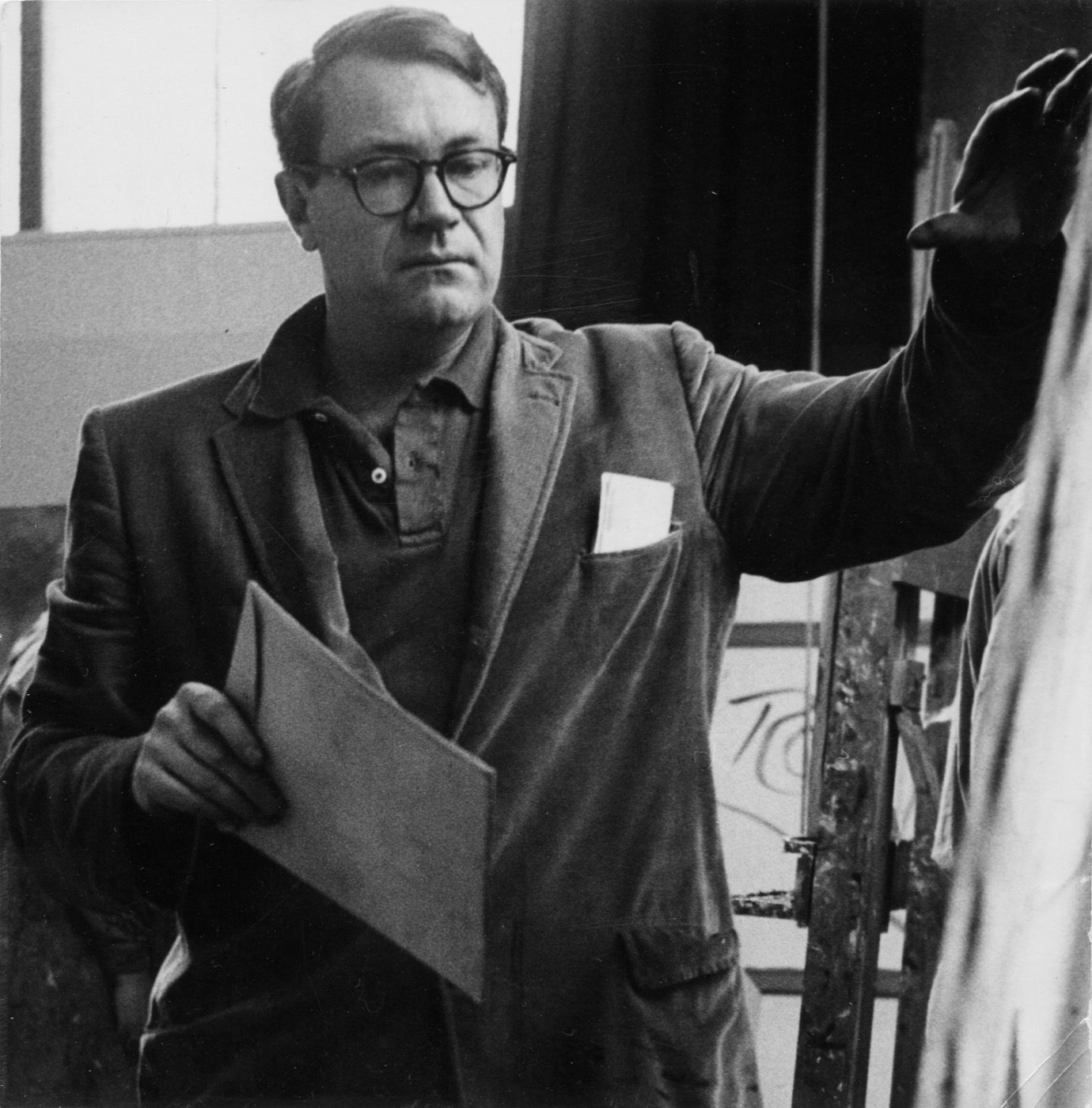
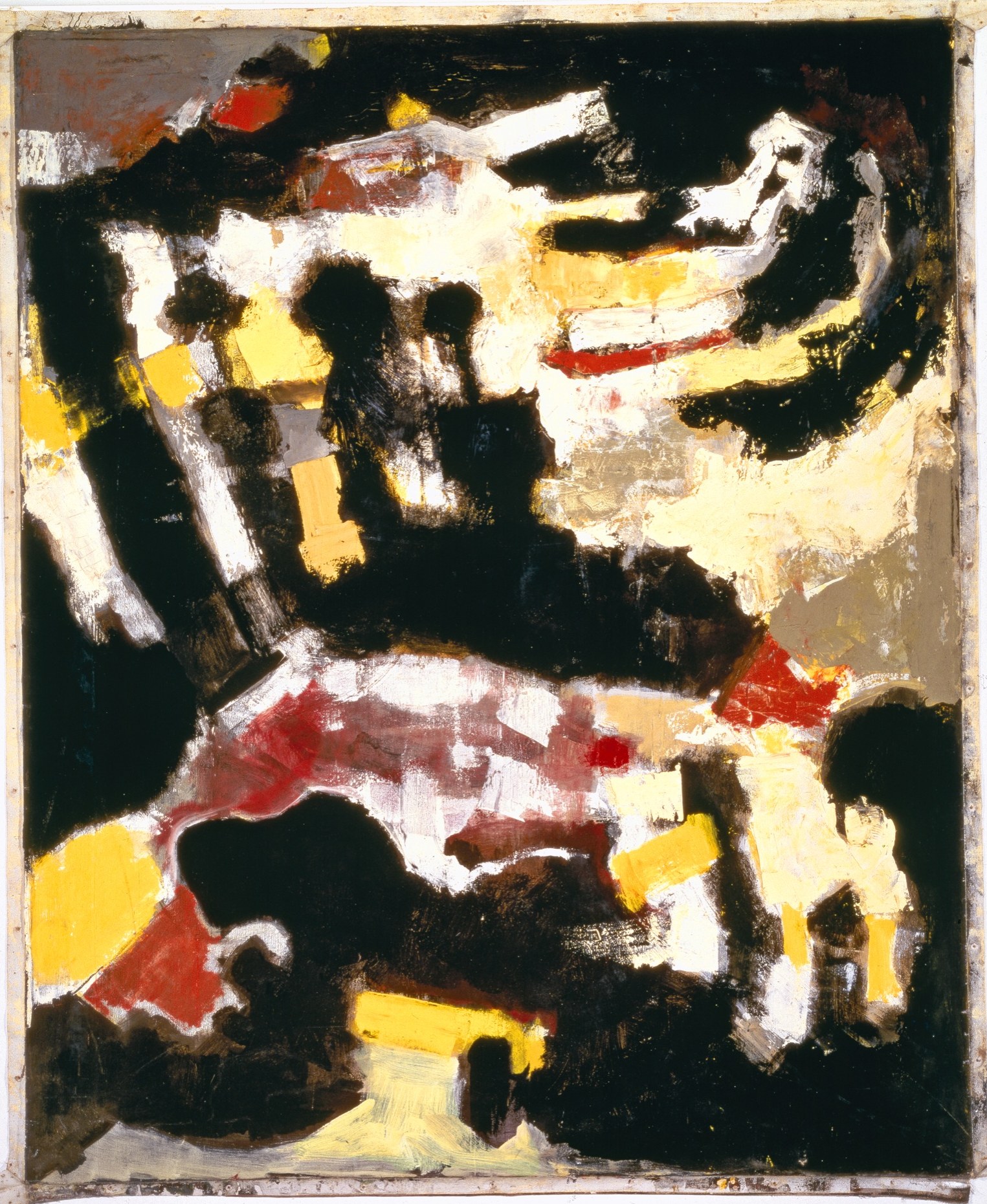
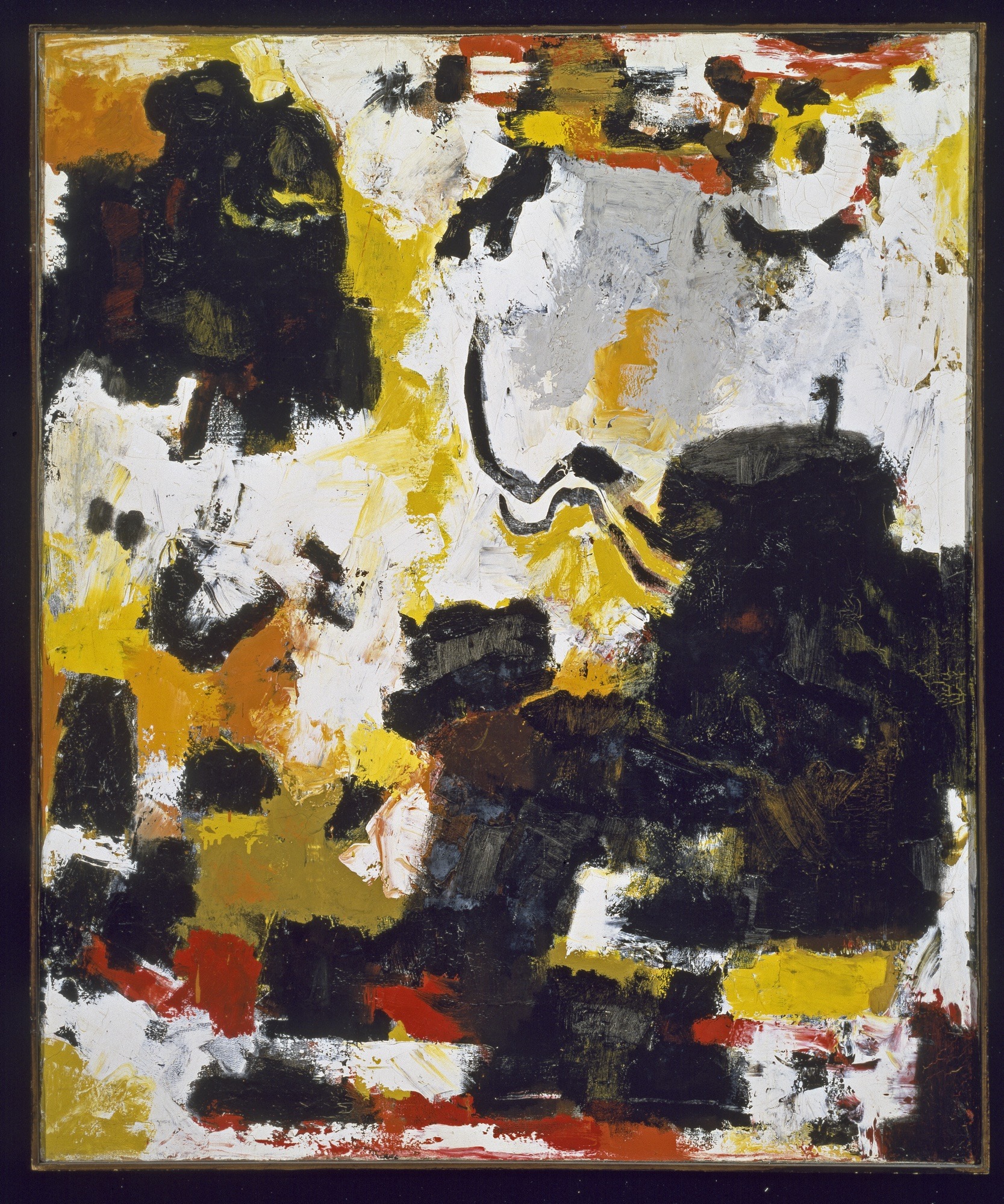
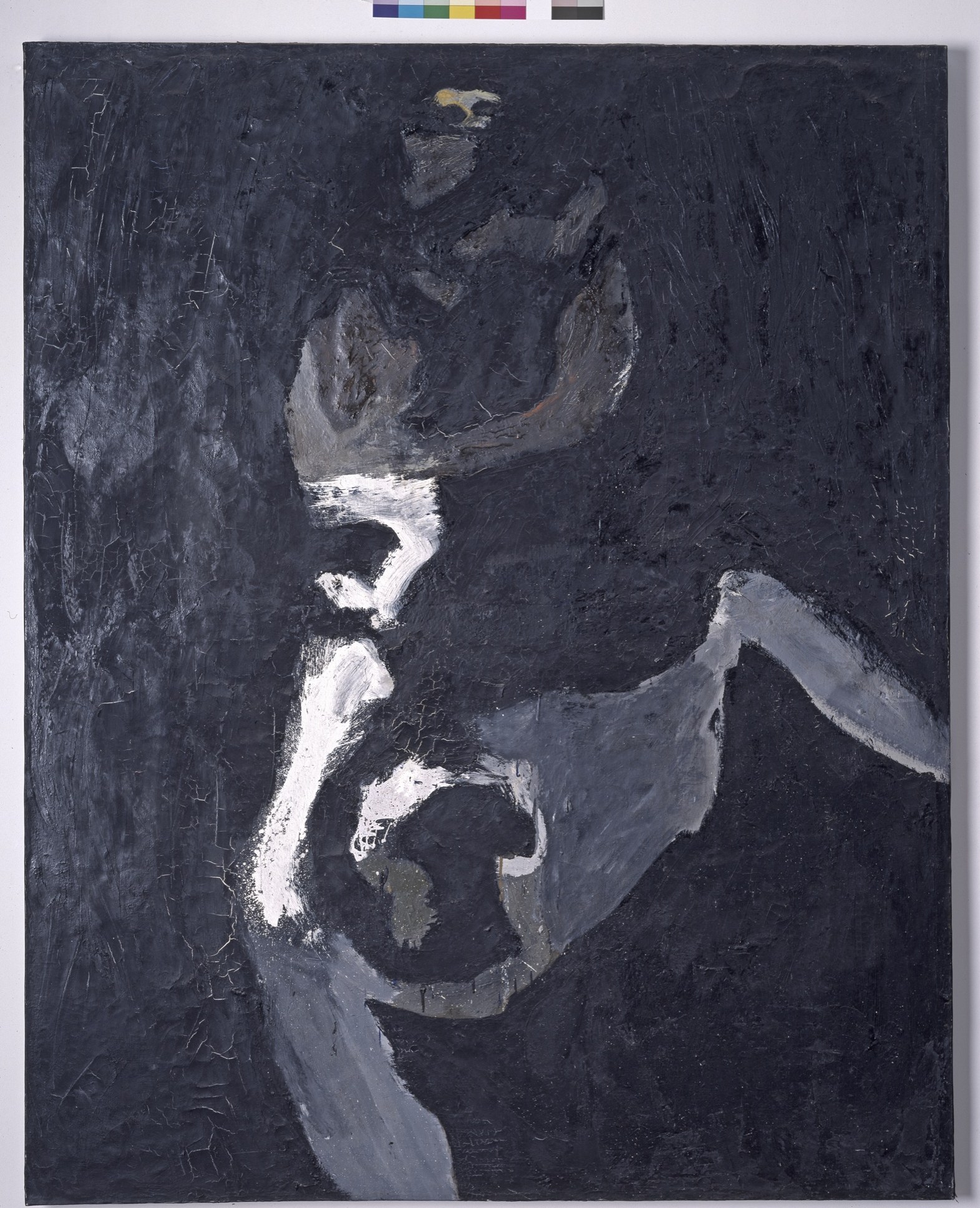
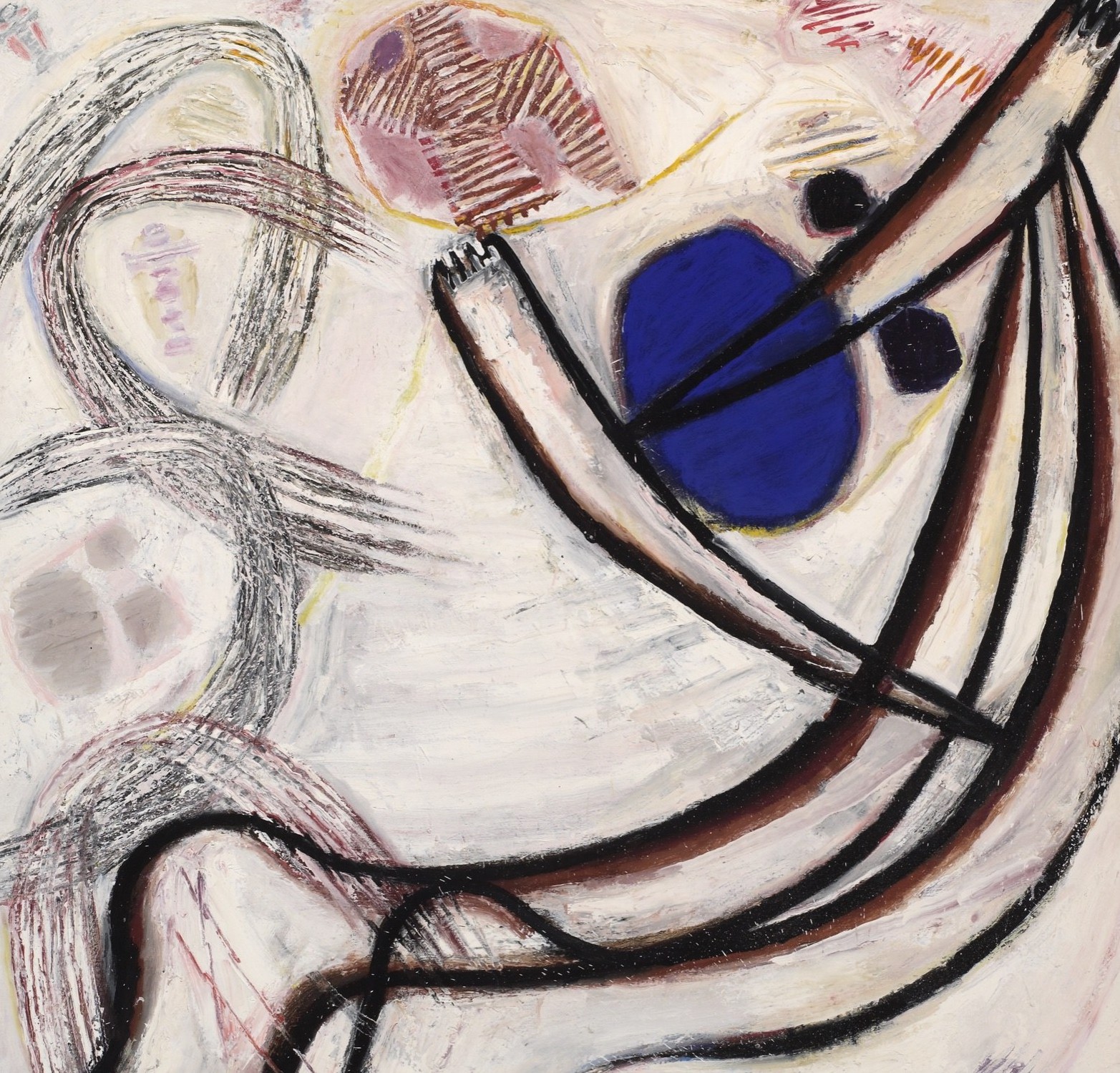
Where his New York contemporaries celebrated the spontaneity of action painting, Lobdell worked slowly. Any impulsiveness had to be answered by self-questioning, and his canvases carry the marks of erasure and revision — patches painted over, ghosts of earlier forms still visible beneath the surface.
"A painting must die before it can live."
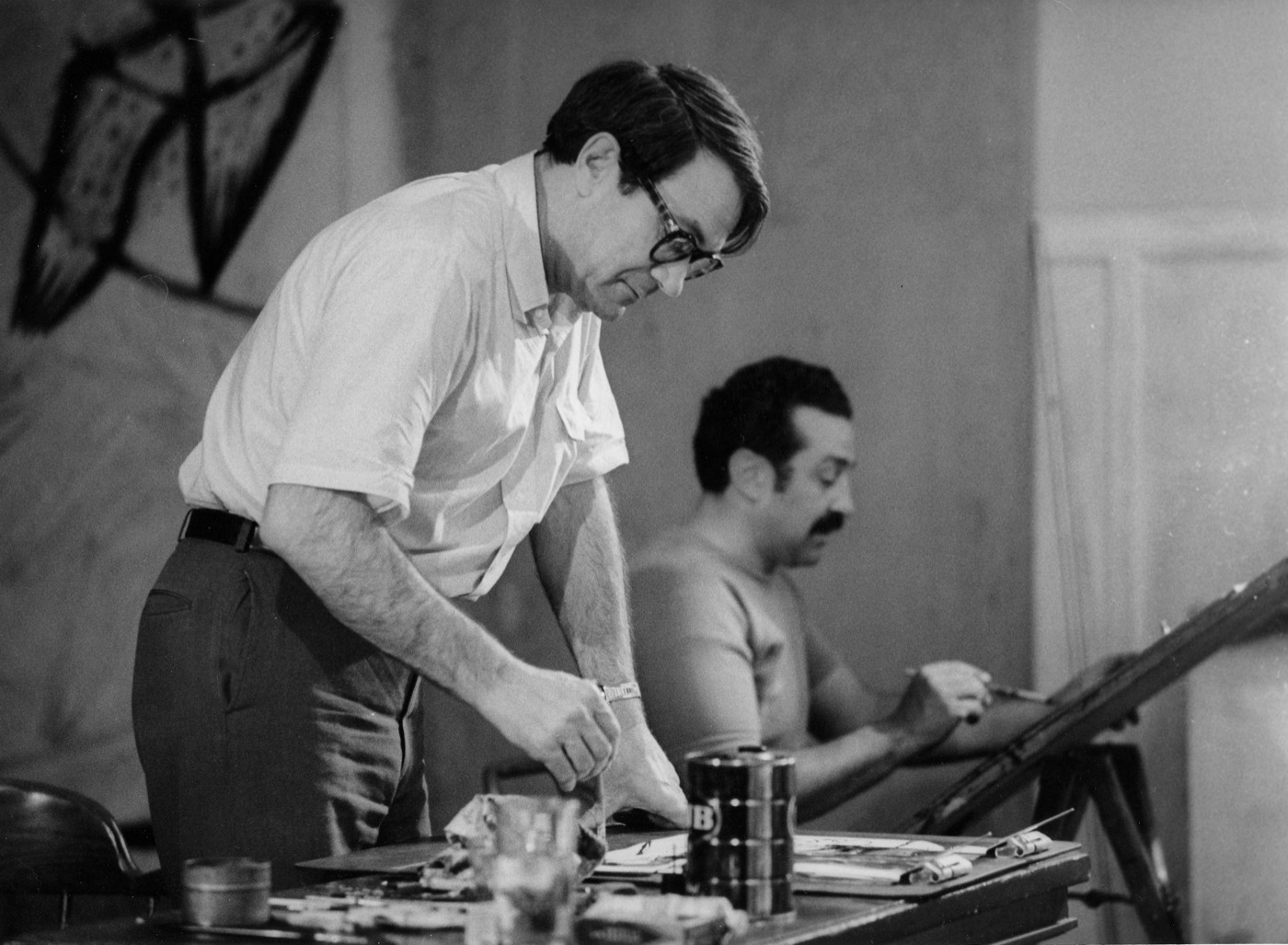
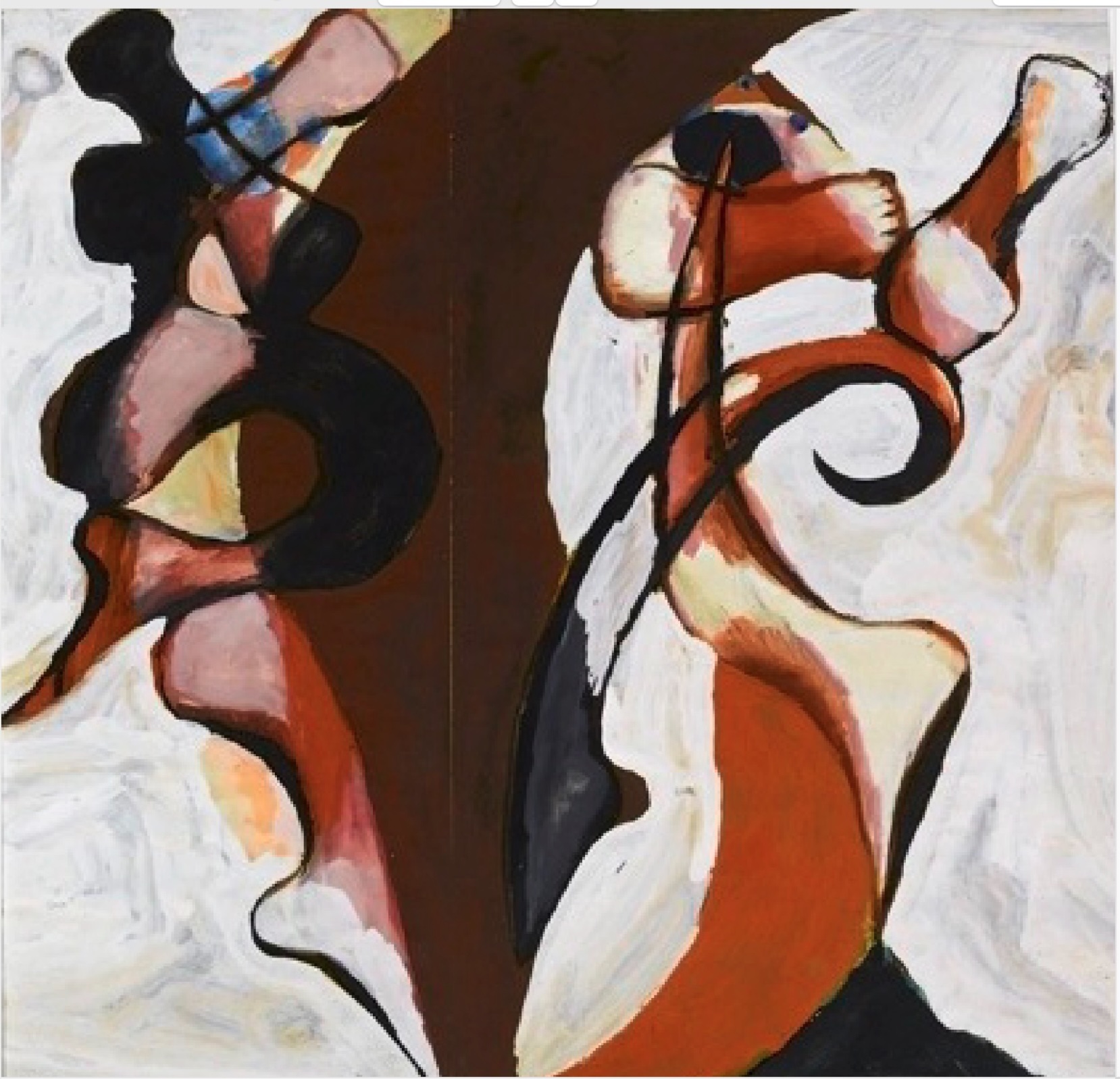
Through the 1950s and 1960s, weekly figure drawing sessions with Diebenkorn, Bischoff, and Park — and later, at Stanford, with Nathan Oliveira — taught him to build form from light and shadow in large, slow shapes. That discipline migrated directly into the paintings: biomorphic, anthropomorphic, charged with what he called a "personal, archetypal symbology," and saturated with the moral seriousness of someone for whom painting was a vocation bordering on the religious.
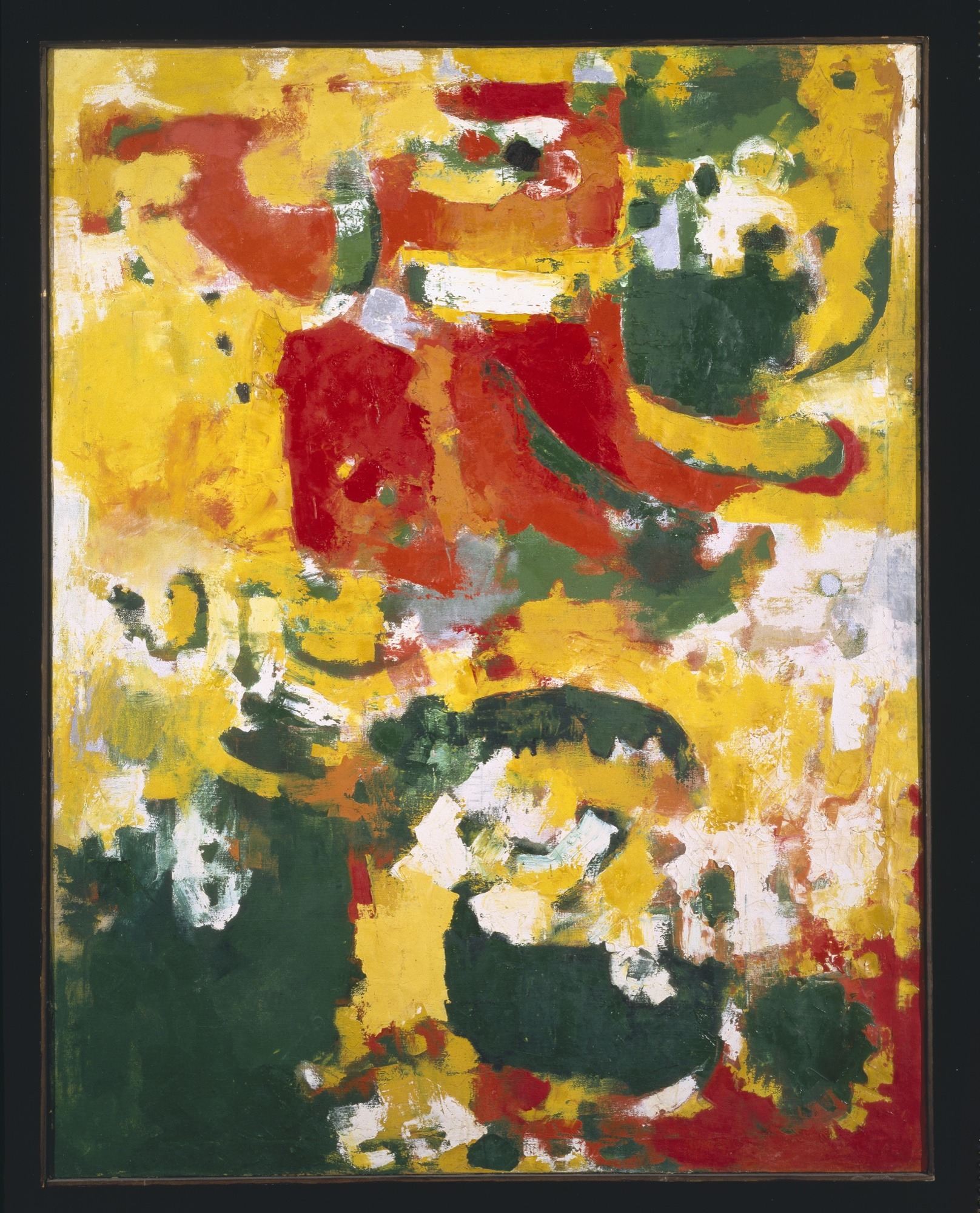
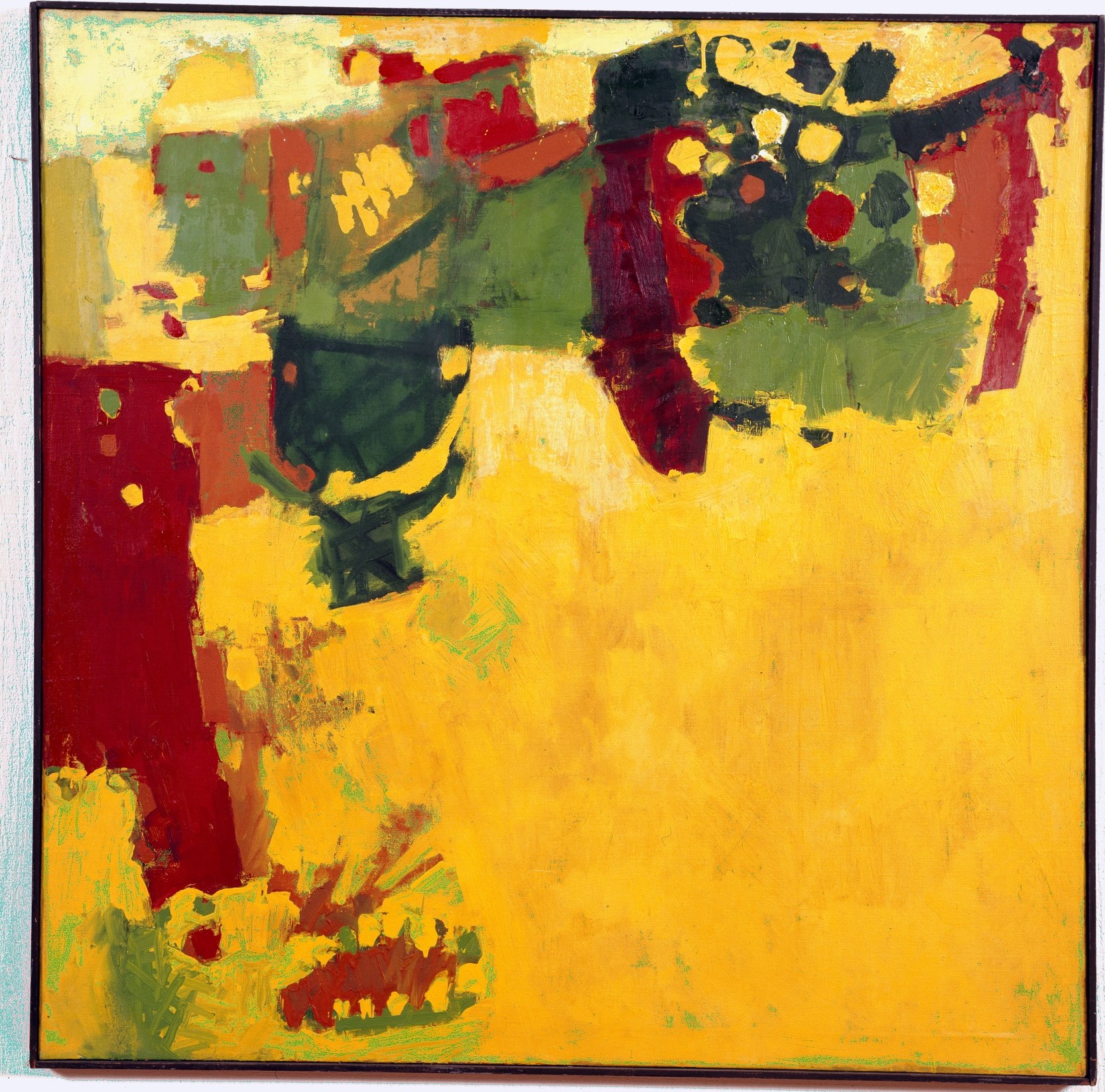
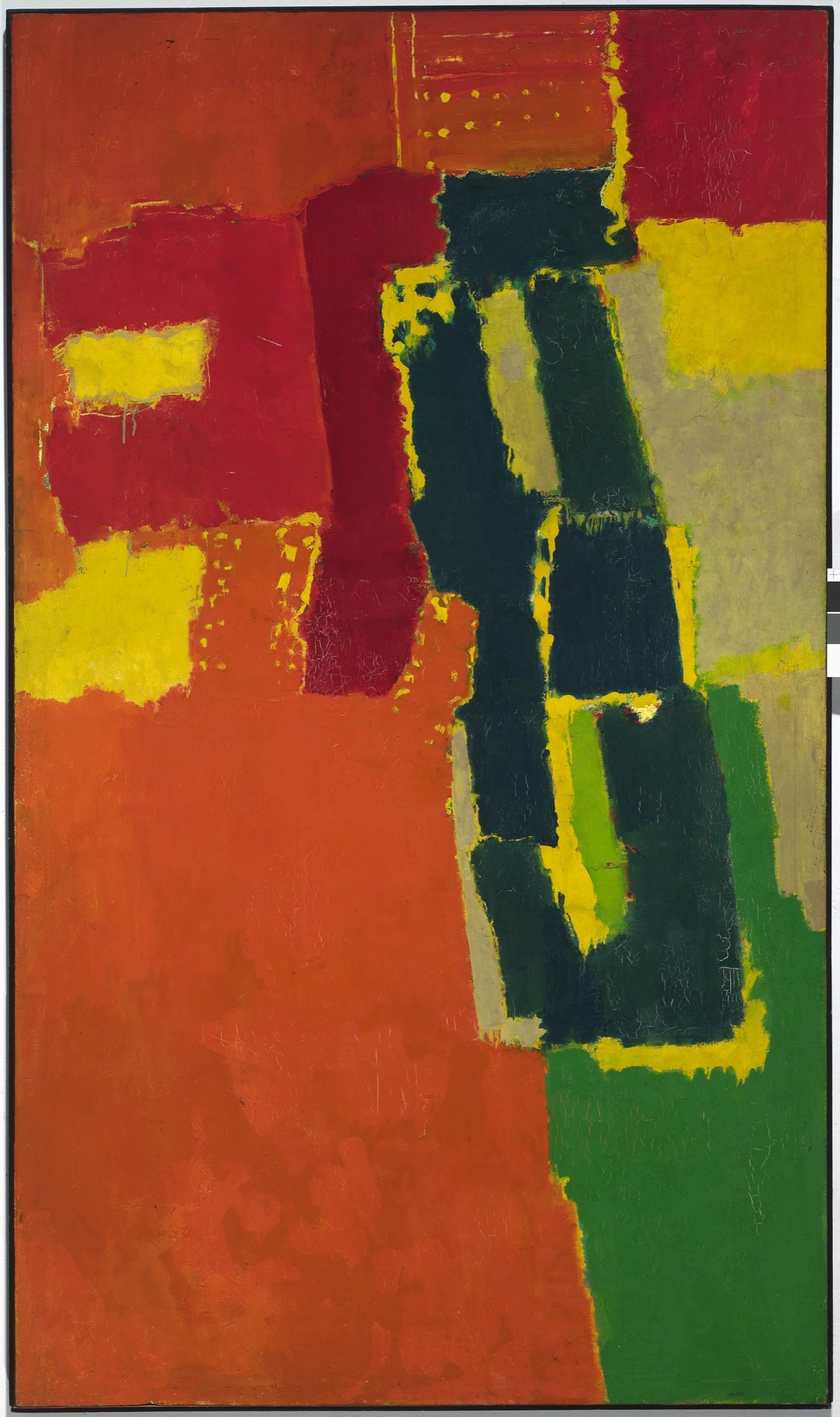
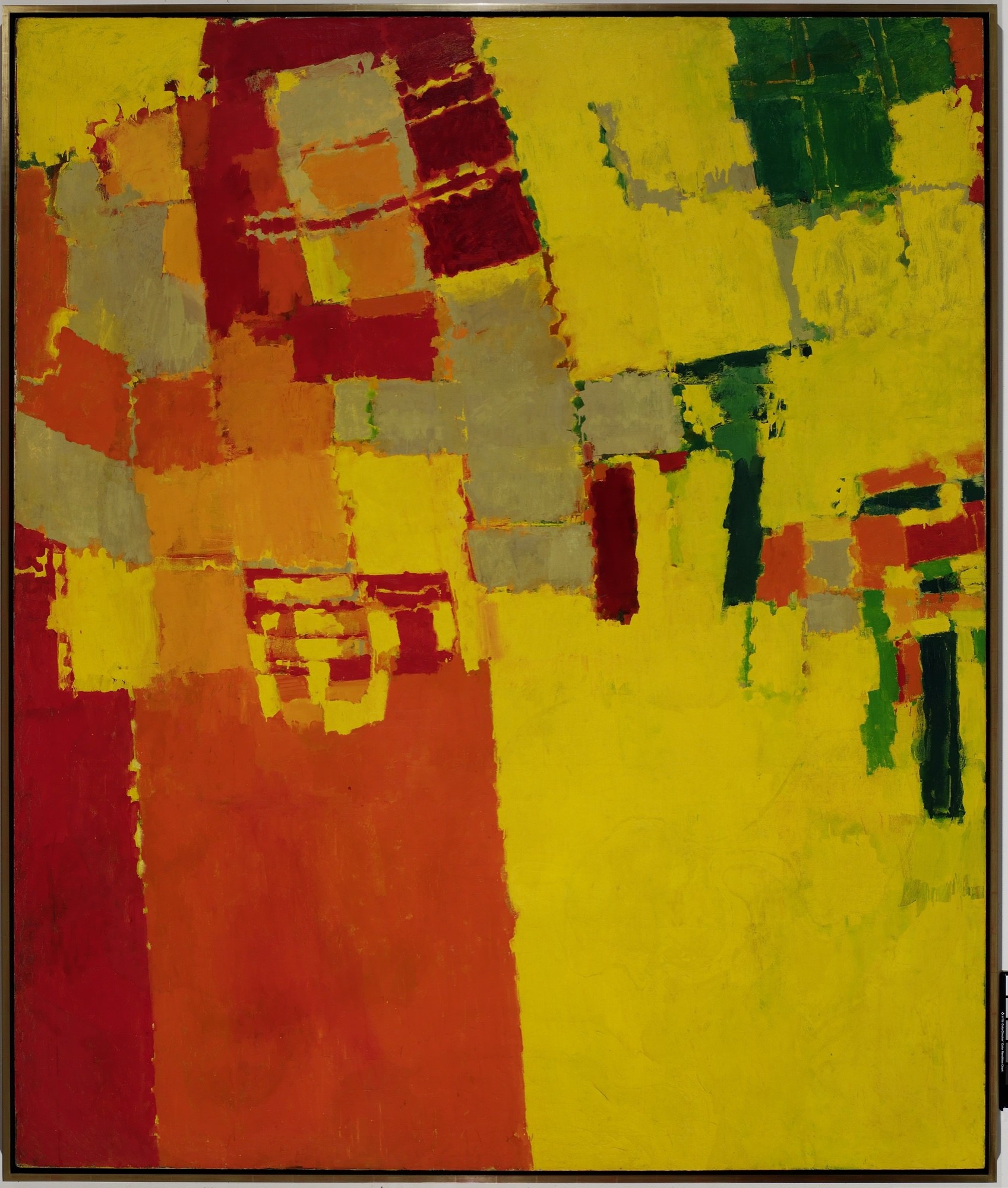
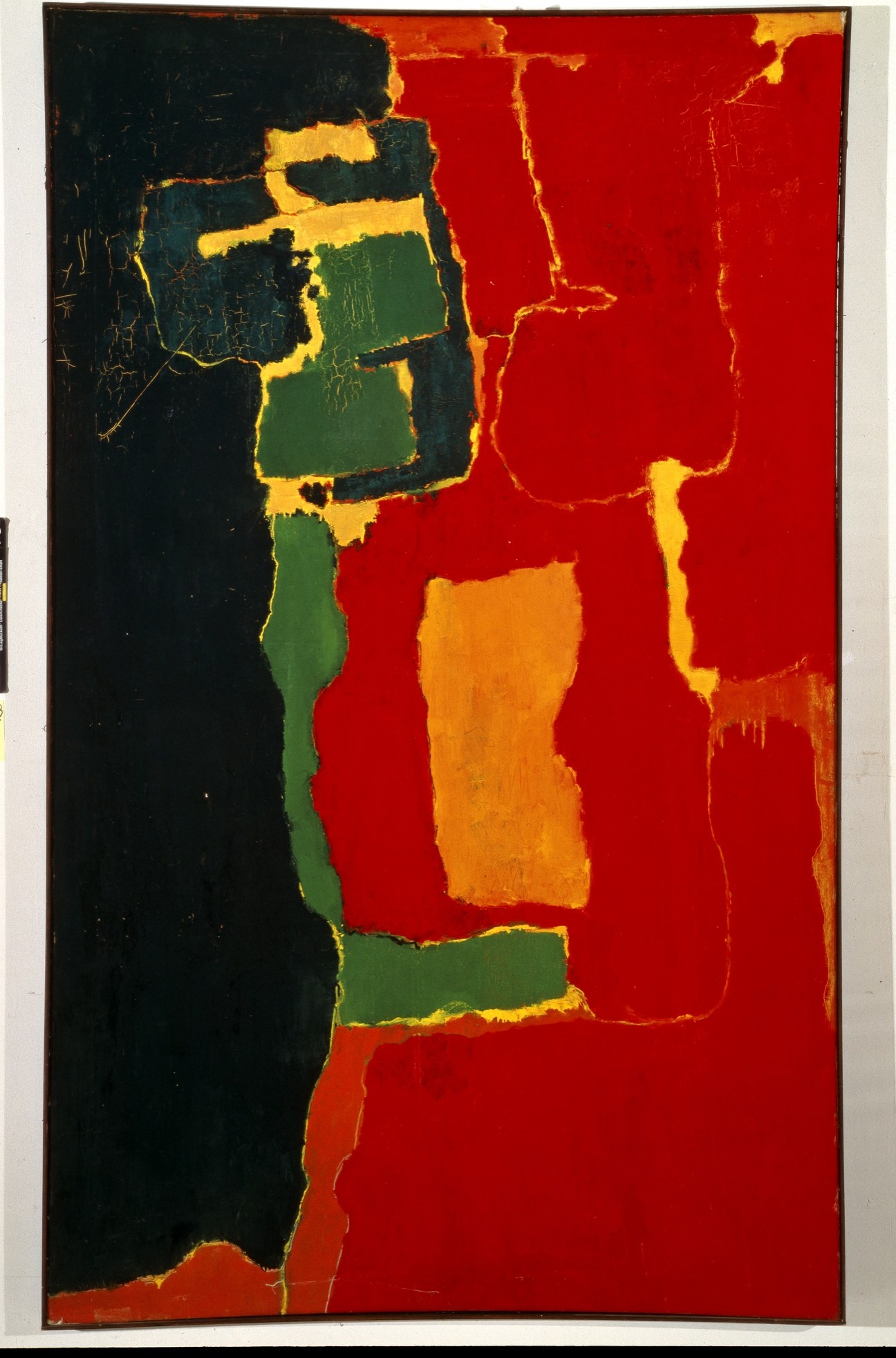
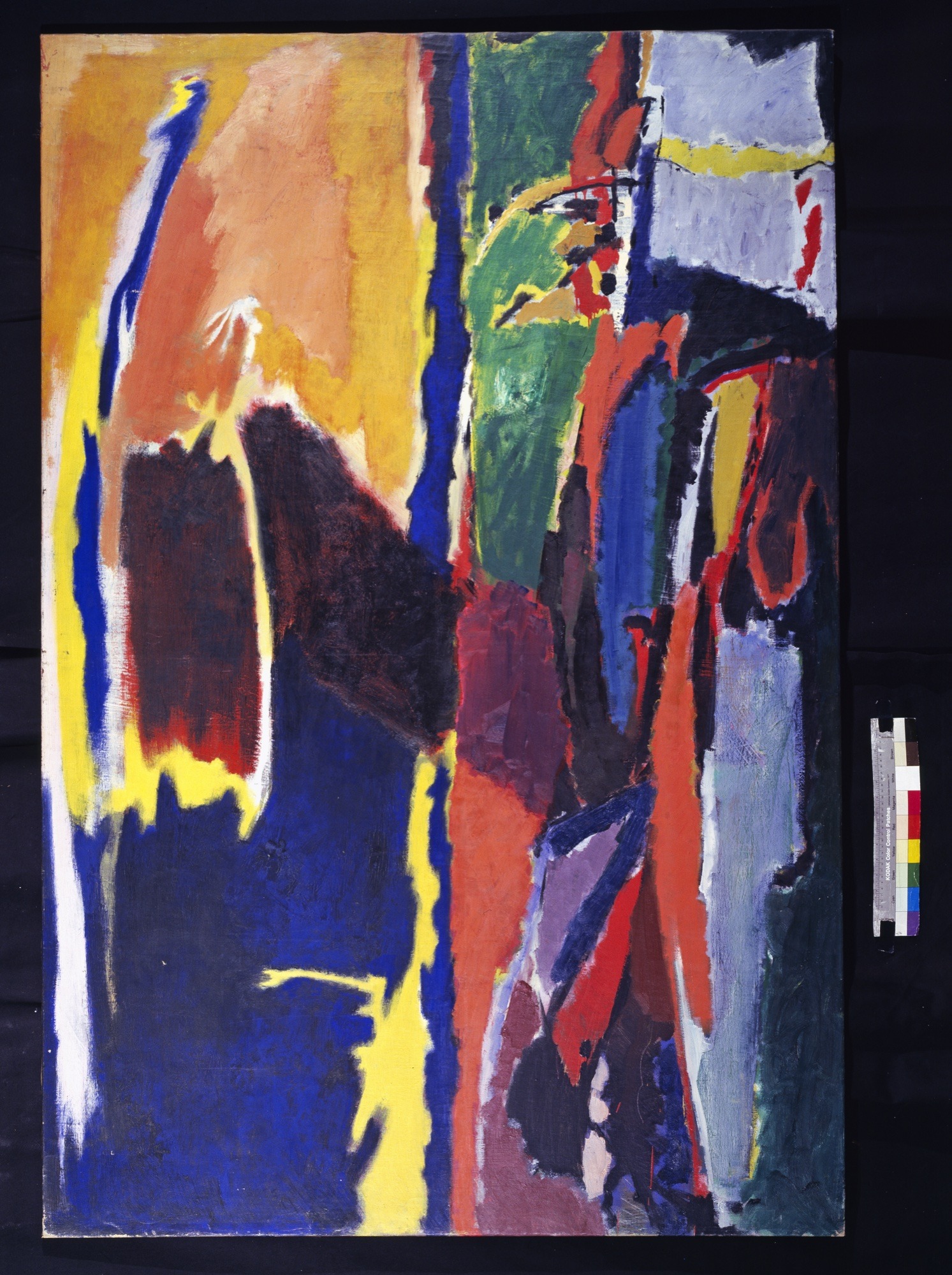
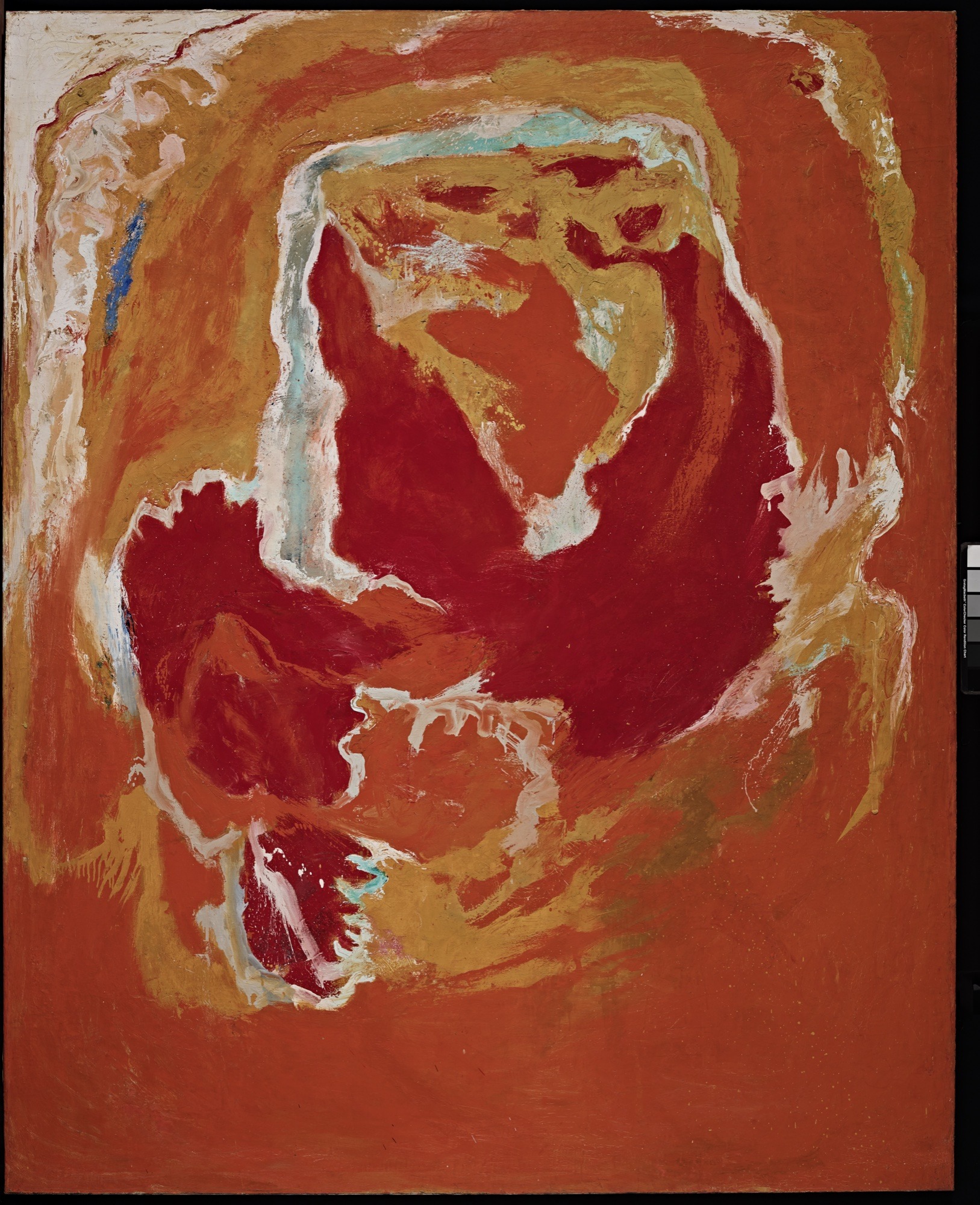
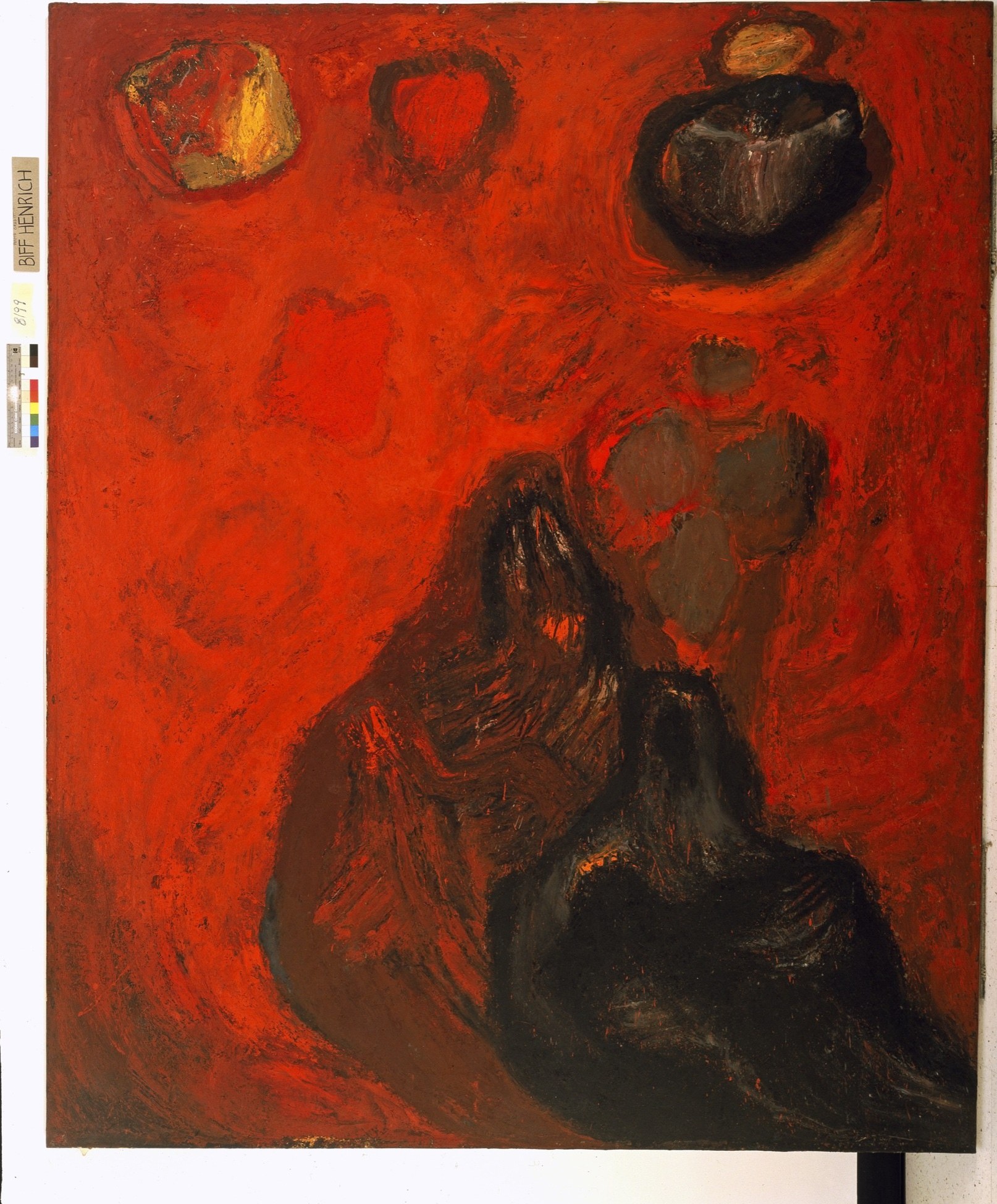
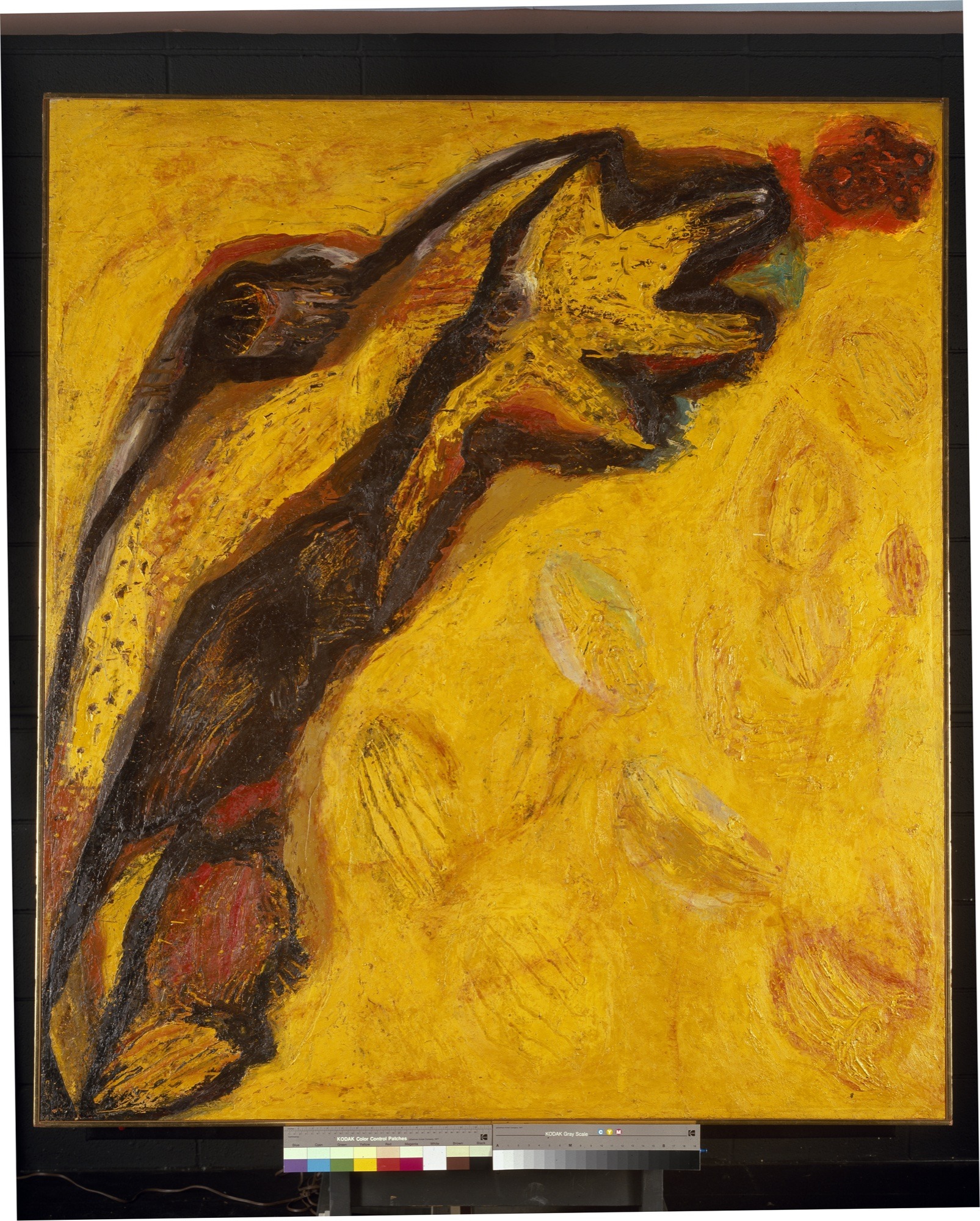
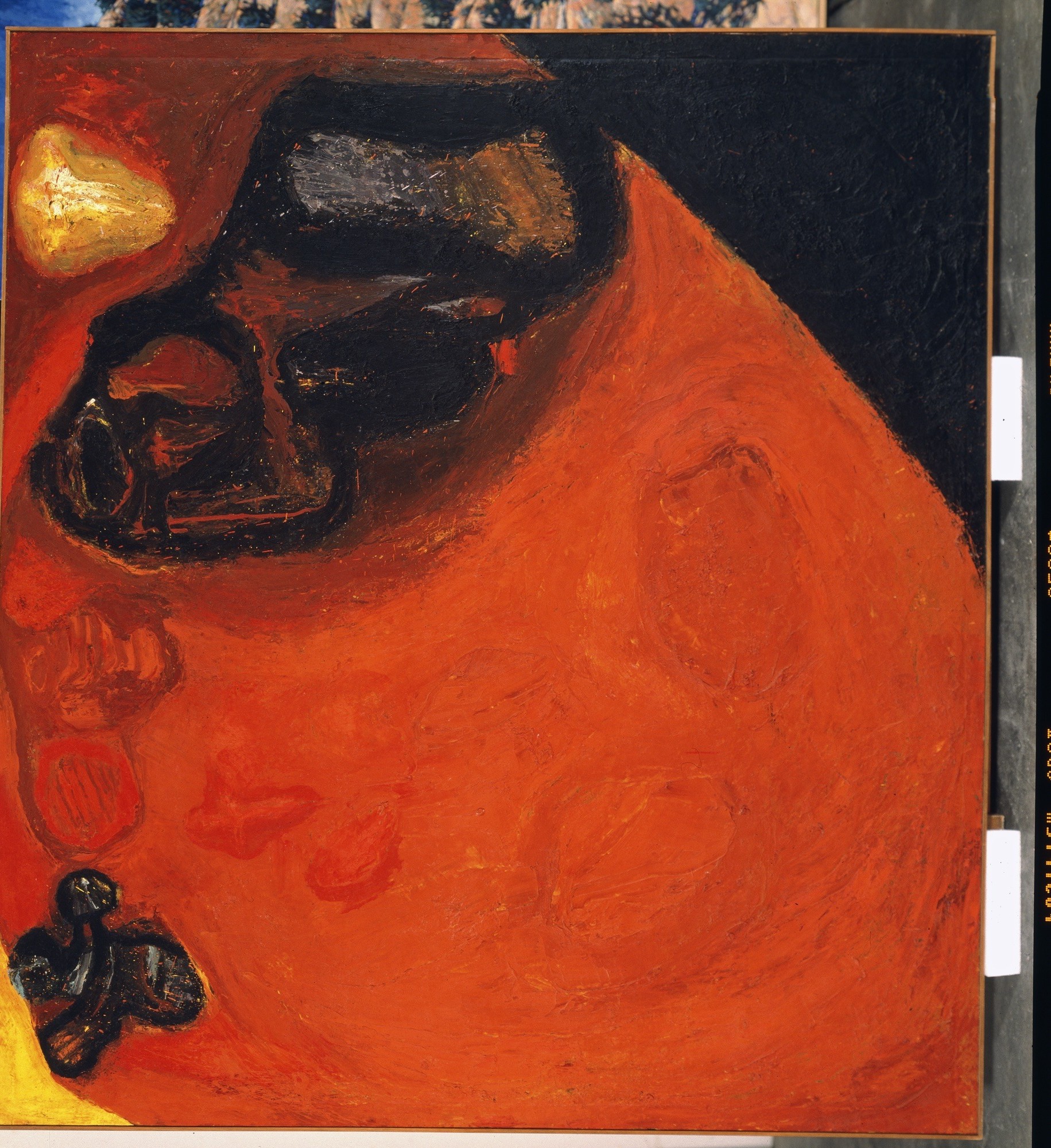
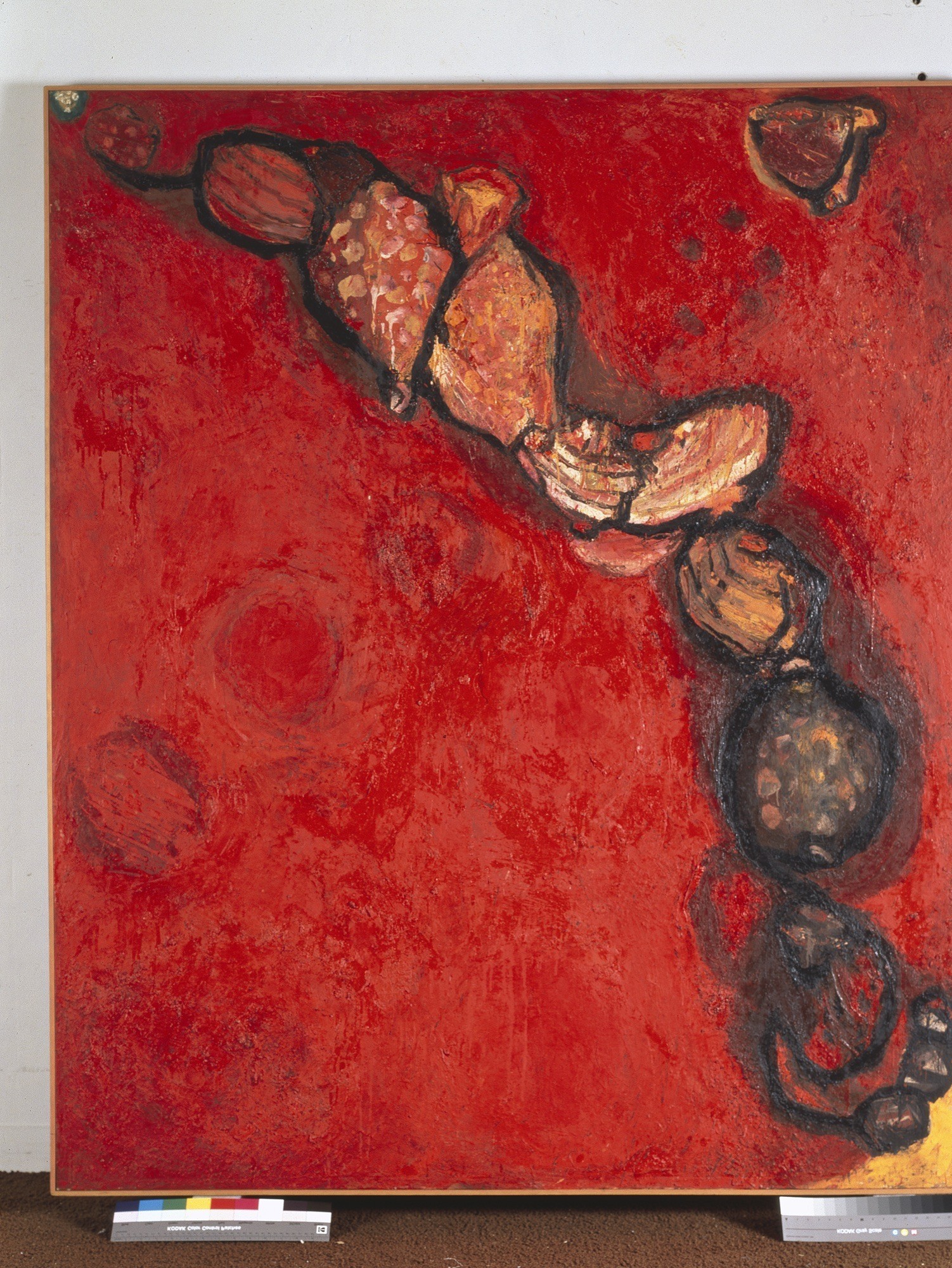
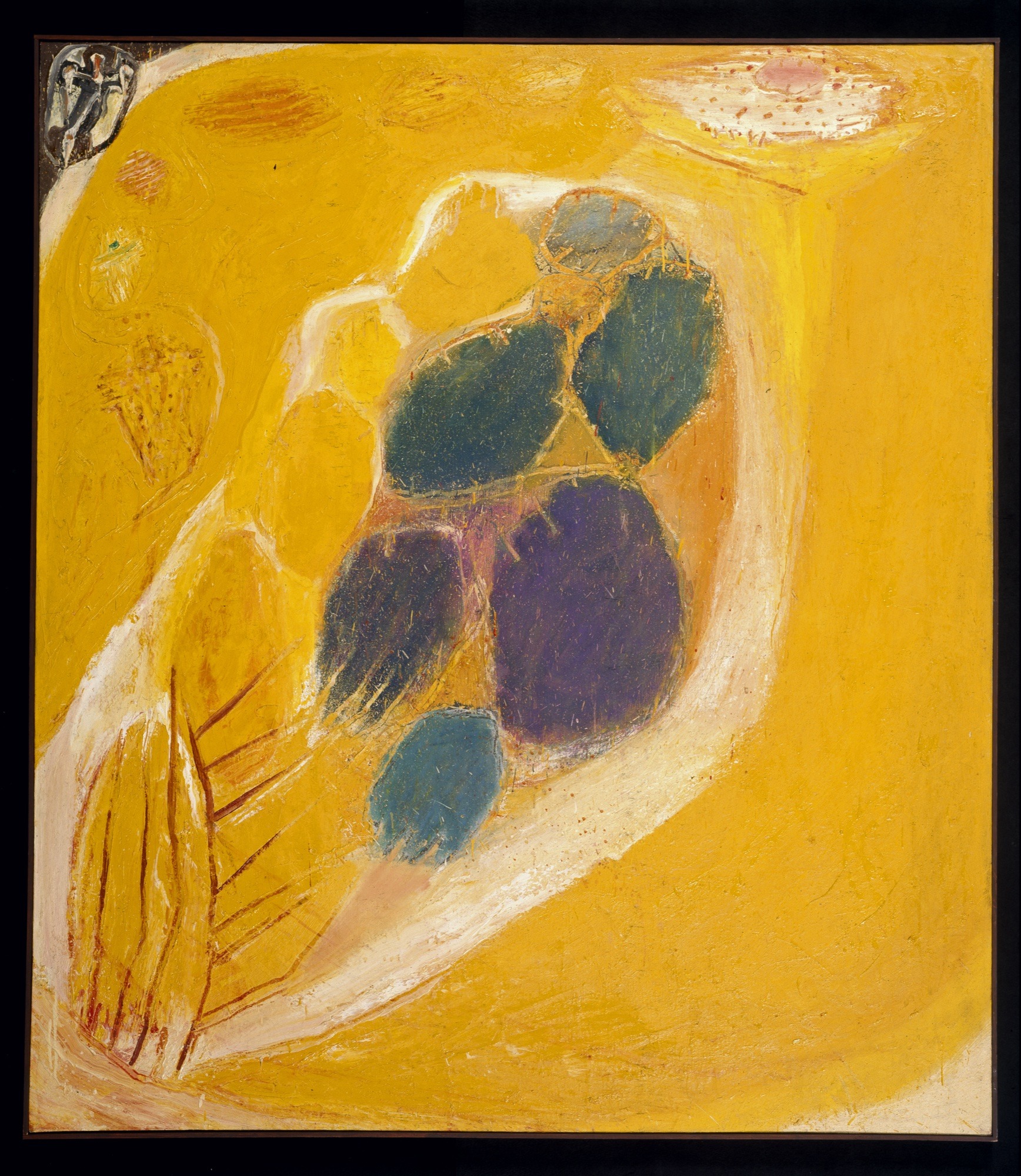
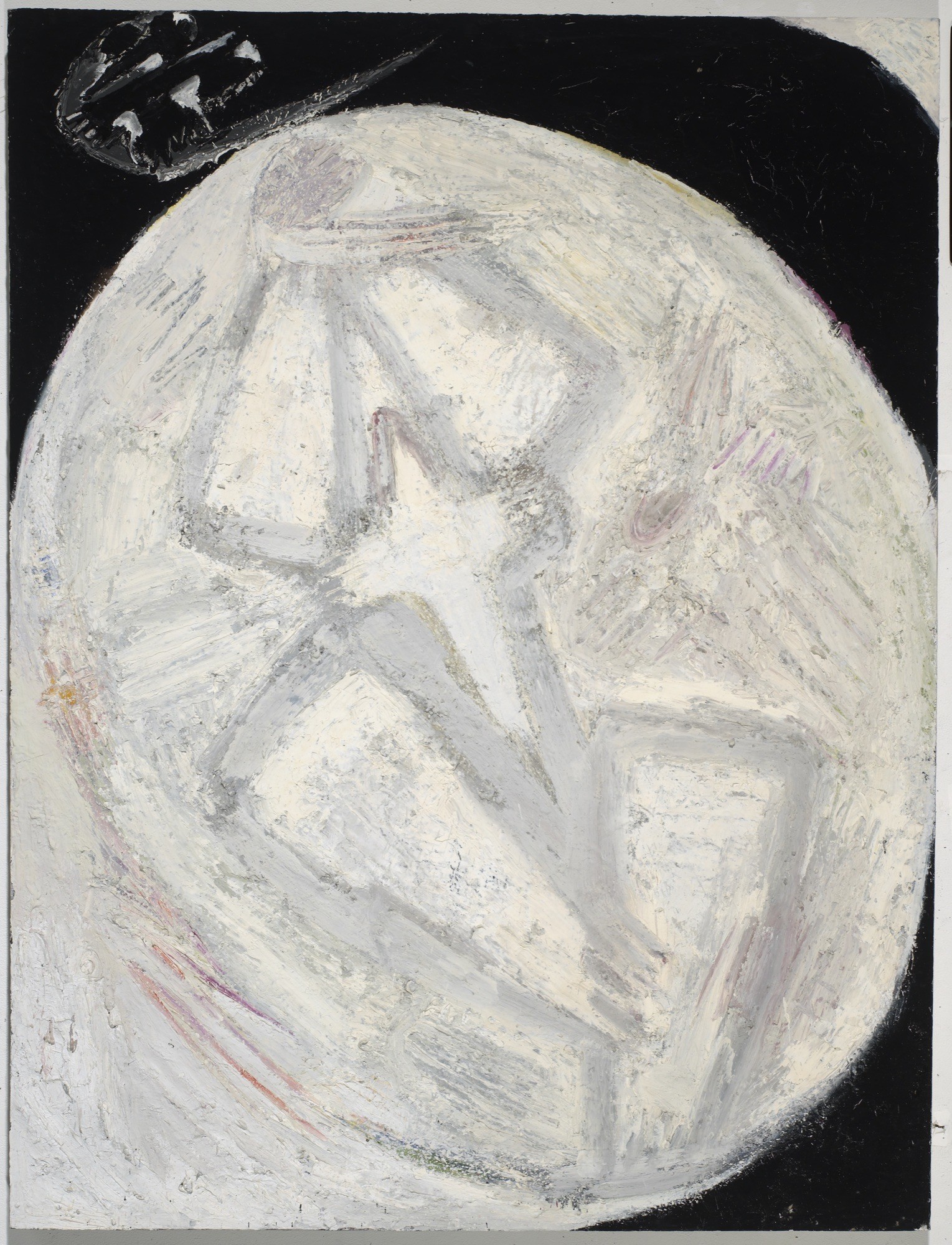
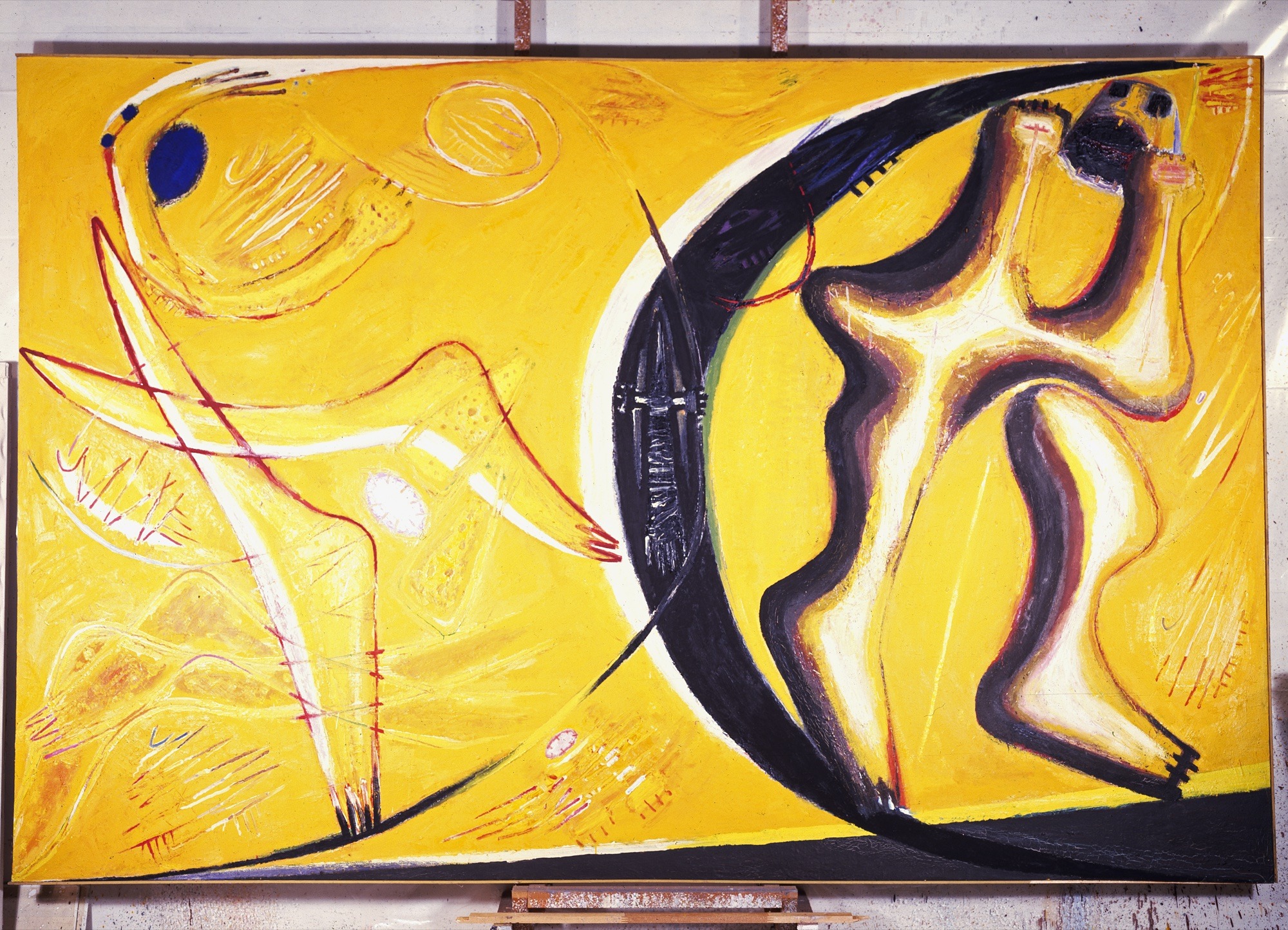
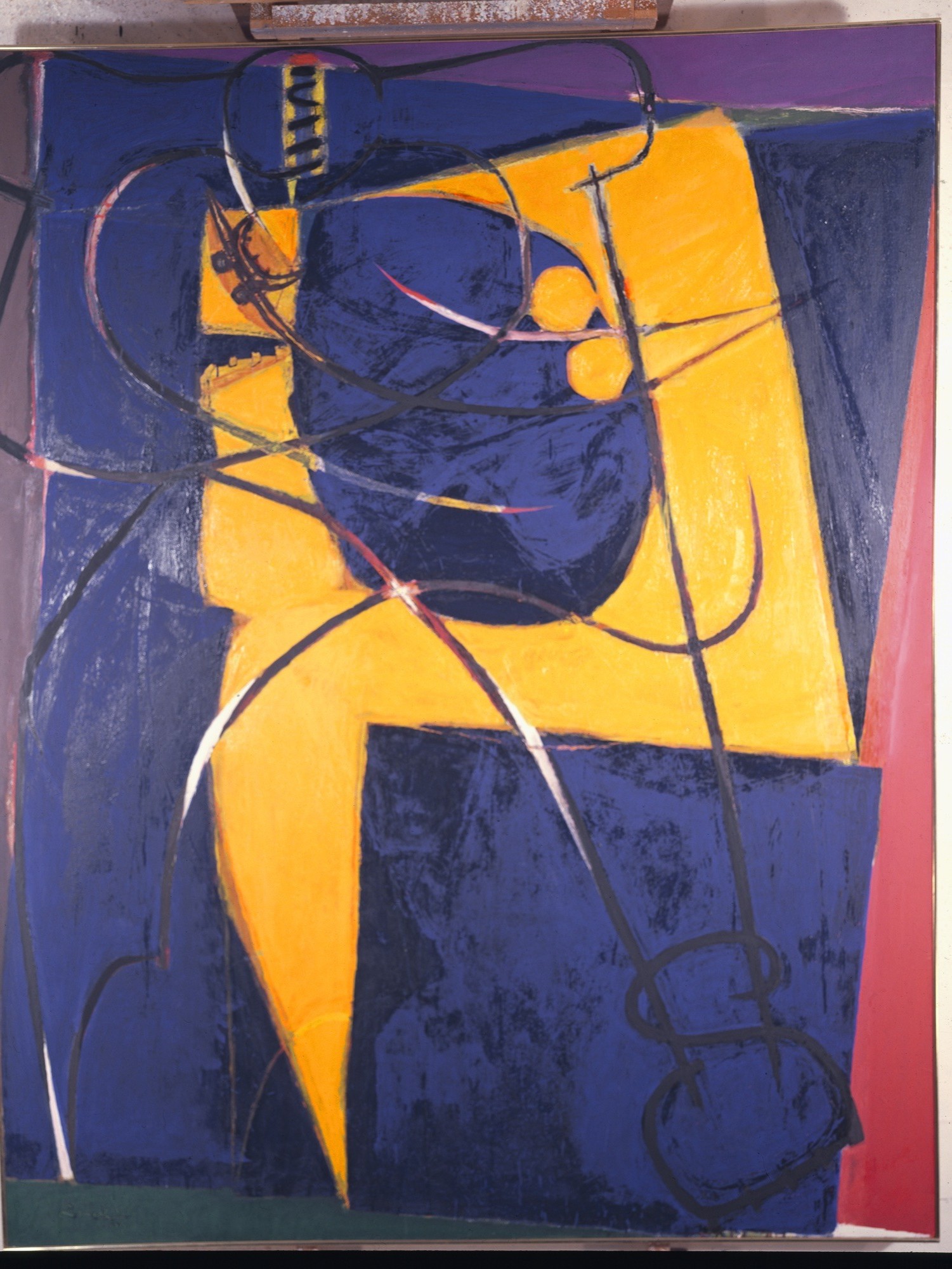
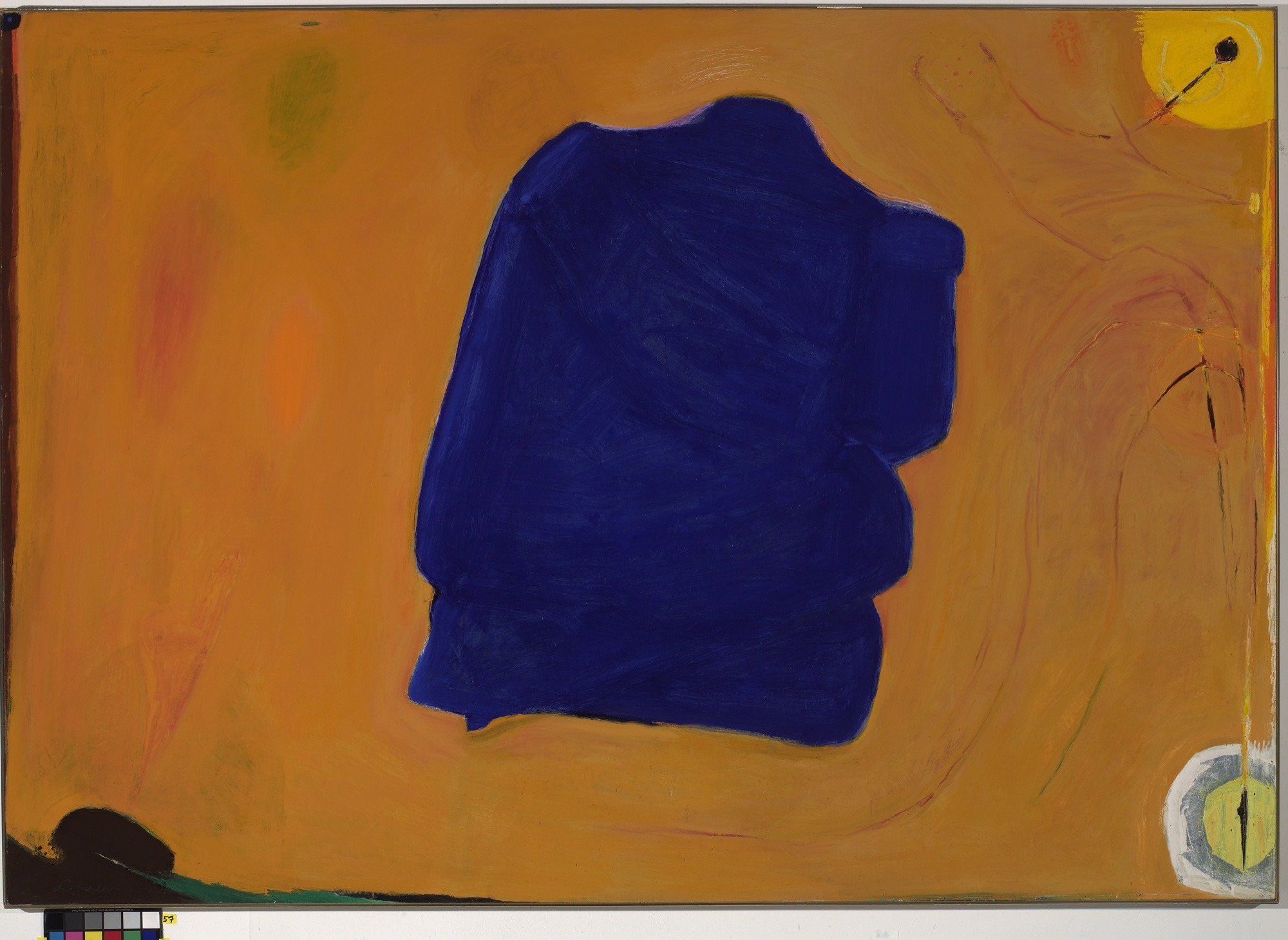
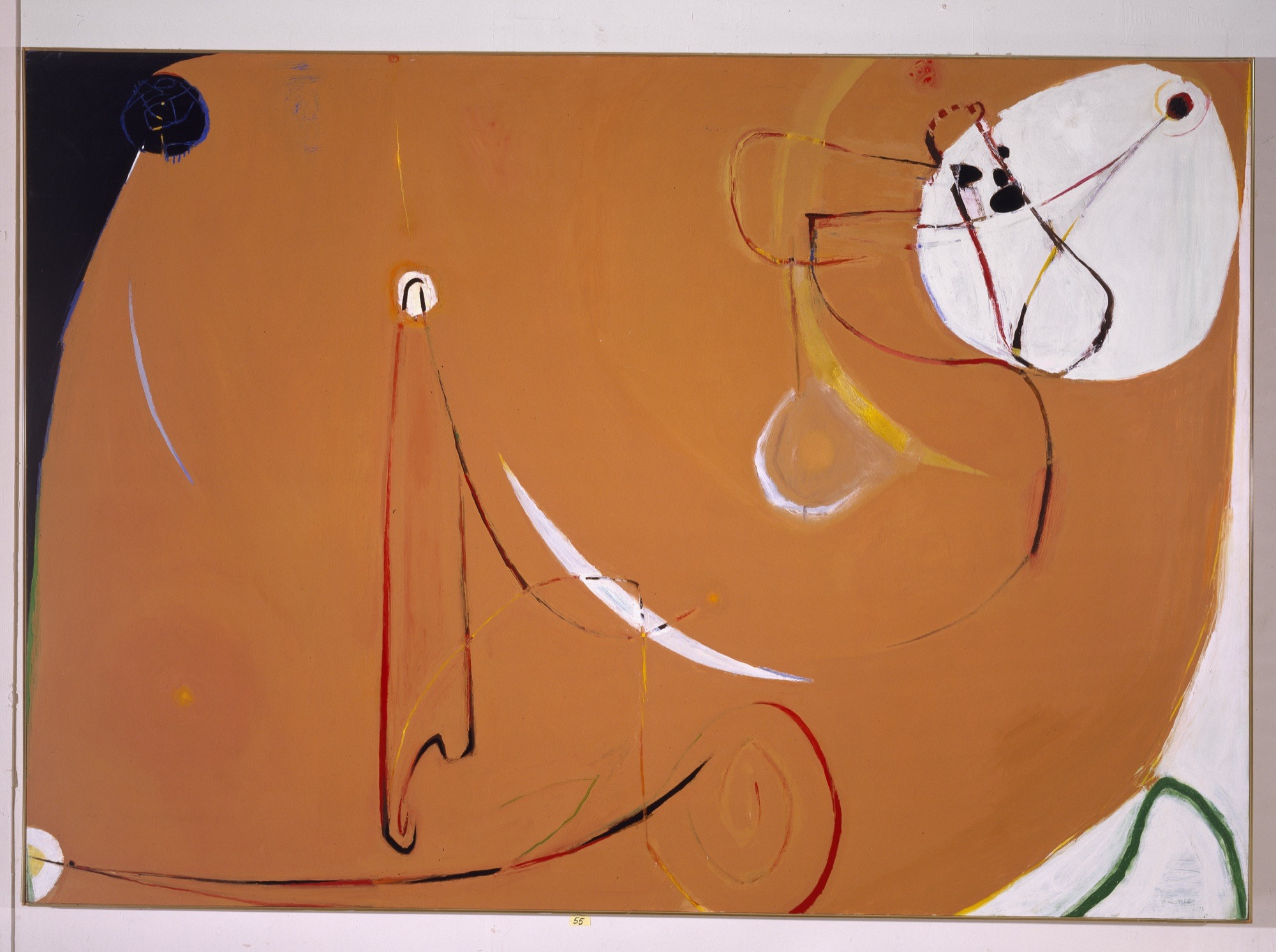
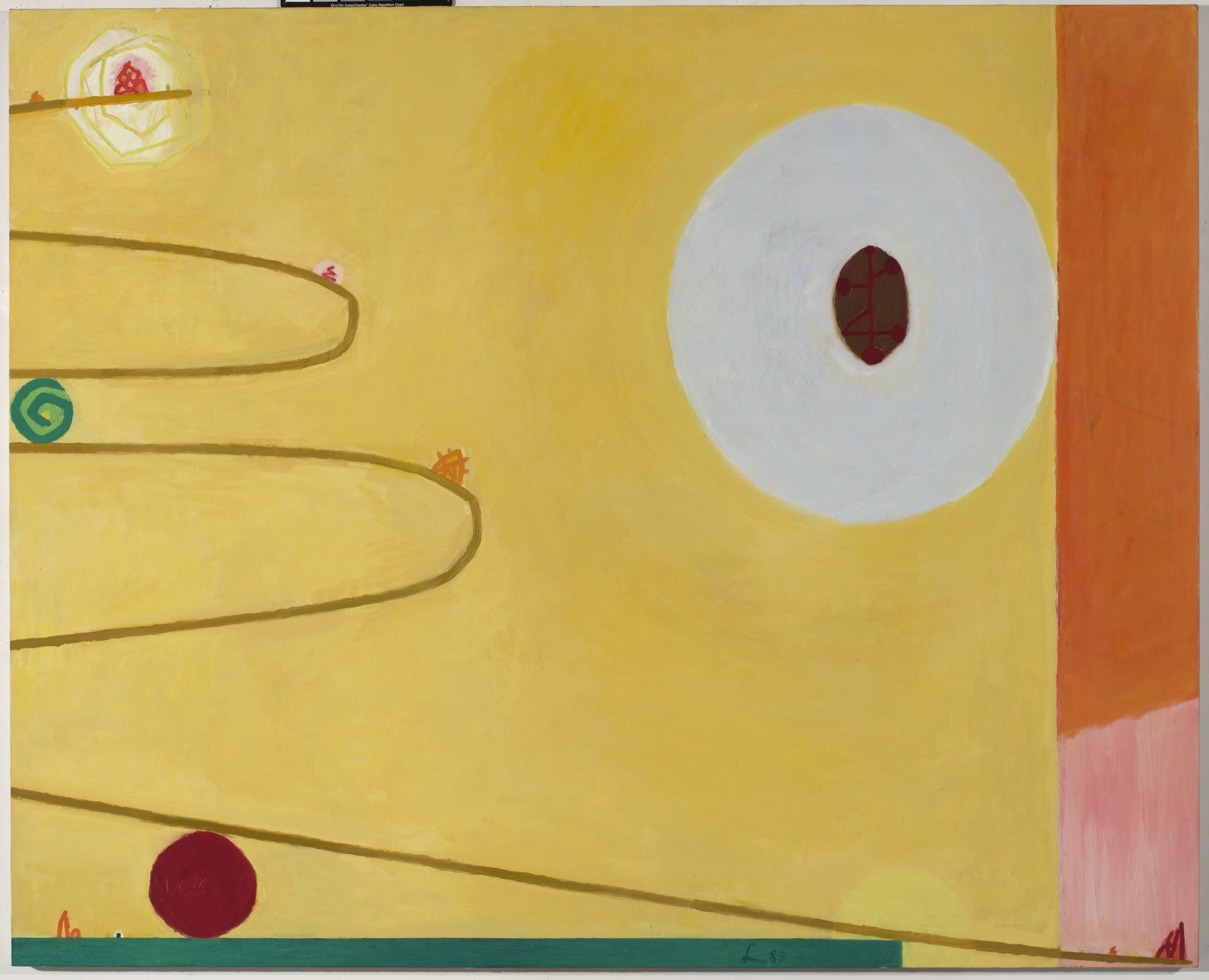
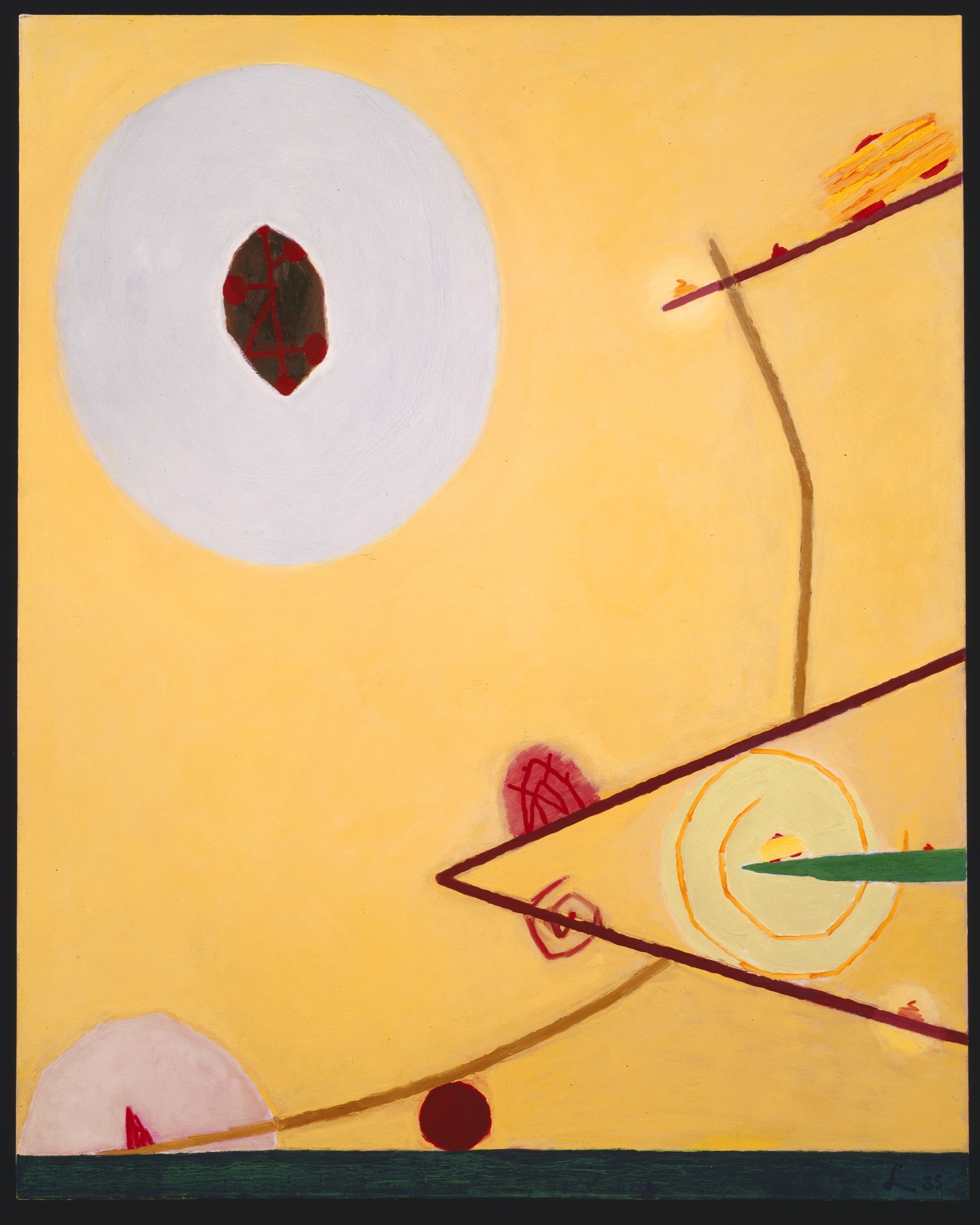
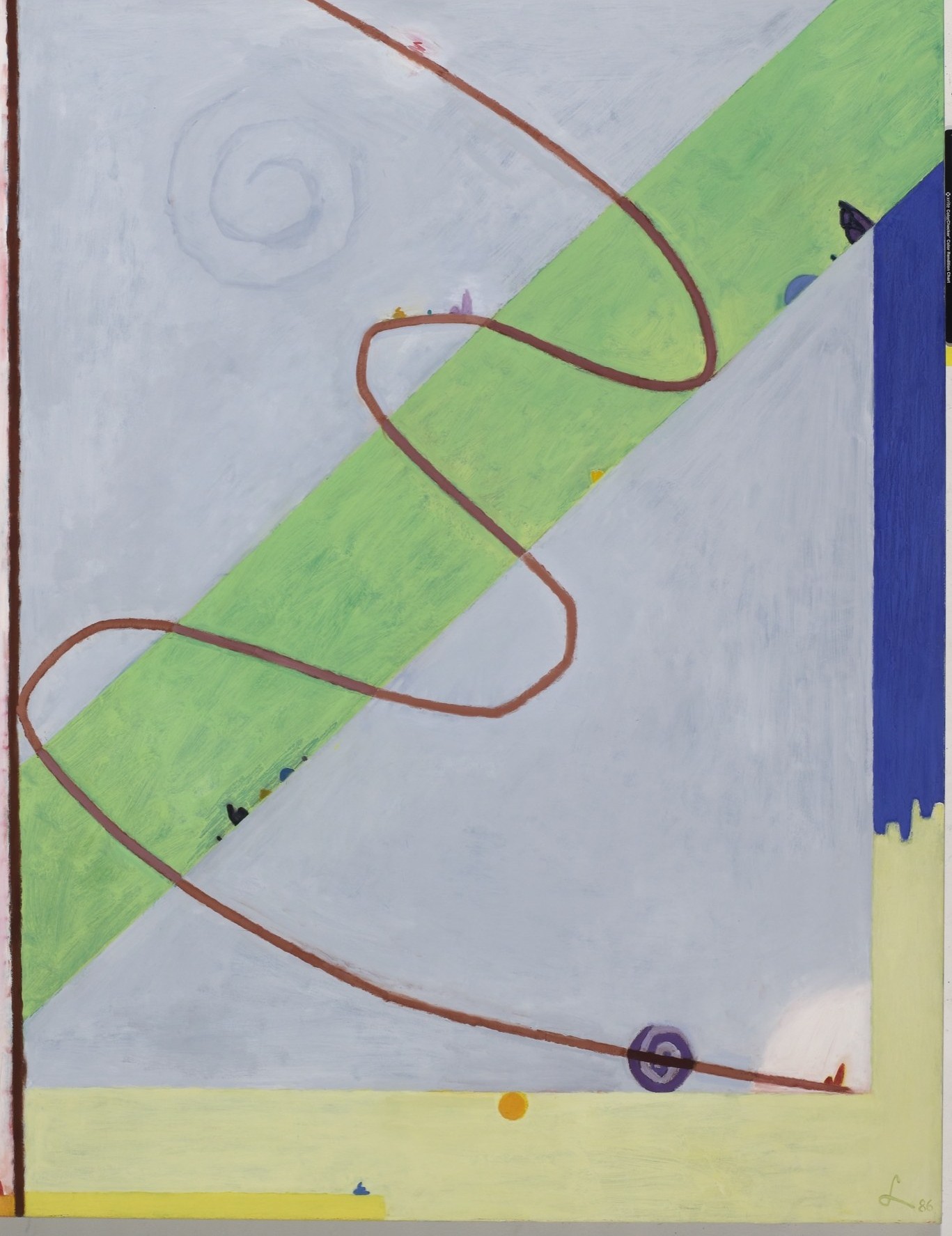
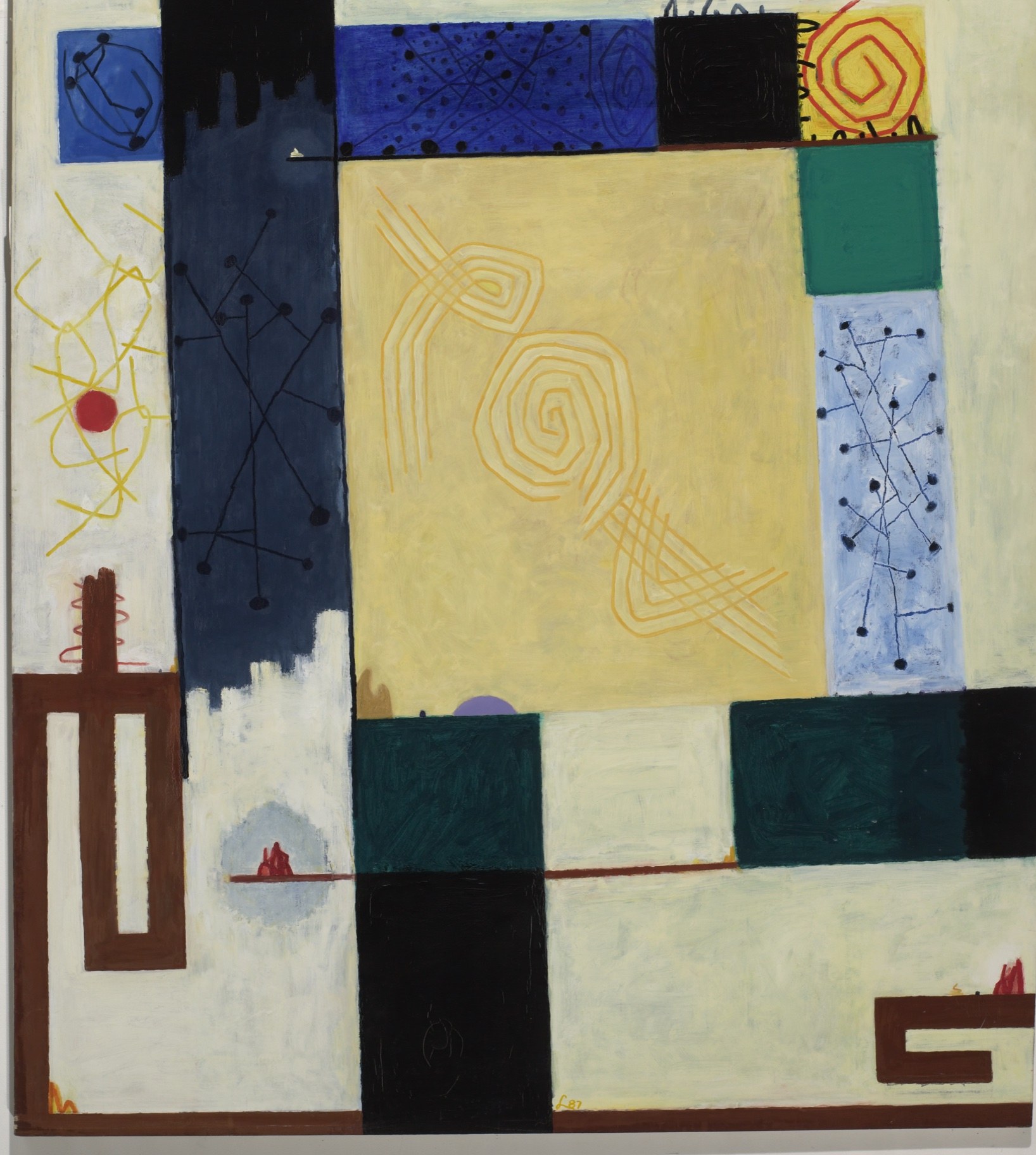
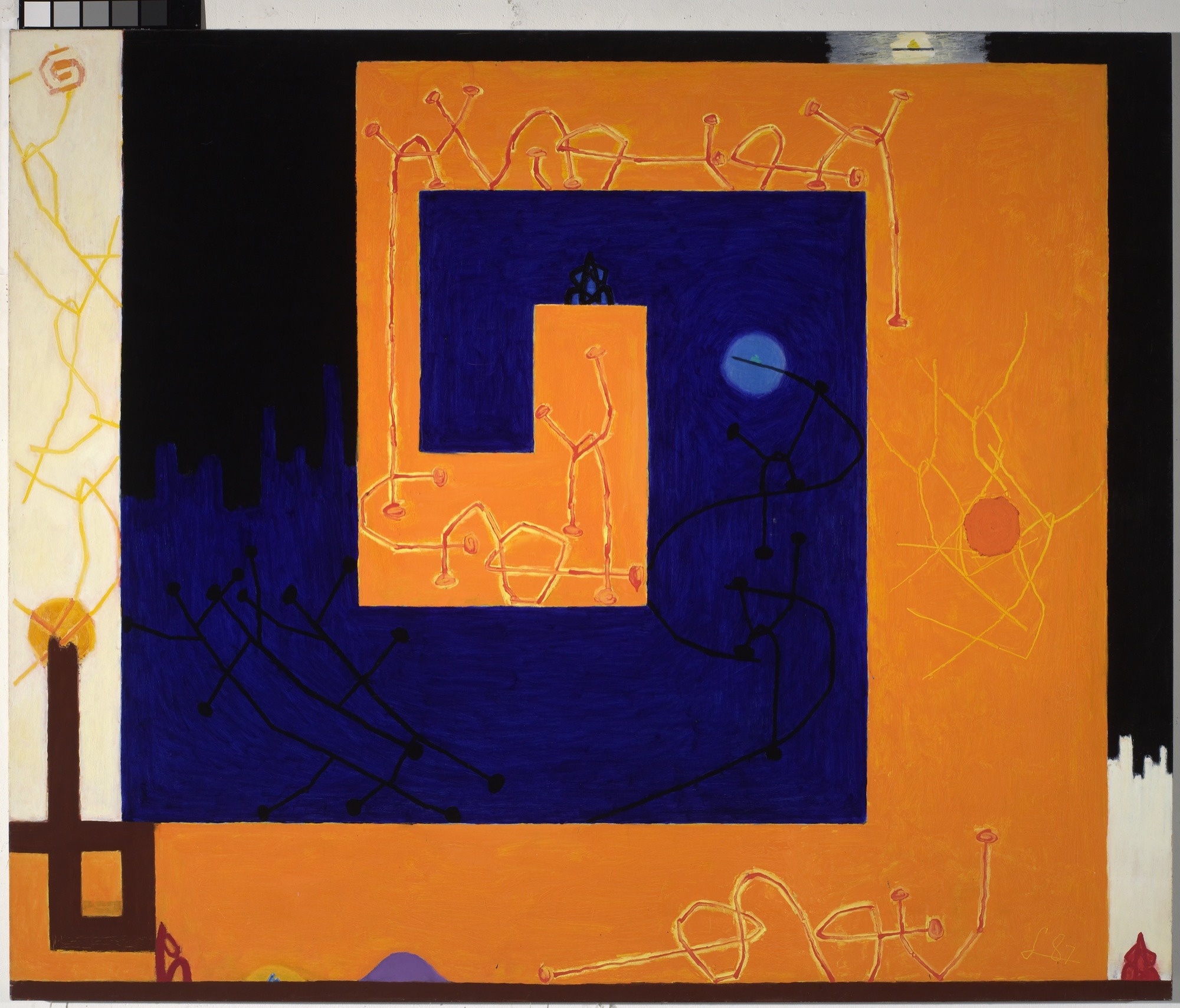
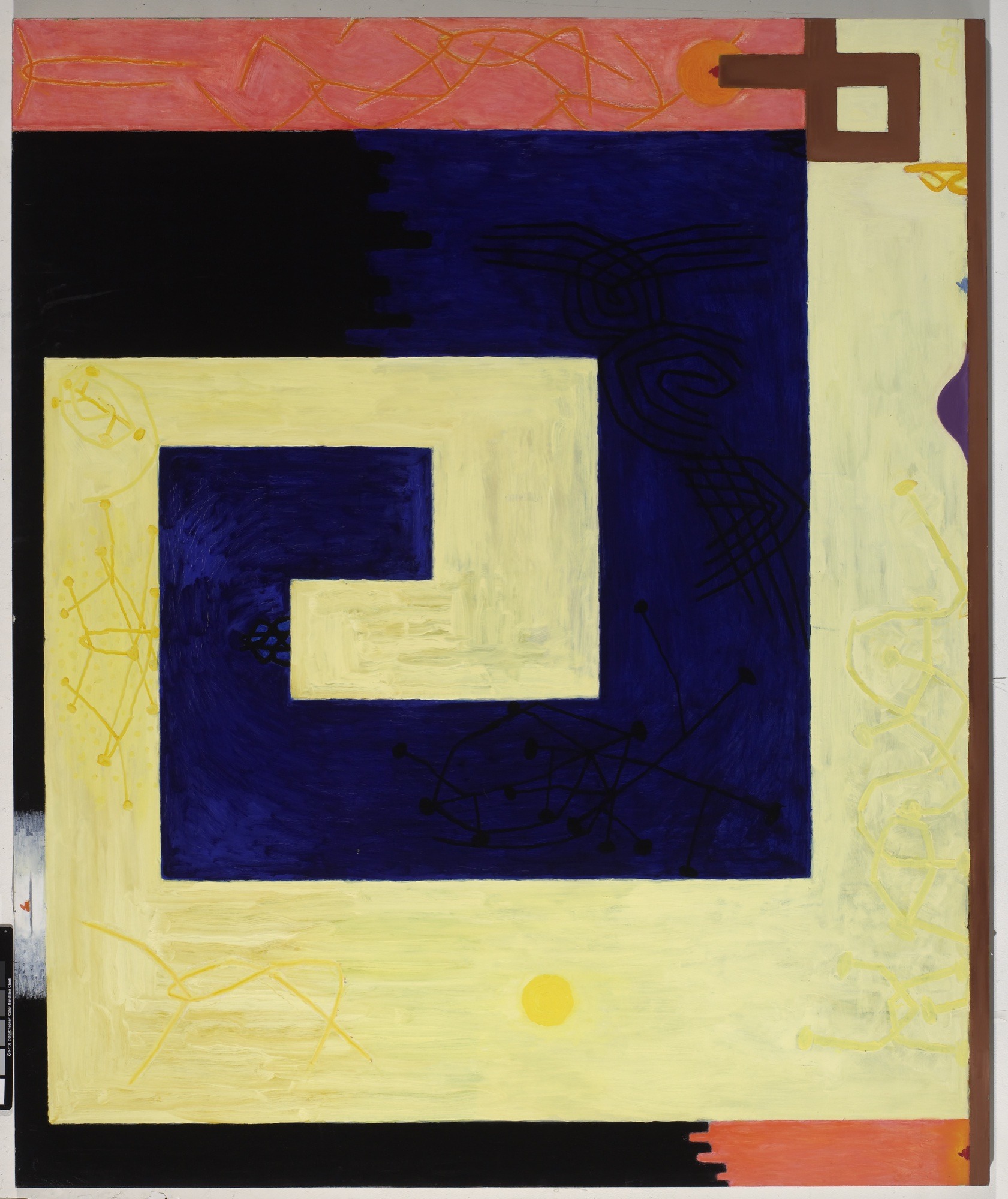
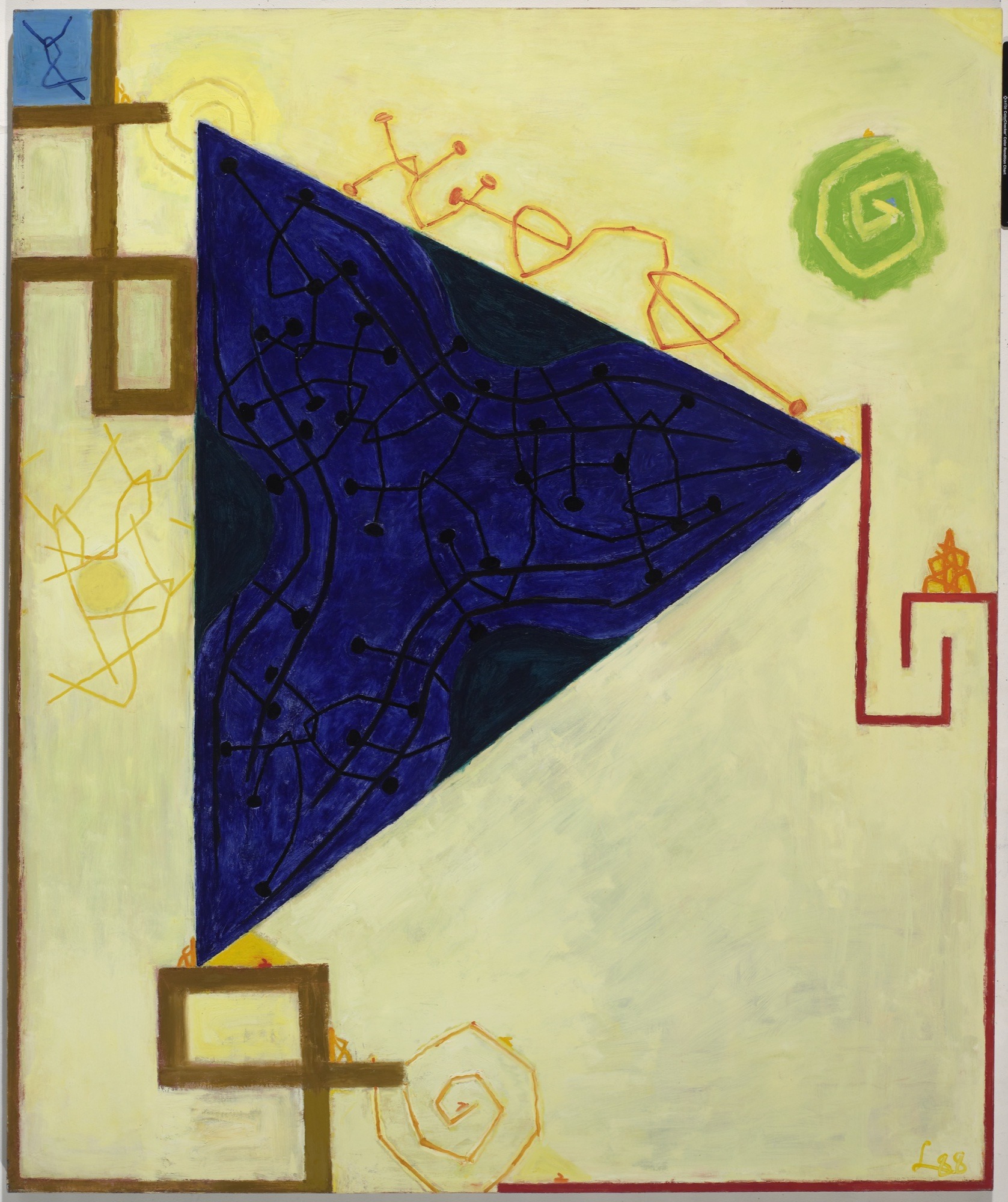
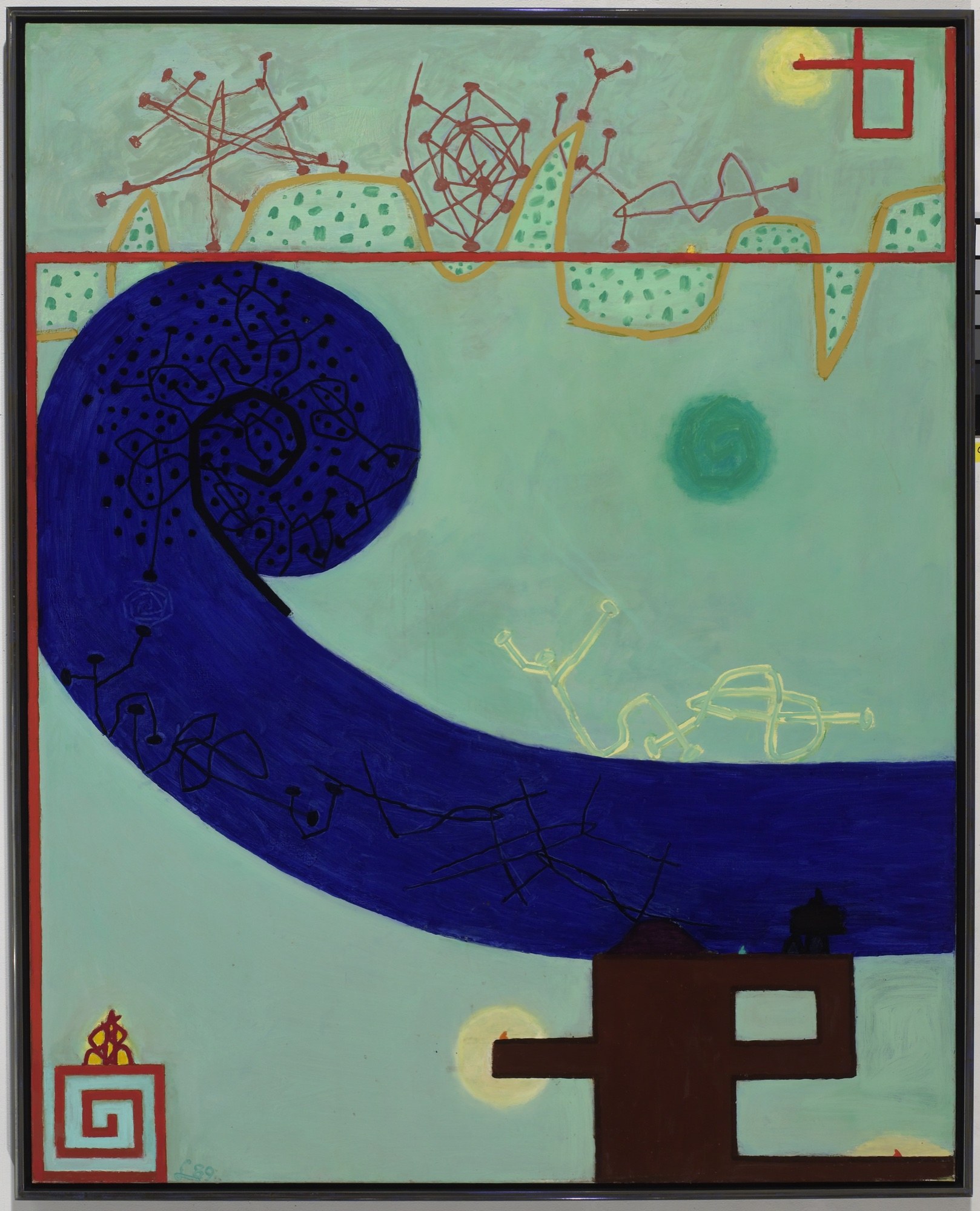
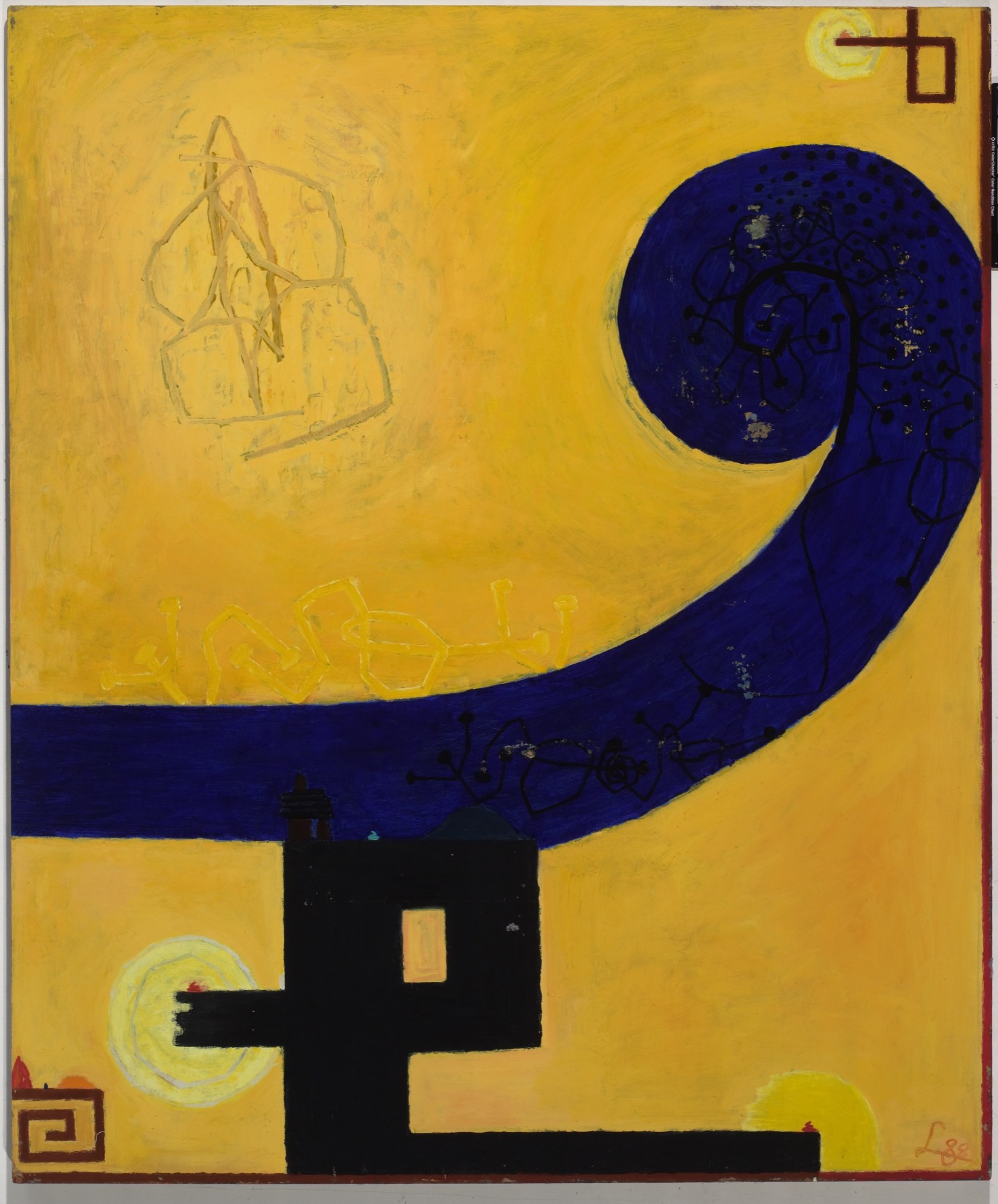
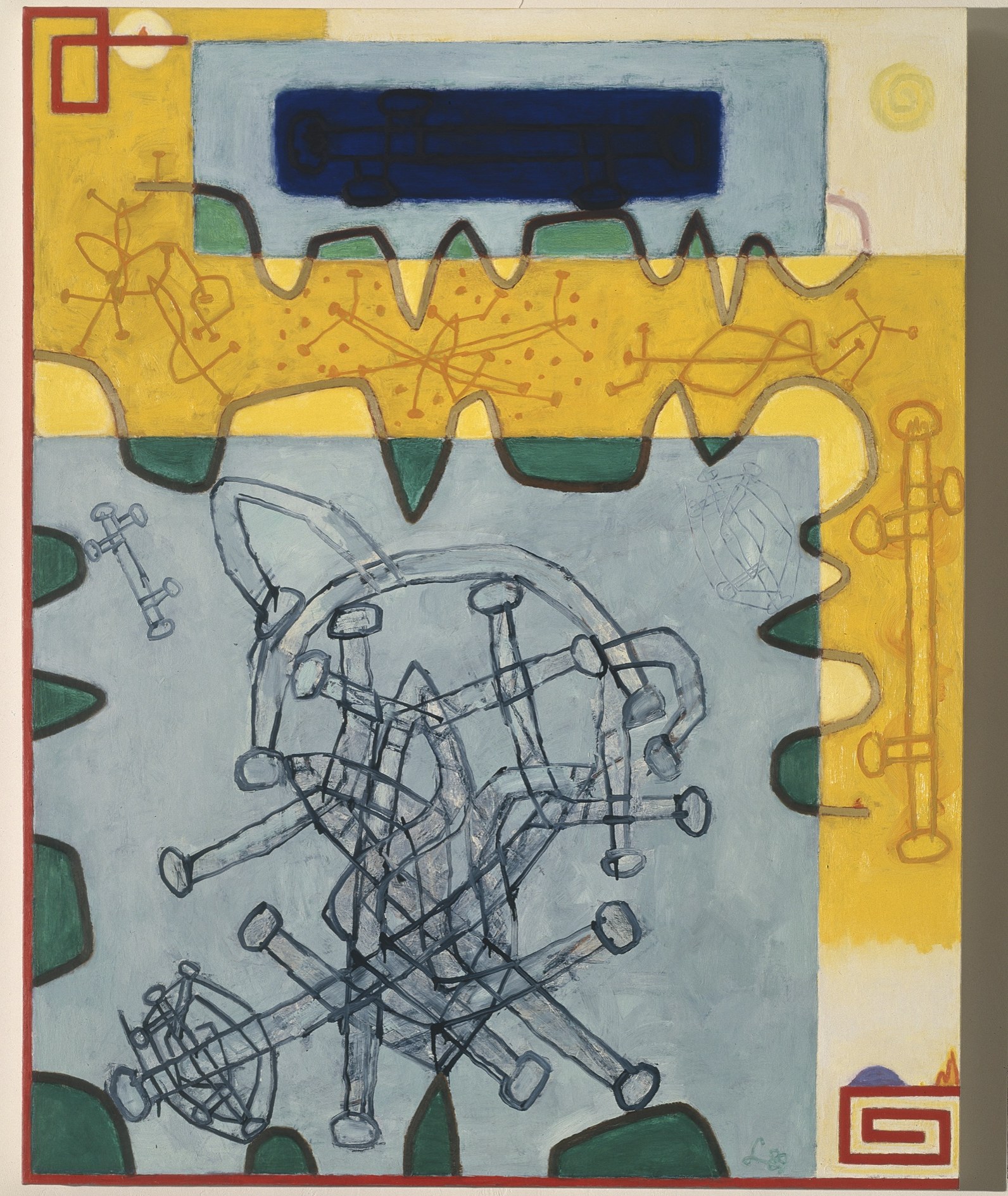
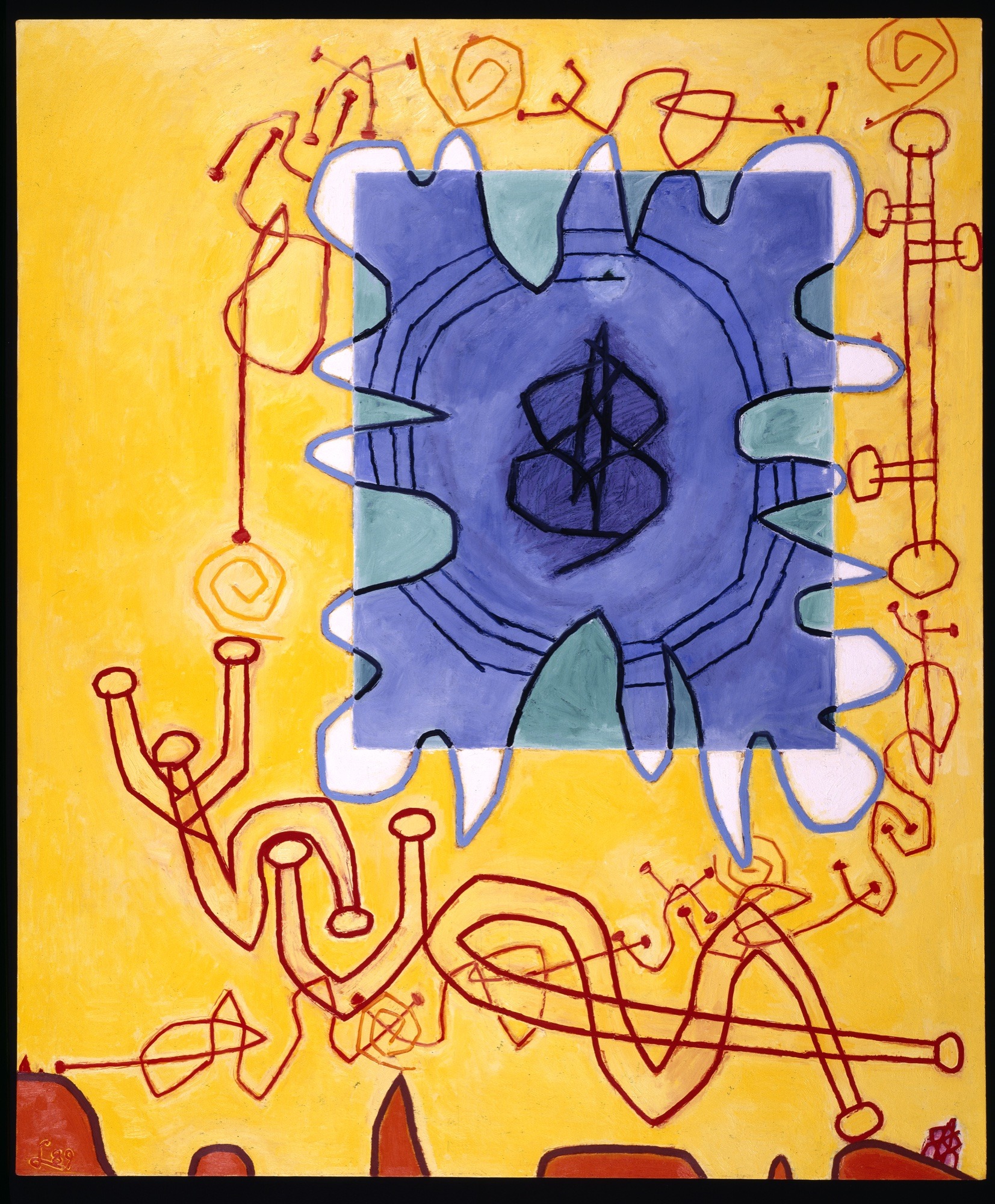
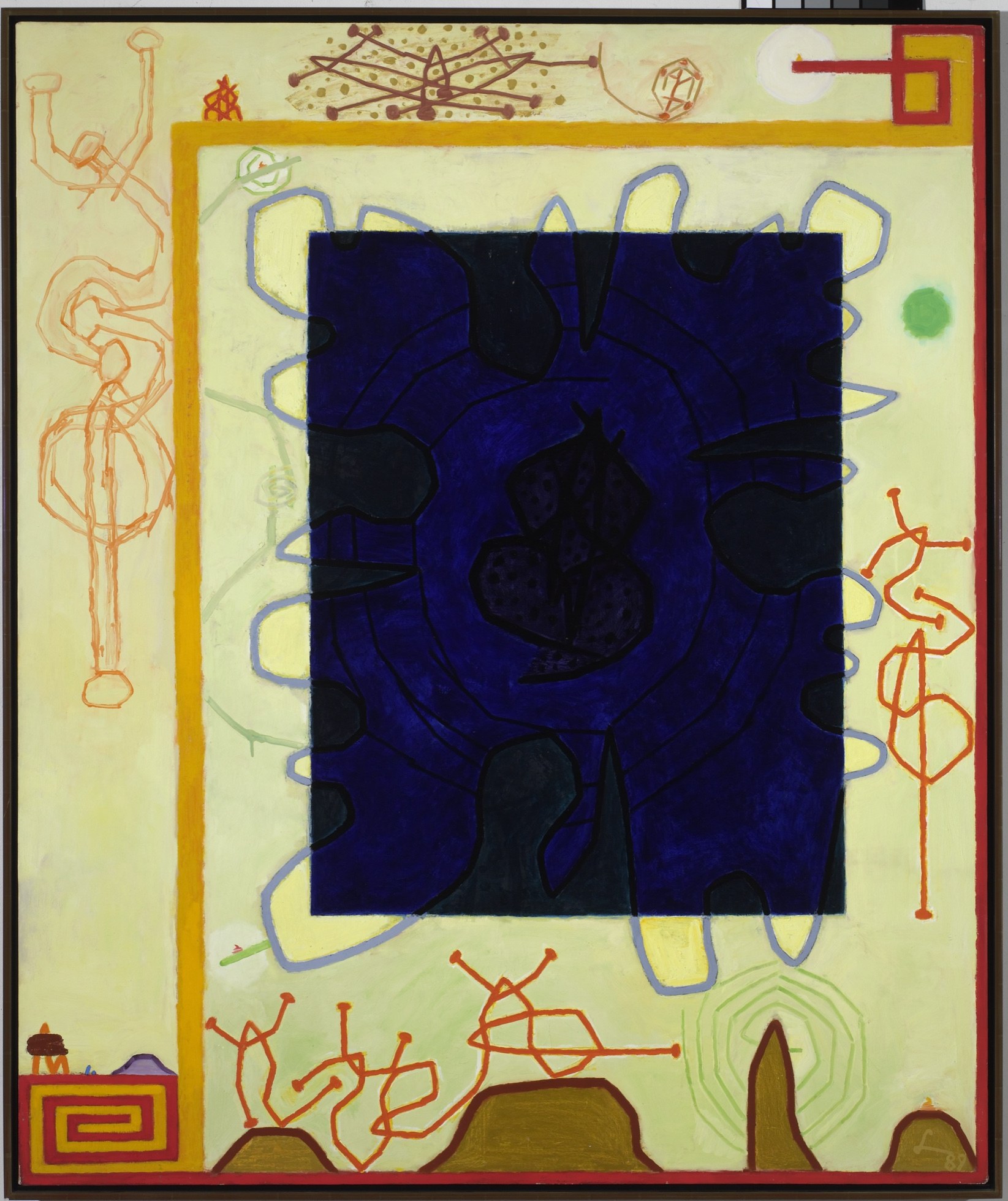
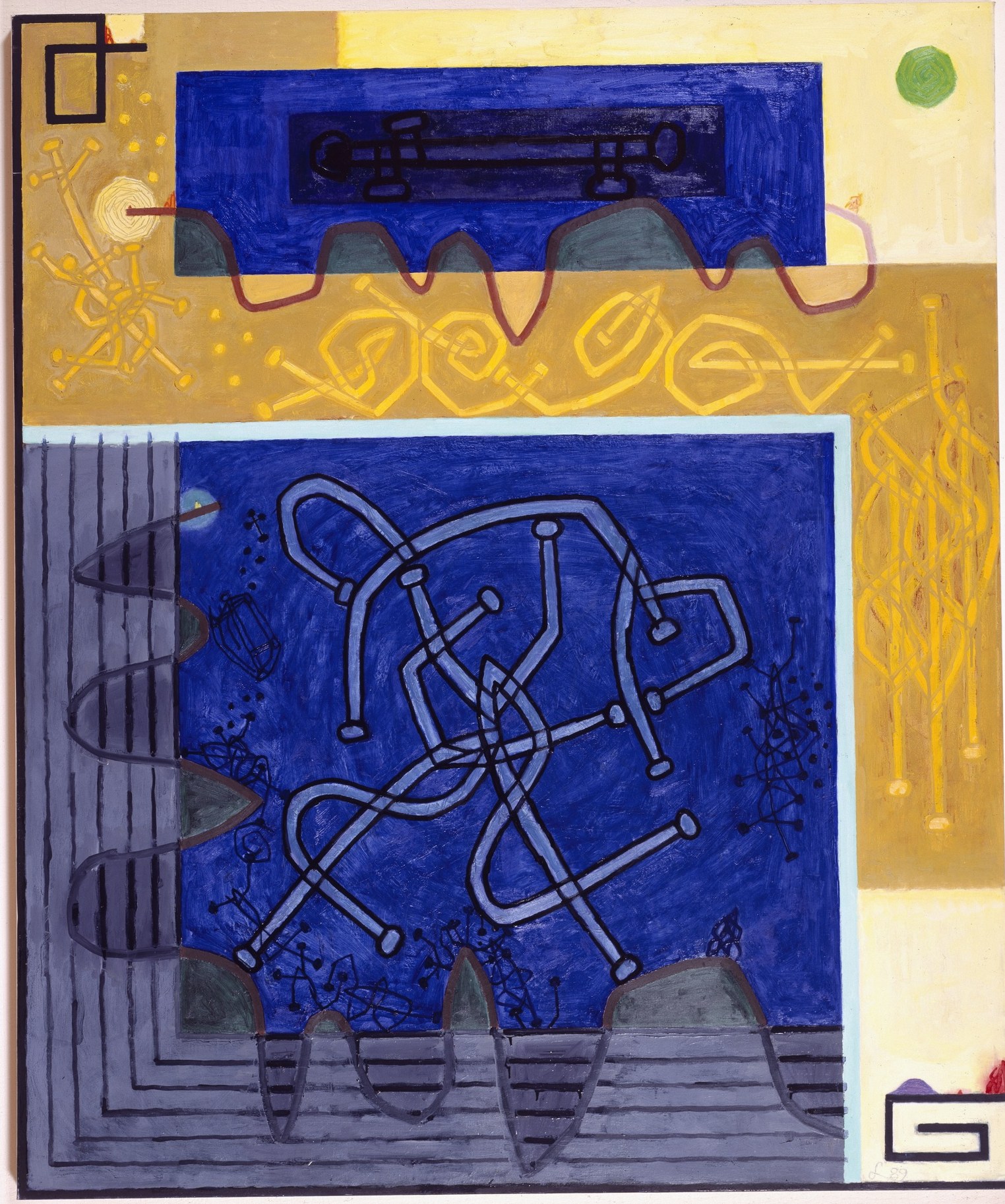
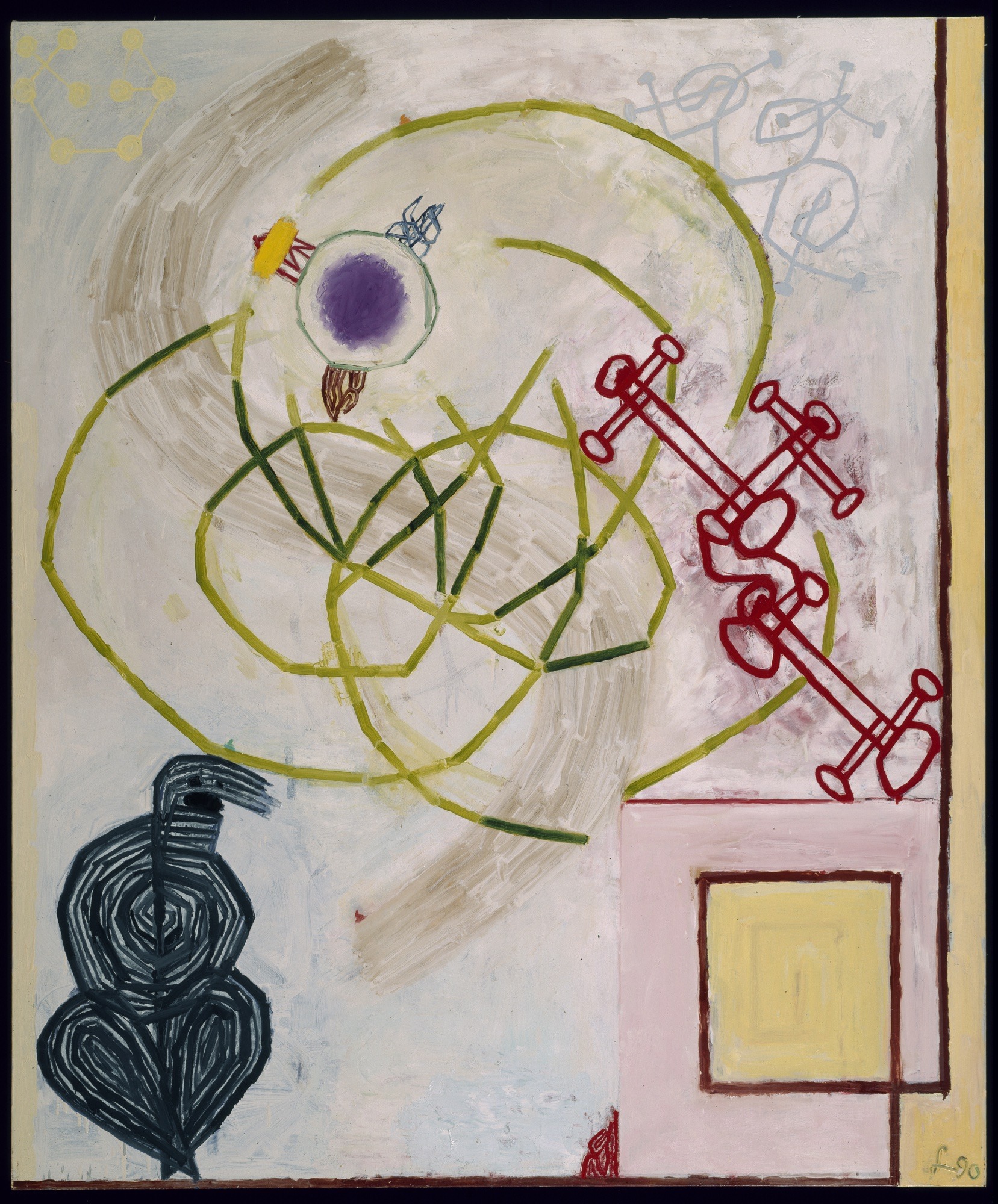
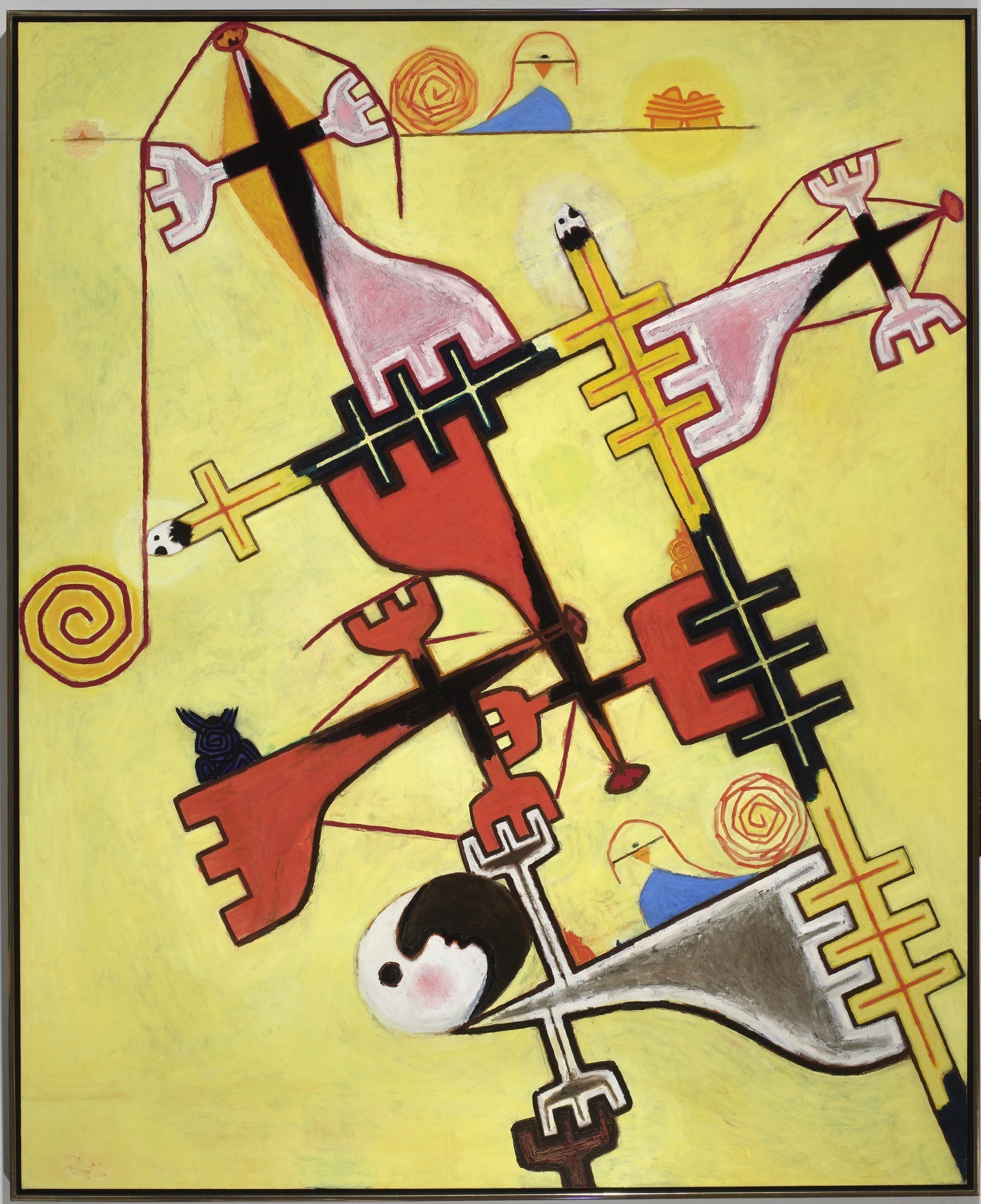
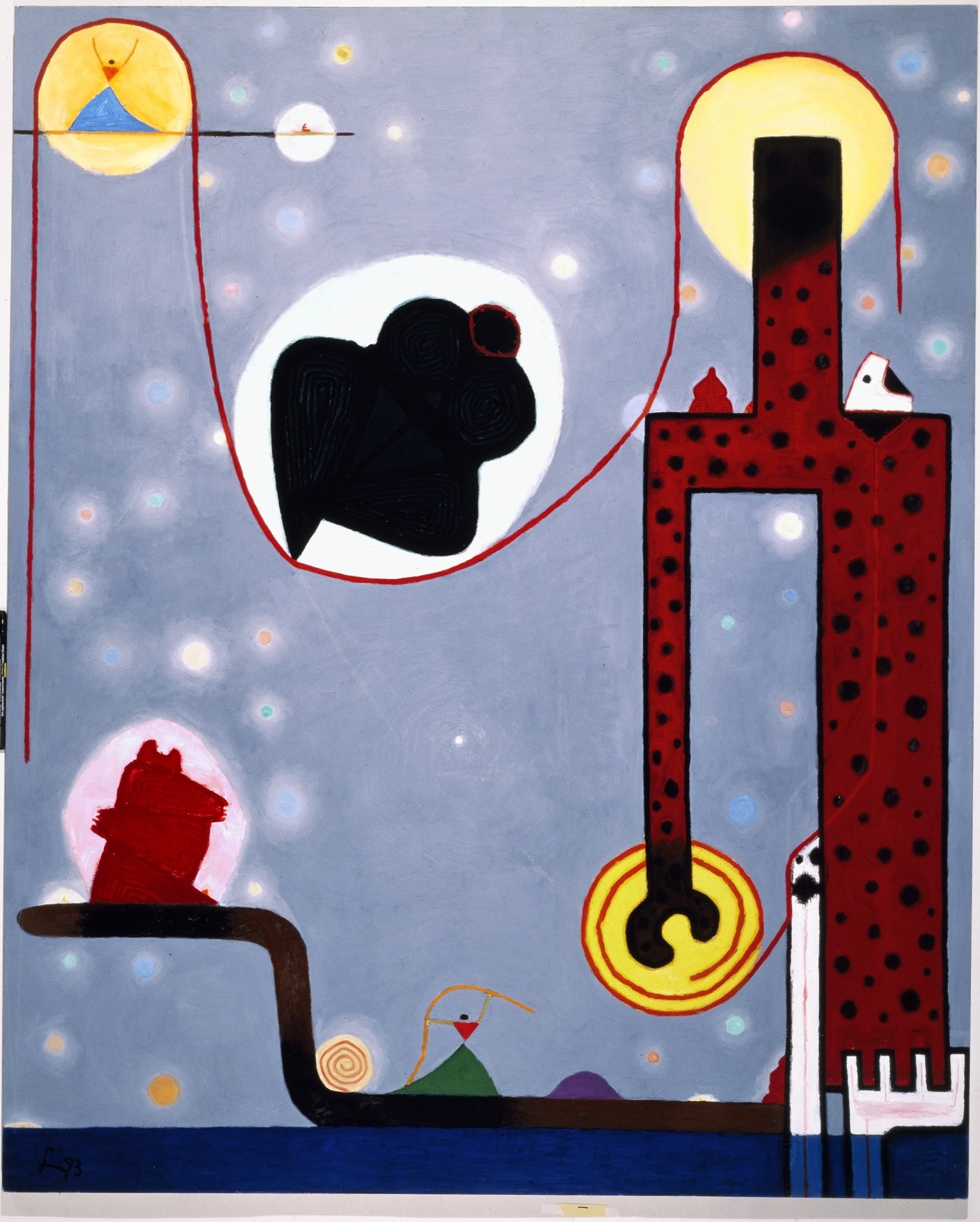
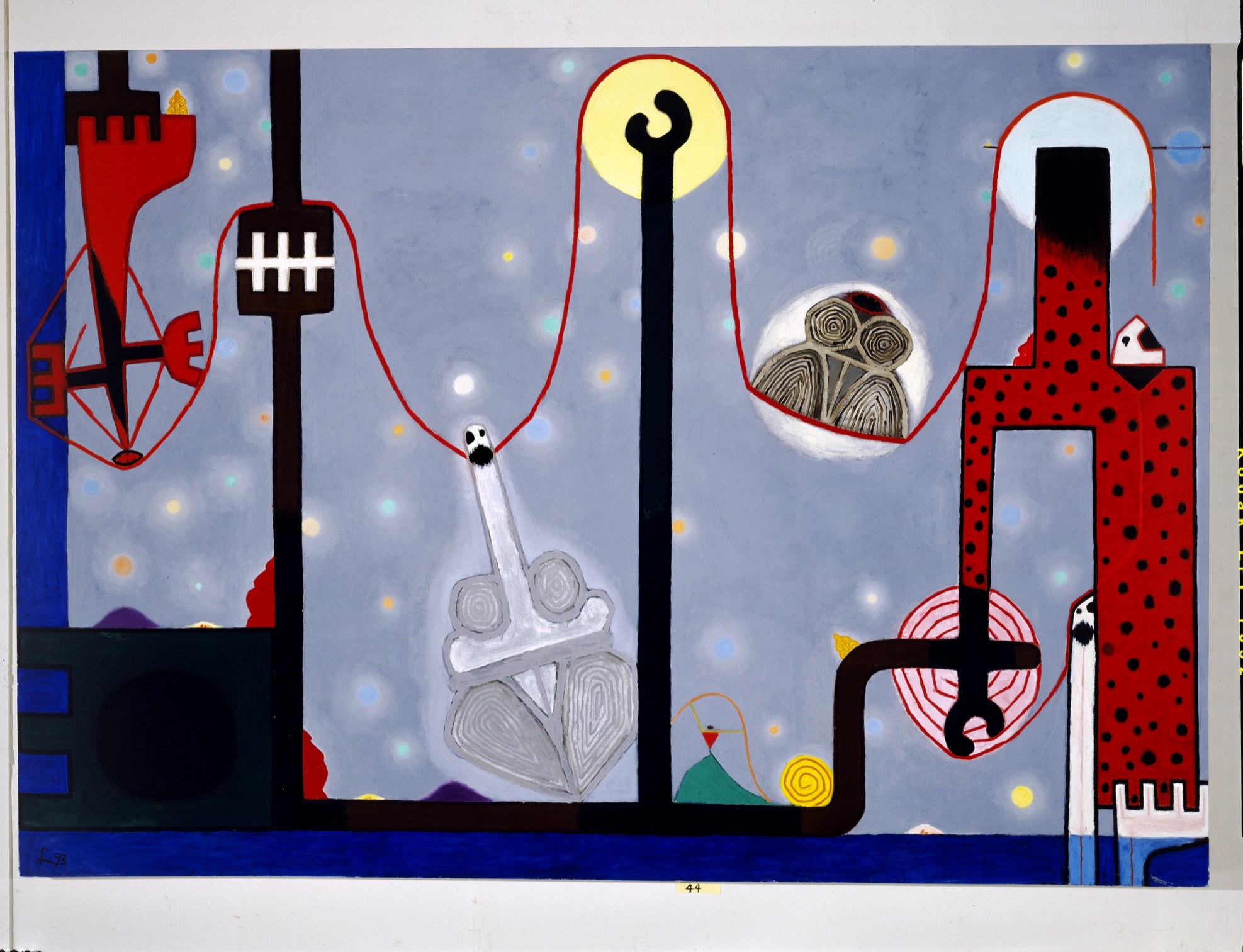
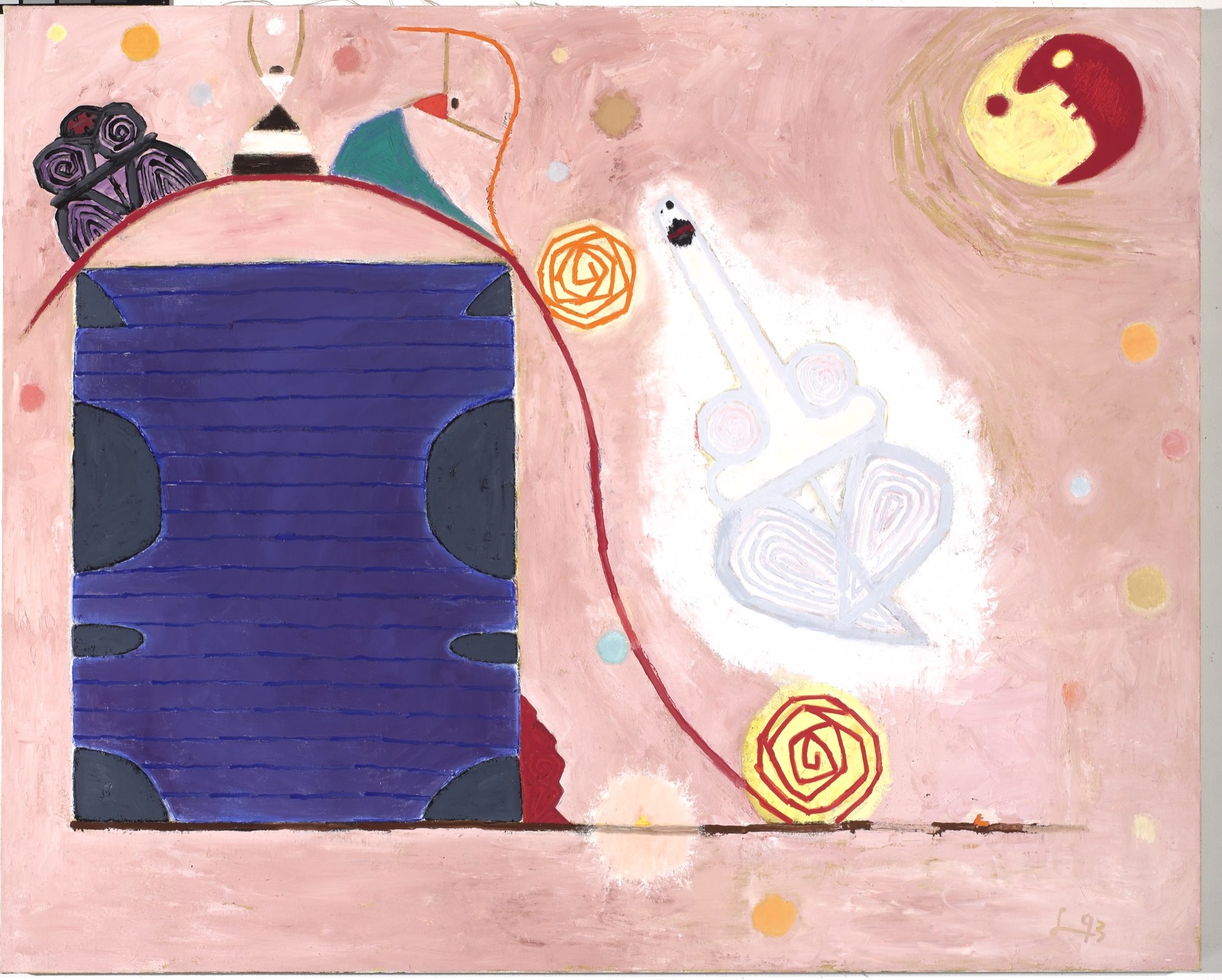
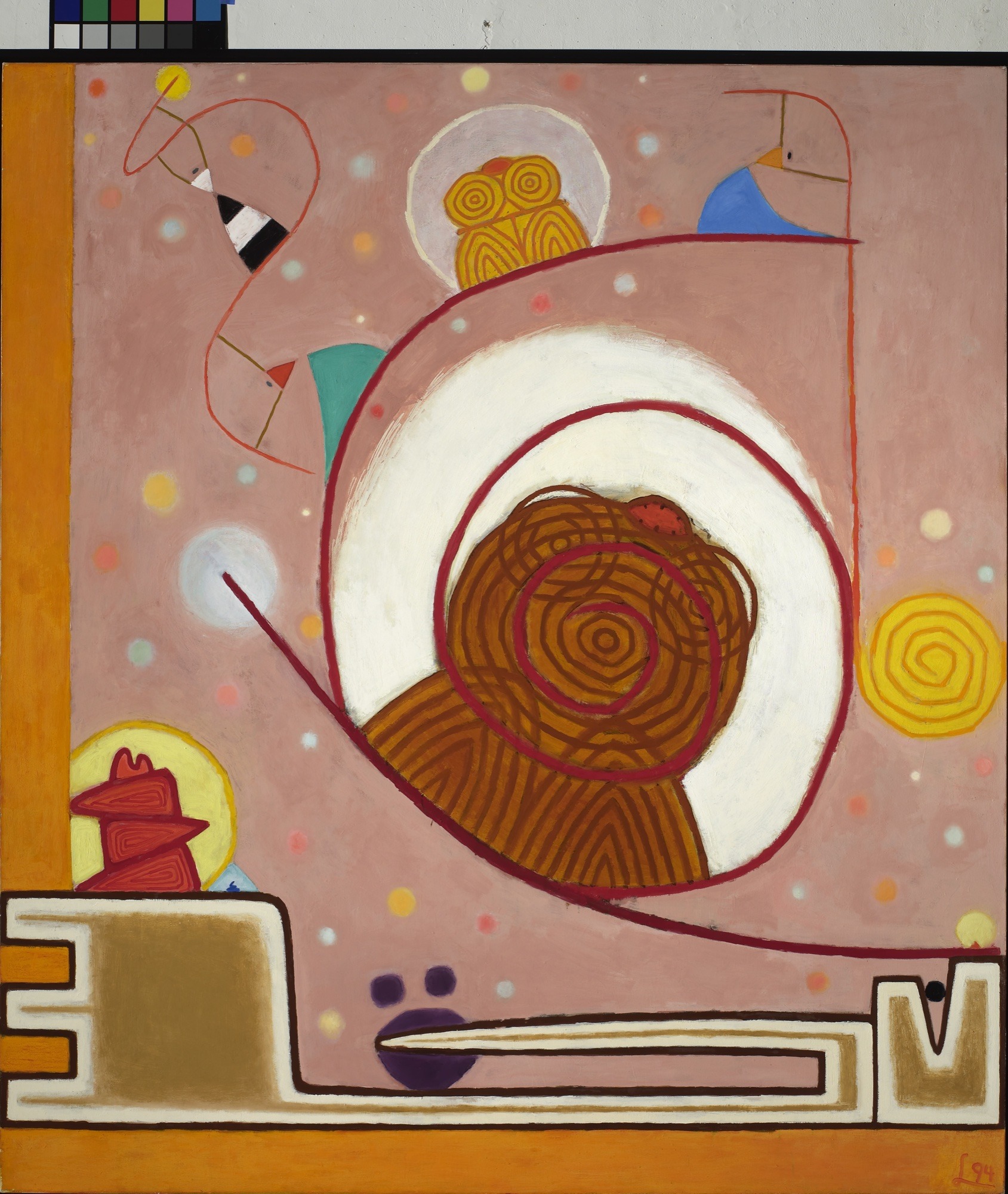
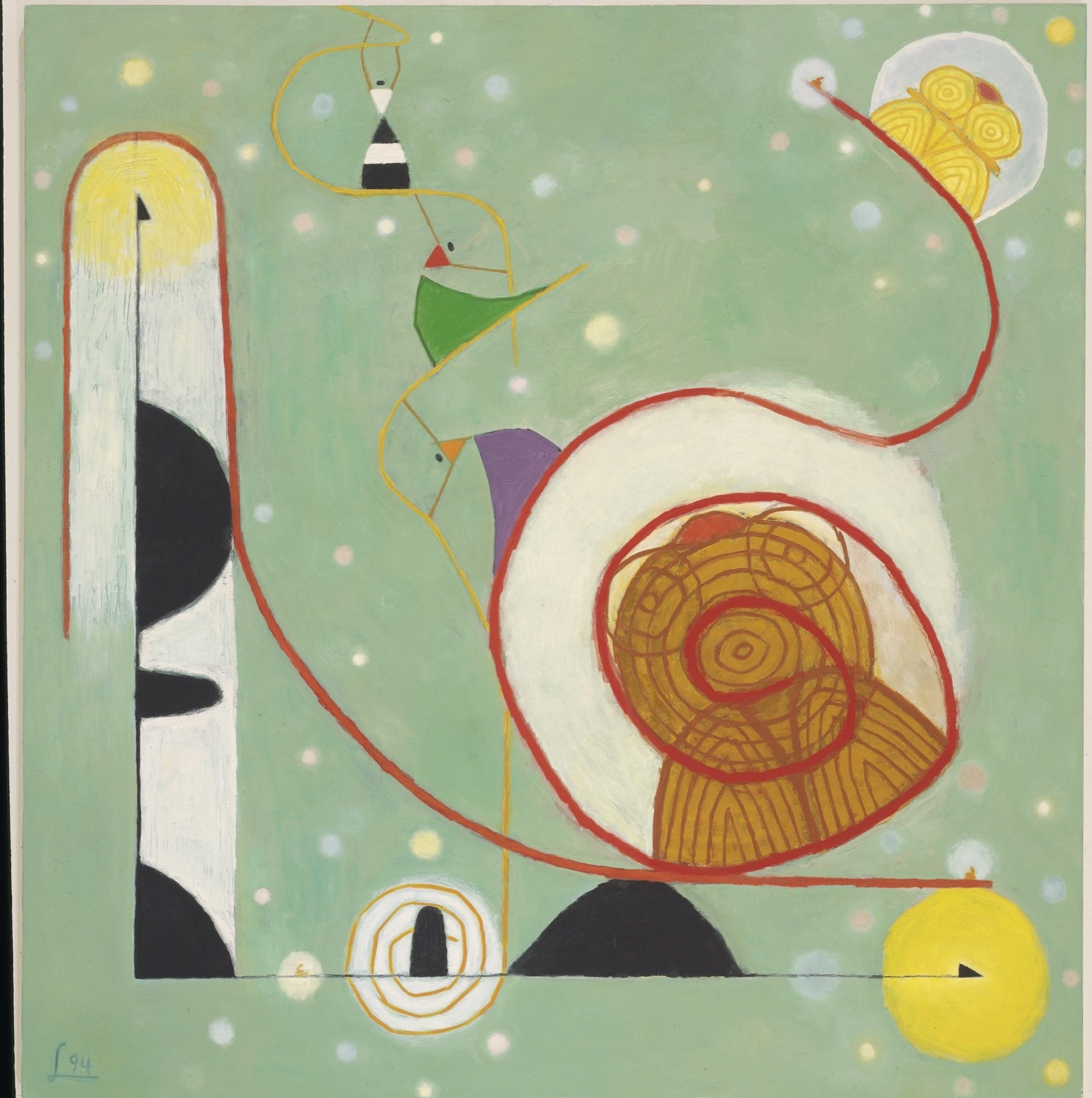
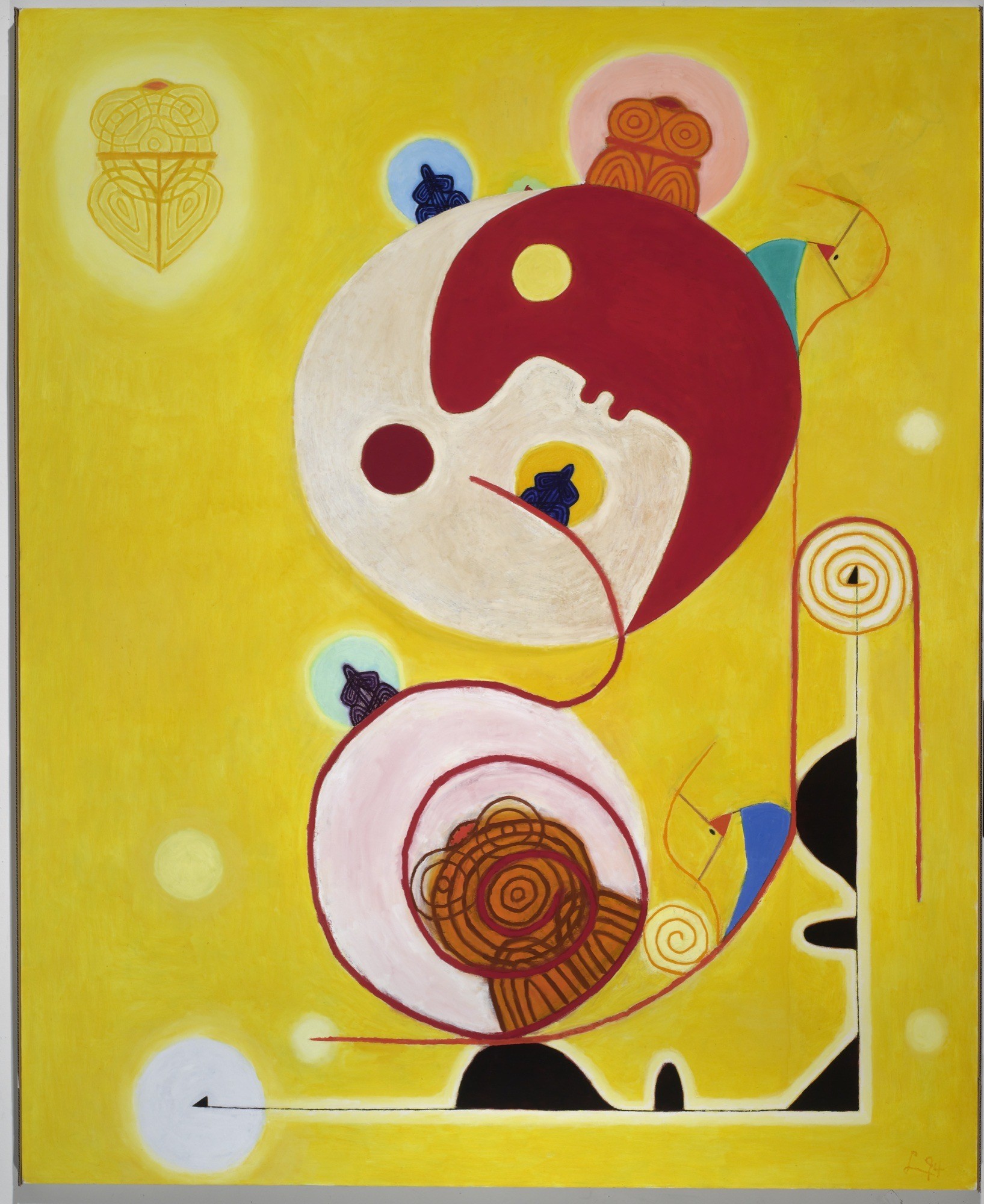
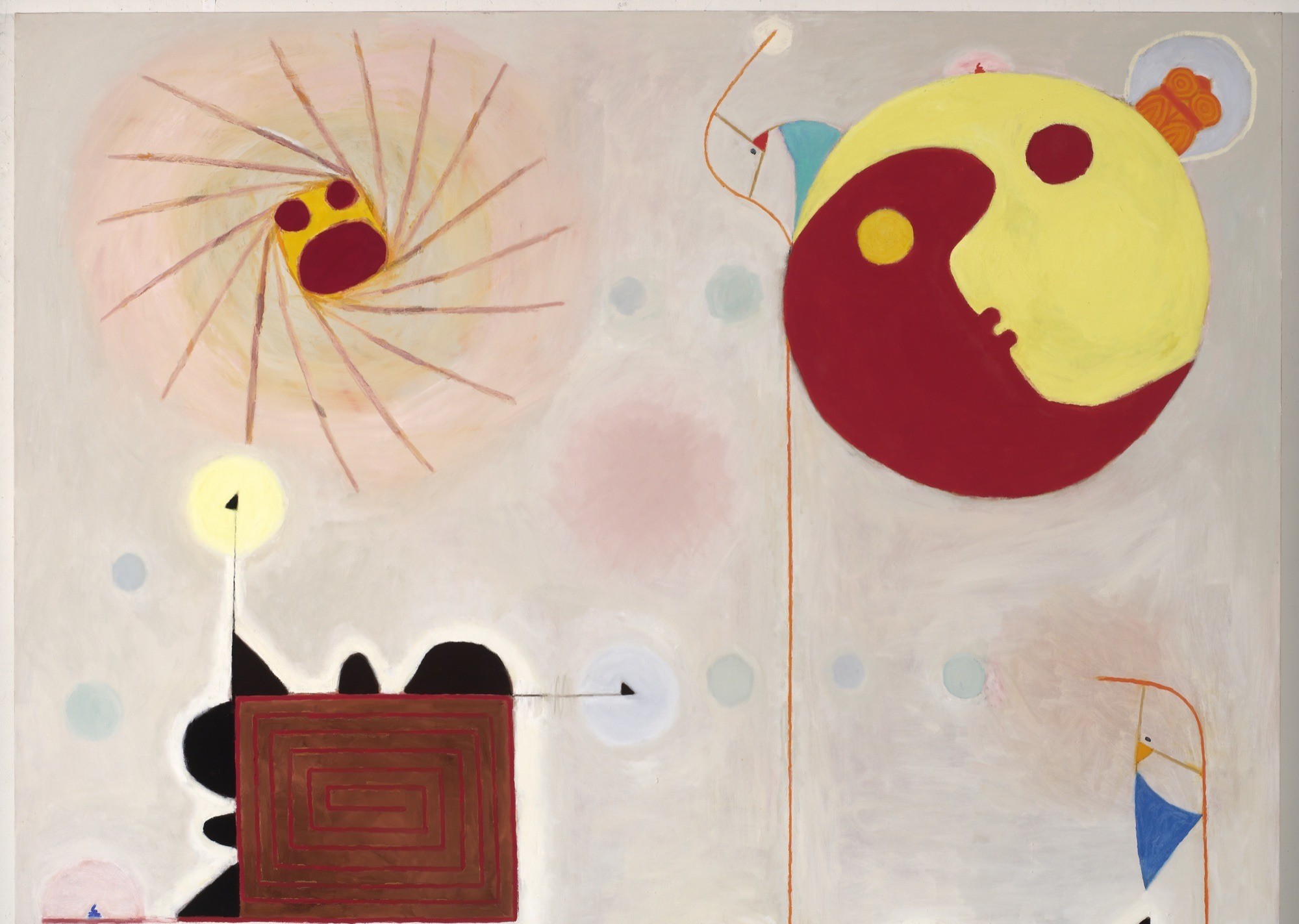
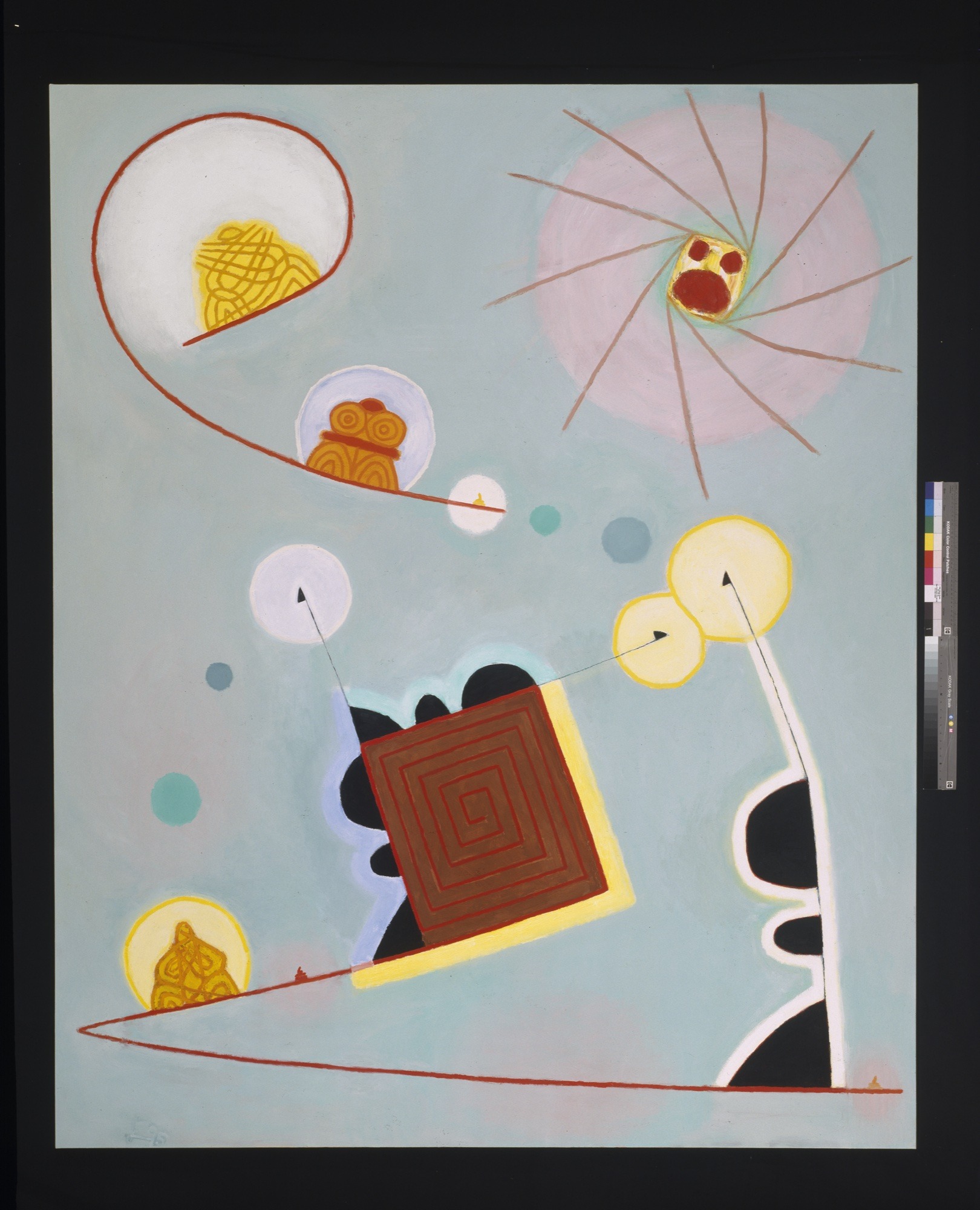
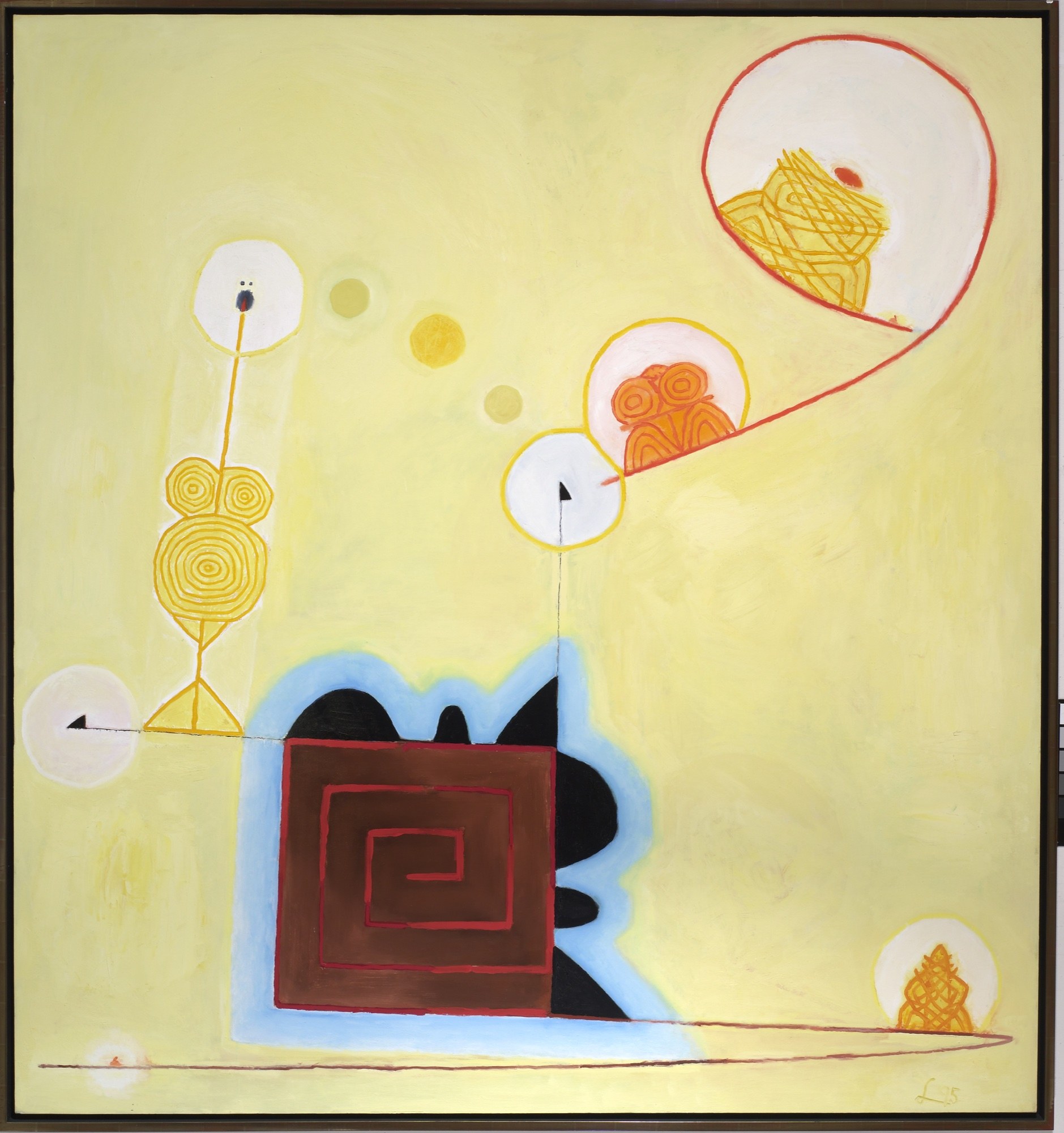
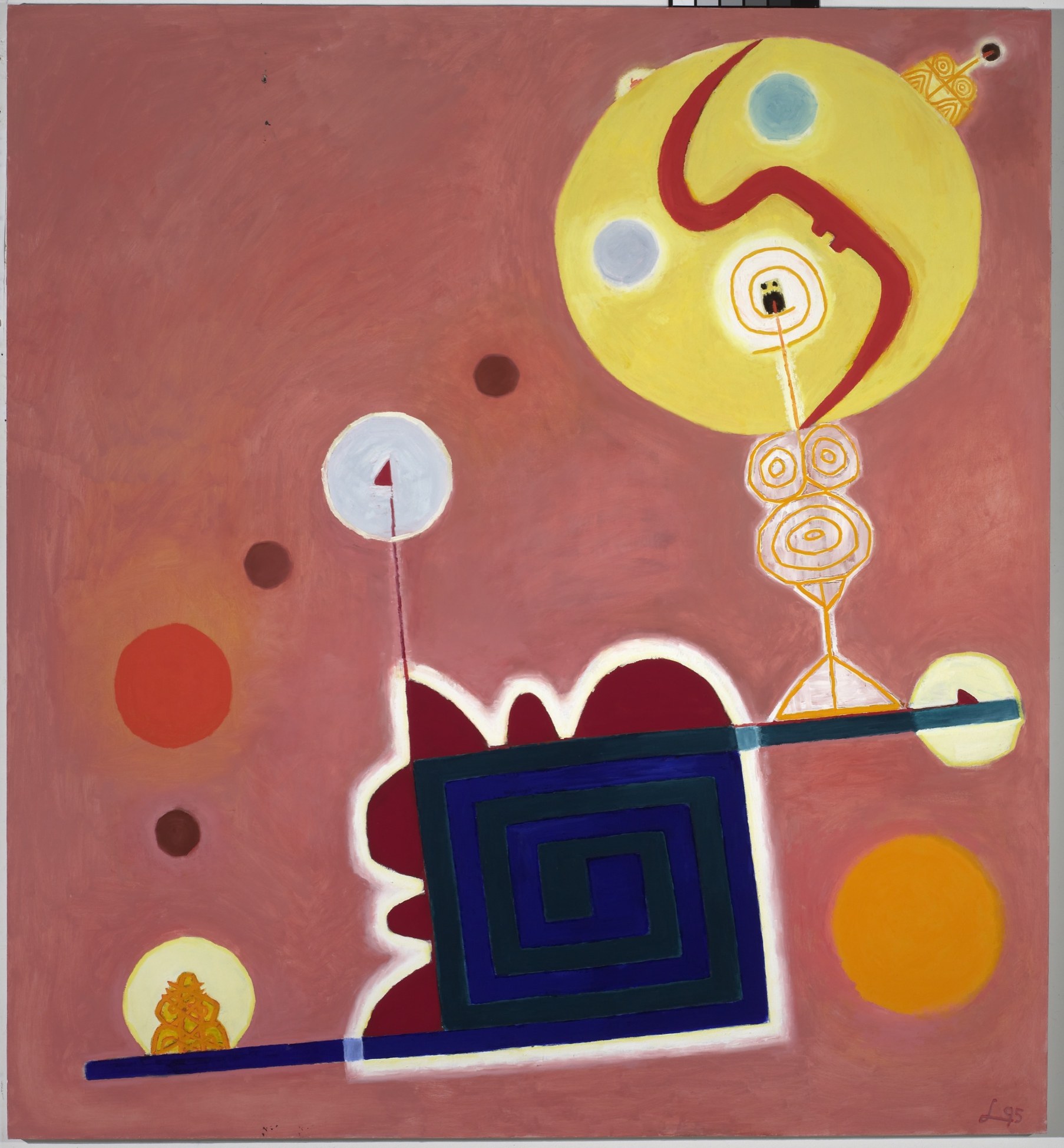
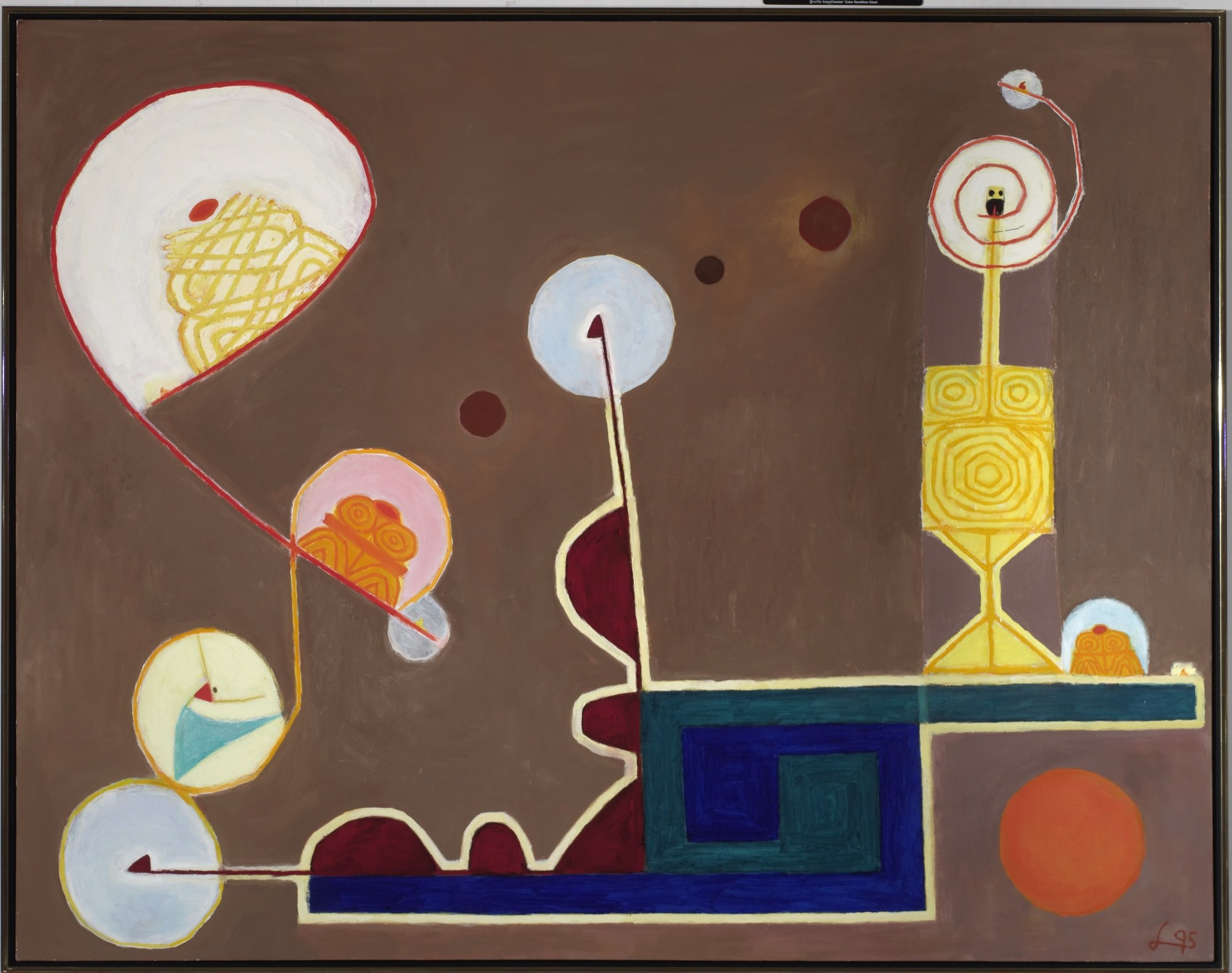
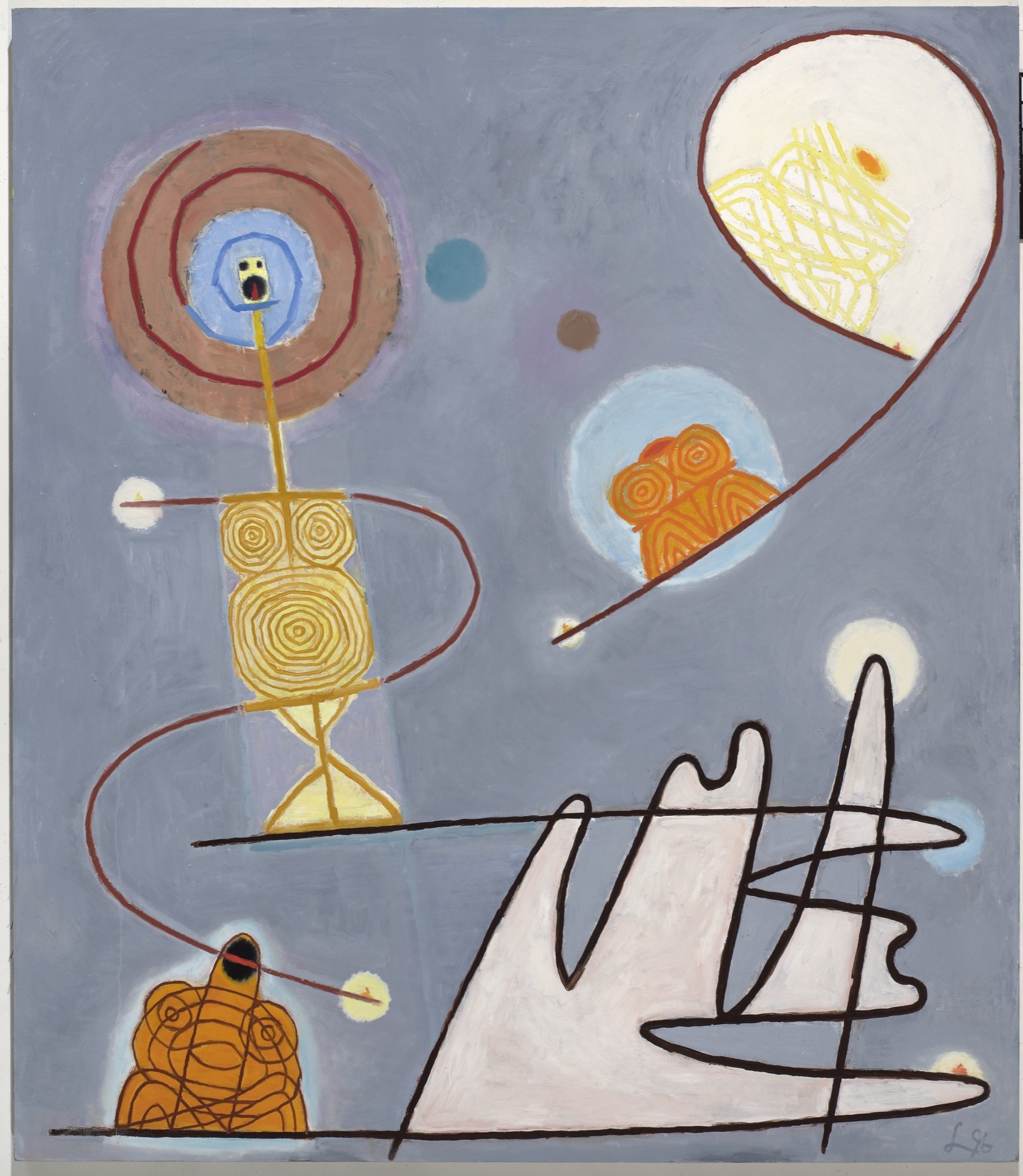
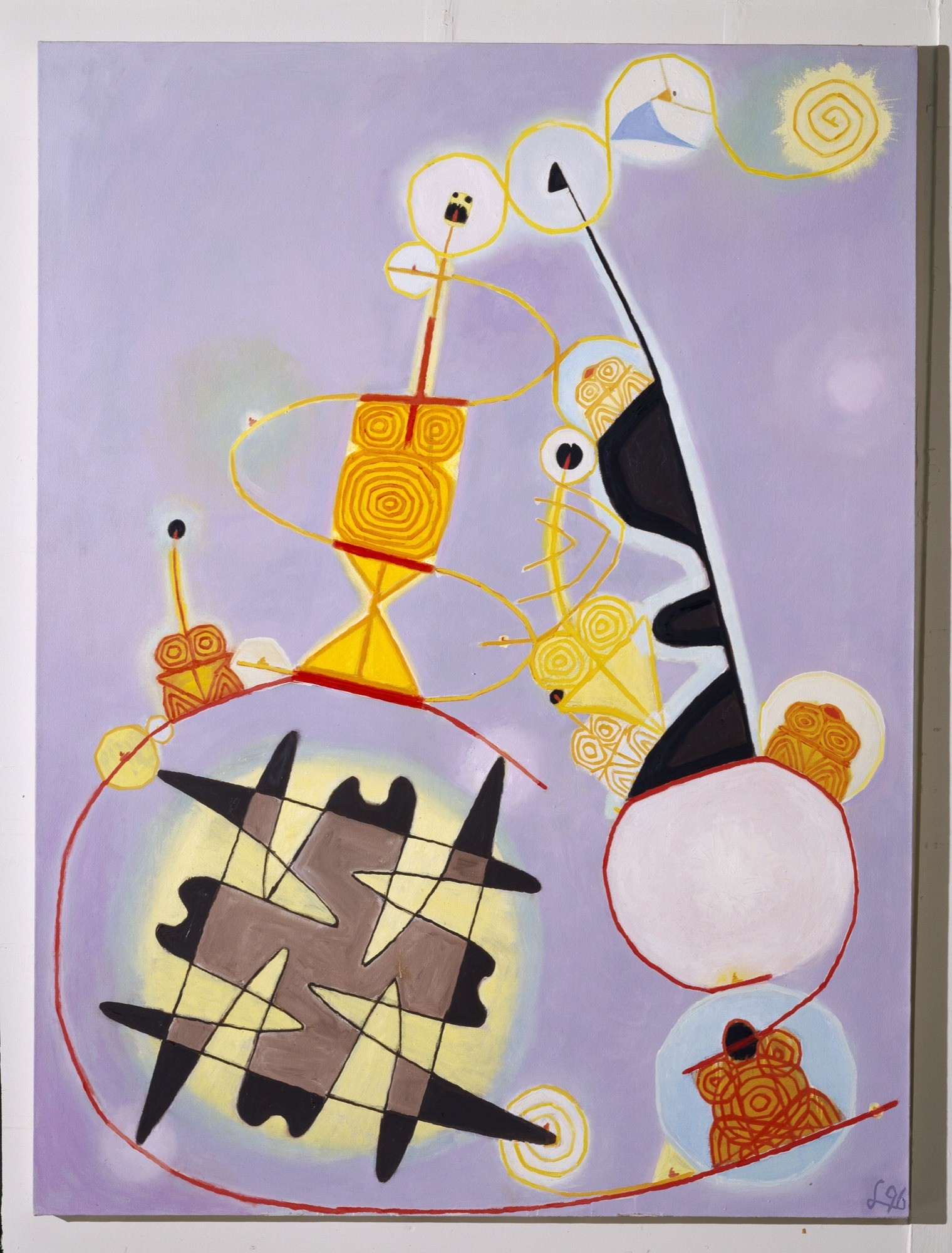
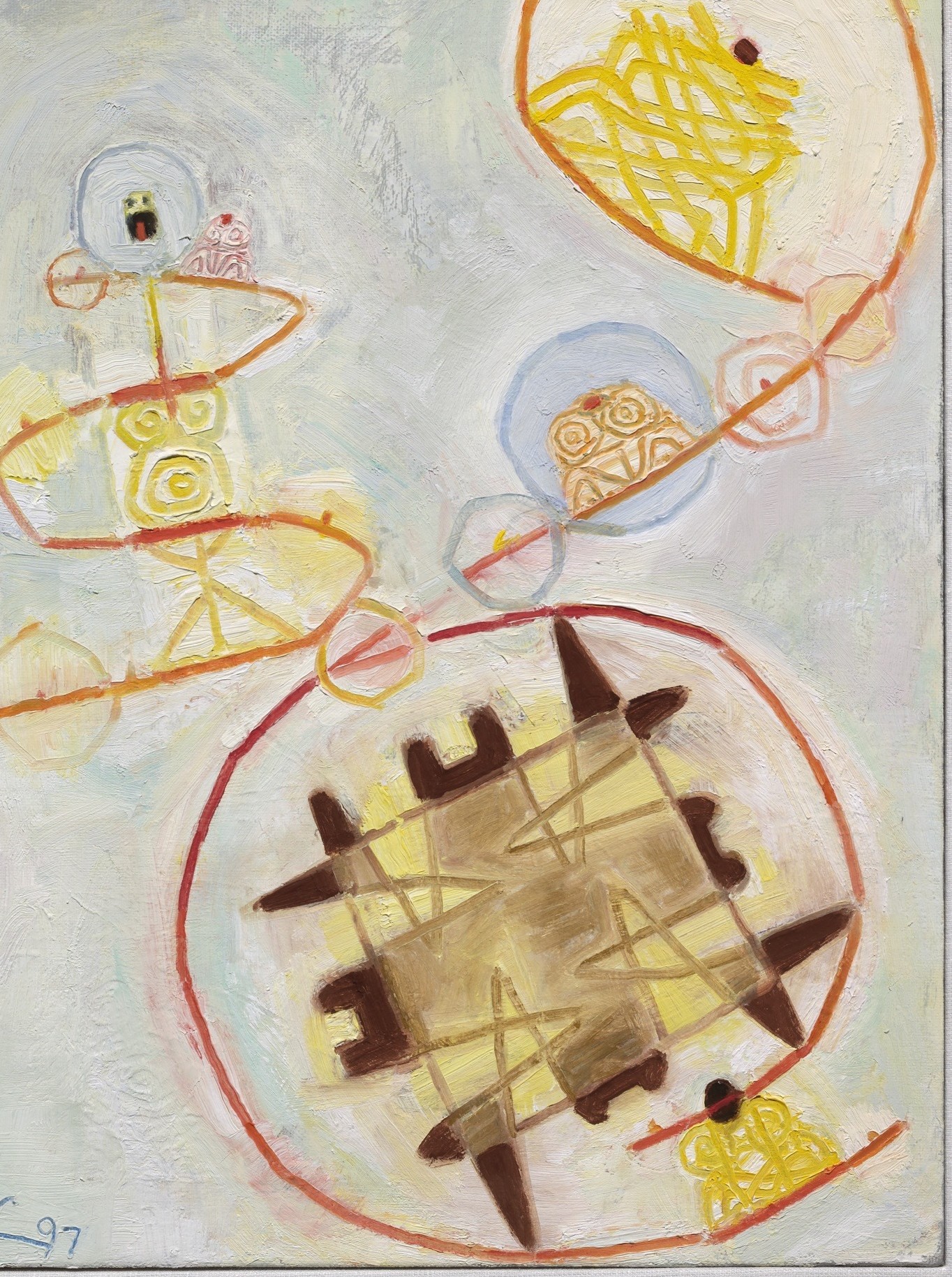
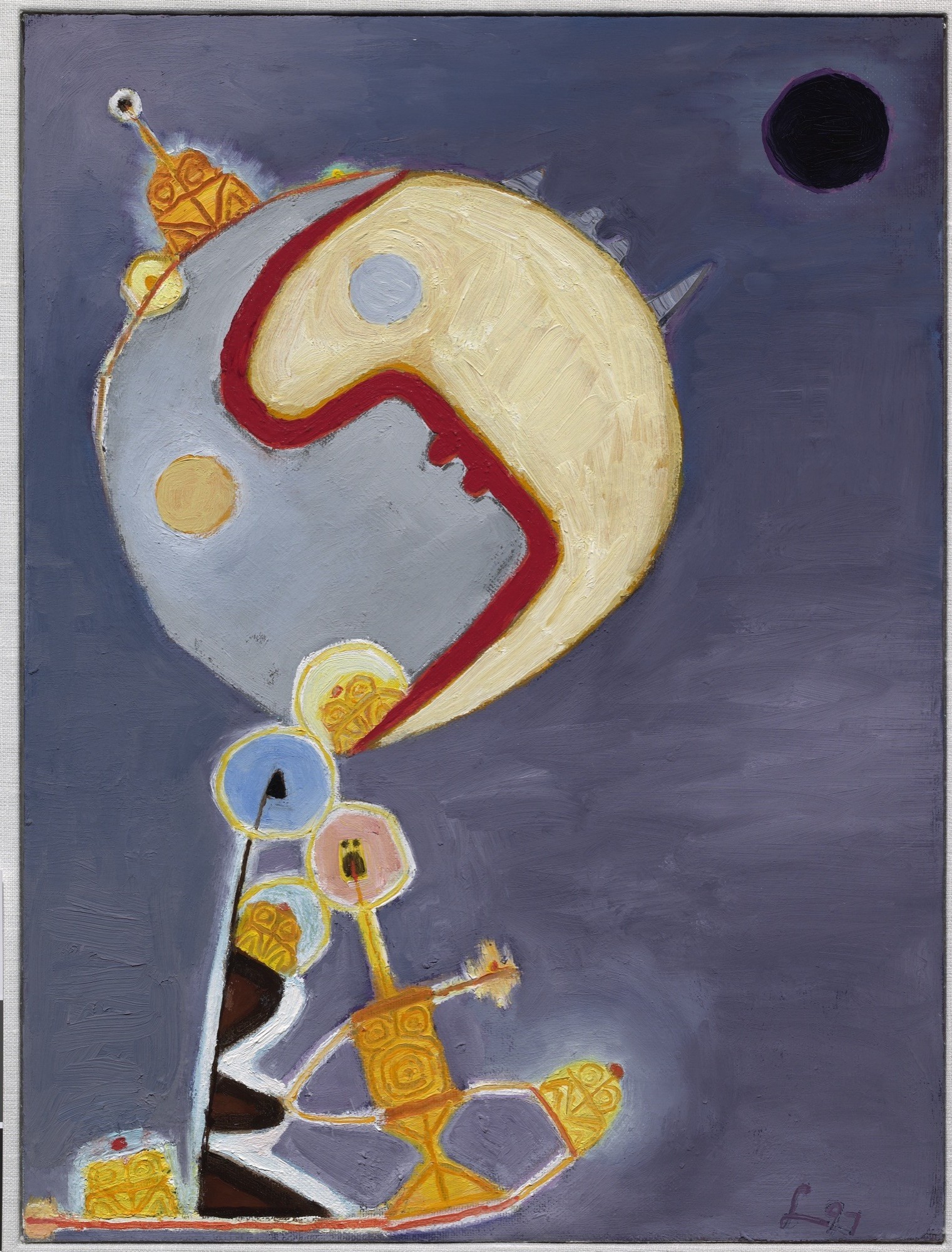
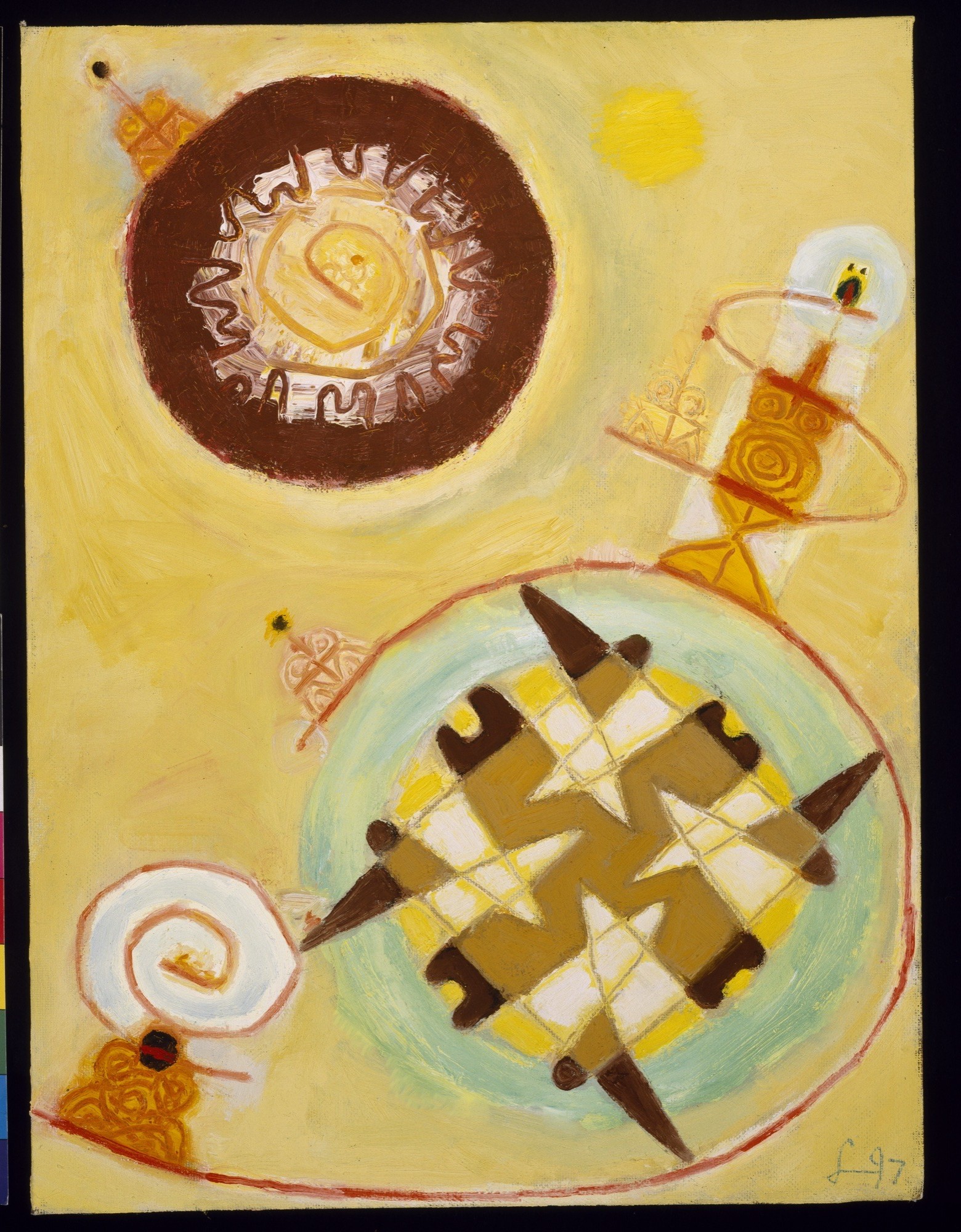
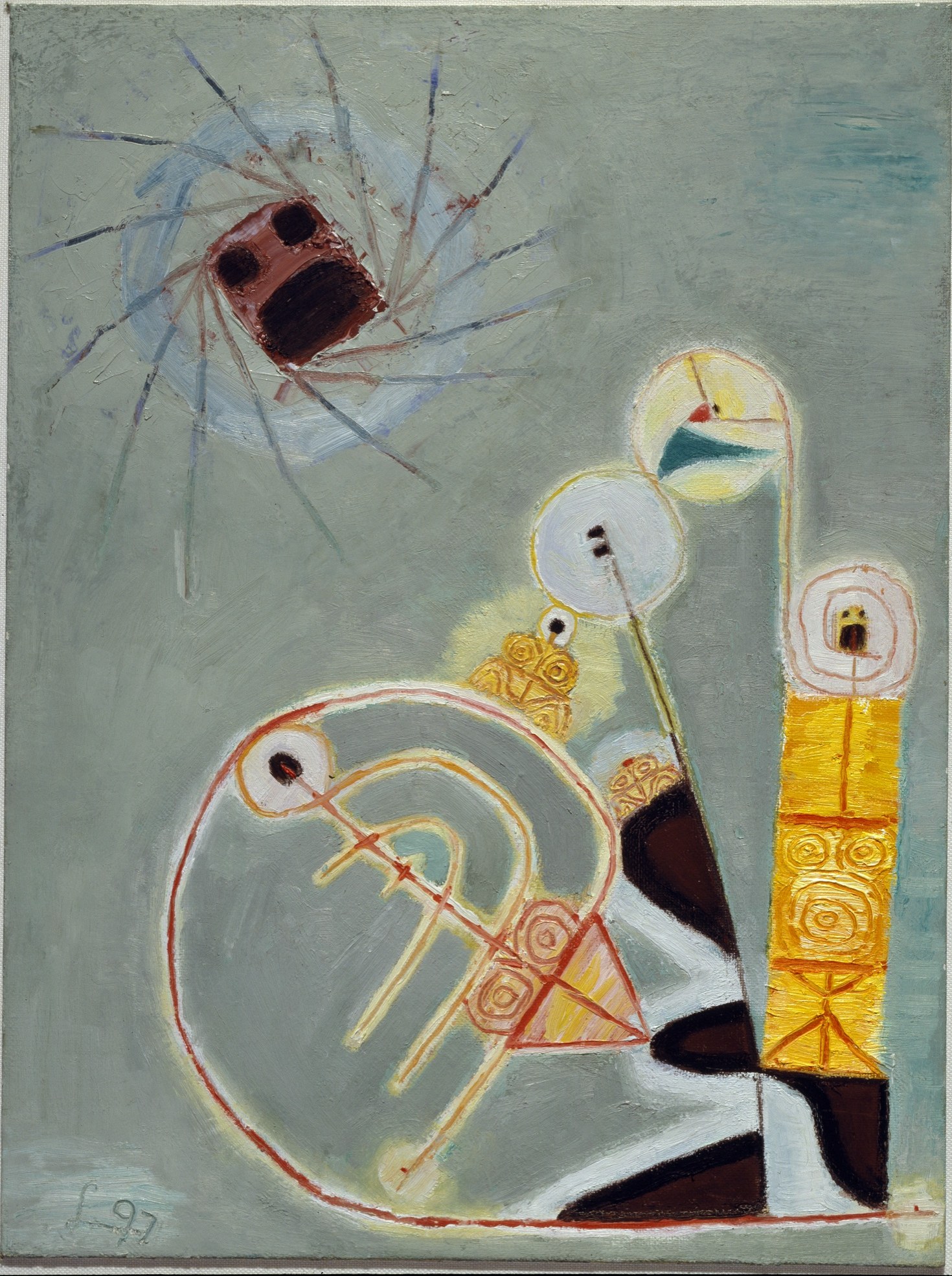
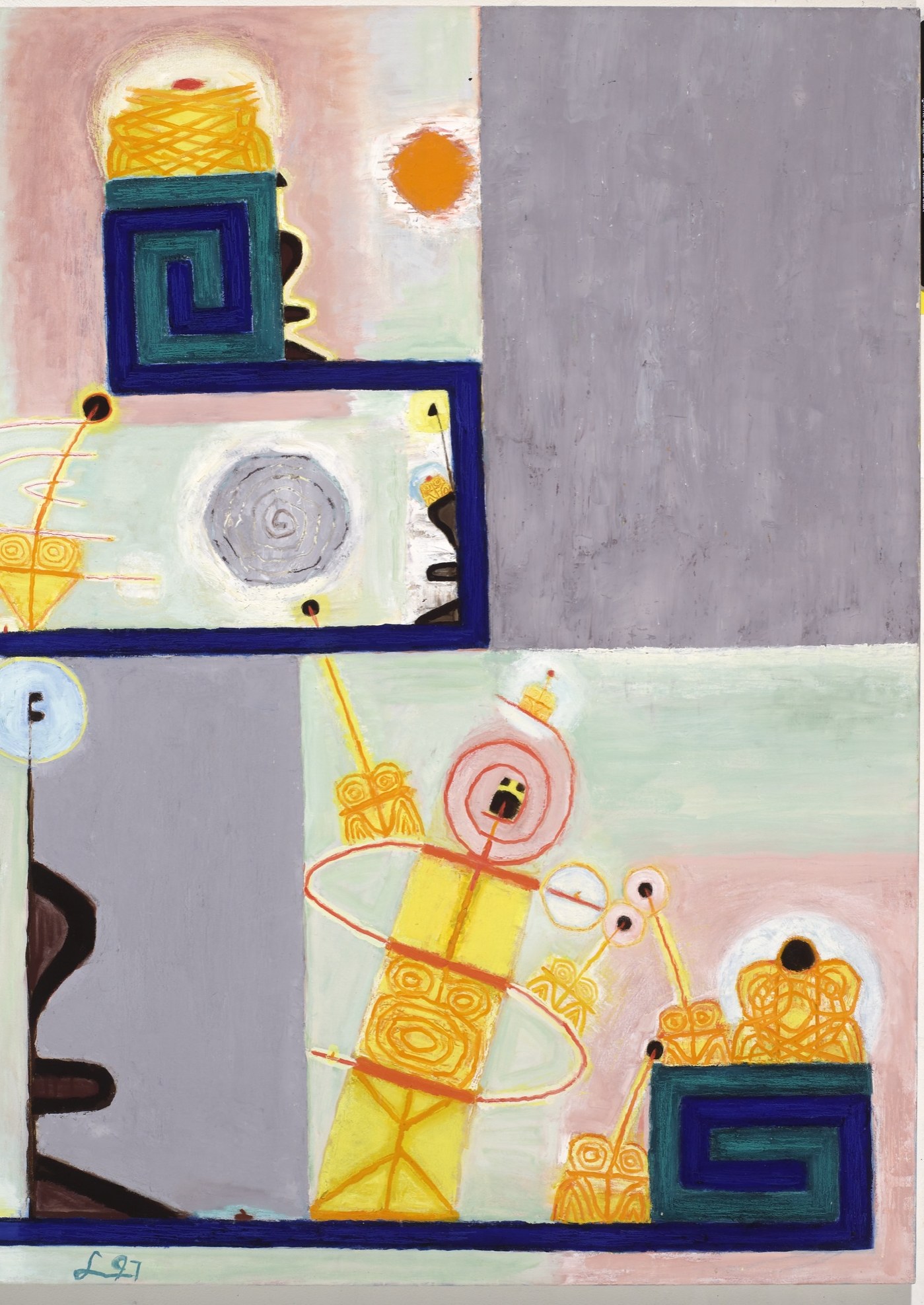
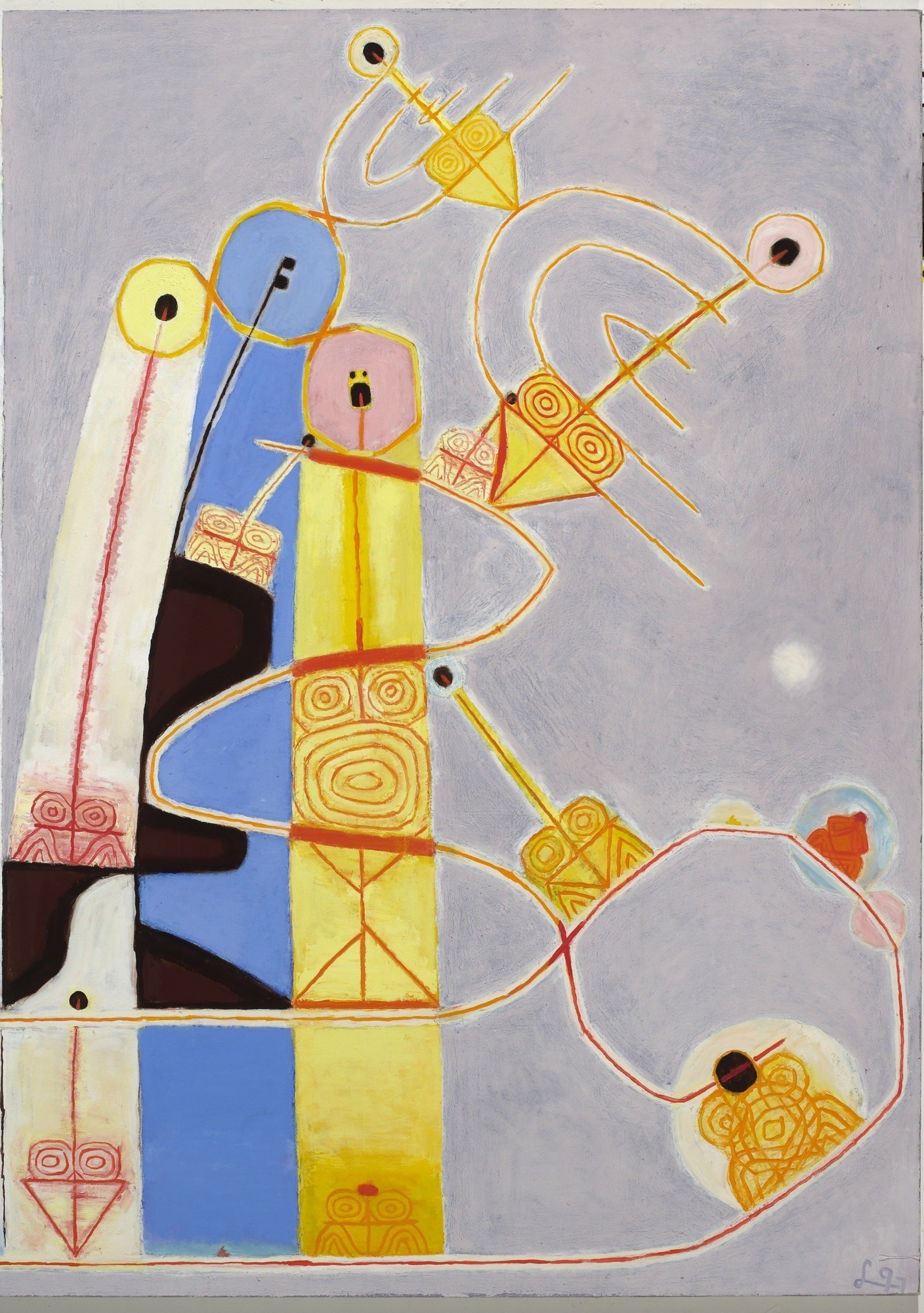
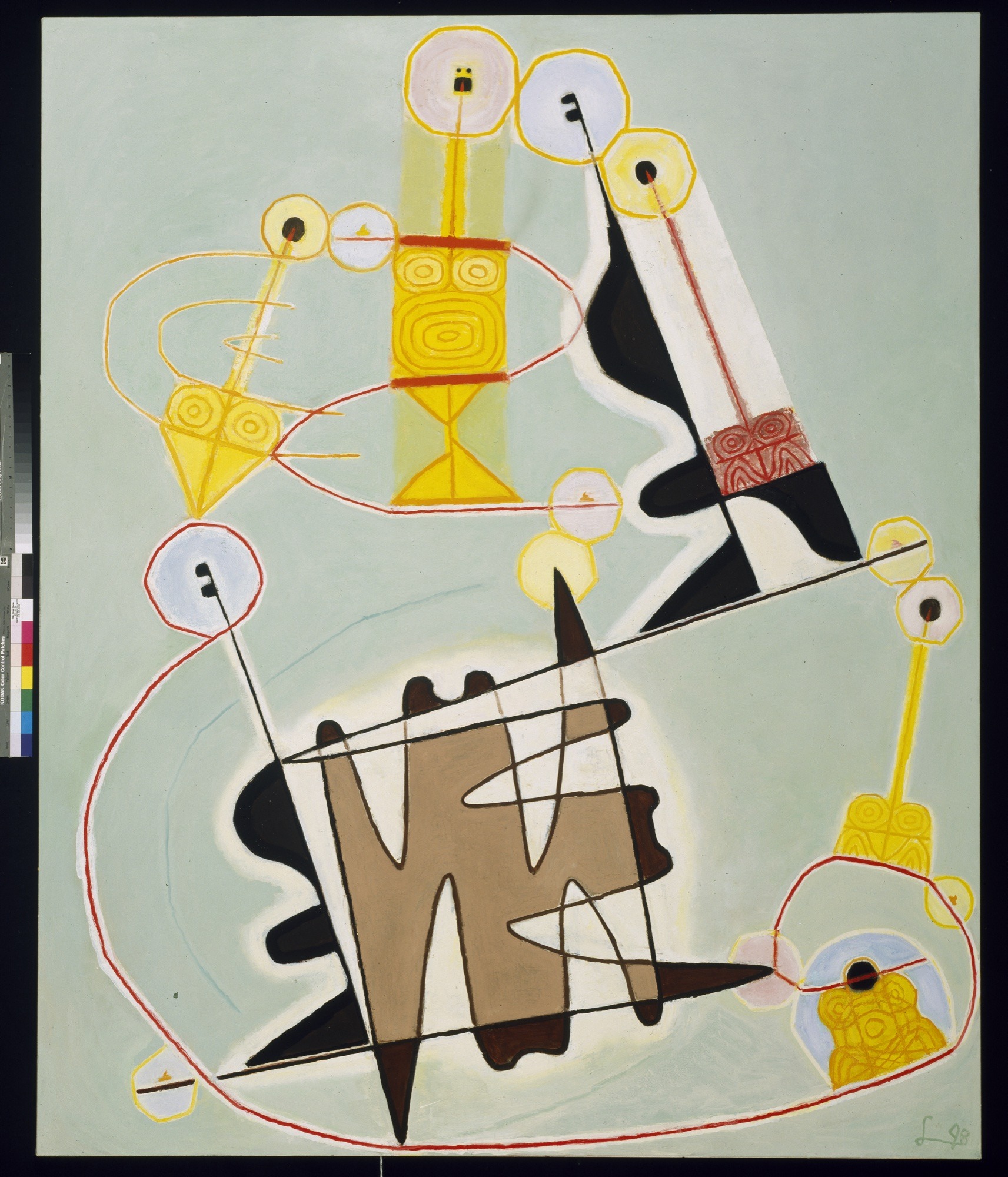
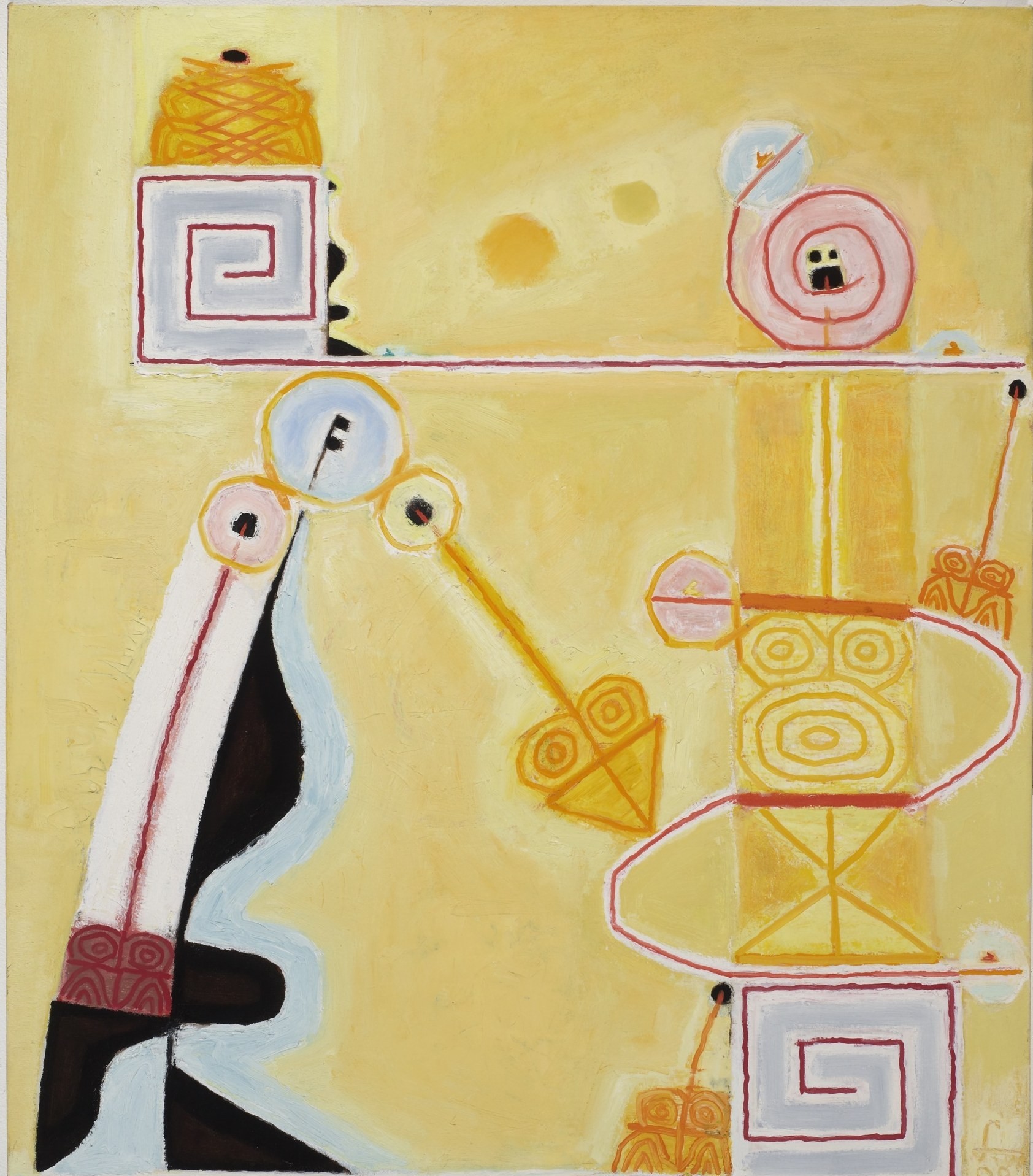
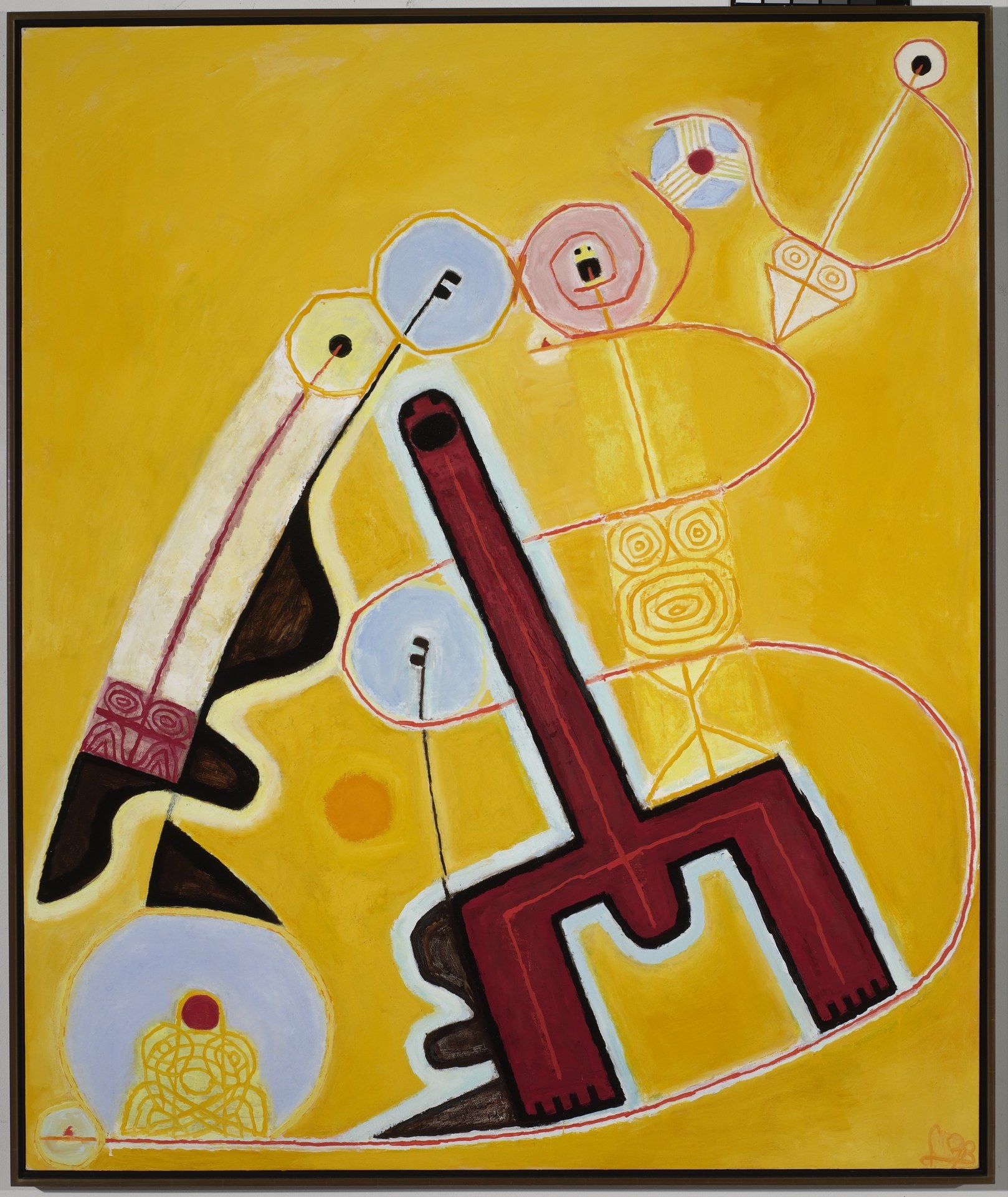
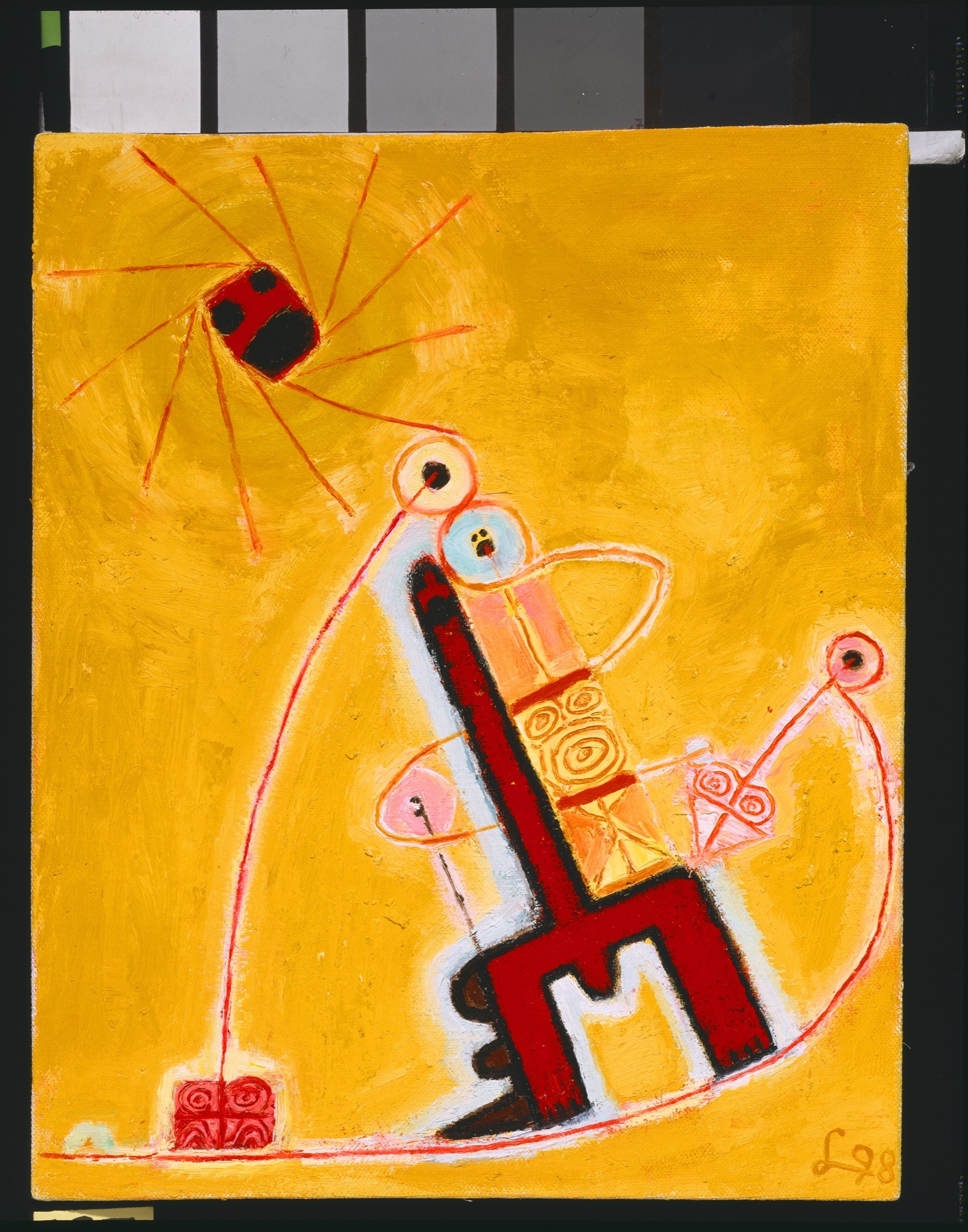
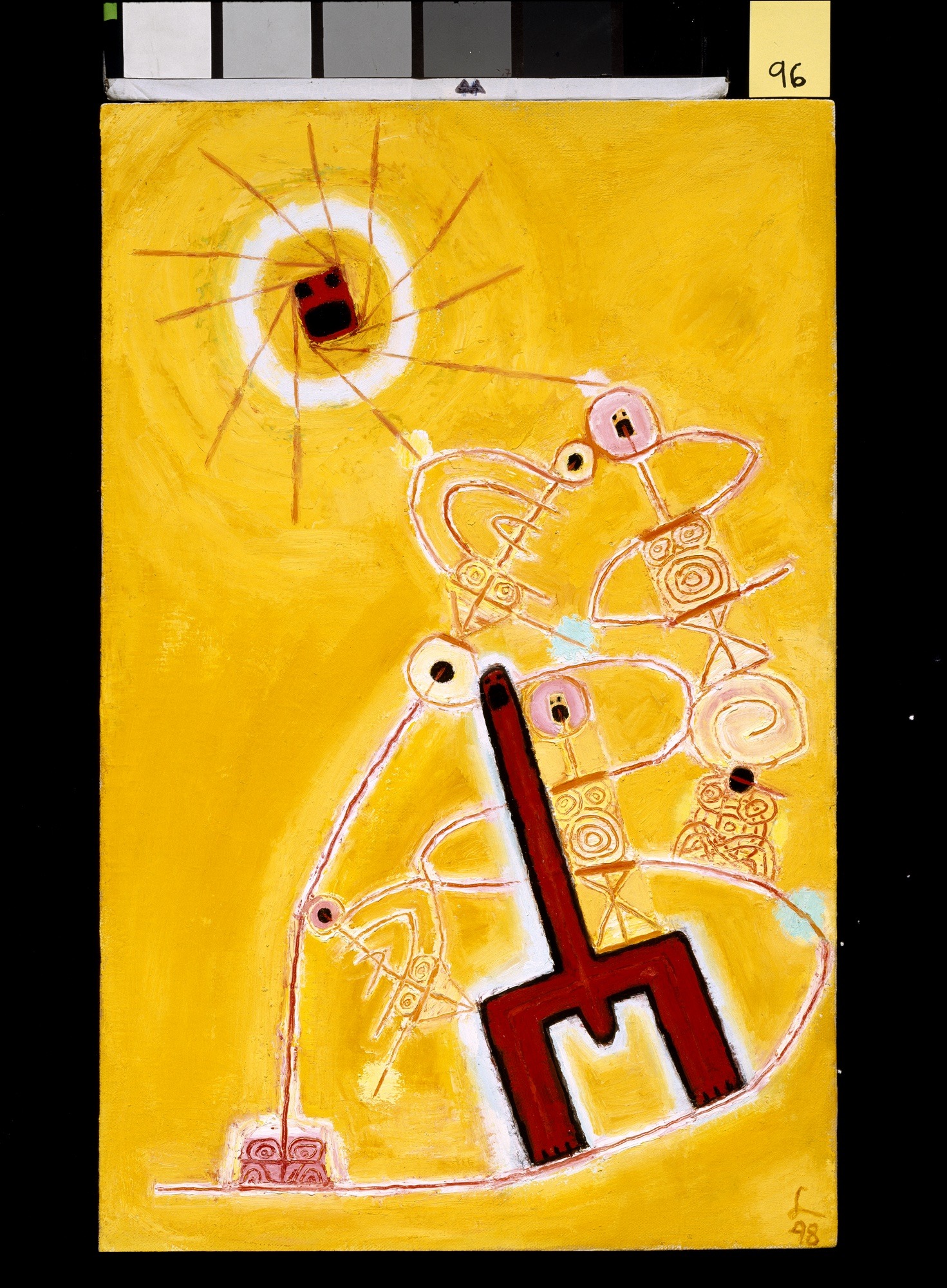
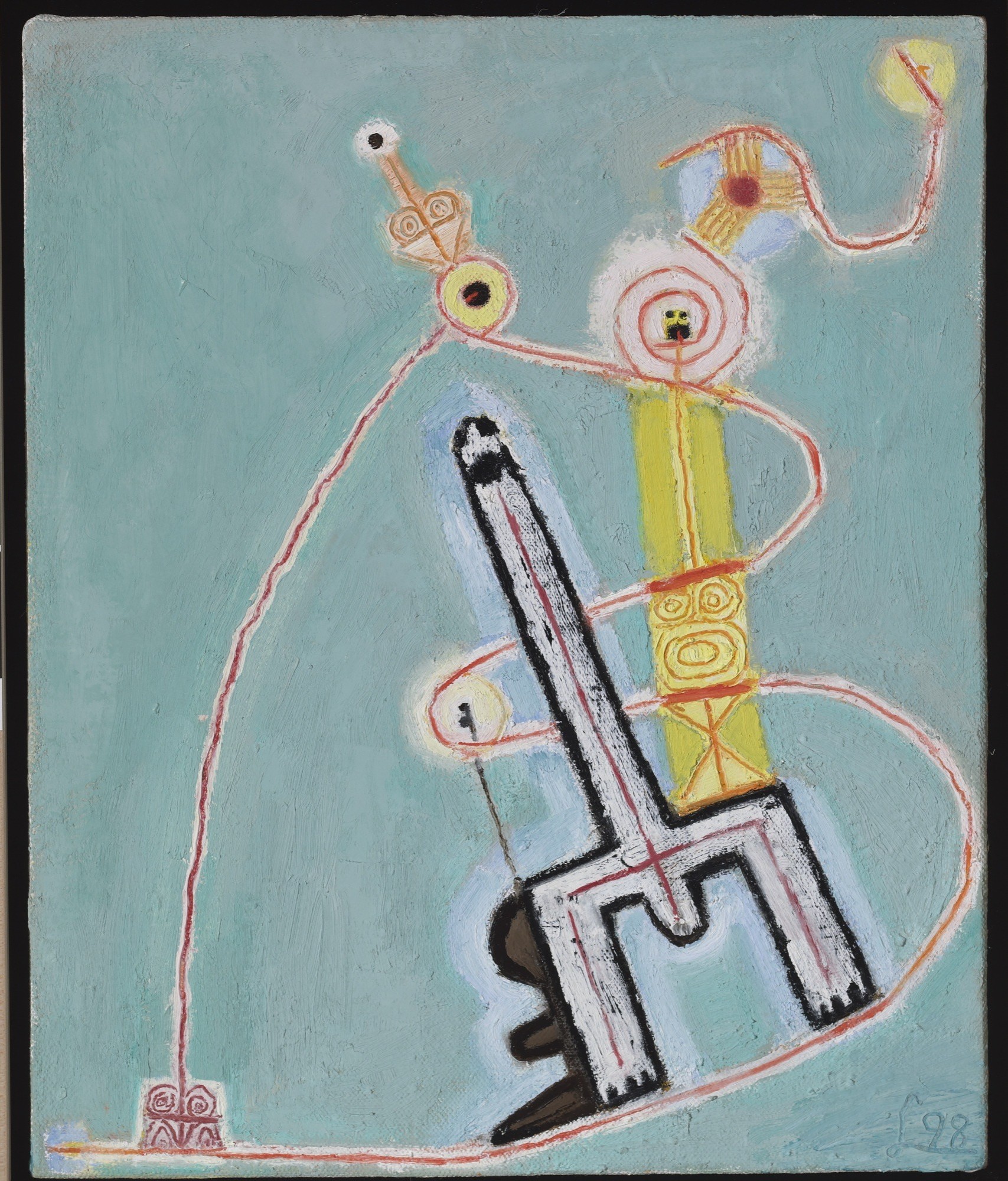
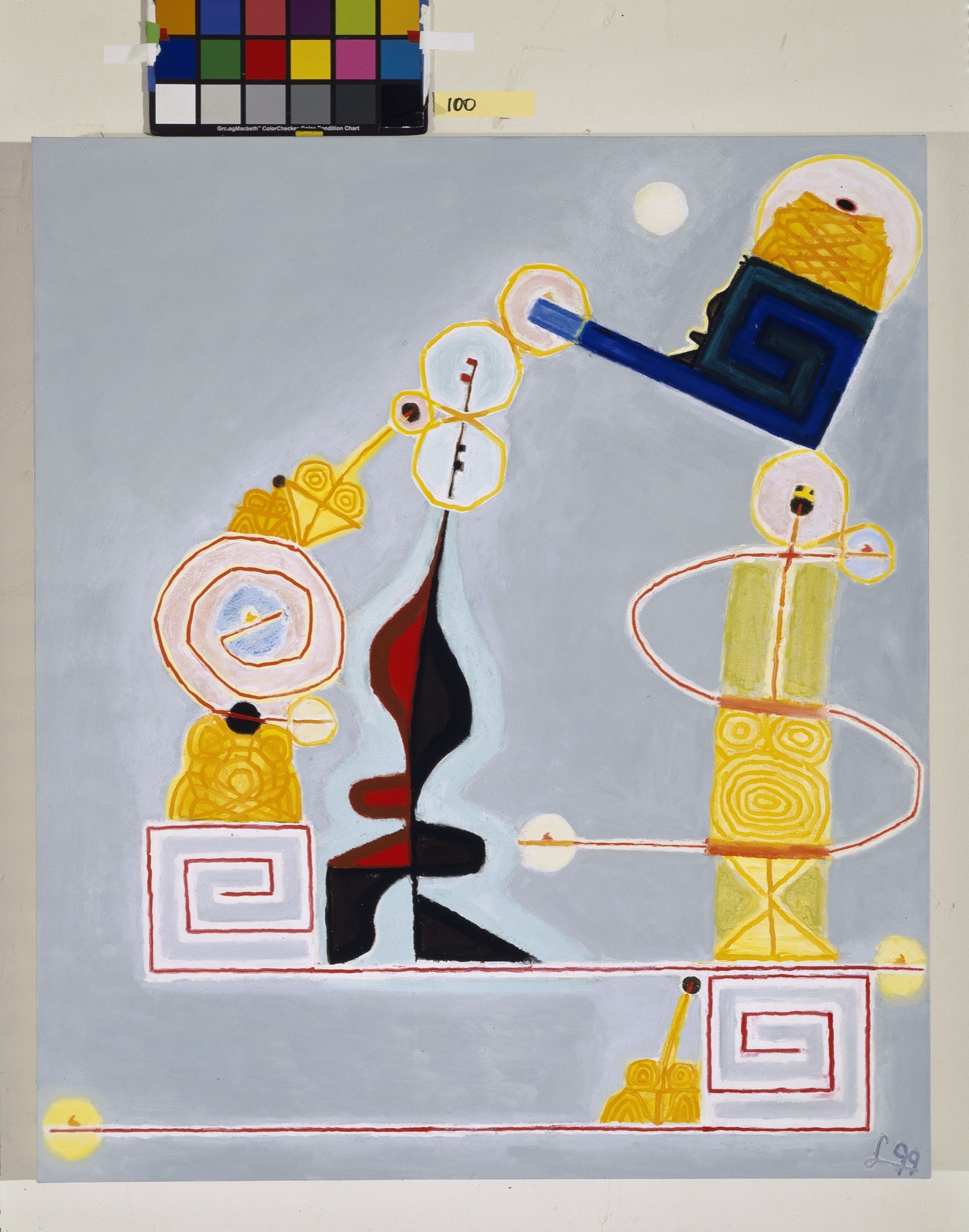
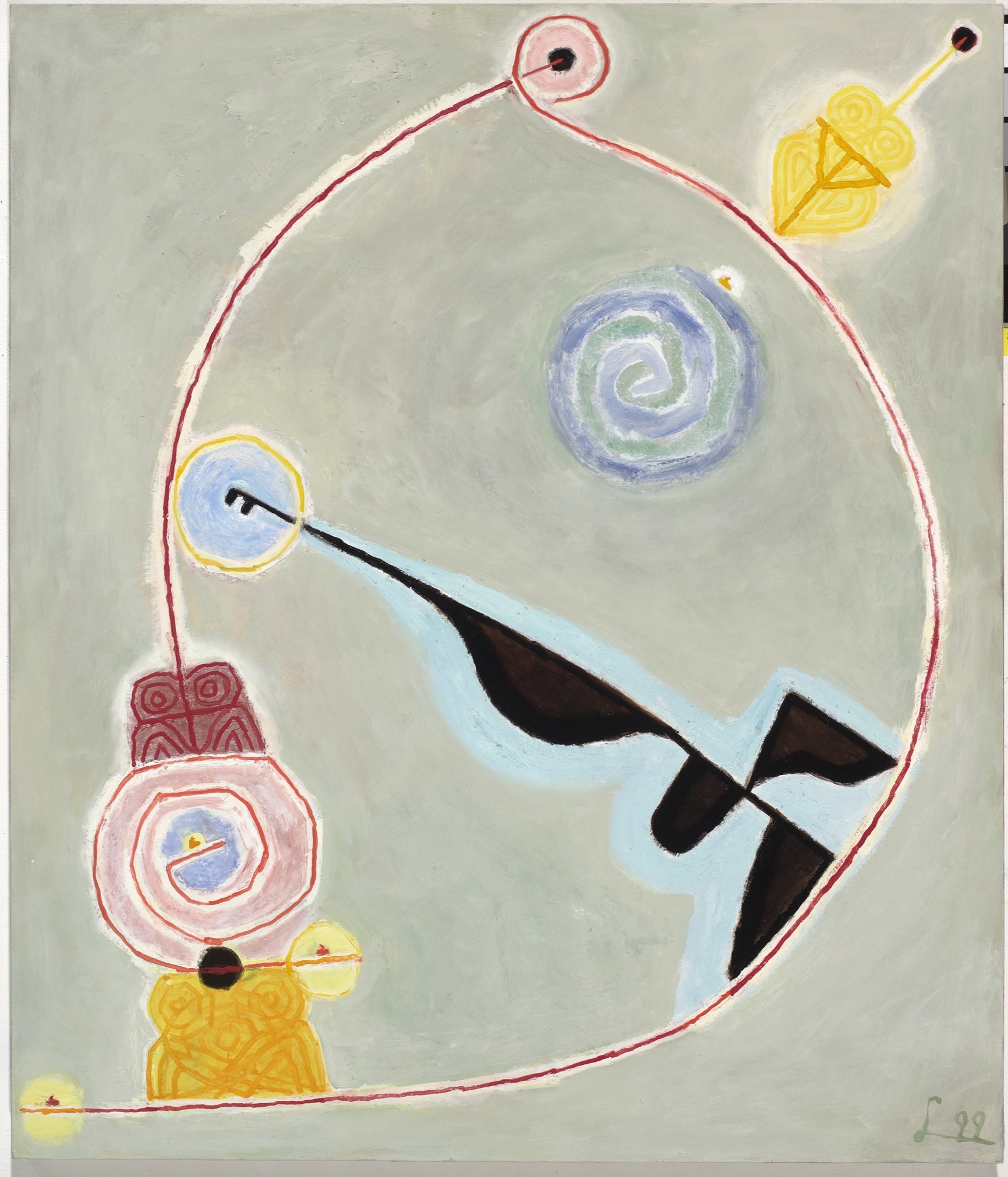
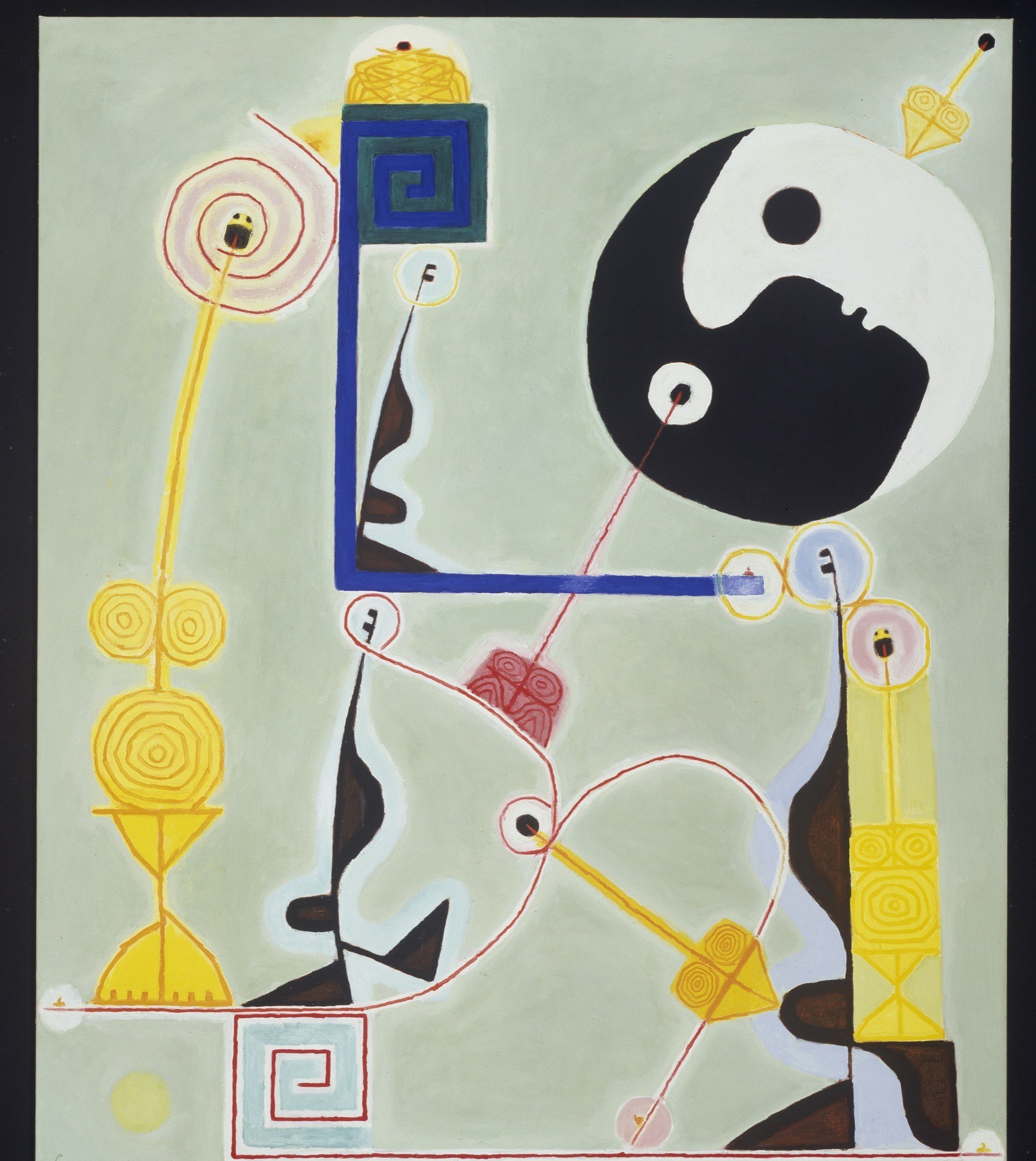
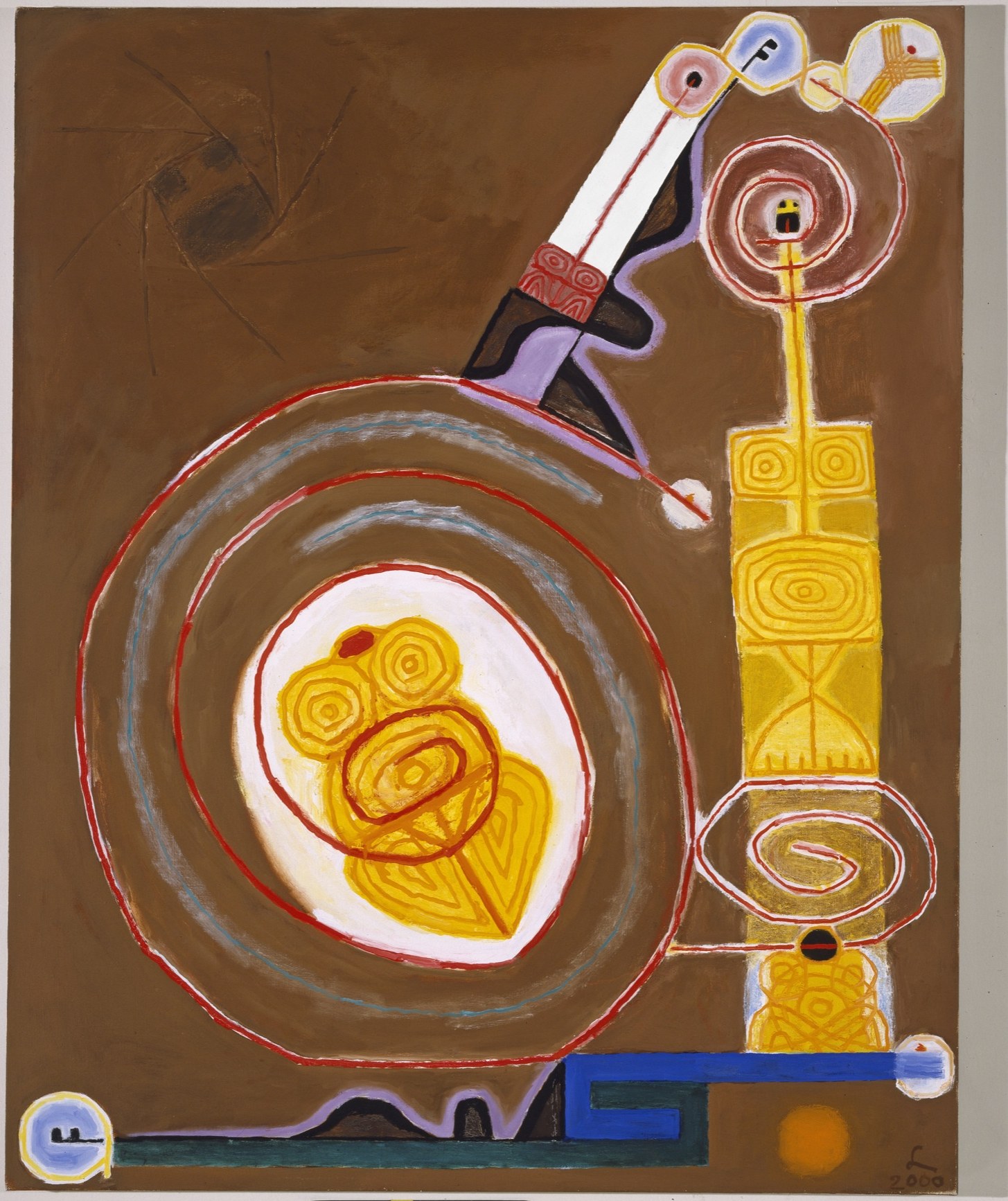
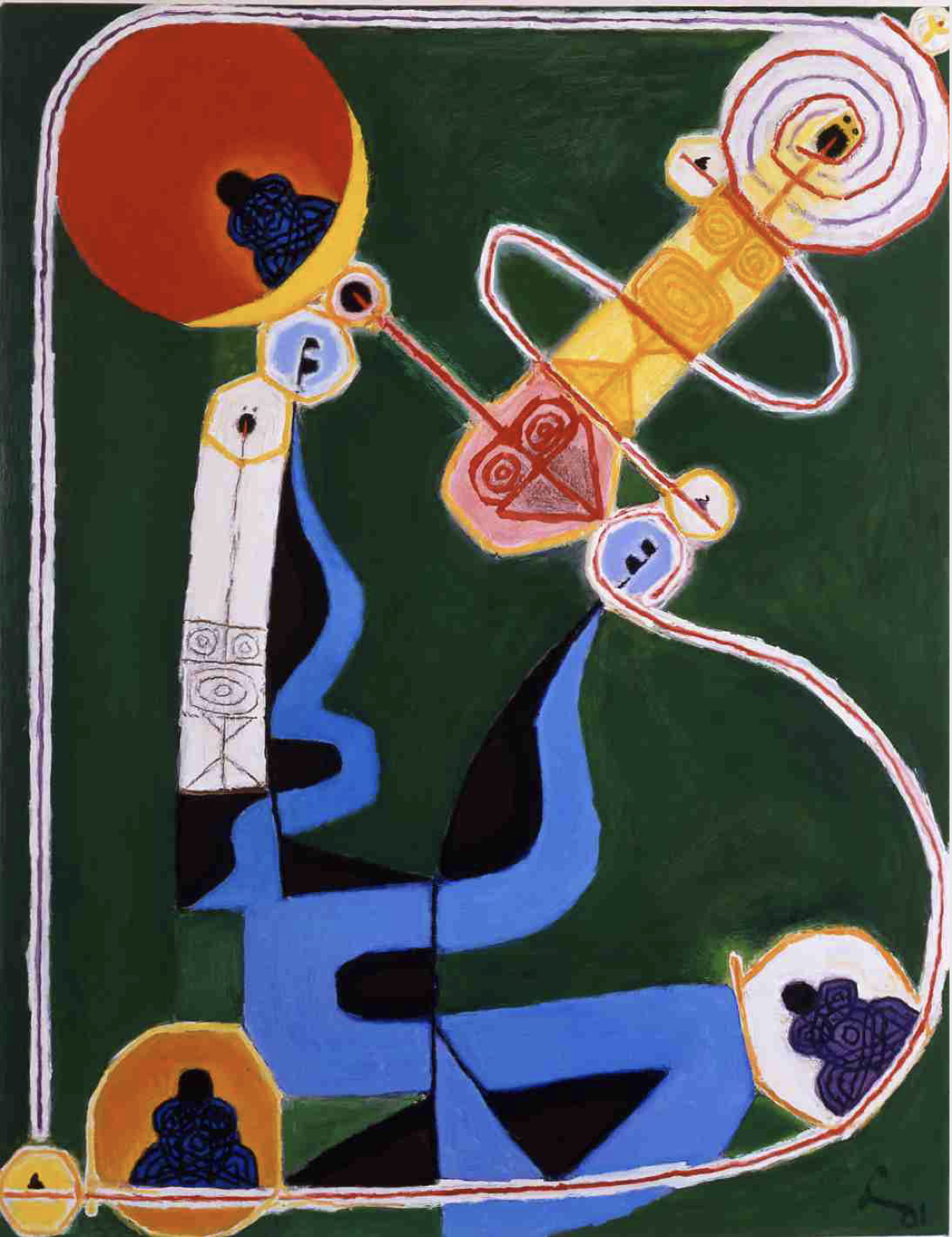
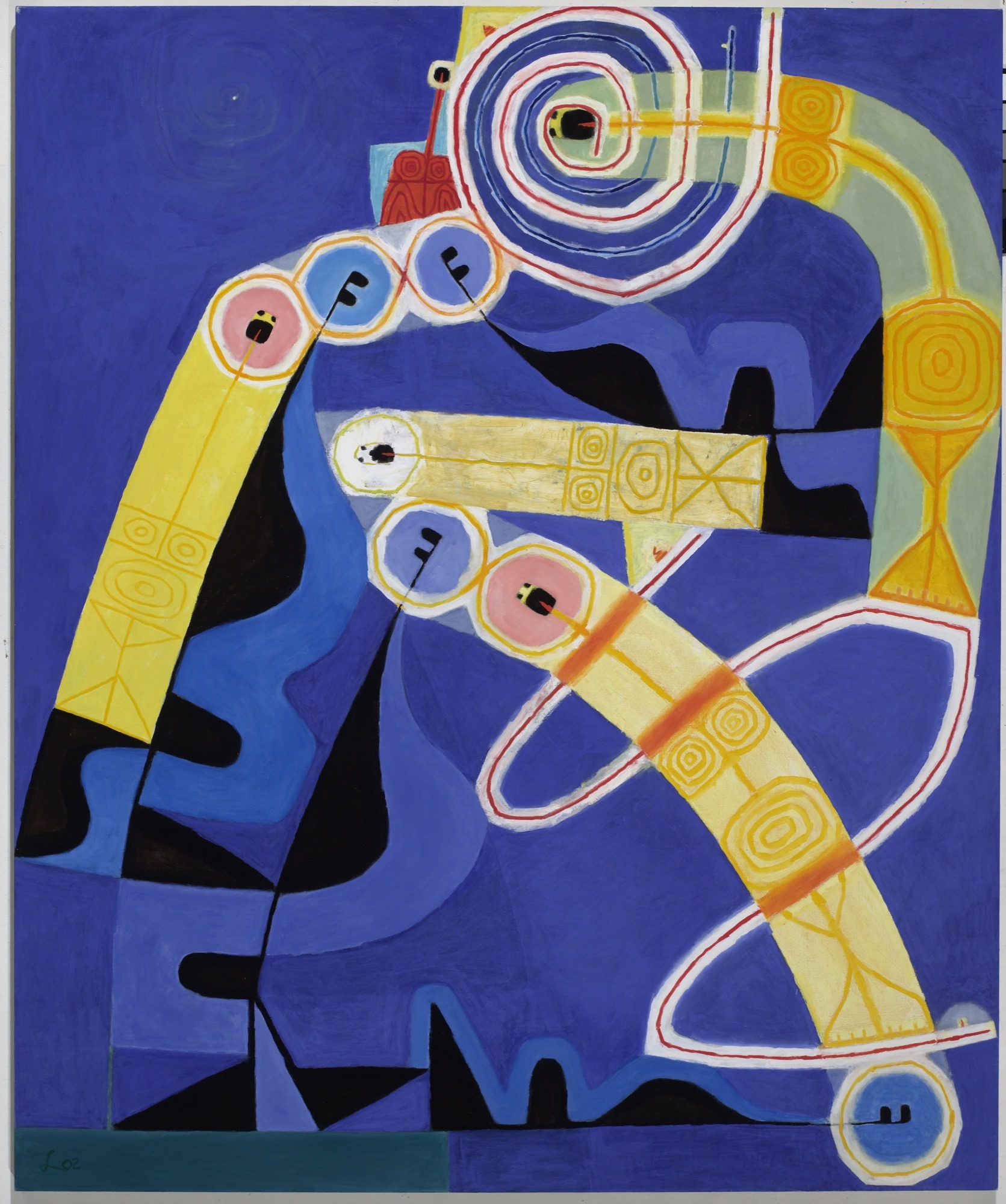
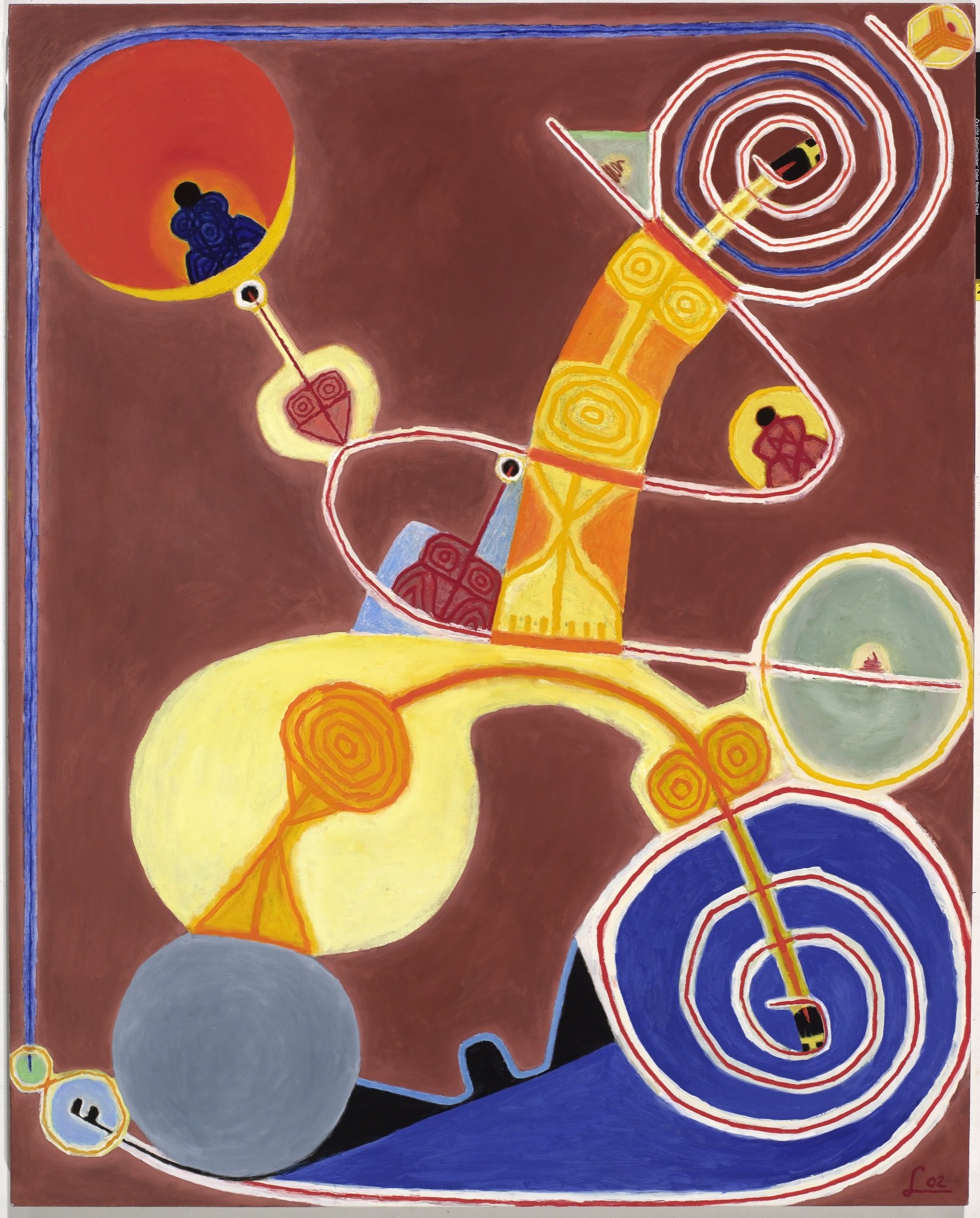
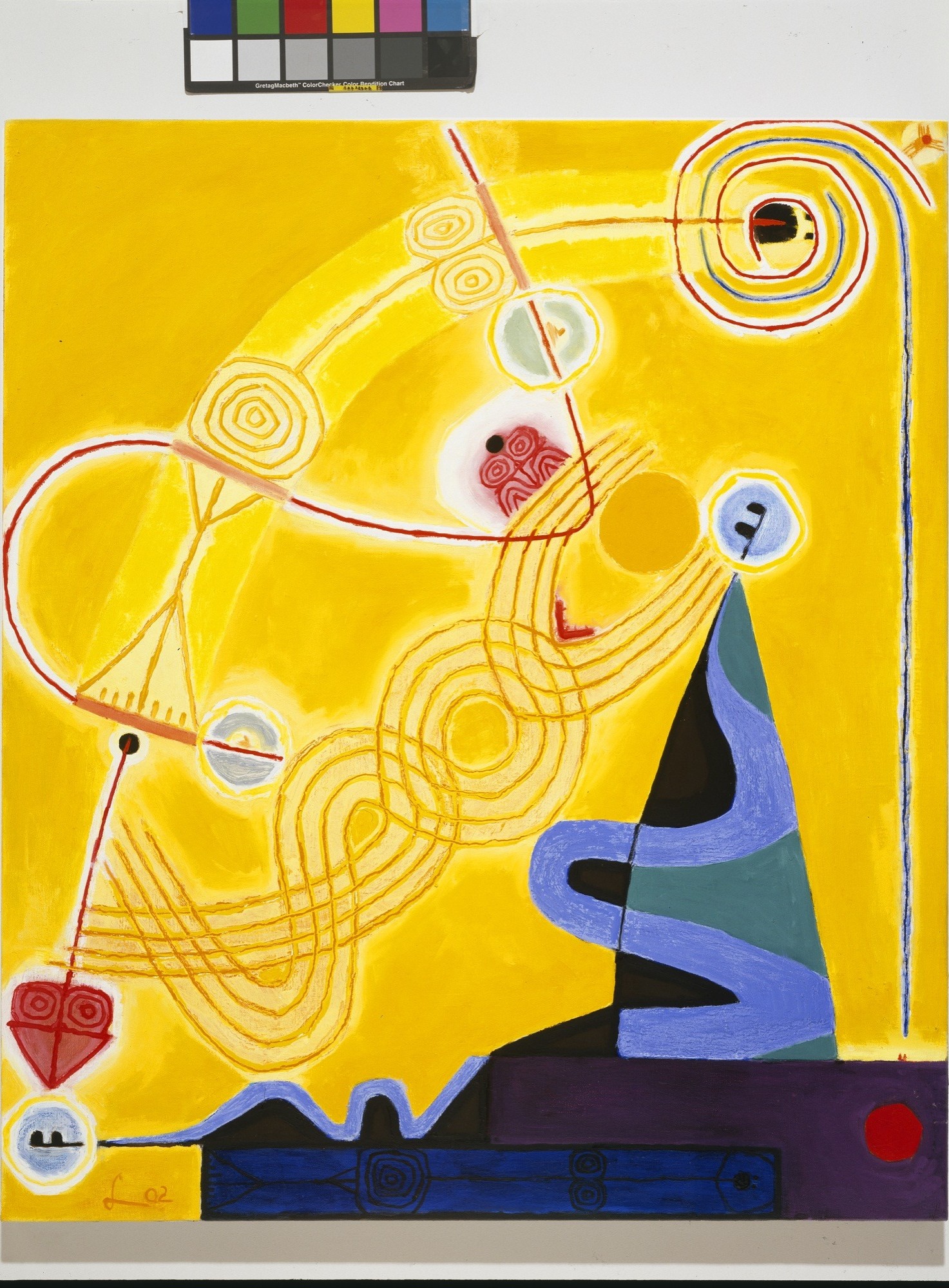
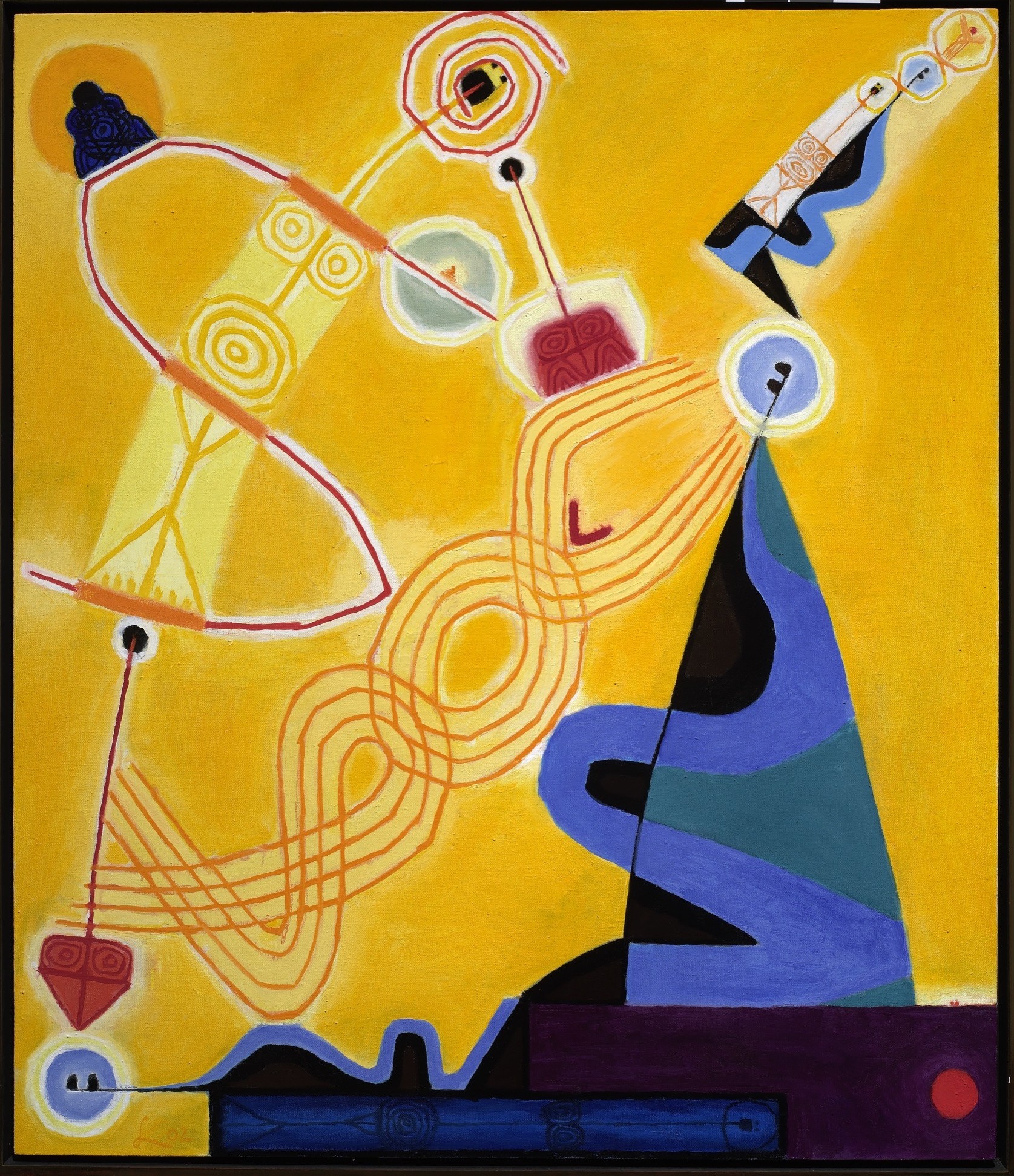
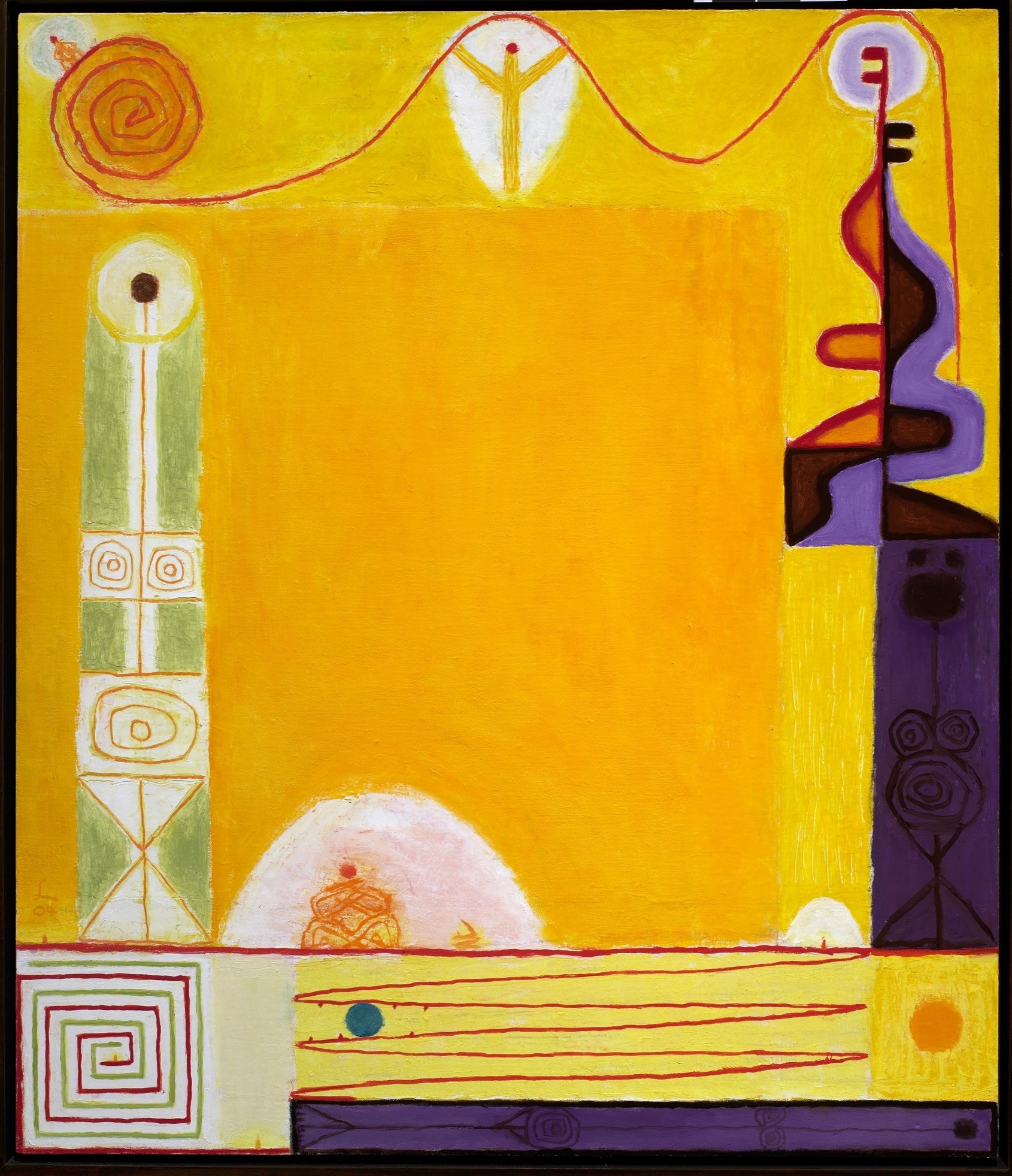
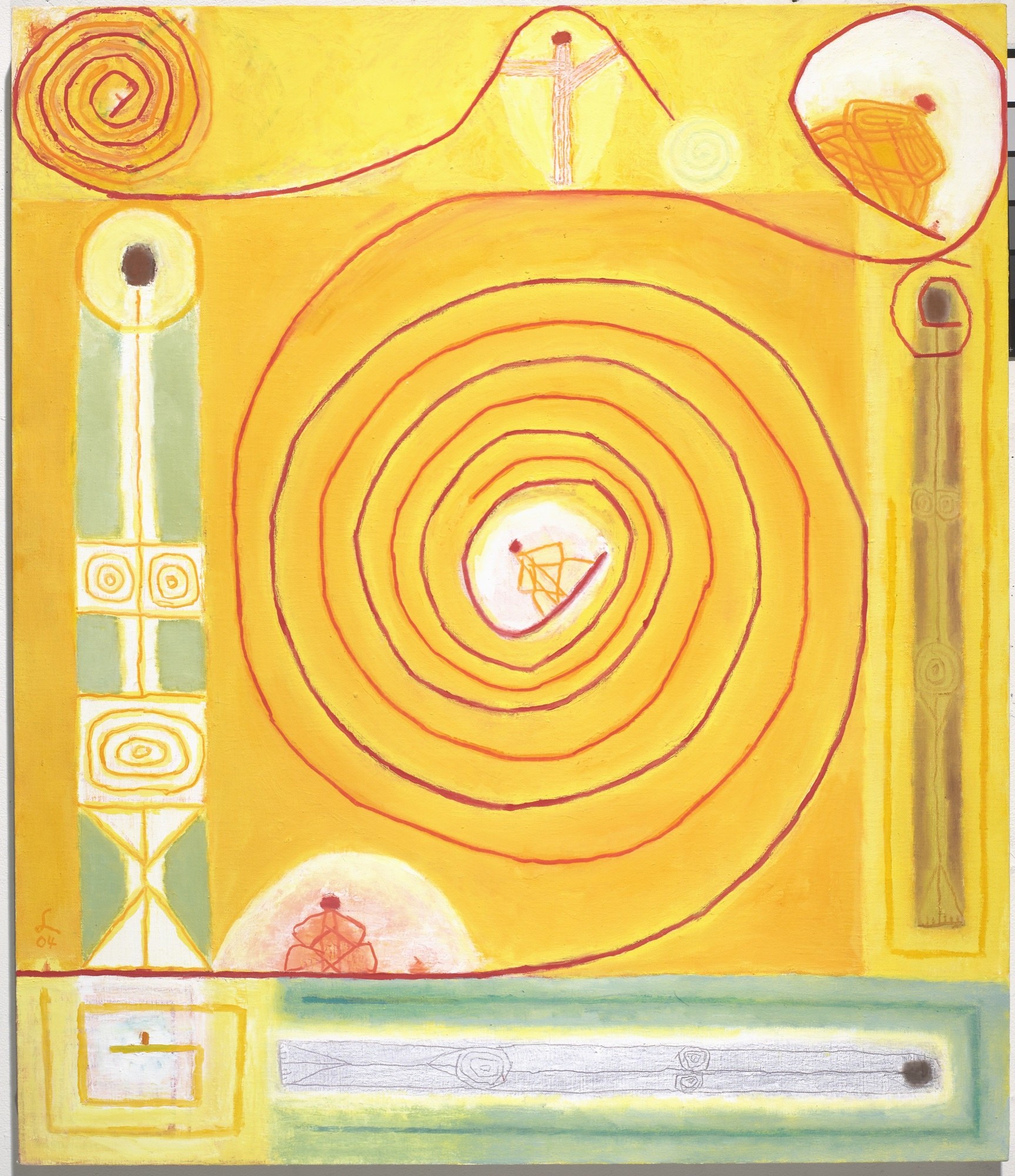
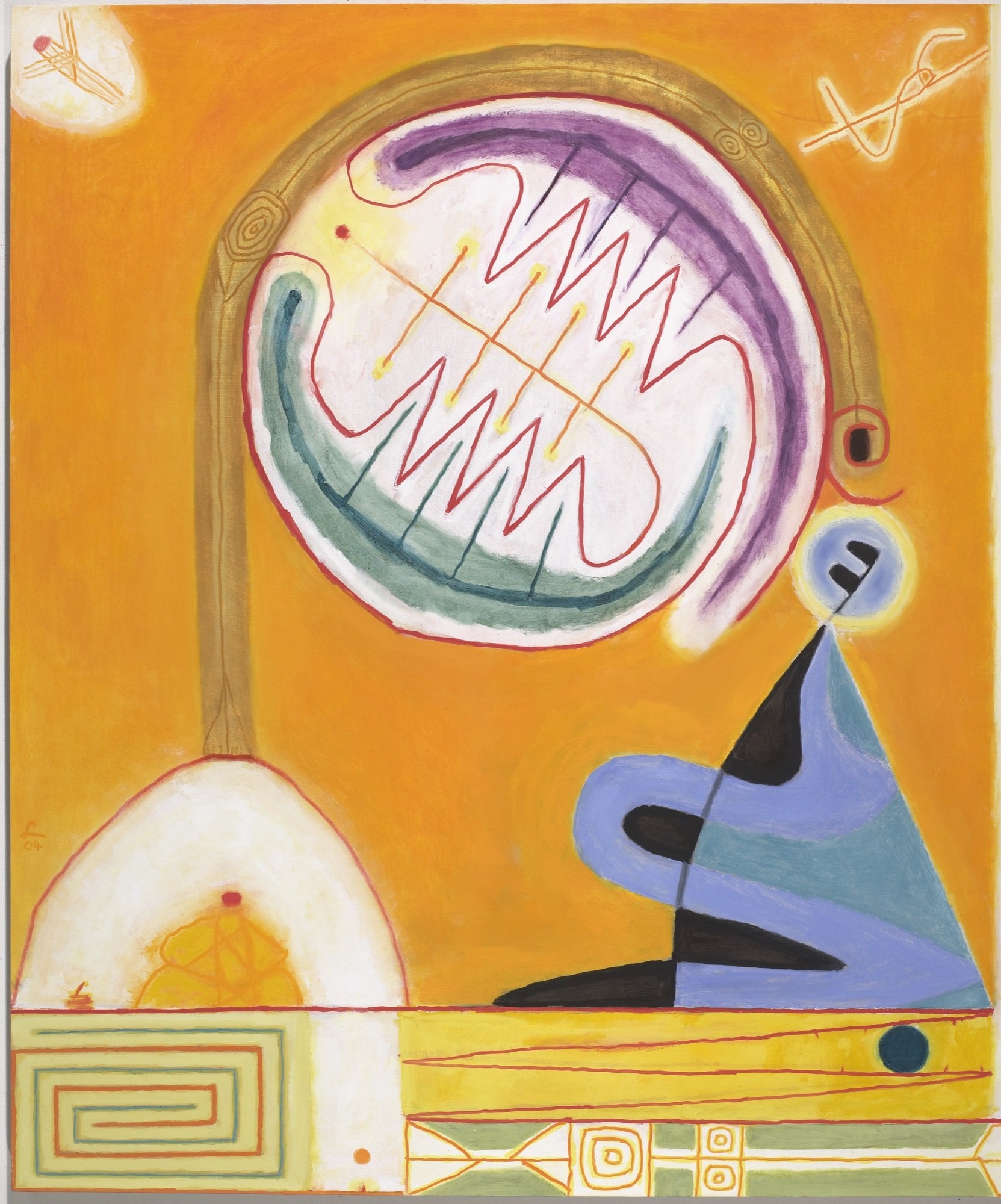
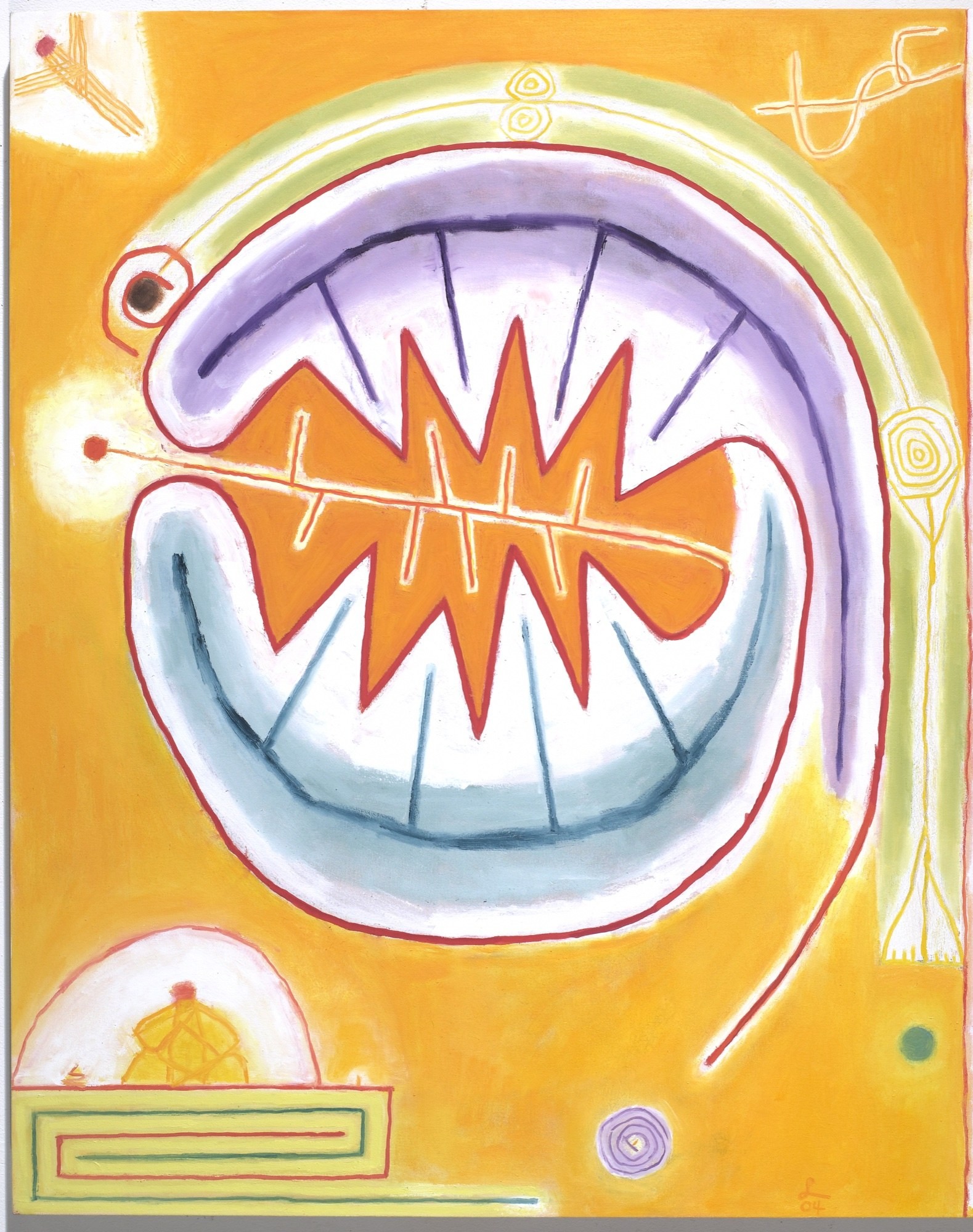
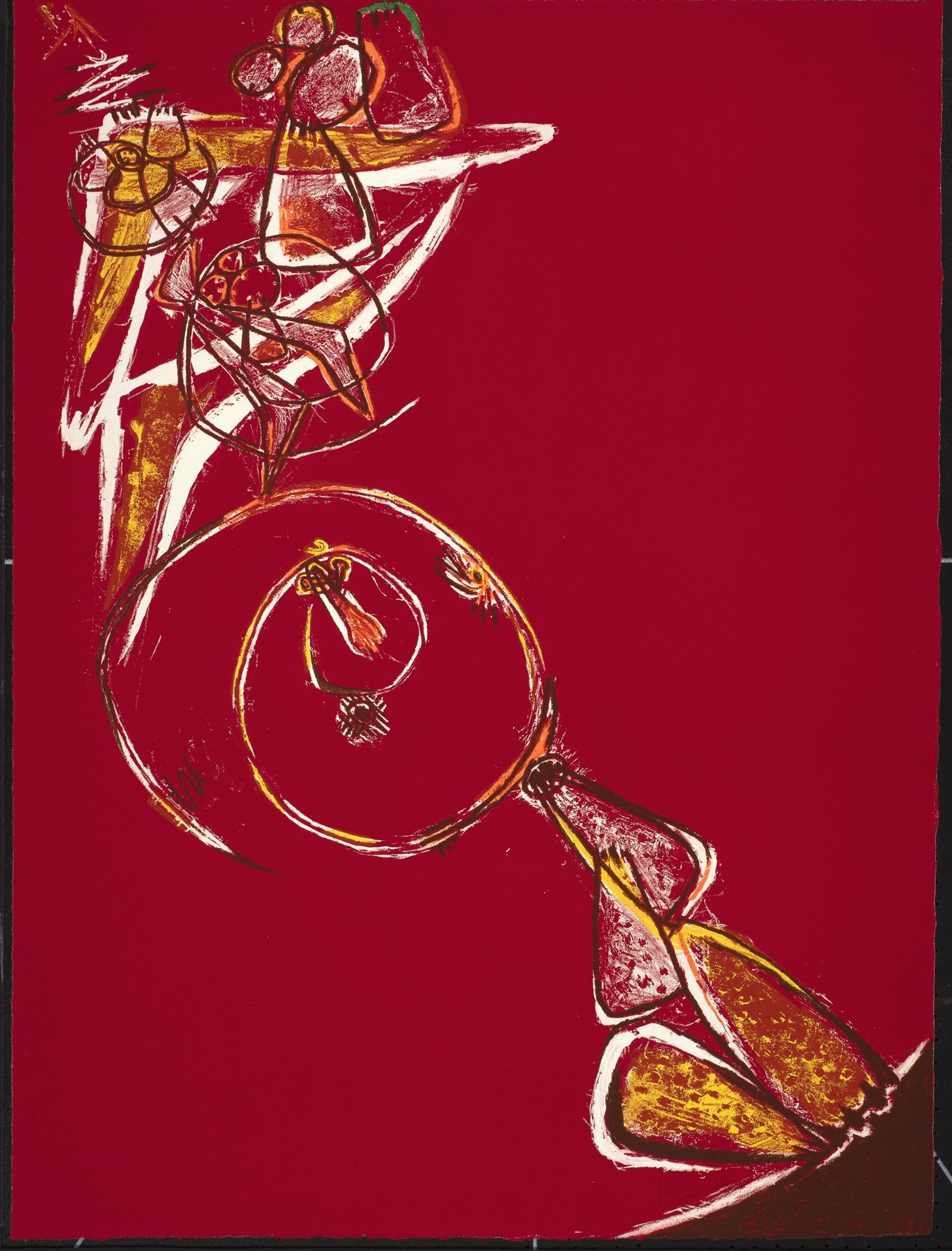
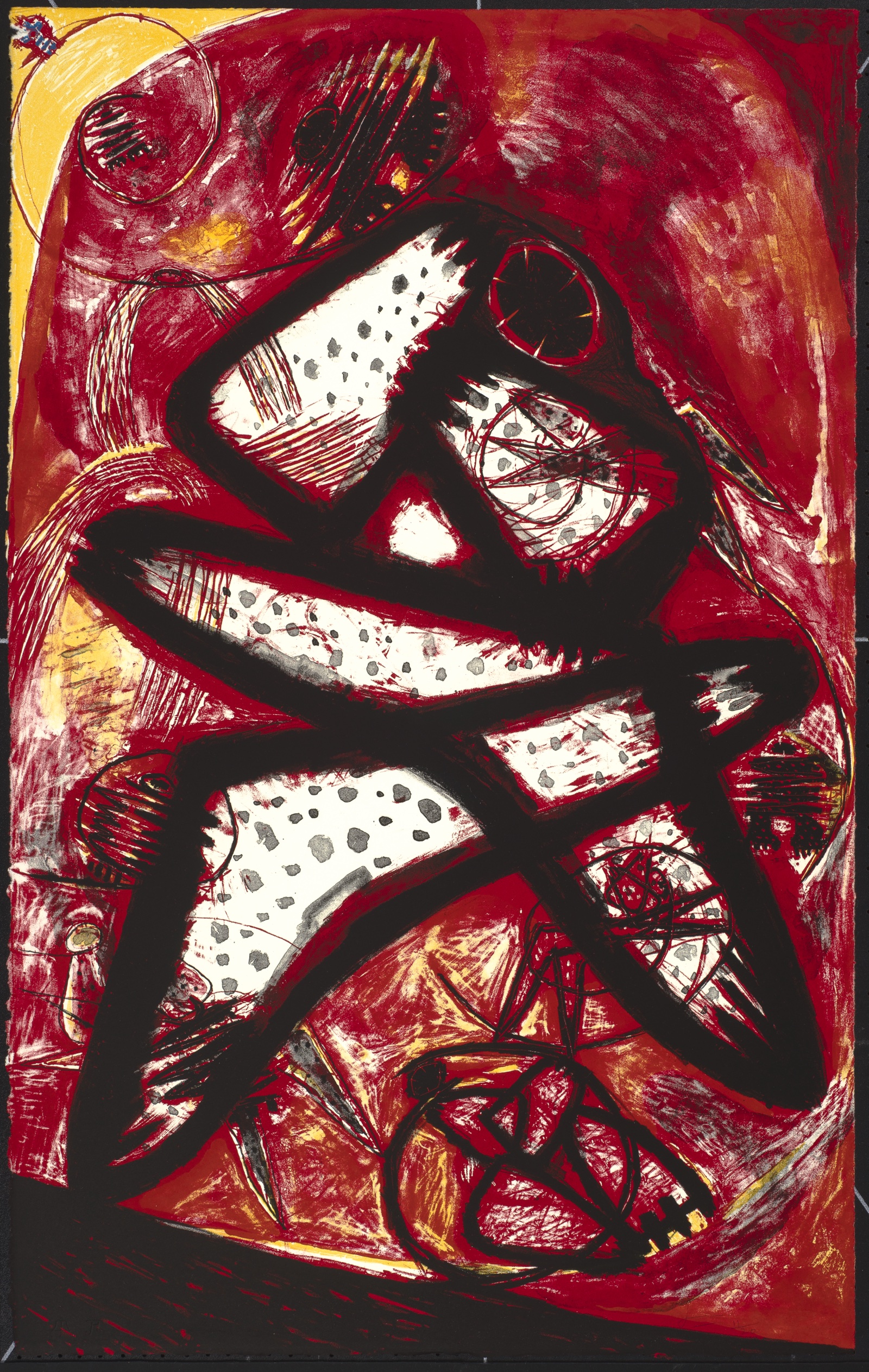
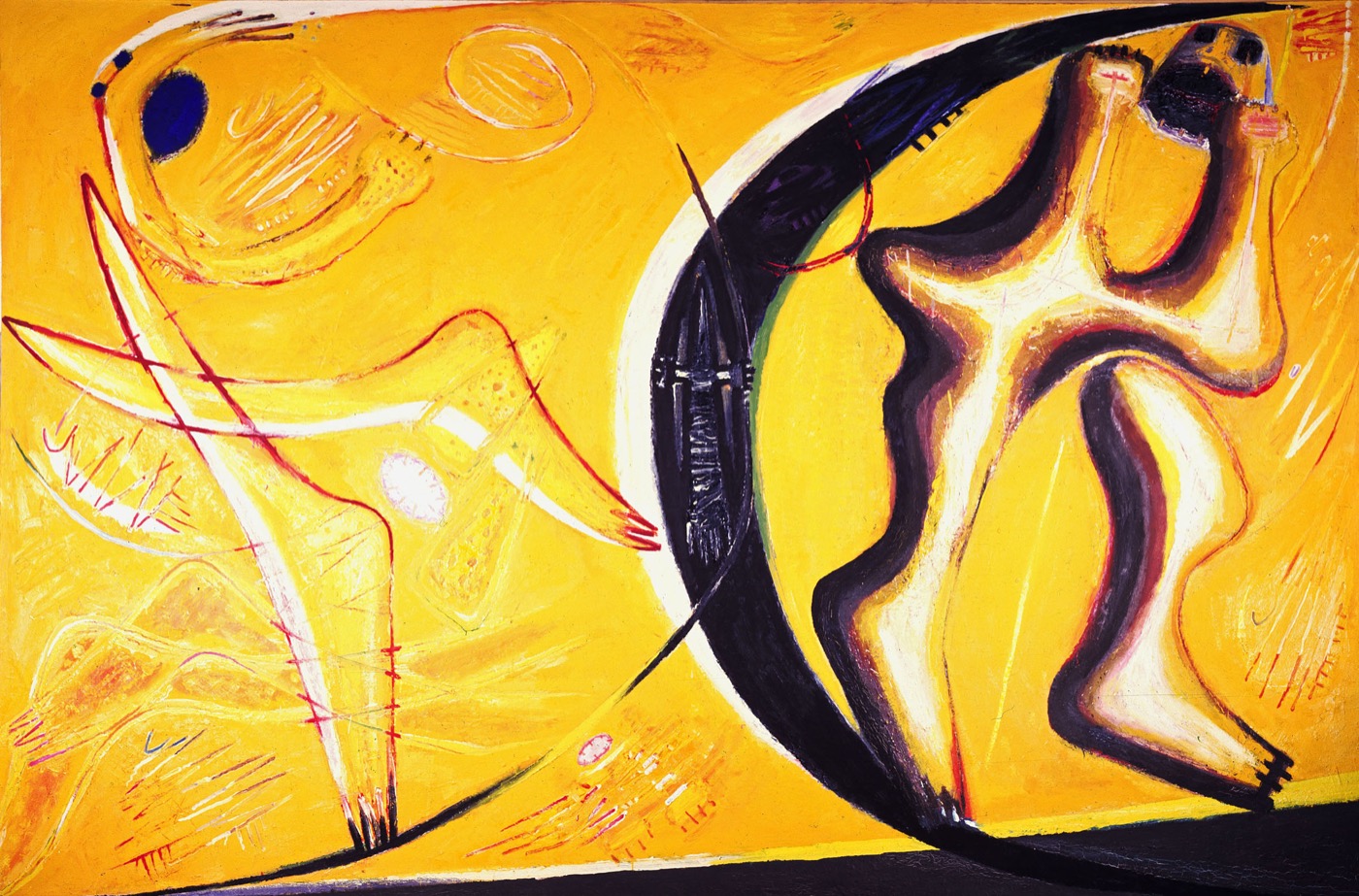
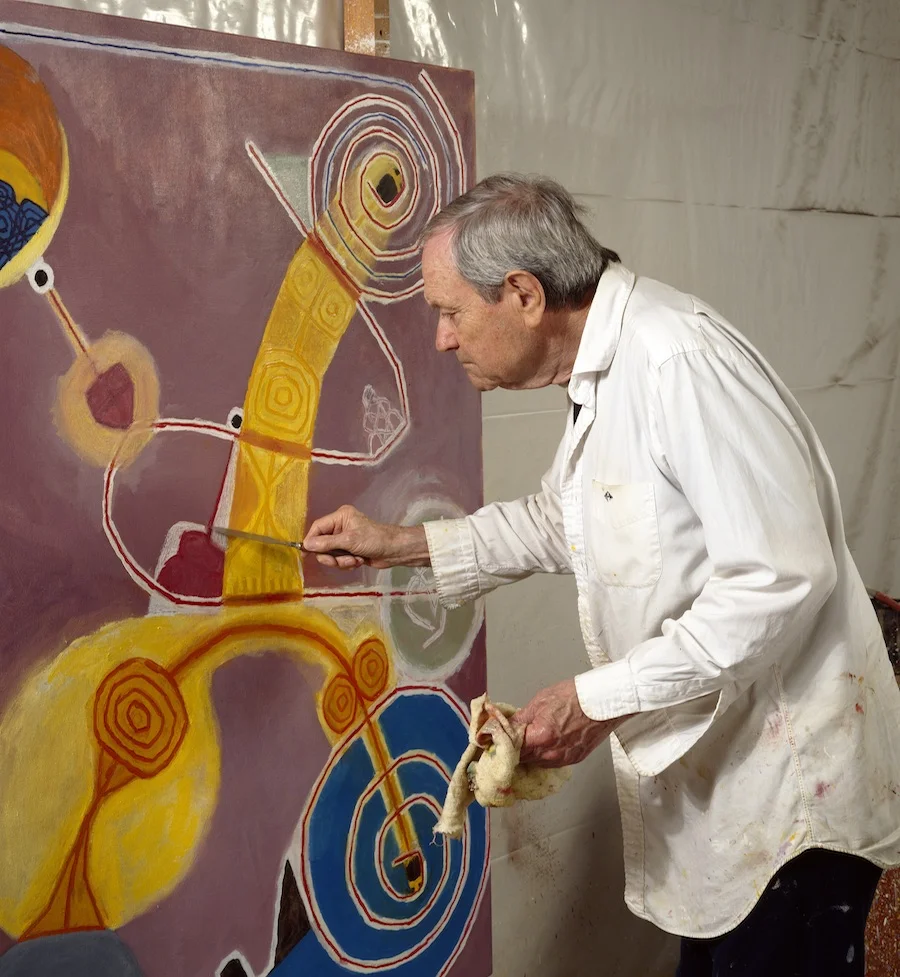
By the 1980s the work opened. The gloom lifted. Scale expanded, the palette brightened to warm yellows and reds, and the dense network of organic forms gave way to orbs that drift freely across the canvas — no longer embodying nature but taking on a geometric, almost mechanical poise. In late masterworks like 2.22.93–4.8.93 Bleeker, his shapes seem compelled into motion, circling in orbit or skimming along a diagonal. He had, in his eighth decade, found a kind of light.
Recognition
Lobdell exhibited internationally from 1951 onward, with major showings at the Whitney (1962), the Guggenheim (1964), and a 2003 retrospective — The Art of Making and Meaning — at the Palace of the Legion of Honor. He received the Medal for Distinguished Achievement in Painting from the American Academy and Institute of Arts and Letters (1988) and was elected to the National Academy of Design (1998). His work is held in MoMA, the Metropolitan Museum, the Whitney, the Guggenheim, the National Gallery, SFMOMA, LACMA, the Menil Collection, and the Anderson Collection at Stanford, among many others. He taught at CSFA (1957–64) and at Stanford (1966–91), where generations of West Coast painters passed through his studio.
Lobdell died at home in Palo Alto on December 14, 2013, at the age of 92. He pursued painting with the intent that the work could be charged with emotion that deeply moved the viewer. More than a decade later, it still does.